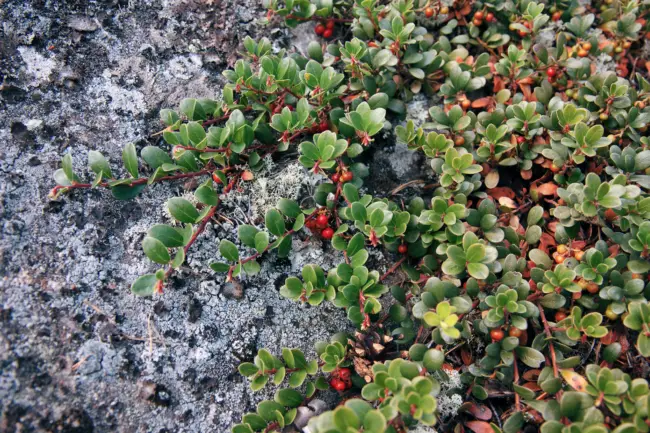
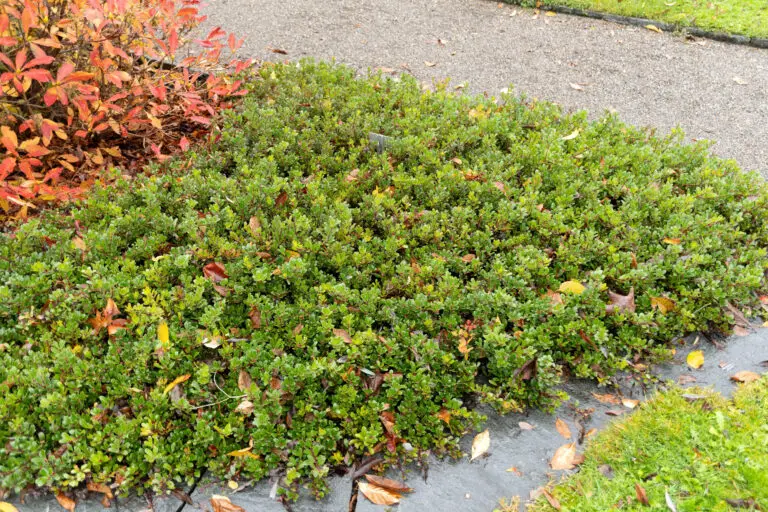
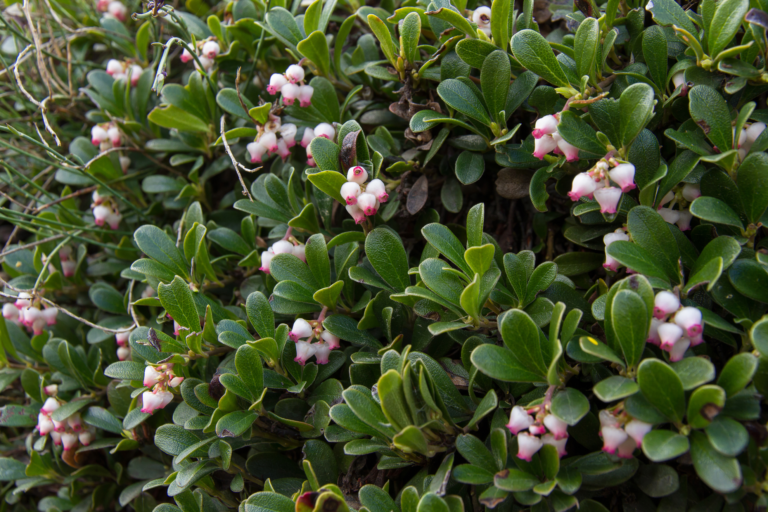
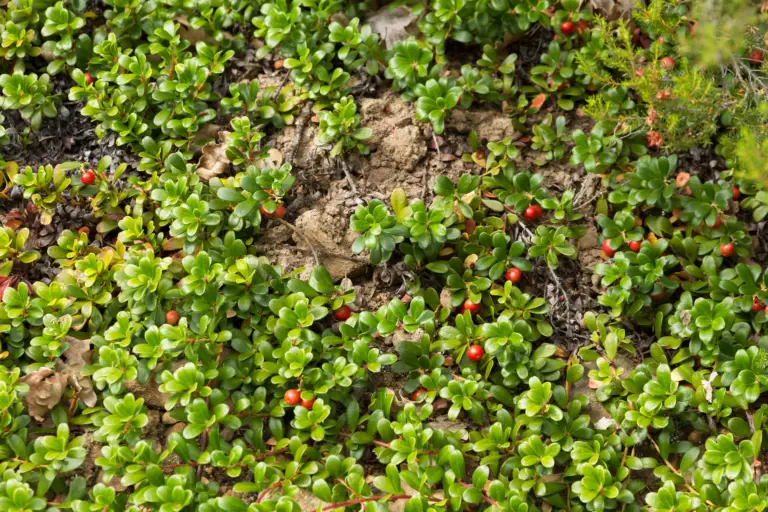
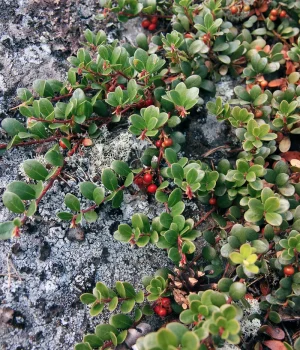
Kinnikinnick is the groundcover for the spot that seems unplantable: the dry, sandy, sun-baked bank where lawn refuses and mulch just washes away. It hugs the ground about six inches high, then creeps outward on cinnamon-red stems into a glossy evergreen mat that stays green all winter. In spring, it hangs out tiny pink-and-white flowers shaped like upside-down urns, and by fall, those become bright red berries that songbirds, and, yes, bears line up for. Its name is an Algonquian word for a smoking mixture, and its Latin name means “bear’s grape” twice over. Scroll on to find out where and how to plant.
Is kinnikinnick right for my yard?
Yes, if…
You have a dry, sunny, sandy problem spot. Kinnikinnick is happiest in poor, gritty, fast-draining soil in full sun. These are normally spots that demolish other plants.
You want an evergreen groundcover that stays put and green. It carpets the ground about six inches tall and holds its glossy leaves right through winter.
You are done watering. Once it is established, it is genuinely drought-hardy and needs almost nothing from you.
You have a slope or bank to hold. Those creeping, rooting red stems hold the soil to stop it sliding.
You want to feed wildlife. It is a butterfly host plant and its berries feed birds and mammals from fall into early spring.
A low-growing, evergreen mat made for no mowing? Sign us up!
Skip it if…
Your soil is rich, heavy, or stays wet. Kinnikinnick wants it well-drained. Fertile, soggy clay will rot it out.
You need coverage ASAP. It is slow to settle in and spreads at its own pace. This is a patience plant, not an instant fix.
You garden in the South. This is a cold-climate, northern and mountain plant and it struggles in heat and humidity.
You want a plant you can move around. Kinnikinnick likes to stay put, so buy container plants and put them where they will stay.
Where is kinnikinnick native?
Native to 23 US states and 12 Canadian provinces (Ontario, Nova Scotia, Quebec, Manitoba, Saskatchewan, Alberta, British Columbia, New Brunswick, Northwest Territories, Yukon, Nunavut, Newfoundland and Labrador)
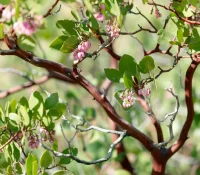
The flowers of kinnikinnick are tiny little bell-shaped urns
“
Its rooting stems hold a slope in place and its low mat shades out weeds, all in the kind of poor soil where little else grows. Plant it on the slope you are tired of fighting and walk away.
”
Why kinnikinnick matters
A butterfly nursery in a groundcover
Kinnikinnick belongs to the genus Arctostaphylos, which the Shropshire-Tallamy host plant records credit with supporting 112 native caterpillar species. This makes the genus a powerhouse for the West. Kinnikinnick itself is a documented host for the hoary elfin (Callophrys polios) and the brown elfin (Callophrys augustinus). Those butterflies lay their eggs on the plant, and the caterpillars grow up on its leaves. A low mat you can walk past without noticing is running a butterfly nursery.
The berry that the whole neighborhood eats
The red berries hang on well into winter, which makes them a lifeline when almost nothing else is left. Per the USDA Forest Service, the fruit feeds songbirds, five species of grouse, wild turkey, deer, elk, and it is especially important to black and grizzly bears, who rely on it heavily in early spring when they come out of their dens hungry. That is where both names come from: the leaves went into Native smoking mixtures called kinnikinnick, and the Latin uva-ursi means “bear’s grape.”
It heals hard ground
Kinnikinnick is one of the plants that shows up early on raw, disturbed, sandy sites and puts them back together. Its rooting stems hold a slope in place and its low mat shades out weeds, all in the kind of poor soil where little else grows. Plant it on the slope you are tired of fighting and walk away.
More good news:
Kinnikinnick is deer-resistant
Deer do NOT normally eat Kinnikinnick. If you’re worried about deer nibbling your garden, planting Kinnikinnick is a good native gardening choice.
Spring or early fall, with a reminder to be patient. Give it a full season to root before you ask it to face a hard summer or a hard winter.
Sun and soil
Full sun to light shade, and poor, sandy or gritty, drained soil. This is the rare plant that does better when you do less: skip the compost and the rich beds. Skeptical? Head over to the Missouri Botanical Garden, who says grows best in infertile, well-drained ground.
Watering
Water lightly and regularly through the first season to help it settle, then back off. An established plant is drought-hardy and can rot if it sits in constant moisture. Less is more.
Garden Recipe™
Kinnikinnick
Arctostaphylos uva-ursi
Part sun to shade
Sun
Pretty easy
Effort
Short (under 3') tall
Size
What it needs
Sunlight
Partial sun to shadeDappled light or a few hours of gentle sun
Directions
Watering
Weekly for the first seasonAfter that, rain is usually enough
Notes
Comes back?
Yes, every yearGoes dormant in winter, that's normal. New growth each spring.
Native plant. This is a native plant, which means local wildlife already knows what to do with it. Just by planting it, you're giving your little corner of the ecosystem a boost.
Spacing
Set plants 2 to 3 feet apart. A single plant can eventually spread 3 to 6 feet or more, rooting as it goes, so give the mat room to grow together over a few seasons.
Maintenance
Not needed. No fertilizer (it prefers poor ground), no mowing, and very little weeding once the mat closes in. If a stem strays where you do not want it, snip it. That’s it.
Beginner Tip
Don't overthink it. Well-drained just means water passes through the soil quickly instead of pooling. Kinnikinnick evolved on sandy, rocky ground and its roots need air. In heavy or soggy soil they suffocate and rot. If water sticks around for hours after rain, pick a different spot.
Do you have a slope where nothing grows (or stays put?) This might be your plant
Where kinnikinnick shines in your yard
Sunny, sandy slopes and banks. Its rooting stems hold soil where mowing is a hazard and mulch washes away.
Lawn alternative in poor soil. A low evergreen carpet for a hot, dry strip where turf always struggles.
Between stepping stones and along paths. It takes light foot traffic and softens hard edges.
Rock gardens and gravel gardens. Right at home spilling over stone with the sharp drainage it loves.
Coastal and exposed sites. Wind, sand, and salt spray do not faze it, which is rare in a groundcover.
Wildlife groundcover. A butterfly host and a winter berry source tucked under taller natives.
FAQs
How do you even say kinnikinnick?
Kin-ni-kin-NICK.
It is an Algonquian word meaning “that which is mixed,” a reference to the smoking mixtures its dried leaves went into. You will also see it sold as bearberry, which is the same plant.
Is kinnikinnick the same as bearberry?
Yes! Kinnikinnick and bearberry are two common names for the same plant, Arctostaphylos uva-ursi. You may also see it called red bearberry, sandberry, or hog cranberry.
Can I eat the berries?
Technically yes, but they are dry and nearly flavorless to people. Native peoples cooked them and mixed them with other foods, but most of us leave them for the birds and bears, who value them far more than we do. The USDA Forest Service notes many animals depend on the fruit—leave it for them and try something tastier.
Why is my kinnikinnick dying?
Almost always too much kindness. Rich soil, overwatering, poor drainage, or being transplanted are the usual culprits. It wants poor, sandy, well-drained ground in the sun and very little extra attention. If it is in heavy or wet soil, move it (as a fresh container plant) to a leaner, drier spot.
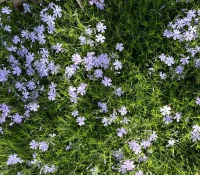
From my old experience, this rings true. I planted it on a slope–got that part right!—but my soil was way too rich. The kinnikinnick was there for a year, then disappeared. I replaced it with creeping phlox, which is doing great.
Plant Nerd Fact
Say it with me: “bear grapes bear grape.”
Let’s get into the name kinnikinnick and its silly scientific name. The Latin name will remind you of the silly repetition in Panera Bread (which translates to “Bread Bread”).
“Kinnikinnick” comes from an Algonquian word meaning “that which is mixed:” many Native peoples dried and smoked the leaves alone or blended with tobacco and other barks. Ok, got it. No notes, makes sense.
But the botanical name has the stutter.Arctostaphylos comes from the Greek for “bear” and “bunch of grapes,” and the species name uva-ursi is Latin for “bear’s grape,” so the full scientific name says “bear grapes bear grape.”
Bears really do seek out the berries, especially in spring. The leaves also contain arbutin, a compound that made kinnikinnick a traditional herbal remedy and is used today in beauty products.
All this, from a native groundcover!
Where can I find kinnikinnick?
Skip the big box stores. They find this native plant too slow and underwhelming (which is wrong). Here are four reliable ways to find some bearberry for your yard:
Kinnikinnick
Where can I find seeds and plants?
Finding native plants can be challenging (we partly blame King Louis XVI.) To make it easier, we’ve assembled four sourcing ideas.
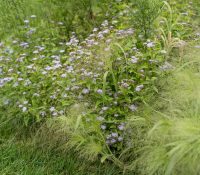
Kinnikinnick pairs with other plants that thrive in dry, sunny ground in your area. That last part is the important one. Since kinnikinnick grows in so many places, you have to pick other natives for your region. Here are some excellent standbys to consider:
Kinnikinnick is the answer to the spot you’ve been fighting; that dry, sandy, sunny, and steep garden. Give it poor soil and full sun, water it just for its first season, then get out of the way. It will slowly spread into a glossy evergreen carpet that holds the ground, feeds butterflies and birds, and laughs at drought, wind, and deer. For more tough, low-water natives, browse our full plant profile library. Or, visit our Best Native Plants for the Northeast or Best Native Plants for the Northwest. Happy planting!
Shropshire, Kimberley J., and Douglas W. Tallamy. Lepidoptera Host-Plant Records. University of Delaware. Dataset. [Trusted Sources/Shropshire-Tallamy Lepidoptera Host Plants 2026-05-23.xlsx]
Emily Lessard is the founder and editor of The Plant Native, the site that helps homeowners across North America get started with native plants. She holds a Sustainable Landscapes certificate through the Pennsylvania Landscape & Nursery Association, is finishing a Native Perennial Garden Design Certificate at Temple University, and is the author of Grow Native (Quarto, February 2027). She gardens mostly in her pajamas outside Philadelphia in the Southeastern Plains ecoregion.
Emily Lessard is the founder and editor of The Plant Native, the site that helps homeowners across North America get started with native plants. She holds a Sustainable Landscapes certificate through the Pennsylvania Landscape & Nursery Association, is finishing a Native Perennial Garden Design Certificate at Temple University, and is the author of Grow Native (Quarto, February 2027). She gardens mostly in her pajamas outside Philadelphia in the Southeastern Plains ecoregion.