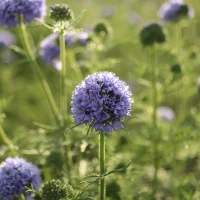
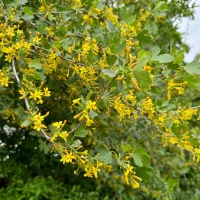
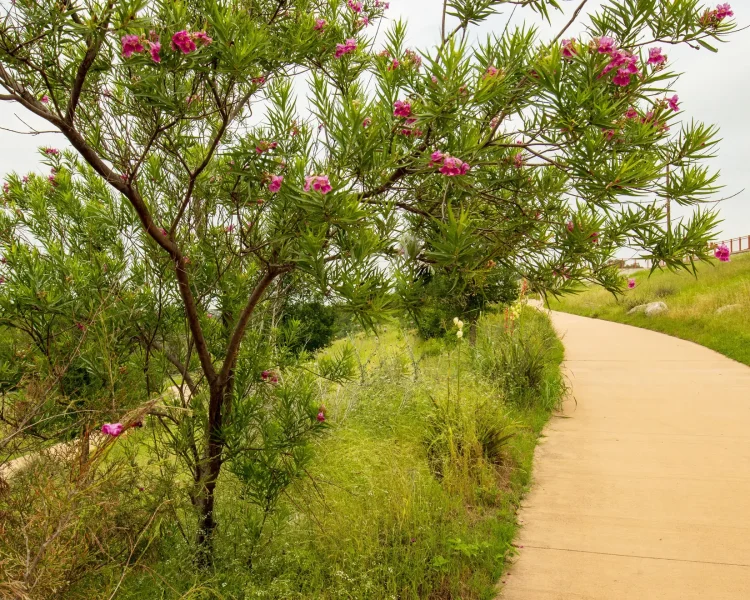
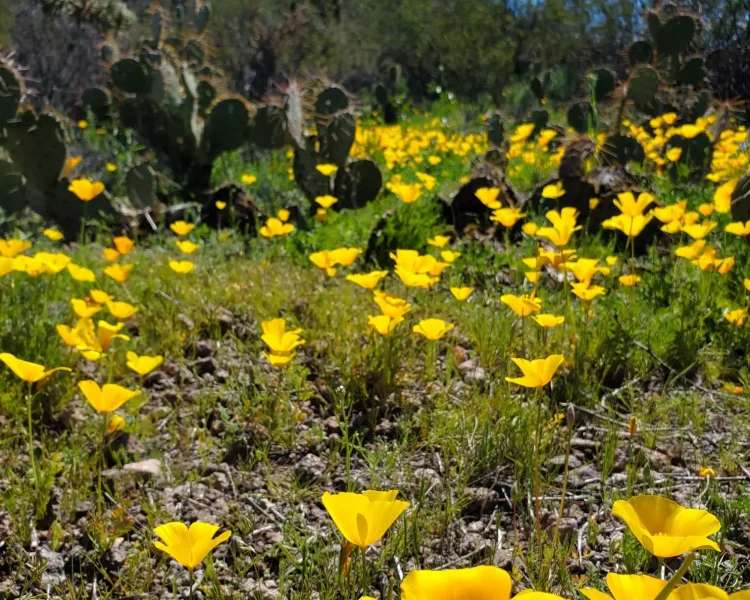
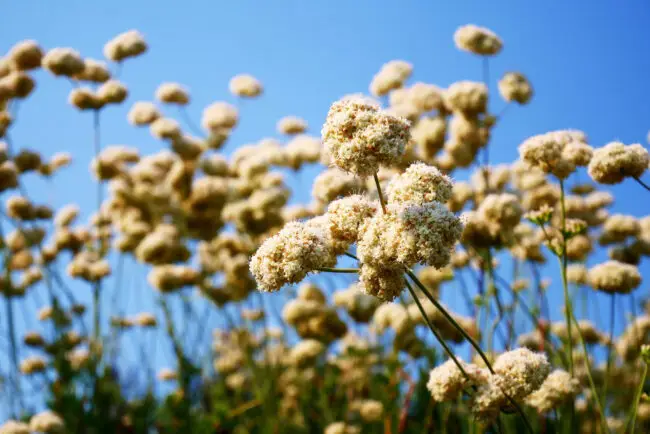
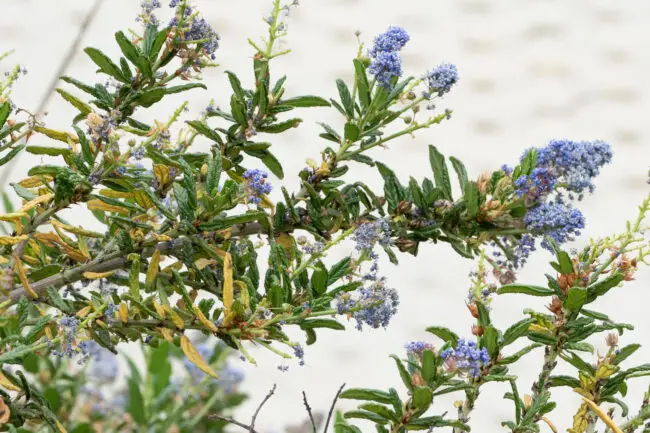
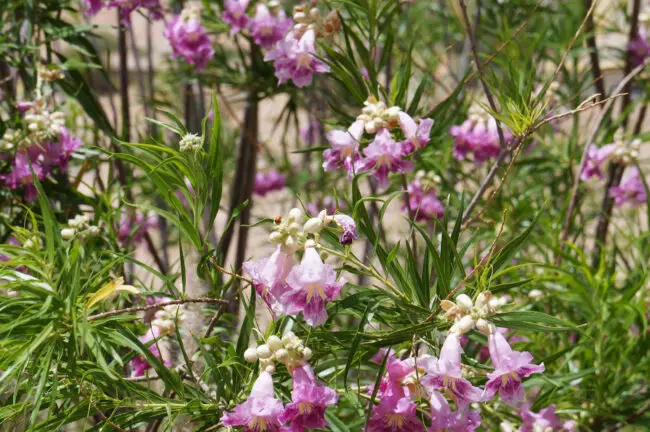
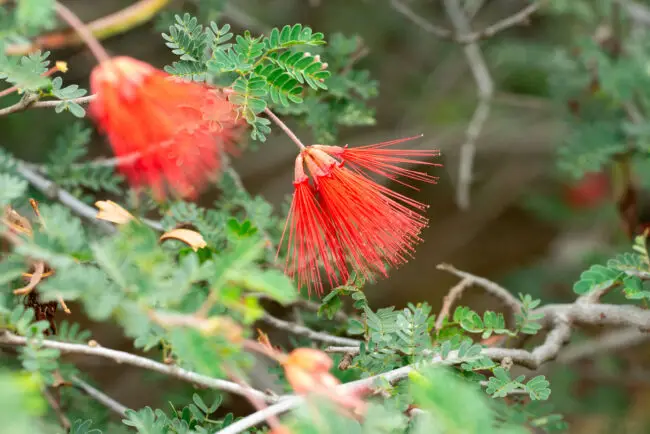
If you’ve ever tried to grow a lawn in the Southwest, you already know the punchline: the desert wins. Traditional landscaping with the Kentucky bluegrass, the blue hydrangeas, and the hostas is essentially a long, expensive argument with the climate.
Native plants are the opposite of that argument. They’re the trees, shrubs, and flowers that evolved here, in this heat, in this alkaline soil, with this little rainfall. They’ve been doing it for thousands of years. A yard planted with Southwestern natives uses 60–80% less water than a conventional landscape, needs almost no fertilizer, and looks like it actually belongs. Scroll on to meet your new favorites.
Why go native in the Southwest?
Water. Here’s the math behind it.
This is the big one. In a region where water is literally the most valuable resource, the numbers are stark: a native plant landscape uses roughly 422 acre-feet of water per year compared to 1,407 for traditional turf. That’s a 70% reduction. Native plants pull this off because they evolved deep root systems that reach water far below the surface, plus specialized leaves that minimize evaporation. Once established, most Southwestern natives can survive on rainfall alone. You’re not fighting the climate anymore. You’re working with it.
“
Non-native ornamentals might look pretty, but to a hummingbird, many are an empty restaurant with nice decor.
”
Wildlife that actually shows up
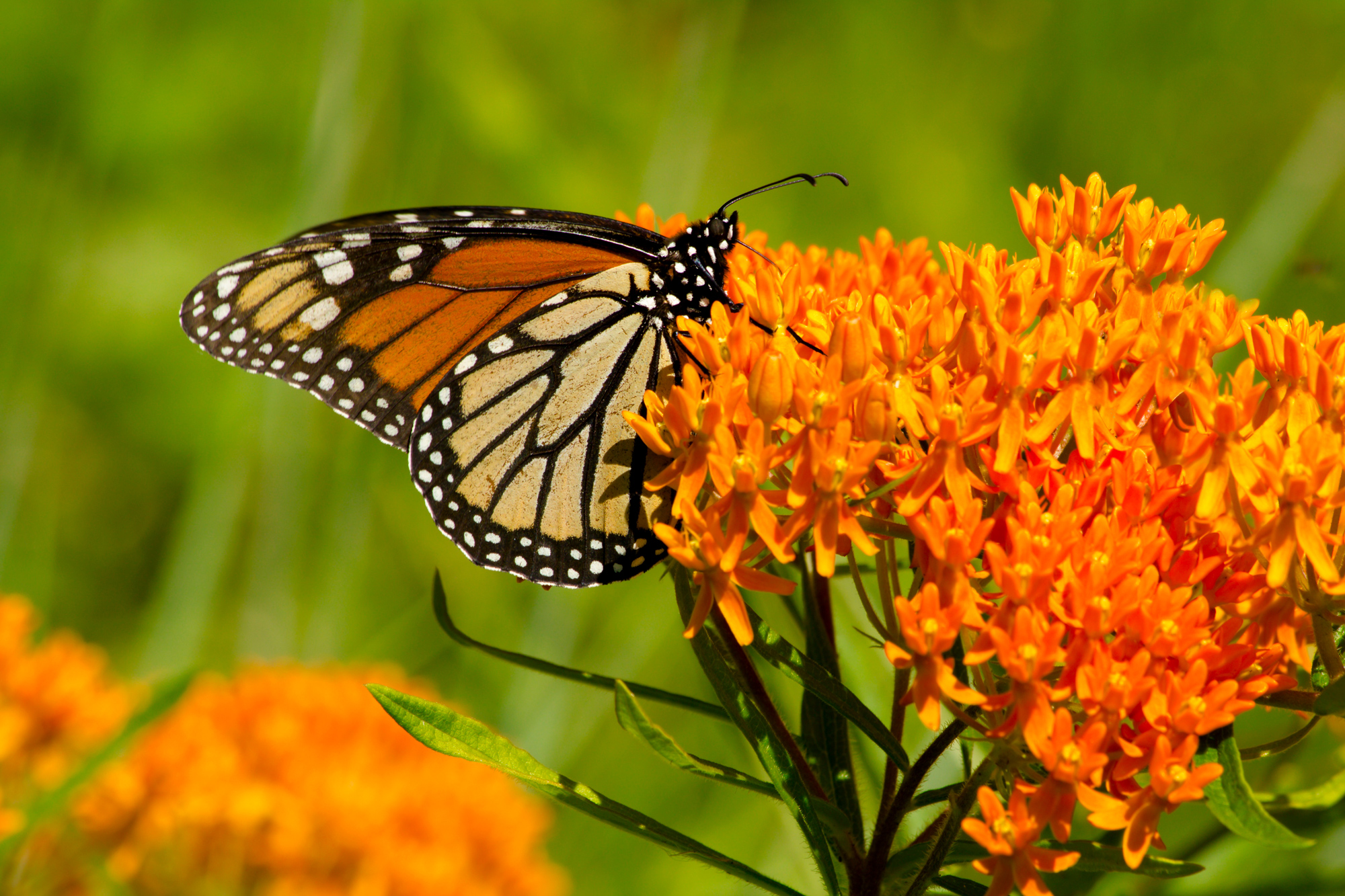
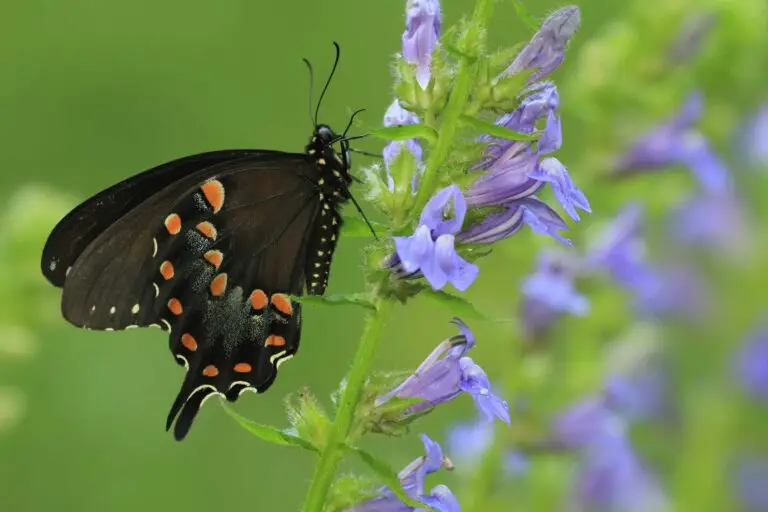
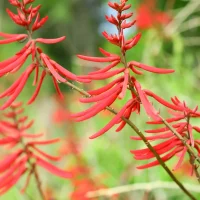
Plant a chuparosa and a hummingbird appears. Plant a penstemon and another one shows up. This isn’t coincidence. It’s coevolution. Southwestern hummingbirds evolved alongside these specific plants, preferring their tubular, nectar-rich flowers. Same with native bees, butterflies, and the rest of the pollinator crew. Non-native ornamentals might look pretty, but to a hummingbird, many are an empty restaurant with nice decor.
Less work, honestly
You might think landscaping and gardening are a time-suck. And you’re right, if you plant non-native plants. When you plant native, here are some things you can skip doing, skip buying, skip worrying about:
- No fertilizer (these plants don’t need it).
- Minimal pruning (they already fit the space they evolved for).
- No pesticides (they’ve handled local insects for millennia).
- After the first season of establishment watering, your maintenance drops to almost nothing.
A native Southwestern garden is what happens when you stop fighting the desert and let it be beautiful on its own terms.
There are thousands of plants native to the Southwest. If you’re looking for a huge encyclopedia of native plants, we highly recommend visiting other sites, like BONAP and the USDA Plant Database, or exploring plants by pollinator profiles at Xerces Society.
Sometimes, these huge sites can feel overwhelming, especially on a tiny phone screen or if you’re beginning your native garden. That’s why we made this website!
We’re here to get you started
The Plant Native’s mission is to help beginner gardeners find their way. So we’ve stuck to Southwestern native selections that are widely known and found.
Southwestern native gardening inspiration
Ok, that was a lot. Feeling overwhelmed? Let’s move away from the lists and look at this another way. Here are some garden pictures to help you visualize how to put it all together:
Excited? I hope so! Now that you’re pumped, let’s send you on your way with a few quick tips.
Common beginner gardening mistakes
First off: ALL gardeners make mistakes. All gardeners kill plants. But here are a few things to look out for, especially when you’re just starting out.
Overwatering.
This bears repeating. More Southwestern plants are killed by too much water than too little. Frequent, shallow watering is the worst approach for desert natives. It keeps roots shallow, promotes fungal diseases, and weakens the plant. Water deeply and infrequently instead.
Planting thirsty non-natives.
That rose bush from the garden center? It wants 25 inches of rain a year. Your yard gets 8. You can fight that math with a hose, or you can plant autumn sage and get flowers, hummingbirds, and a lower water bill.
“
That rose bush from the garden center? It wants 25 inches of rain a year. Your yard gets 8. You can fight that math with a hose, or you can plant autumn sage
”
Ignoring the monsoon.
In monsoon regions (Arizona, New Mexico, parts of Texas), July through September brings intense rain. You need to adjust your irrigation. Don’t eliminate it entirely, but reduce it. Plants sitting in waterlogged soil during monsoon season get root rot.
Wrong plant, wrong microclimate.
Take a moment to triple-check whatever idiosyncratic spot you’re planting in. That south-facing wall reflects heat like a pizza oven. That exposed spot along the sidewalk gets a lot of sun and wind. That north-facing corner stays cooler. Match plants to the specific conditions of each spot in your yard, not just the general zone.
Expecting instant results.
Native plants spend their first year establishing roots, not putting on a show. By year two, they start to fill in. By year three, they’re doing exactly what they evolved to do. Give them time and enjoy years of beauty after that single year of patience.
Beginner Tip
The number one cause of native plant death in the Southwest is overwatering, not underwatering. When in doubt, water less. These plants evolved to handle dry. They did not evolve to handle soggy.
We hope you’ve a great list of natives you’ve fallen in love with. Let’s make finding them easy.
Where can I find native plants in the Southwest?
The sad reality is that finding native plants (especially if you’re not looking for cultivars) can be a challenge. But it’s much easier if you know where to look! We’ve put together an ever-evolving list of native-friendly nurseries. Time for a road trip!
Find native plants for the Southwest online
Looking to start your native garden by buying online? We got you. Here are sources for buying native seeds and plants online in the Southwest:
Arkansas + Oklahoma
Texas
Arizona, Colorado, New Mexico, and Utah
Why do we keep including the city/town and state? Here’s why:
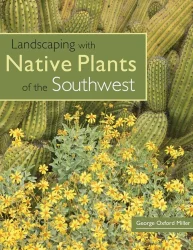
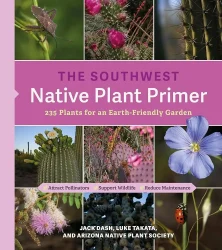
Sometimes, you want to get lost in a picture-filled book and scribble your garden dreams in the margins. Here are three of The Plant Native’s favorites:
Best native plant books for Southwestern gardens
The Plant Native has read a lot of books to create this website. Here our favorites for Southwestern gardens. Note: We may receive a commission if you purchase from these links.
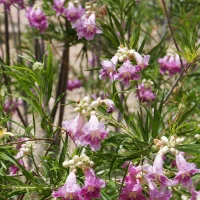
The Southwest is not a hard place to garden. It’s a hard place to garden if you garden like you live in Ohio. Once you stop trying to replicate a Midwestern lawn and start working with the plants that evolved here, everything gets easier: less water, less maintenance, more hummingbirds, more color, more of the kind of beauty that actually matches the landscape outside your window. Check out our profiles on prickly pear, penstemons, and desert willow for deeper dives on individual plants.
We’re not with the inspiration yet! Explore our other native planting FAQs, peruse the Native Plant Profiles, and bookmark our ever-expanding resources for native gardening. Don’t forget to join your local native plant society and find your people (and plant sales…) Happy Southwestern planting!