

Highlights
I really don’t understand why Christmas fern is not in every American garden on the eastern side of the continent. It looks great 12 months of the year, grows in shade, and still looks great when you desperately need to see something green in February. Its natural home is the slopes in a forest, and its roots do a great job of holding down soil in your own sloping yard. Pair it with some native asters underneath some native trees and shrubs, and your neighbors will assume you hired a landscape architect.
Is Christmas fern right for my yard?
Plant it if…
- You have a shady spot that drains. Christmas fern loves a shady area where water doesn’t pool and stick around.
- You have a slope that soil can’t hang onto. The roots are dense and fibrous, helping to keep soil from sliding off a slope.
- You want something besides boring grass under trees. Christmas fern grows in the dry, rooty ground where most other plants fail.
- You have a dry area and don’t want to add irrigation and sprinklers. Once Christmas fern settles in, it’s fine in dry shade, which is unusual for most ferns.
- You want a true evergreen that’s native. Skip the boring boxwoods or yews and plant something that has grown in North America for thousands of years.
Skip it if…
- Your yard is bright and sunny. Christmas fern needs shade and scorching sun broils and crisps the leaves.
- You need to cover a huge area quickly. This is a slow-growing evergreen that stays in a tidy clump after you plant it. It takes quite a few years to get a large patch going, unless you plant lots of individual plants.
- You need something tall. It’s just 1 to 2 feet tall, meaning it’s more of a groundcover than a statement piece. Put taller plants behind it.
Where is Christmas fern native?
Native to 34 US states, Washington, D.C., and 5 Canadian provinces (New Brunswick, Nova Scotia, Ontario, Prince Edward Island, Quebec)
Sources: NatureServe, Royal Botanic Gardens, Kew (World Checklist of Vascular Plants) and the USDA PLANTS Database, compiled by The Plant Native. How we map native ranges
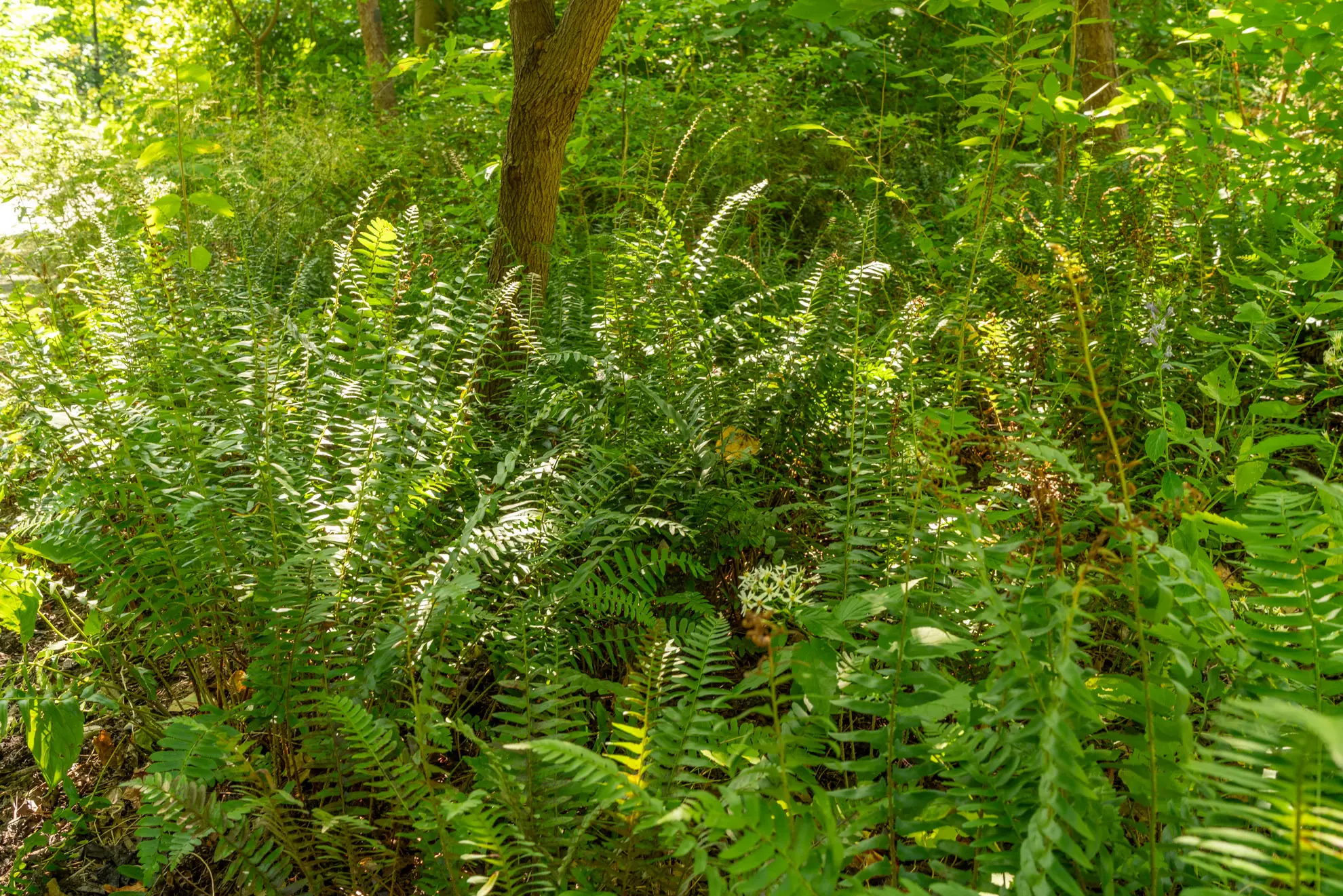
The fern holds the floor; the oaks and cherries overhead feed the caterpillars.
Why Christmas fern matters
Most of us plant native plants for the flowers and pollinators, and yet Christmas fern checks neither box. You’ll love it for another reason: it looks good all the time. In a shade plant, this is harder to find than you’d think. Here are some reasons why this plant looks great and helps wildlife in return.
Winter snuggle cover
When the trees drop their leaves and perennials die back to their roots for the winter, the forest floor looks a little empty. It can be a rough life for those sleeping through the winter, including salamanders, beetles, and the overwintering insects birds count on in early spring. Enter Christmas fern. They stay green and upright, the thick leathery fronds leaving nooks and crannies for sleeping wintering wildlife. The ground stays warmer and damper under a Christmas fern crown, giving small animals a somewhere to hide.
Keeping your dirt on the hillside
Does your shady hillside turn into a mudslide in the rain? Here’s your fix. Christmas fern’s fibrous roots hold the soil and slow the water from tumbling down in a waterfall. It’s a huge improvement over bare ground.
Christmas fern through the year
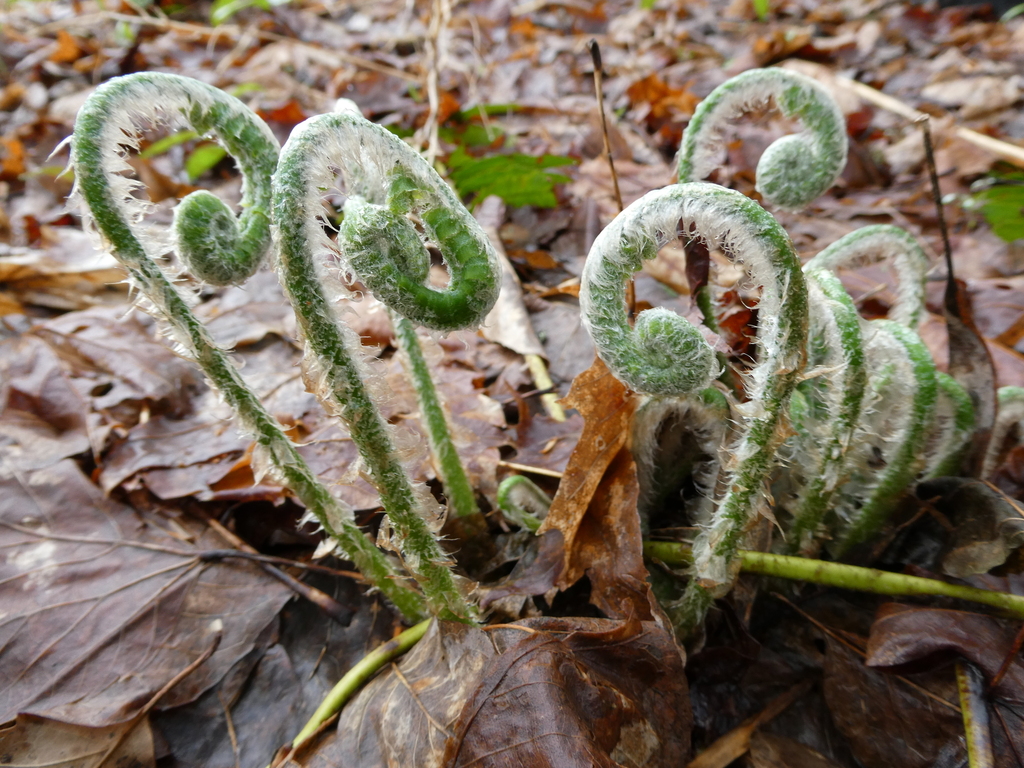
Spring
Bruce Cook · iNaturalist · CC0
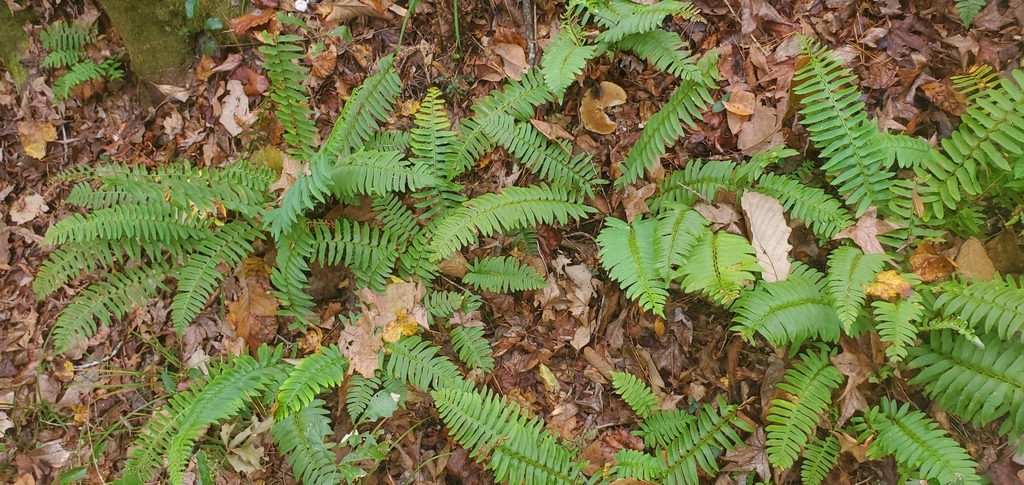
Summer
Laura Gaudette · iNaturalist · CC BY · cropped
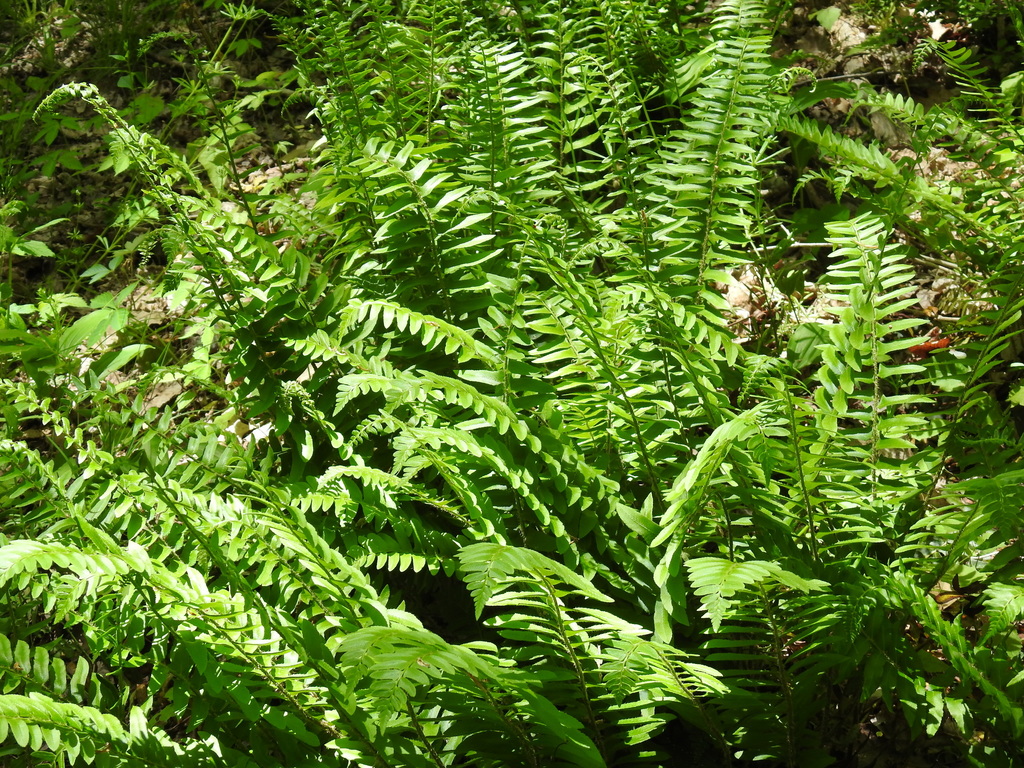
Summer into Fall
Surly Aardvark · iNaturalist · CC0
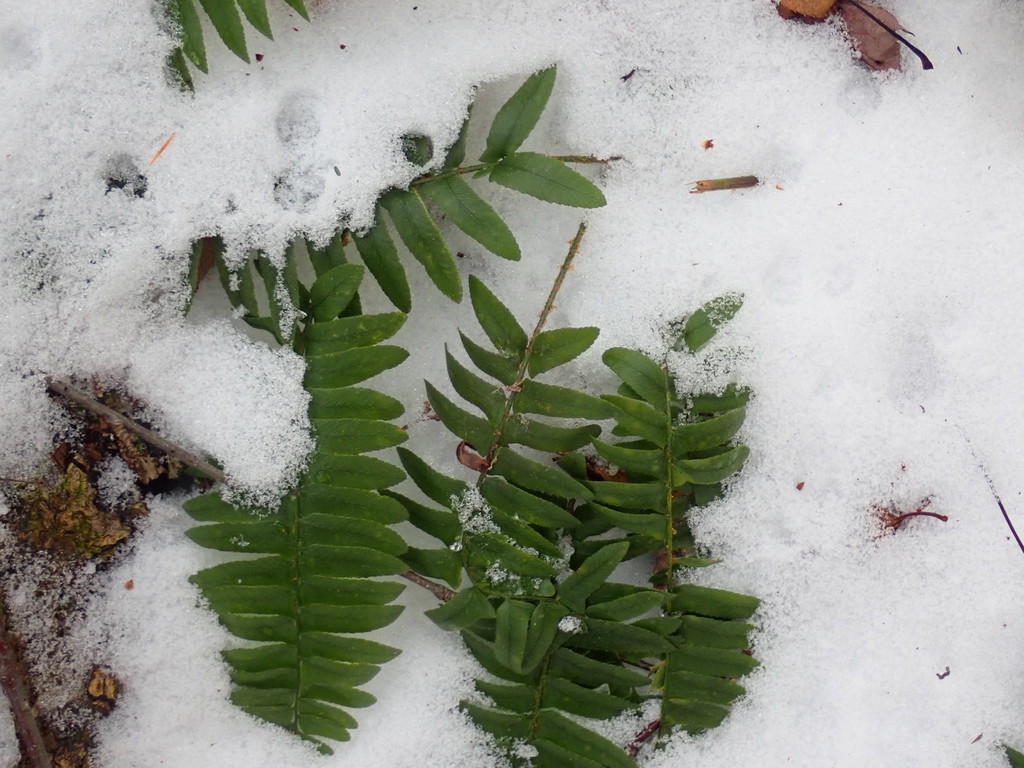
Winter
Lynn Harper · iNaturalist · CC0
Where Christmas fern shines in your yard
- Dry shade under trees. That dark, boring patch under trees where nothing—including grass—grows? Plant some Christmas fern.
- Shady slopes and hillsides. To keep a mud avalanche at bay, plant a patch of Christmas ferns close together. The roots hold the soil in place.
- Woodland-inspired gardens. For a fairy-land look, plant it in sweeps alongside other native shade favorites like foamflower, native asters, and goatsbeard.
- North-facing foundation gardens. You know the side of the house where the deer eat the hostas and the grass quits? Christmas fern is made for that spot. And deer leave it alone.
- Rain garden edges. Christmas fern can’t take the middle of the mud pit, but it thrives on the edges. It also gives a rain garden a green edge in the winter.
- Rock gardens stone walls. It likes rocky ground and thin soil. Tuck some into the cracks beside stone steps or between boulders.
- Winter interest. It’s your trusted go-to for green in the saddest weeks in January. Put it near red-twig dogwood or winterberry holly for a winter pick-me-up that looks professionally landscaped.
How to grow Christmas fern
Where to plant
We can keep it simple: Christmas fern wants shade. Part shade, full shade, the dappled kind under deciduous trees—any kind is perfectly fine. Keep it out of full sun, especially in the South. It does best in rich, crumbly, well-drained soil. It’s especially beloved because it thrives in something difficult: dry shade. I’m talking about those spots that you think are unplantable: under tall trees where the grass dies. Along the cold, north side of the garage. This is your plant for the unplantable area.
Spacing
Space plants 18 to 24 inches apart. Christmas fern stays in a clump instead of sending runners to push out. This means what you plant is roughly what you get. Each clump widens a little every year until the clumps touch. Skip lining them up like linebackers; instead stagger them in sweeps or diagonal lines to have it look more forest-like.
Watering
Water regularly the first year so the soil stays evenly moist to get the roots get going. After that, you’re done. It can tough out dry spells that take down other shade plants. Spread mulch around it after you plant, and top off in future years, but keep the mulch off the crown. This mulch mimics the forest floor, holds in moisture, and keeps out weeds.
Planting card
Polystichum acrostichoides
When to plant
Plant in spring or fall, when weather is mild and rain is more reliable. Spring gives it a full season to grow roots. Fall is a forgotten garden season and a great time to plant Christmas ferns. Just make sure you get it in the ground at least six weeks before your first hard freeze.
Maintenance
Basically none. In late winter, before the new fiddleheads uncurl, you could snip off last year’s flattened brown fronds if you want to be super tidy. But I recommend leaving them. They fall and then break down into free fertilizer.
No need for fertilizer, and no dividing. Water it during that first year and that’s it.
Beginner tip
On a slope, tip the root ball slightly back into the hill so water runs toward the roots instead of off them. After big rains that first season, check that soil isn’t washing away from the base. Once the roots grab hold, the fern does the erosion work for you.
What pairs well with Christmas fern?
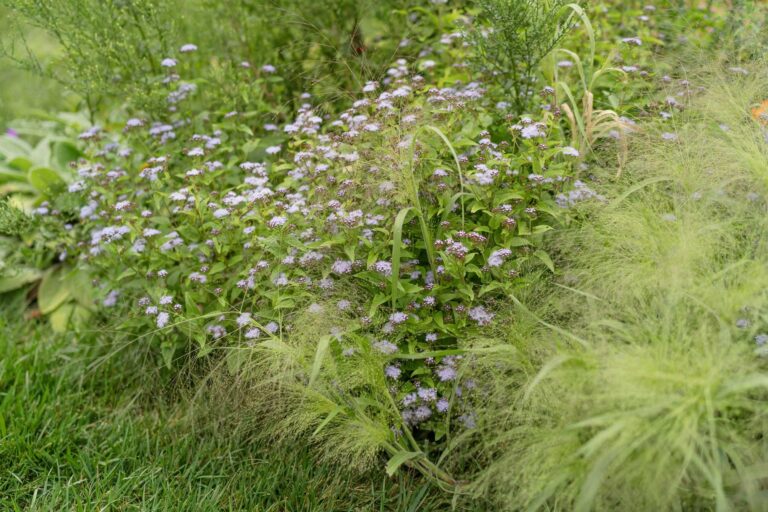
In eastern hardwood forests (the kind where the leaves drop from the trees), Christmas fern grows with a regular crowd of shade plants. Here are some natives that like the same shade and the same rich, well-drained soil.


Where can I buy Christmas fern?
Most big-box garden centers don’t carry true natives, but Christmas fern is easier to find than you might think. Your best bets are a native plant nursery near you, a native plant society sale, or a trusted online grower that ships to your region.
Potential challenges with Christmas fern
Honestly, there are not many. Again, I ask: why is this not in everyone’s yard? It has no serious pests or diseases. Deer skip it. It doesn’t spread aggressively, and it never needs deadheading, staking or spraying. Let’s make this everyone’s new favorite landscaping choice. That said, here are a few tips.
Sun scorch
Too much direct sun, especially hot afternoon sun in the South, burns the frond tips and leaves the plant looking like it was put in the toaster. Think of it as the way the fern tells you: nope, not this spot. Get out a shovel and move it into deeper shade, give it an extra drink of water, and it should thrive in its new location.
Crown rot in wet soil
Christmas ferns offer leafy beauty dry shade, but they hate sitting in wet soil. Spots that stays muddy can rot the crown and kill the plant from the middle out. Pick a spot that drains. In heavy clay, set the crown a little above grade so water runs away from the center.
Slow establishment
This is a plant that grows on its own languid clock. Give a new fern two or three years to fill in. The first year, it’s mostly building roots so it can thrive in dry stretches. After the first few years, the fronds get bigger and more numerous, and by year three, you have a full, arching clump that looks like your grandparents planted it.
FAQs
Is Christmas fern really evergreen?
Yep. It has green leaves year-round.
At the end of the winter, snow and frost eventually push the fronds flat against the ground, but they stay green. By March the old fronds look a little beat up before flopping downward around the base. Next comes silvery fiddleheads, which unfurl into bright new leaves.
Does Christmas fern spread?
It takes a few years for a clump to expand. Unlike many other ferns, it does not spread by runners. Each plant is one crown that widens over the years.
Christmas ferns reproduce via spores, too. But any baby fern grown from a spore takes years to reach any real size.
Can I grow Christmas fern in full sun?
Skip full sun. This plant will not do well there. A little morning sun is fine, especially in the northeast. But hot afternoon sun will scorch it.
Is Christmas fern native to my state?
East of the Great Plains, it probably is. Scroll back up for the map. It grows wild from Nova Scotia to Florida and west to Minnesota and eastern Texas. Look up your county on the USDA PLANTS Database.
Do deer eat Christmas fern?
Deer almost never eat Christmas fern, which I know is surprising since it’s green year-round. But deer will walk right past it…to go snack on your hostas. If deer are a problem where you live, swap your hostas for Christmas fern.
How do I divide Christmas fern?
Wait until the clump is big, usually four or five years in. In early spring, before the fiddleheads come up, dig up the whole thing, shake off the soil and pull or cut the crown into pieces that each have their own roots. Replant right away and water well the first year, the same way you did with the new plants.
Why are the pinnae at the tip of some fronds smaller and darker?
Those are the fertile pinnae, the ones carrying spores. Christmas fern keeps both kinds on the same frond, with the spore-bearing ones bunched at the tip. Making spores costs the plant enough energy to slow its growth the next year. So every spring it’s quietly choosing between having babies now and getting bigger later.
Plant nerd fact
Look for the tiny Christmas stocking.
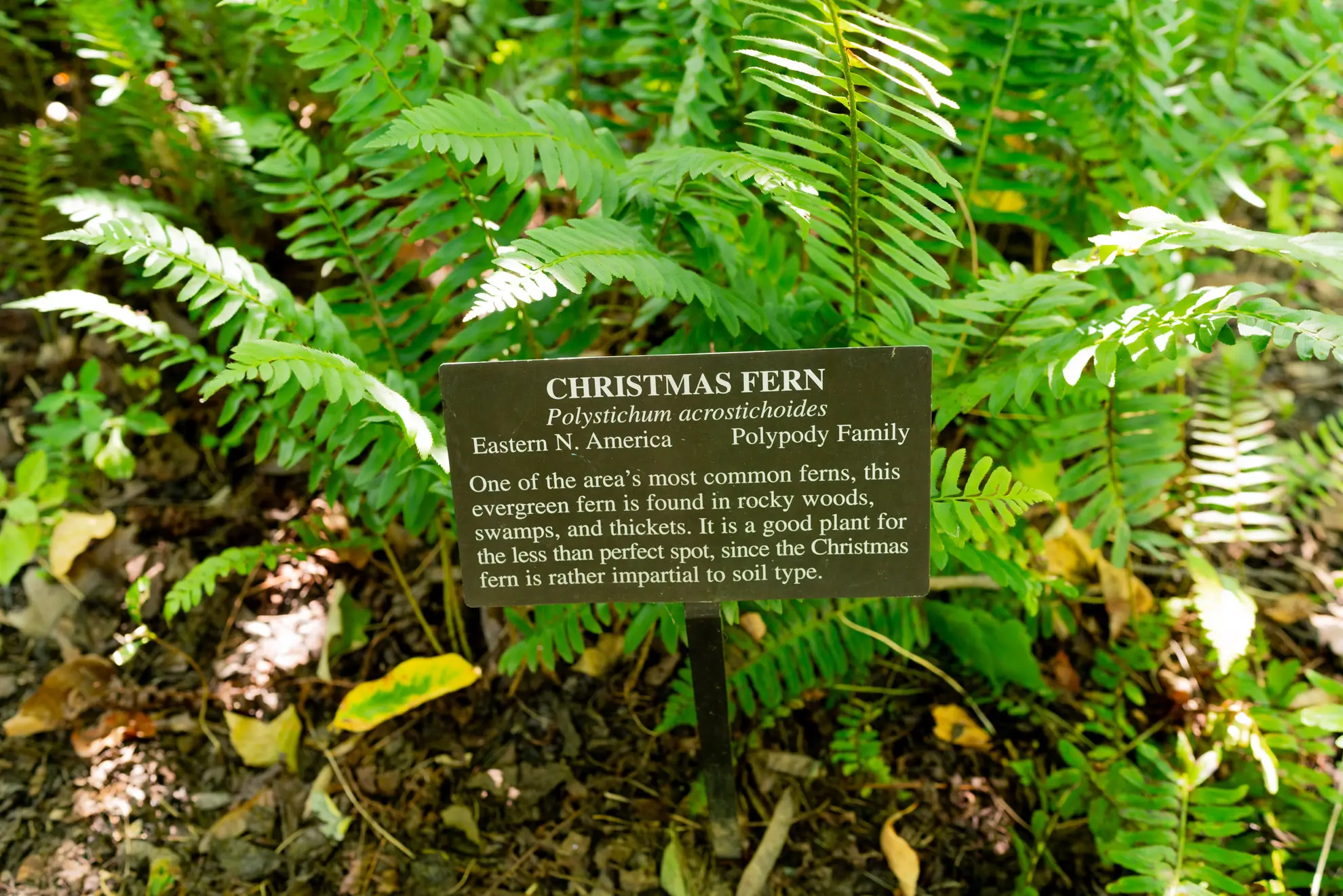
Get up close to a single leaflet on a frond (botanists call it a pinna) and look at the base. On one side you’ll see there’s a little lobe sticking up, like the toe of a Christmas stocking. This is how you can ID a Christmas fern from any other in a yard or a forest.
Next time you’re on a trail in an eastern forest, crouch down and check for a few tiny green socks. Knowing where to look feels like you speak fluent forest.
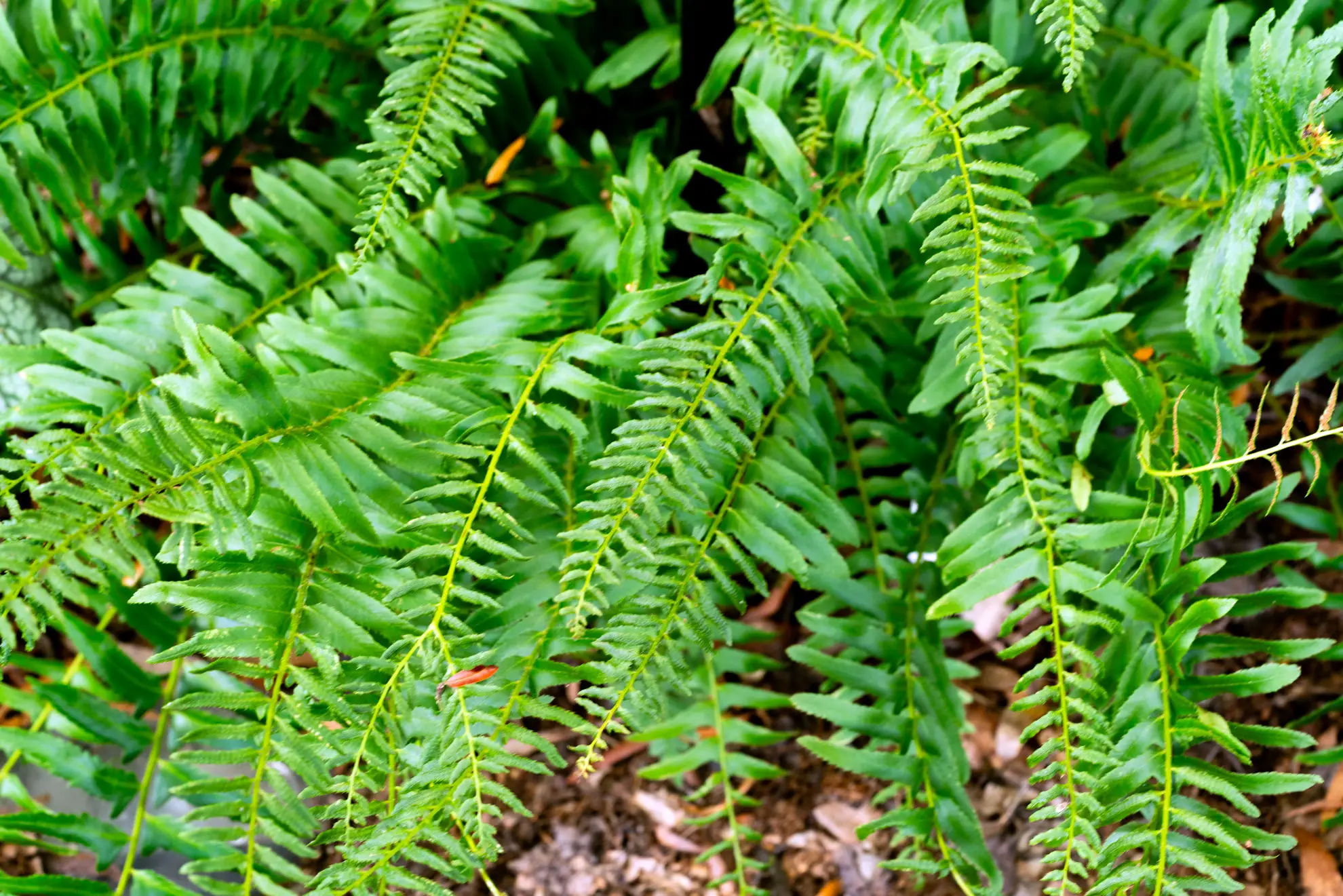
I strongly feel that Christmas ferns need a better sales team. I hope this article got you excited to plant some. They look great year-round, thrive in shady spots that rarely hold a garden, and keep hillsides from sliding off into muddy puddles. It will never be the flashiest thing in your yard, but it will be the most reliable. If your shady yard has bare patches or a slope that keeps sliding, start here.
Plant it with alum root or foamflower, add a little wild ginger, and your shade garden will be something you look forward to visiting, instead of a sad corner you neglect. Happy planting!
Related plants
-
 Ferns
Ferns
-
 Western Sword Fern
-
 Pennsylvania Sedge
-
 Golden Ragwort
-
 Celandine Poppy
-
 Wild Geranium
-
 Virginia Bluebells
-
 Bleeding Heart
-
 Trillium
Sources
- Lady Bird Johnson Wildflower Center. “Polystichum acrostichoides (Christmas Fern).” University of Texas at Austin. https://www.wildflower.org/plants/result.php?id_plant=poac4. Accessed April 25, 2026.
- Missouri Botanical Garden. “Polystichum acrostichoides.” Missouri Botanical Garden. https://www.missouribotanicalgarden.org/PlantFinder/ PlantFinderDetails.aspx?kempercode=a710. Accessed April 25, 2026.
- Narango, D. L., D. W. Tallamy, and K. J. Shropshire. “Few Keystone Plant Genera Support the Majority of Lepidoptera Species.” Nature Communications 11 (2020): 5751. https://www.nature.com/articles/s41467-020-19565-4. Accessed April 25, 2026.
- Native Plant Trust. “Polystichum acrostichoides.” Native Plant Trust. https:// plantfinder.nativeplanttrust.org/plant/Polystichum-acrostichoides. Accessed April 25, 2026.
- North Carolina State Extension. “Polystichum acrostichoides (Christmas Fern).” NC State University. https://plants.ces.ncsu.edu/plants/ polystichum-acrostichoides/. Accessed April 25, 2026.
- Prairie Nursery. “Christmas Fern (Polystichum acrostichoides).” Prairie Nursery. https://www.prairienursery.com/christmas-fern- polystichum-acrostichoides.html. Accessed April 25, 2026.
- Sharpe, J. M., and J. A. Jernstedt. “Patterns of Growth and Reproduction in a Natural Population of the Fern Polystichum acrostichoides.” ResearchGate, 1990. https://www.researchgate.net/ publication/271992791. Accessed April 25, 2026.
- USDA PLANTS Database. “Polystichum acrostichoides.” United States Department of Agriculture. https:// plants.usda.gov/home/plantProfile?symbol=POAC4. Accessed April 25, 2026.

Updated Find more: Deer Resistant Evergreen Part Sun Full Shade Moist Dry Drought-Tolerant
The ads on this site help pay real native plant nerds to research and write these guides.
Garden notes
Notes from people who’ve grown it
Tips, wins, and the occasional disaster. If you’ve grown Christmas fern, share the advice you’d give to a neighbor.
No notes yet. Yours could be the first.
Grown Christmas fern? Tell the next person what you wish someone had told you.
Tap anywhere to close


