Highlights
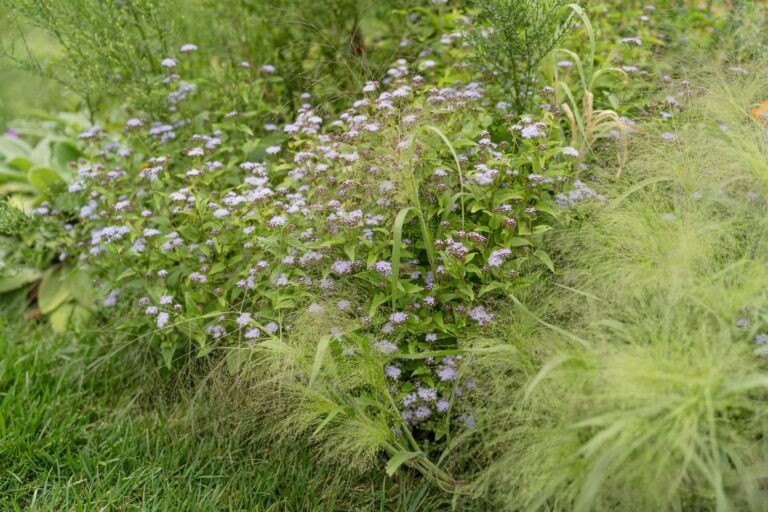
Kinnikinnick (Arctostaphylos uva-ursi), also called bearberry, is a manzanita that decided to lie down. It makes a low, evergreen mat of small glossy leaves on red-barked stems, about 6 inches high, that roots as it creeps across sand, rock and gravel. In spring it hangs out tiny pink-white bells; by fall it’s dotted with red berries that last into winter.
It grows across the northern half of the continent, from Alaska and the Rockies to the Great Lakes and New England. Where the soil is poor and fast-draining, few groundcovers look this good all year.
Is kinnikinnick a good choice for my yard?
Yes, if…
- You have sandy, rocky or gravelly soil. It wants rocky or sandy, acid soils that drain fast.
- Your winters are cold. Oregon State rates it hardy to USDA Zone 2.
- You want an evergreen groundcover. The leaves stay green all winter, and some forms turn red-bronze in the cold.
- You need to hold a dry slope or a sandy bank. NRCS uses it as a critical area stabilizer.
- You live by the coast. It has good salt spray tolerance.
Skip it if…
- Your summers are hot and humid. NC State says it does not do well in the eastern US because of wet, humid summer weather.
- Your soil is heavy clay or stays damp. Wet roots rot.
- You want fast cover. It spreads slowly, and it’s very difficult to transplant once it’s growing.
- You’ll walk on it. Give it its own space and put stepping stones through it.
Why kinnikinnick matters
The berries are winter food. Go Botany notes they’re slow to rot, so they hang on as emergency food for birds and mammals through the cold months. The Forest Service lists grouse and wild turkey among the birds that eat them, and bears eat the berries in fall and spring. Nature Alberta calls the fruit a favourite food of bears.
In spring, hummingbirds take nectar from the little bells. It’s also the host plant for the hoary elfin, a small brown butterfly that flies in late April and May. Mass Audubon says bearberry is the only documented host for the hoary elfin in Massachusetts, and Illinois calls it the host plant there too. NC State and the Lady Bird Johnson Wildflower Center also list the brown elfin and Freija fritillary.
Where kinnikinnick shines in your yard
- A sandy or gravelly slope where grass won’t grow.
- Spilling over a rock wall or the edge of a raised bed.
- Under pines, in open, acidic, sunny spots.
- A coastal garden with salt in the air.
- A rock garden, between boulders and around low conifers.
- A hell strip in a cool, northern climate.
Beginner tip
Mulch around new plants with gravel instead of wood chips. Gravel keeps the base of the plant dry, which is what kinnikinnick wants most.
How to grow kinnikinnick
Start with the right plants
Buy container plants or rooted cuttings. NRCS says bare root plantings are rarely effective, and plants dug from the wild usually die. Plant in spring or early fall.
Sun and soil
Full sun to part shade. In deep shade it thins out; the Forest Service says it becomes very rare when shade becomes intense. The soil matters more than anything: sandy or gritty, acidic, and fast-draining. Skip the compost and the fertilizer; NC State says fertilization is discouraged.
Water
Water lightly but regularly the first season while the roots settle. After that, it needs very little. Overwatering is the most common way to lose it.
Spacing and size
Plants grow 6 to 12 inches tall and spread 3 to 6 feet, more over many years. Set them about 2 feet apart and mulch between with gravel or wood chips while they knit together.
Which cultivar?
‘Massachusetts’ is a flat, fruitful form developed at Oregon State, and ‘Vancouver Jade’ has glossy leaves that turn red-bronze in winter. In warmer, drier gardens, Oregon State points to ‘Point Reyes’ for its heat and drought tolerance.
Planting card
Arctostaphylos uva-ursi
The trickMulch with gravel, not wood chips, to keep the crown dry.
Where is kinnikinnick native?
Native to 33 US states
Sources: NatureServe, Royal Botanic Gardens, Kew (World Checklist of Vascular Plants) and the USDA PLANTS Database, compiled by The Plant Native. How we map native ranges
Where the soil is poor and fast-draining, few groundcovers look this good all year.
What are good pairings for kinnikinnick?
Pair it with other natives that like sun and sharp drainage: prairie smoke, bluebell bellflower, little bluestem and Pennsylvania sedge. In the West, add Oregon sunshine and broadleaf stonecrop.


Where can I buy kinnikinnick?
Native nurseries in the North and West carry it, often as named cultivars like ‘Massachusetts’ or ‘Vancouver Jade’. Look for well-rooted plants in pots, and never dig it from the wild. Start with our list of native plant nurseries or order online.
FAQs
Is kinnikinnick the same as bearberry?
Yes. Kinnikinnick, bearberry and red bearberry are all names for Arctostaphylos uva-ursi. Don’t confuse it with bearberry cotoneaster, an Asian groundcover sold under a similar name, whose berries may cause mild stomach upset.
Can you eat kinnikinnick berries?
You can, but they’re not much to eat. The Forest Service calls the flesh dry, insipid, and tasteless raw. Many Native nations cooked the berries or mixed them with fat or meat, as the Native American Ethnobotany Database records.
Can I grow kinnikinnick in the South?
Usually not. Humid summers rot it. In hot, dry places, try ‘Point Reyes’, which Oregon State notes for its heat and drought tolerance.
Is kinnikinnick deer resistant?
In most gardens, yes. Rutgers rates bearberry “rarely damaged.” In the wild, deer and mountain goats do browse it, and NRCS says deer sometimes browse it lightly.
How fast does kinnikinnick spread?
Slowly. The stems trail and layer, rooting as they go. Expect a few years before plants set 2 feet apart close the gap.
Why did my kinnikinnick die?
Too much water is the usual reason. It needs soil that drains fast, and NRCS notes it doesn’t do well on moist sites. Heavy clay, rich soil and fertilizer are the other common causes.
Plant nerd fact
“That which is mixed”
Kinnikinnick is an Algonquian word that The Canadian Encyclopedia translates as “that which is mixed”: the smoking blend the leaves went into. Smoking the leaves is the most widely mentioned human use of the plant. The botanical name says “bear” twice: Arctostaphylos is Greek for bear and bunch of grapes, and uva-ursi is Latin for grape of the bear.
Kinnikinnick is proof that poor soil can be a gift. Give it sun, sand and almost no attention, and you get an evergreen carpet with flowers for hummingbirds and berries for winter birds. For its taller western cousins, see our beginner’s guide to native manzanitas. Happy planting!
Sources
- European Medicines Agency. “Draft Assessment Report on Arctostaphylos uva-ursi (L.) Spreng., folium.” EMA/HMPC/750266/2016, 2017. Accessed October 12, 2026.
- Hallworth, Beryl. “Bearberry.” The Canadian Encyclopedia, 2006. Accessed October 12, 2026.
- Illinois Department of Natural Resources. “Hoary Elfin.” Wild About Butterflies. Accessed October 12, 2026.
- Lady Bird Johnson Wildflower Center. “Arctostaphylos uva-ursi.” Native Plant Database. Accessed October 12, 2026.
- Mass Audubon. “Hoary Elfin.” Butterfly Atlas. Accessed October 12, 2026.
- Native American Ethnobotany Database. “Arctostaphylos uva-ursi.” Accessed October 12, 2026.
- Native Plant Trust. “Arctostaphylos uva-ursi.” Go Botany. Accessed October 12, 2026.
- NatureServe. “Arctostaphylos uva-ursi.” NatureServe Explorer. Accessed October 12, 2026.
- Nature Alberta. “Common Bearberry.” PlantWatch. Accessed October 12, 2026.
- NC State Extension. “Arctostaphylos uva-ursi” and “Cotoneaster dammeri.” Extension Gardener Plant Toolbox. Accessed October 12, 2026.
- Oregon State University. “Arctostaphylos uva-ursi.” Landscape Plants. Accessed October 12, 2026.
- Rutgers New Jersey Agricultural Experiment Station. “Landscape Plants Rated by Deer Resistance.” Accessed October 12, 2026.
- Shropshire, Kimberley J., and Douglas W. Tallamy. “Lepidoptera of North America North of Mexico: An Annotated List Containing Geographic Ranges and Host Plant Records.” ZooKeys, 2025. Host counts from the UDELep data, May 2025.
- USDA Forest Service. “Arctostaphylos uva-ursi.” Fire Effects Information System. Accessed October 12, 2026.
- USDA NRCS Northeast Plant Materials Program. “Bearberry Plant Fact Sheet.” Accessed October 12, 2026.

Similar plants
-
 American Holly
-
 Pines
-
 Rhododendron
-
 Holly
-
 Ferns
-
 Mountain Laurels
-
 Golden Alexander
-
 Irises
-
 Grasses and Sedges
Updated Find more: Acidic Deer Resistant Evergreen Evergreen Shrub
The ads on this site help pay real native plant nerds to research and write these guides.
Garden notes
Notes from people who’ve grown it
Tips, wins, and the occasional disaster. If you’ve grown kinnikinnick, share the advice you’d give to a neighbor.
No notes yet. Yours could be the first.
Grown kinnikinnick? Tell the next person what you wish someone had told you.
Tap anywhere to close


