

Highlights
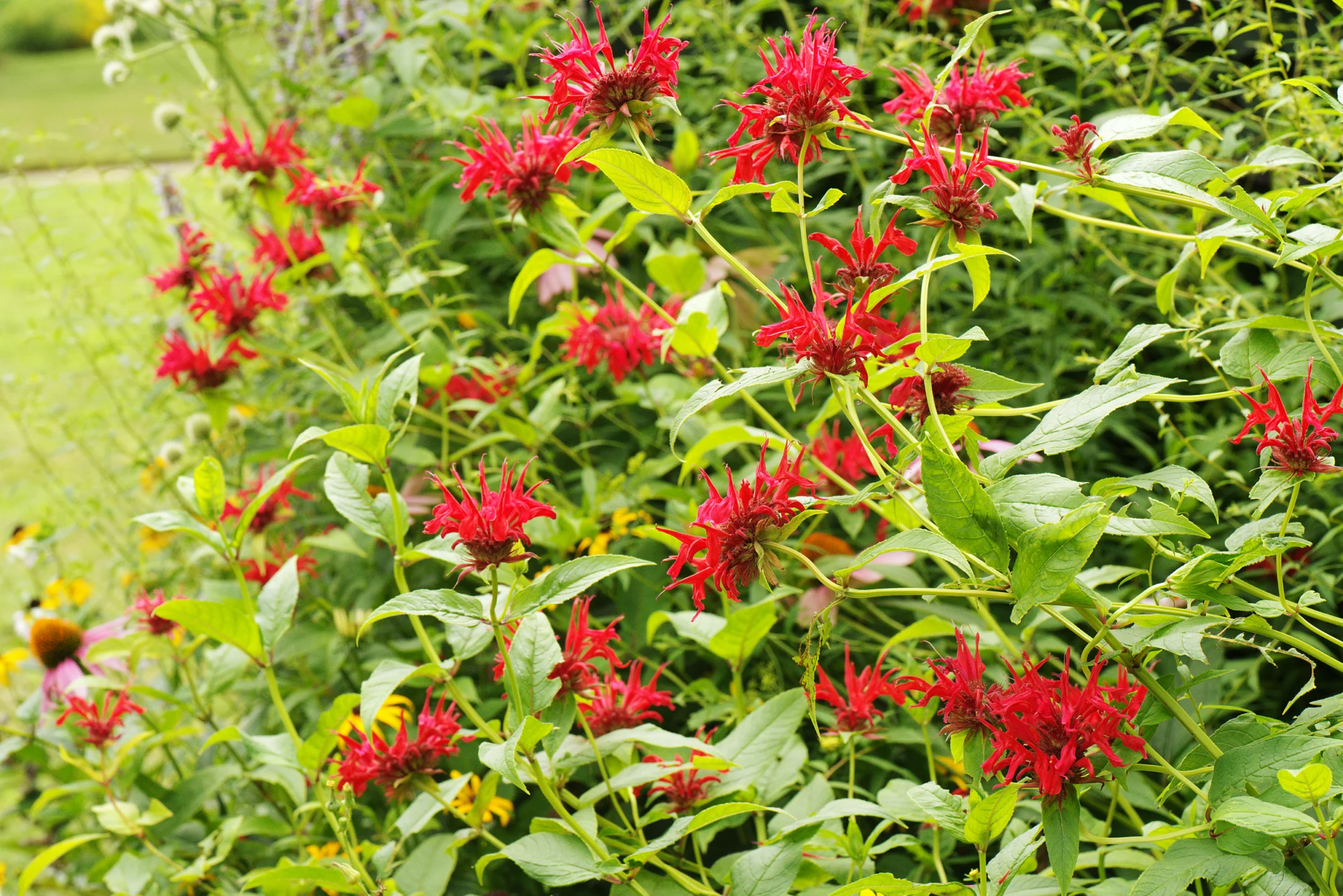
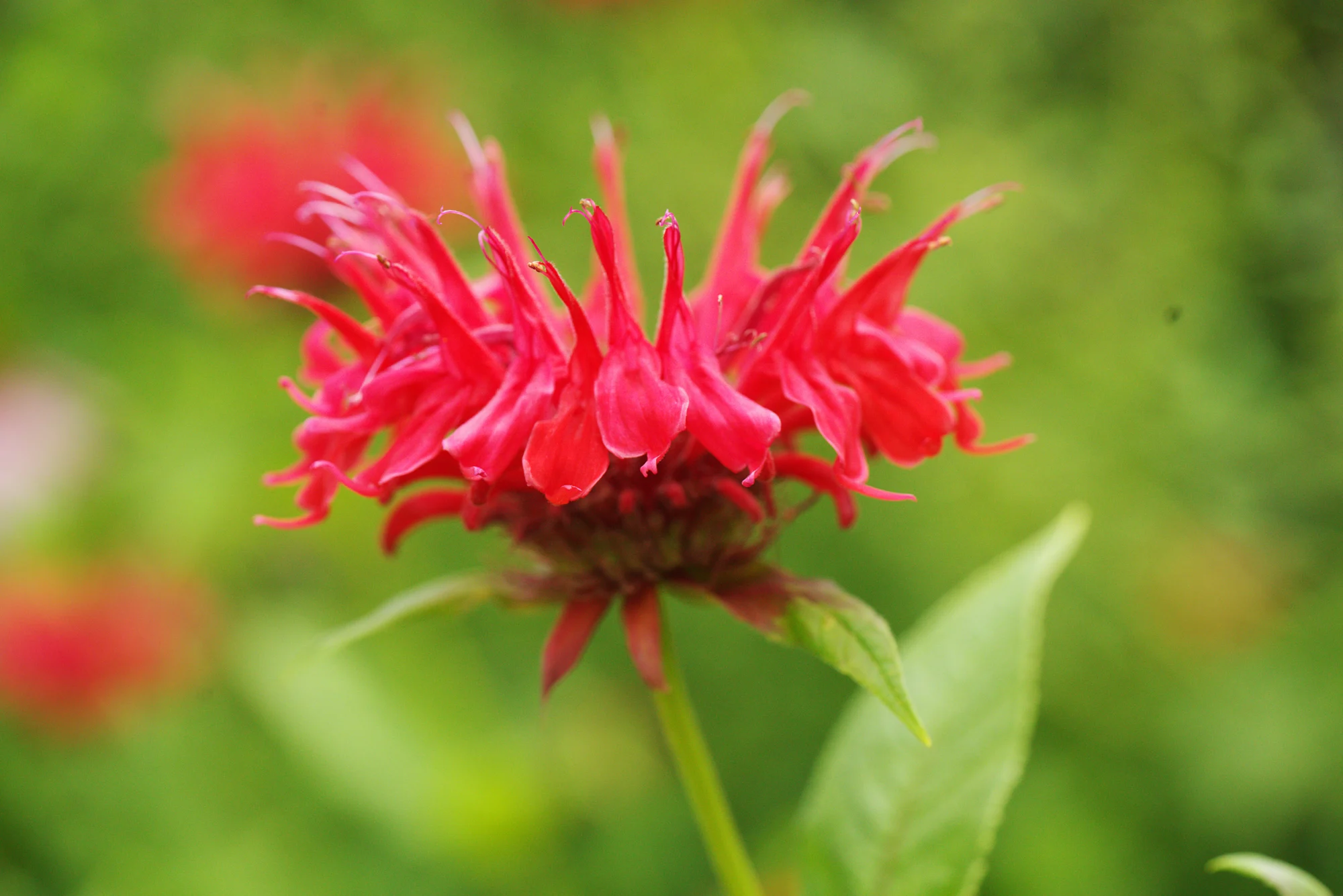
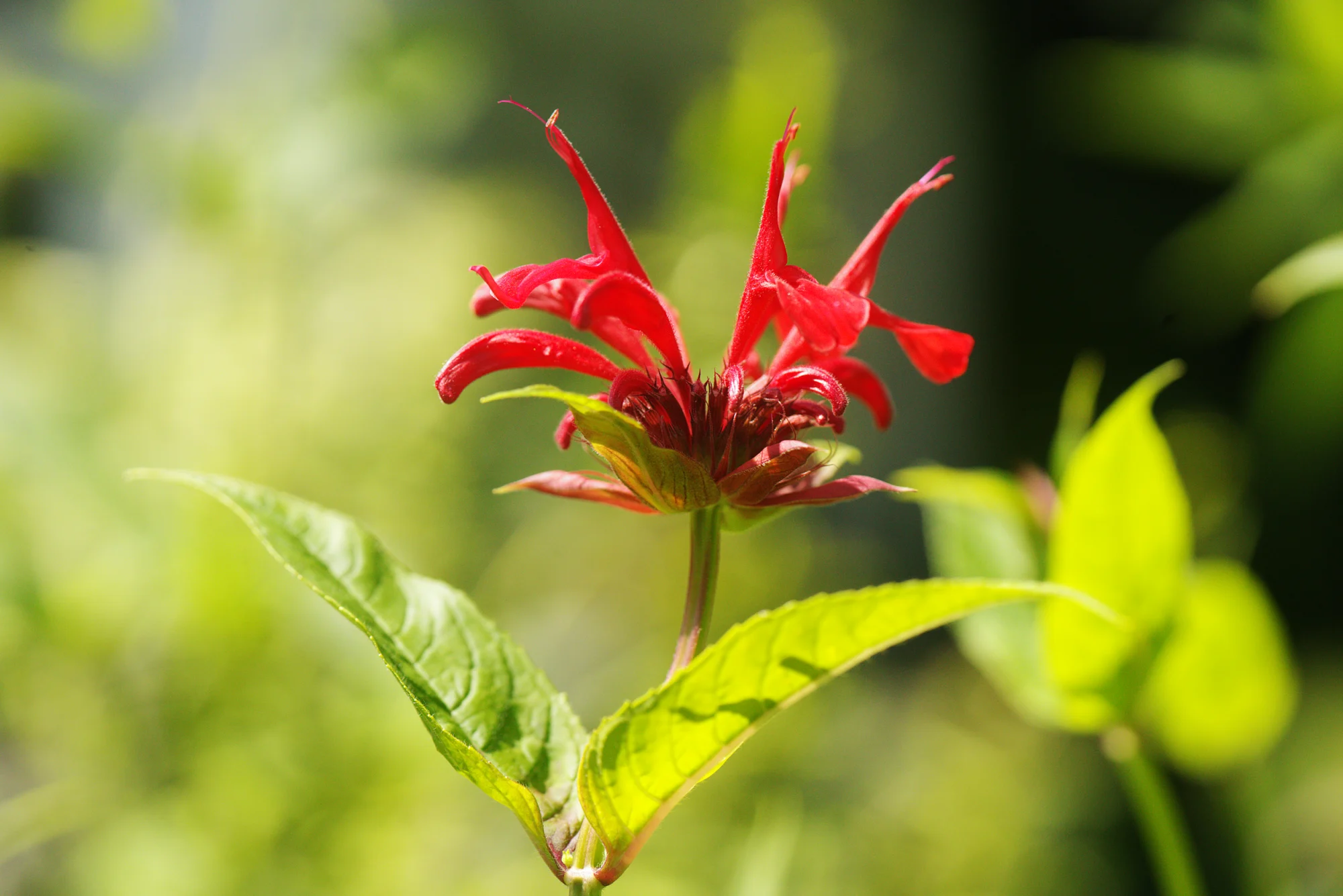
Scarlet bee balm (Monarda didyma) is the red one. When most people picture bee balm, this is the plant in their head: shaggy heads of tubular flowers in a red you can read from across the street, held up on stems 3 to 4 feet tall.
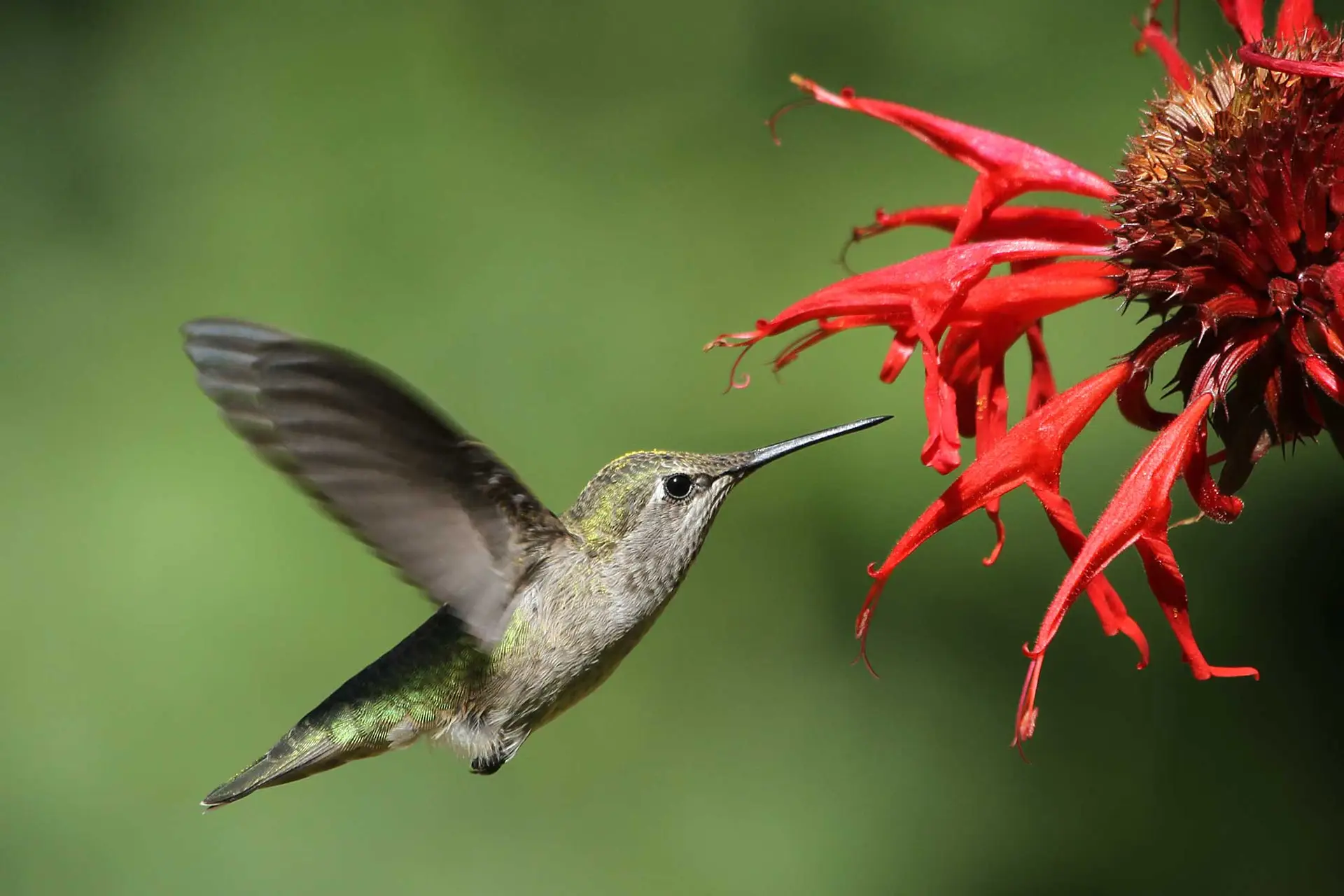
Those tubes are sized for a hummingbird’s bill, and ruby-throated hummingbirds come for them. It has a past, too. After the Boston Tea Party, colonists brewed it instead of British tea.
Is scarlet bee balm a good choice for my yard?
Yes, if…
- You want hummingbirds. Red tubes full of nectar are what they look for.
- Your soil stays a little damp. In the wild it grows in moist open woods, meadows and along streams. That low spot by the downspout is a good start.
- You want one big hit of color in midsummer. It blooms from June into early August, after the spring flowers have quit.
- You have a black walnut. Plenty of plants sulk under walnuts. Scarlet bee balm handles juglone, the compound walnut roots release.
Skip it if…
- Your sunny spot is hot and dry. That’s a job for wild bergamot, its lavender cousin.
- Gray, dusty leaves in August would bother you. Powdery mildew is its main problem, and it’s worse in part shade.
- You want a plant that stays put. It spreads rapidly by underground stems. Great for filling a bed, less great in a tidy border.
Why scarlet bee balm matters
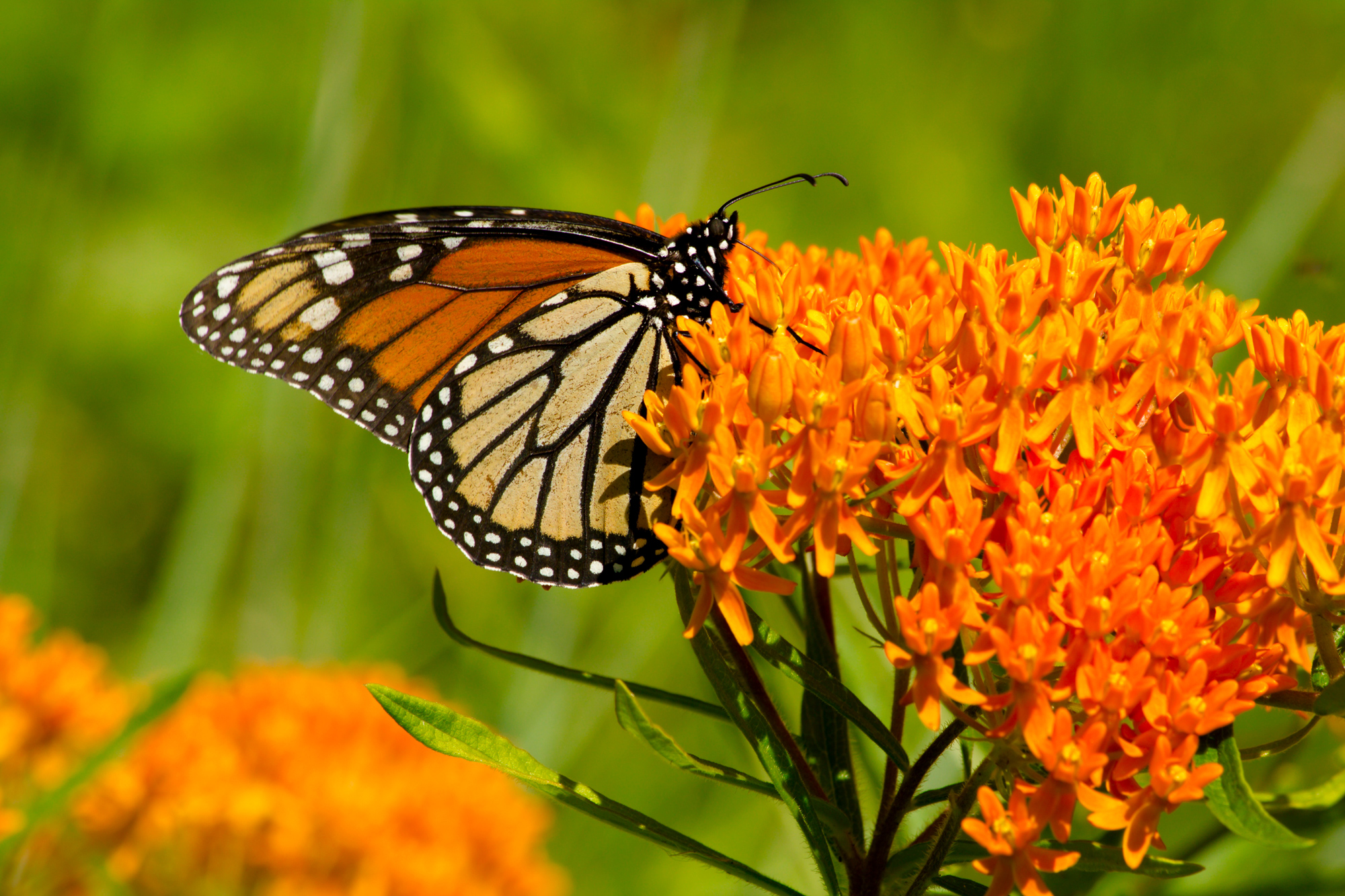
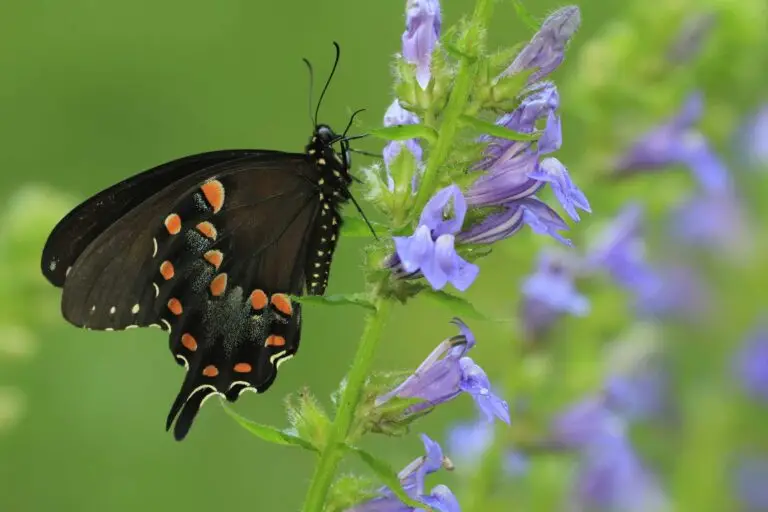
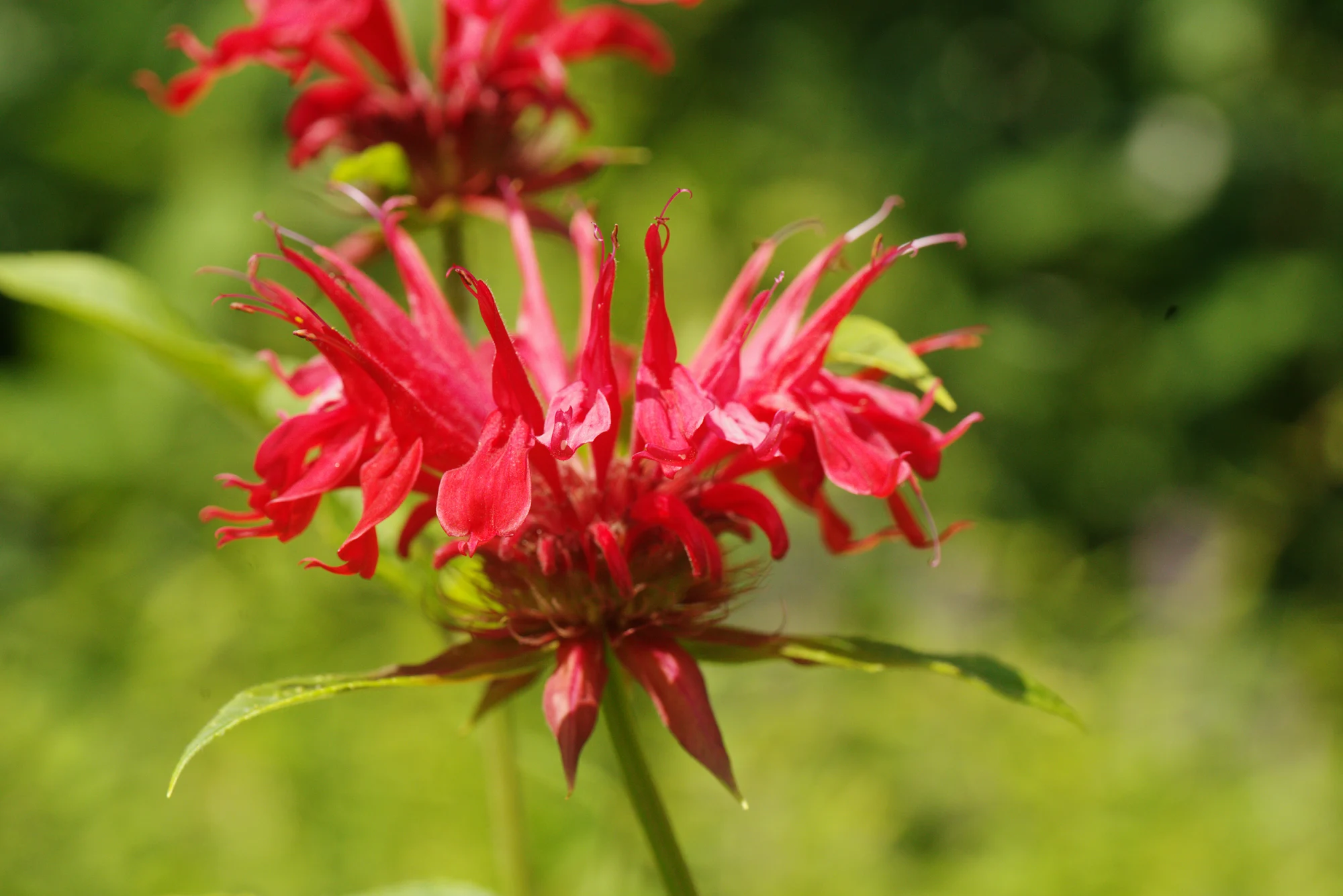
Get close to one flower head and you’ll see dozens of narrow red tubes pointing every which way. A hummingbird’s bill fits right in. Bumblebees and swallowtail butterflies work it too, so a patch in bloom is rarely quiet.
Some caterpillars eat it, and that’s fine
Bee balms host 20 species of native moths and butterflies. On scarlet bee balm you might find caterpillars of the hermit sphinx, orange mint moth or raspberry pyrausta. They chew a few leaves and the plant keeps blooming.
Bees live in the stems
The stems are hollow, and native bees nest in the dead ones. Wait until spring to cut them, and leave 12 to 24 inches standing.
Where scarlet bee balm shines in your yard
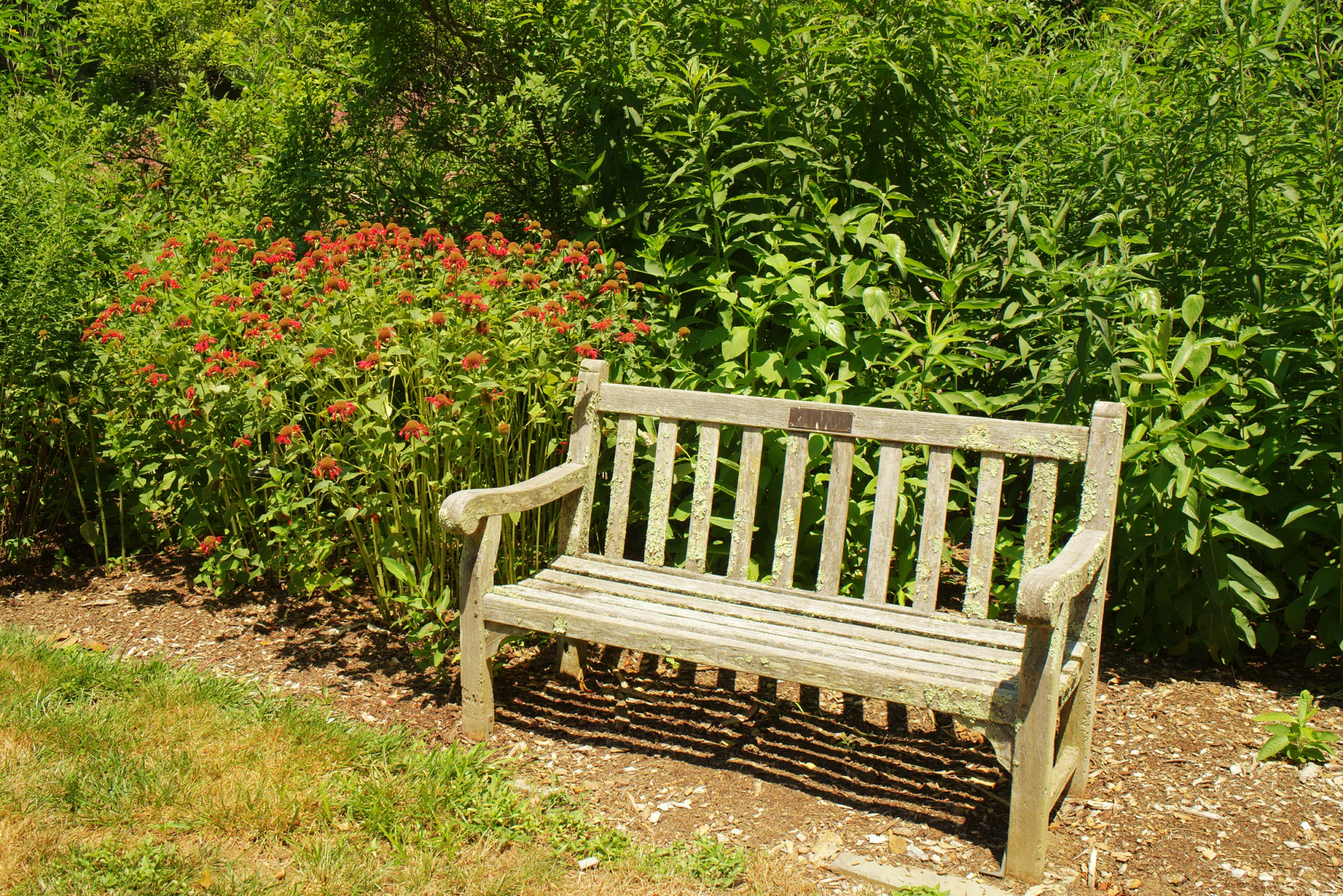
- A hummingbird garden. Put it with cardinal flower and coral honeysuckle and you’ve got a red corner hummingbirds can find from the air. Our hummingbird garden guide has the rest.
- The damp edge of a pond or stream. NC State suggests it for pond and stream edges.
- A cottage border, where a little sprawl looks intentional.
- Near a black walnut, where your options are usually short.
- A tea garden. Grow it next to mint and you have a whole pot’s worth.
How to grow scarlet bee balm
When to plant
Spring, in pots or as divisions from a friend. If you want to save seed, it ripens one to three weeks after the flowers fade.
Sun and soil
Give it at least 6 hours of sun. It likes rich, moist soil on the acidic side, and clay is fine. If the ground dries out hard in summer, put it somewhere else.
Watering
Keep it evenly moist, especially the first summer. Water the soil, not the plant: wet leaves give mildew a head start, so skip the overhead sprinkler.
Spacing
About 2 feet apart. It will close the gaps faster than you expect.
Powdery mildew
This is the one thing to plan for. Missouri Extension calls mildew bee balm’s “main disease nemesis,” and scarlet bee balm gets it more than wild bergamot, which shows some resistance. You’ll see a white-gray film on the lower leaves, usually by late summer.
- Plant it in full sun with room to breathe.
- Water at the base during dry spells.
- Cut the worst stems to the ground after flowering. Fresh leaves fill in.
- Or start with ‘Jacob Cline’, a selection of scarlet bee balm that scored 4.0 out of 5 in Mt. Cuba Center’s three-year trial.
Planting card
Monarda didyma
The trickWater the soil, not the leaves: wet leaves give powdery mildew a head start.
Where is scarlet bee balm native?
Native to 17 US states and Washington, D.C.
Sources: NatureServe, Royal Botanic Gardens, Kew (World Checklist of Vascular Plants) and the USDA PLANTS Database, compiled by The Plant Native. How we map native ranges
Why is scarlet bee balm called Oswego tea?
The Oswego people of what’s now New York brewed its leaves into tea long before anyone else did. After 1773, when colonists dumped British tea into Boston Harbor, drinking the British kind looked unpatriotic, and many switched to this one. Drinking it was a small, fragrant act of protest.
You can still make it. The flowers are edible in tea, jelly and fruit salad, and the leaves smell minty when you crush them. Pick from plants you know haven’t been sprayed.
Drinking it was a small, fragrant act of protest.
Beginner tip
The first time the middle of your clump dies out, it’s not you. Bee balm clumps often die out in the center after a few years. Dig it up in early spring, keep the young pieces from the edges, and replant them. One tired plant becomes three good ones.
What are good pairings for scarlet bee balm?
Give it neighbors that like the same damp ground. Cardinal flower and great blue lobelia keep the hummingbirds coming, coral honeysuckle can climb a nearby fence, and Joe Pye weed, swamp milkweed and blue vervain bring in the butterflies.


Where can I buy scarlet bee balm?
It’s easy to find, and that’s also the catch: garden centers are full of hybrids and cultivars with “bee balm” on the tag. For the native, look for Monarda didyma on the label, or ‘Jacob Cline’ if you want a selection that scored well against mildew. Native nurseries are your safest bet. Start with our list of native plant nurseries or order online.
FAQs
Does scarlet bee balm attract hummingbirds?
Yes. Ruby-throated hummingbirds visit it, and the long red tubes are built for their bills. Plant a patch, not a single stem, so it’s worth the stop.
What does scarlet bee balm look like before it blooms?
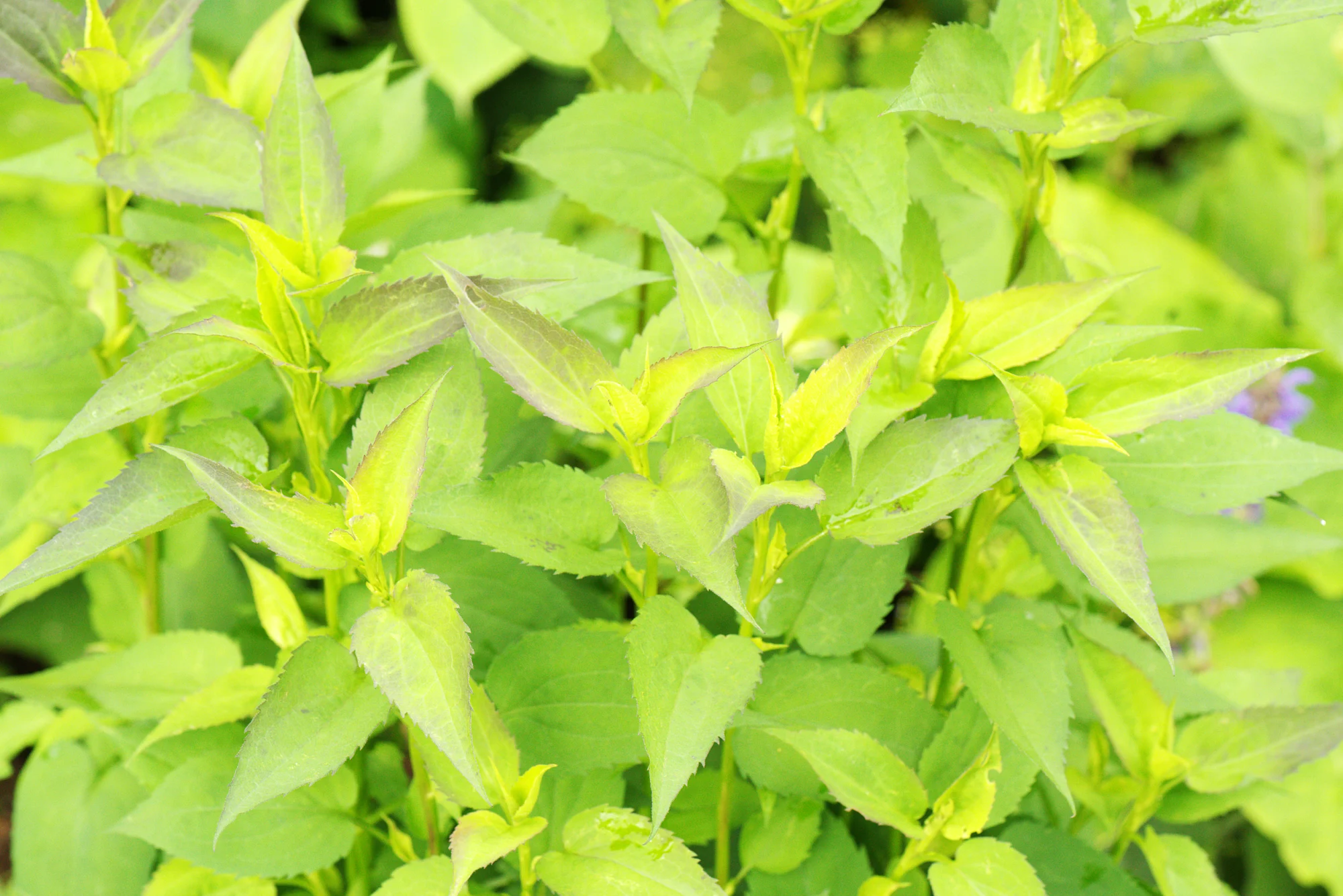
Upright square stems with pairs of pointed green leaves that smell minty when you rub them. Square stems are the giveaway for the mint family. Near bloom time, the stem tips start to color up where the flower heads are forming.
Is scarlet bee balm invasive?
Not where it’s native, but it does spread. Underground stems carry it outward pretty quickly. Pull the runners you don’t want in spring, or divide the clump every 2 to 3 years.
Is scarlet bee balm deer resistant?
Mostly. The minty leaves put most deer off, and NC State calls it resistant. The Lady Bird Johnson Wildflower Center is more cautious and rates it moderate.
How tall does scarlet bee balm get?
3 to 4 feet, sometimes 5 in a happy spot. For a smaller bed, look for a compact selection like ‘Pardon My Pink’, which tops out around 14 inches.
Why is my bee balm covered in white powder?
Powdery mildew. It looks dramatic and rarely hurts the plant. Cut the worst stems back after it blooms, then give it more sun and more space next year (see “Powdery mildew” above).
Does scarlet bee balm come back every year?
Yes, it’s a perennial. Each spring new shoots come up from the roots. If the center of the clump thins out after a few years, that’s normal, and dividing it in early spring fixes it.
Plant nerd fact
It was named for treating bee stings
“Bee balm” comes from an old folk remedy: people rubbed the crushed leaves on bee stings. These days we plant it to bring the bees in, which feels a little like asking for trouble.
Plant it somewhere you can see from a window, and watch it in July. For the other natives in the family, see our beginner’s guide to native bee balms, or meet its dry-ground cousin, wild bergamot. Happy planting!
Sources
- Coombs, George. Monarda for the Mid-Atlantic Region. Mt. Cuba Center Research Report, 2016. Accessed October 11, 2026.
- Iowa State University Extension and Outreach. “Growing Bee Balm in the Home Garden.” Accessed October 11, 2026.
- Iowa State University Extension and Outreach. “When Is the Best Time to Divide Bee Balm?” Accessed October 11, 2026.
- Lady Bird Johnson Wildflower Center. “Monarda didyma.” Native Plant Database. Accessed October 11, 2026.
- Mt. Cuba Center. “Monarda Trial Results.” Accessed October 11, 2026.
- Mt. Cuba Center. “Monarda didyma ‘Pardon My Pink’.” Accessed October 11, 2026.
- NatureServe. “Monarda didyma.” NatureServe Explorer. Accessed October 11, 2026.
- NC State Extension. “Monarda didyma.” North Carolina Extension Gardener Plant Toolbox. Accessed October 11, 2026.
- Tallamy, Douglas W., and Kimberley J. Shropshire. “Ranking Lepidopteran Use of Native versus Introduced Plants.” Conservation Biology 23, no. 4 (2009): 941–947. doi.org/10.1111/j.1523-1739.2009.01202.x. Host counts from the Shropshire-Tallamy Lepidoptera host plant data (UDELep), May 2025.
- University of Missouri Extension. “Perennial of the Year Steeped in American Patriotism.” Adapted from National Garden Bureau. Accessed October 11, 2026.

Similar plants
-
 Trillium
-
 Grasses and Sedges
-
 Dogwoods
-
 New Jersey Tea
-
 Trout Lily
-
 Purple Muhly Grass
-
 Trumpet Vine
-
 Milkweeds
-
 Sedges
Updated
The ads on this site help pay real native plant nerds to research and write these guides.
Garden notes
Notes from people who’ve grown it
Tips, wins, and the occasional disaster. If you’ve grown scarlet bee balm, share the advice you’d give to a neighbor.
No notes yet. Yours could be the first.
Grown scarlet bee balm? Tell the next person what you wish someone had told you.
Tap anywhere to close


