





Highlights
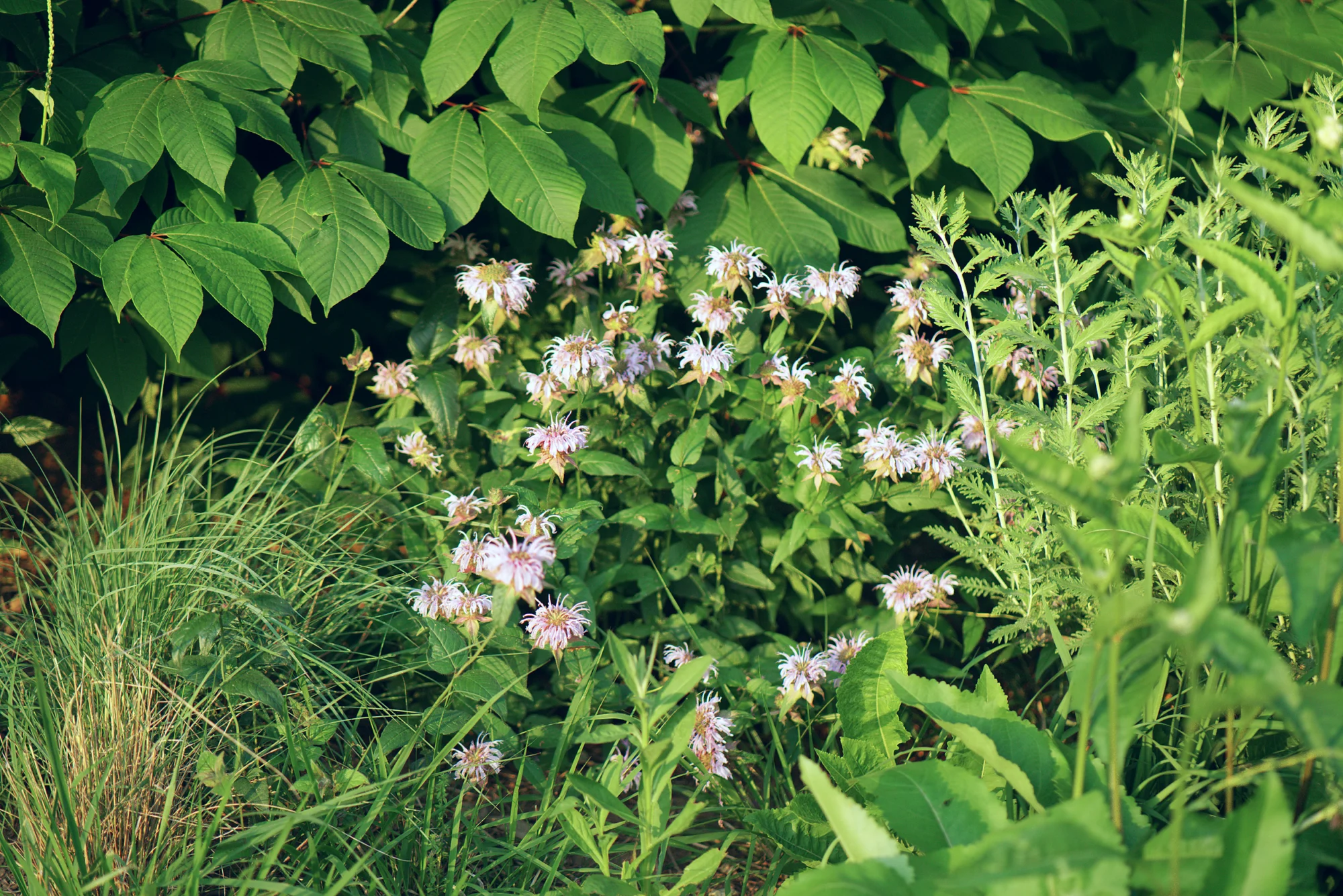
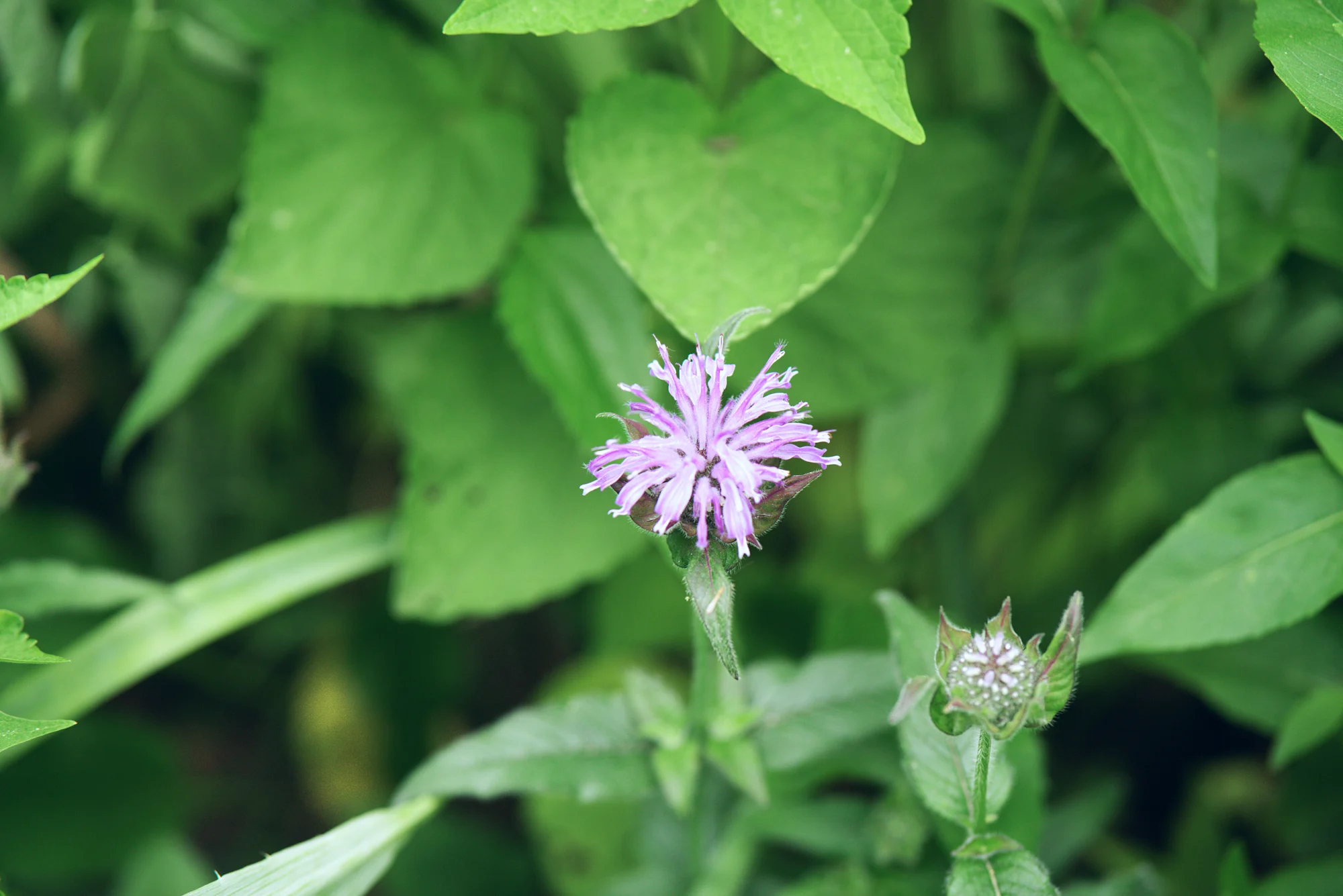
Wild bergamot (Monarda fistulosa) is the bee balm for the spots nobody else wants: the strip by the driveway that bakes in August, the sunny bed you forget to water. Its lavender pom-poms look like fireworks frozen mid-burst, and when you brush past the leaves, your yard smells like a pizza place.
It grows wild in 46 states. And when researchers spent four summers counting wild bees in North Dakota, this was the flower they caught them on most.
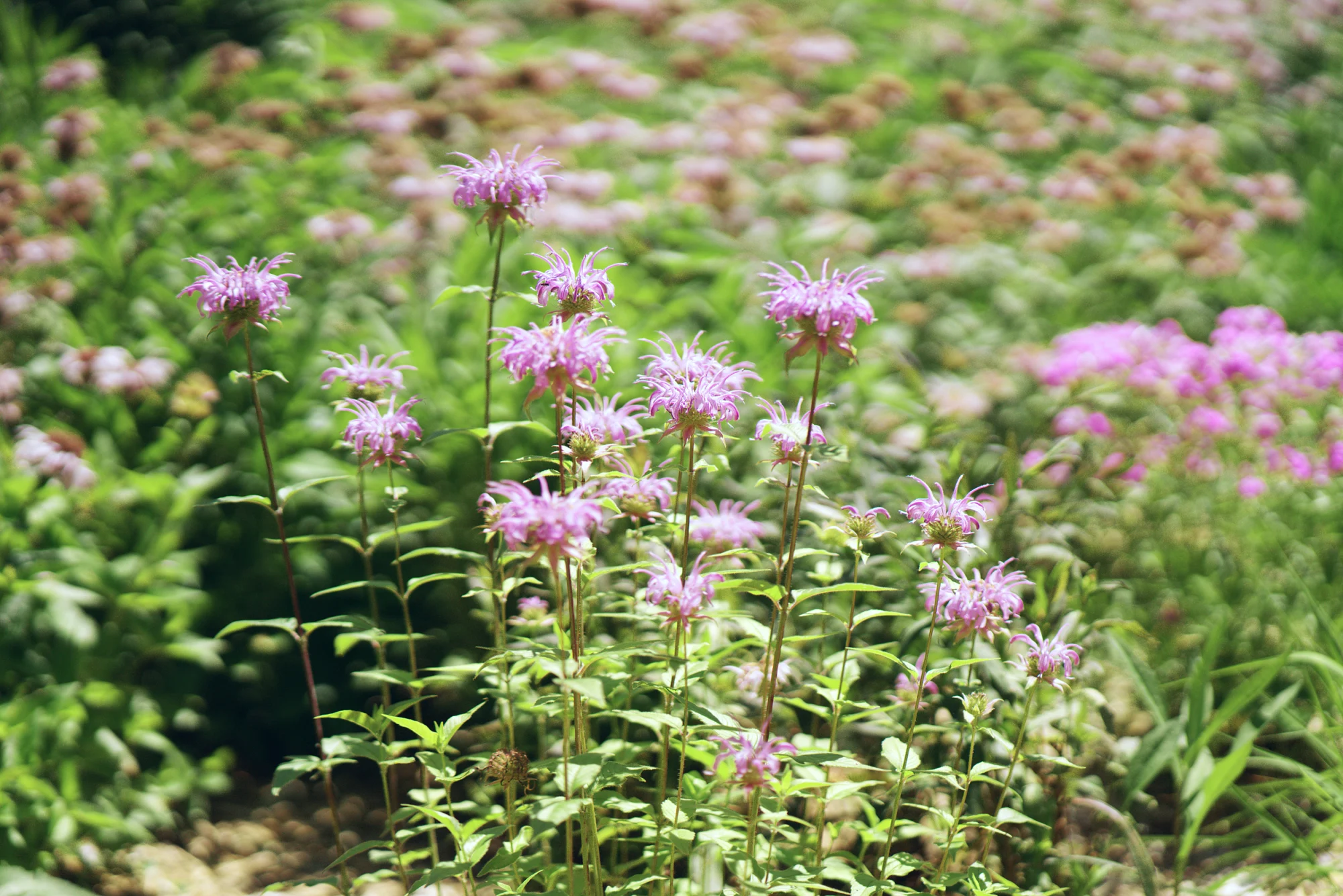
Is wild bergamot a good choice for my yard?
Yes, if…
- You have a hot, dry, sunny spot. Wild bergamot grows wild in dry soils on prairies, rocky woods and roadsides, and it handles occasional drought once it’s settled in.
- You want bees. Lots of bees. Bumblebees, leafcutter bees and one tiny black bee that specializes in it all show up. (More on that below.)
- You live almost anywhere in the lower 48. It’s native from Maine to Washington and south to Florida and Arizona. Only California and Nevada are left out.
- You have deer. The oregano-scented leaves seem to give plant-eating mammals indigestion, so deer and rabbits usually pass it by.
- You want a soft, meadowy look that blends in instead of shouting. Lavender and pale pink get along with almost everything.
Skip it if…
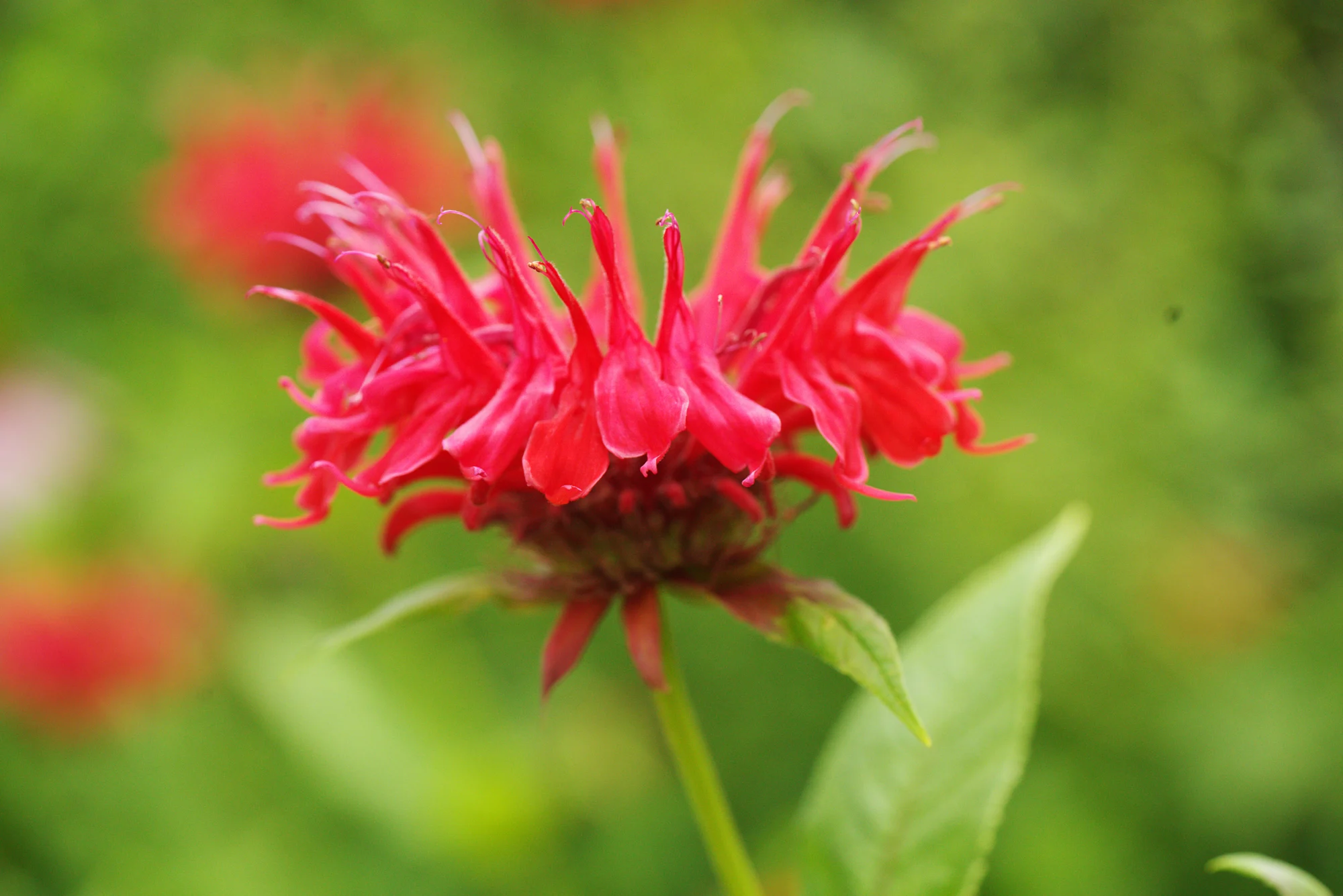
- You want hot red flowers for hummingbirds. That’s scarlet bee balm. Hummingbirds will stop at wild bergamot, but they’ll fly past it for anything red. Meet all four in our beginner’s guide to native bee balms.
- Your soil is rich and wet. In moist, rich soil, wild bergamot grows fast and then flops over as the summer goes on.
- You need spotless leaves all season. The lower leaves often pick up powdery mildew by late summer. It’s mostly cosmetic, but it’s there (see below).
- You’re in California or Nevada. It isn’t native there. Try our best native plants for California and Nevada instead.
Why wild bergamot matters
Stand next to a patch in July and you’ll hear it before you see what’s going on. Bumblebees, leafcutter bees and miner bees work the flowers from the edges in, and butterflies, skippers and hummingbird moths drop by between them. In that North Dakota study, wild bergamot got more wild bee visits than any other flower on the list.
It has its own bee
A small black bee called Dufourea monardae collects pollen almost only from wild bergamot and a few mint-family relatives, like anise hyssop. No wild bergamot nearby, no Dufourea.
It feeds caterpillars, too
Bee balms host 20 species of native moths and butterflies. On wild bergamot, that includes the hermit sphinx, a big gray hawk moth whose caterpillars eat the leaves, and the raspberry pyrausta, a tiny moth the color of raspberry jam. (If you find a few chewed leaves, that’s who.)
Bees move into the stems
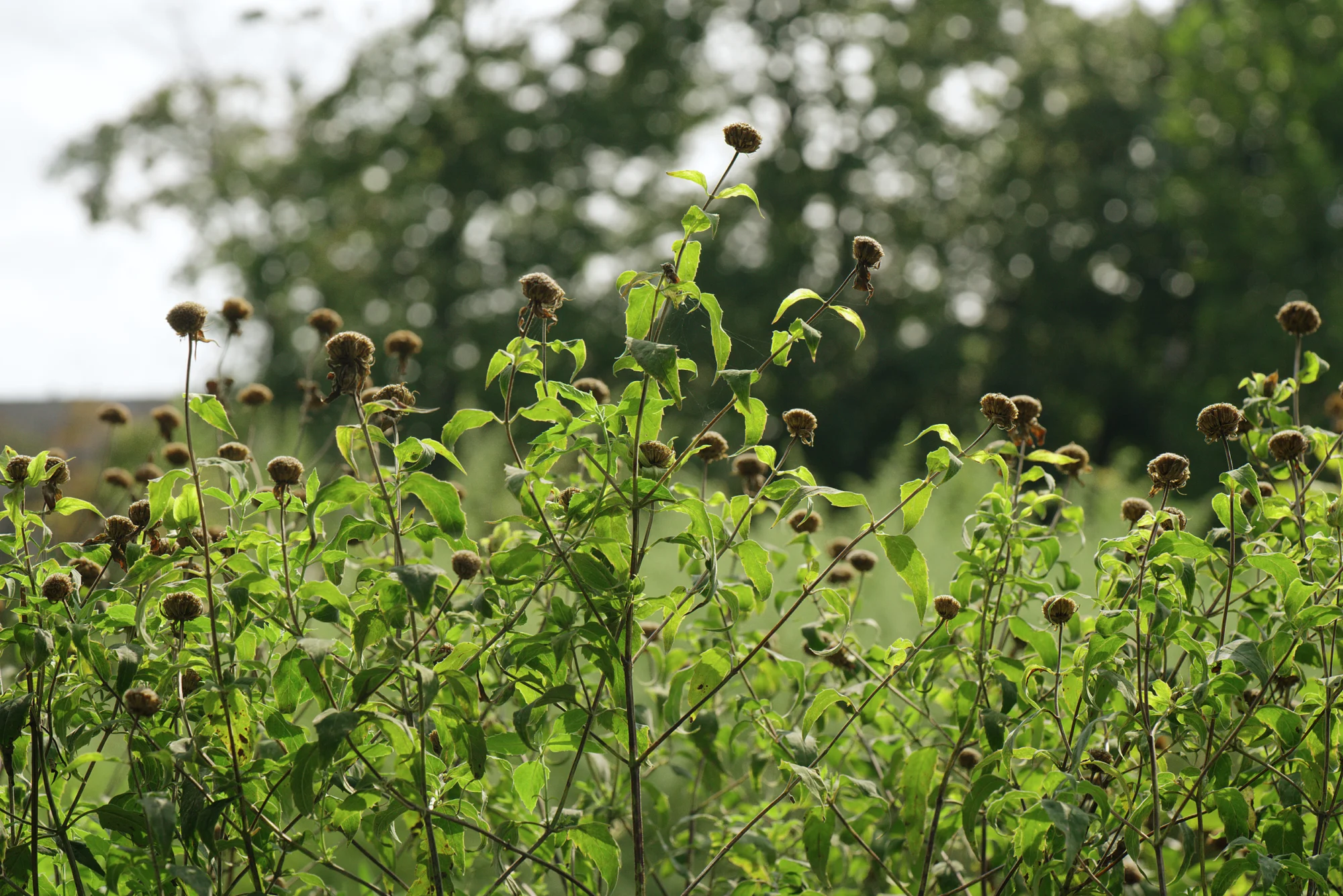
The stems are hollow, and native bees nest inside the dead ones. The tidy-looking fall cleanup is the one that evicts them. Leave the stems standing through winter and cut them back to 12 to 24 inches in spring.
The tidy-looking fall cleanup is the one that evicts them.
Where wild bergamot shines in your yard
- The sidewalk strip. Hot, dry and ignored? That’s where wild bergamot does its best work.
- A meadow or prairie planting. It grows wild on prairies, so it looks right at home with grasses.
- A pollinator garden. It fills the midsummer gap between spring flowers and fall asters and goldenrods.
- An herb garden. NC State says it adds color and contrast to the herb garden, and the leaves make tea.
- Deer country. Plant it where the deer have eaten everything else.
- A cutting garden. The flowers are fragrant and good for cutting, and they dry nicely too.
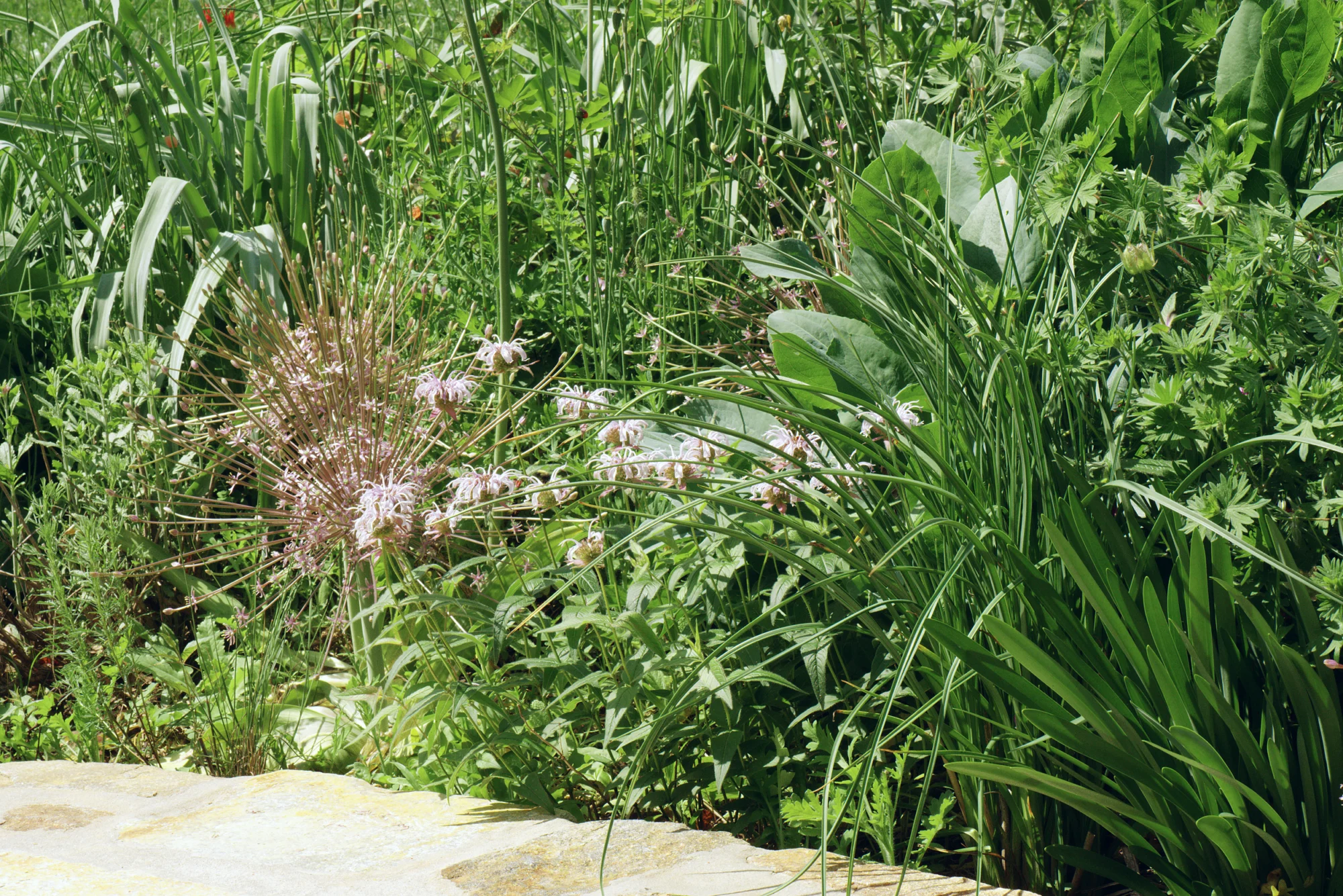
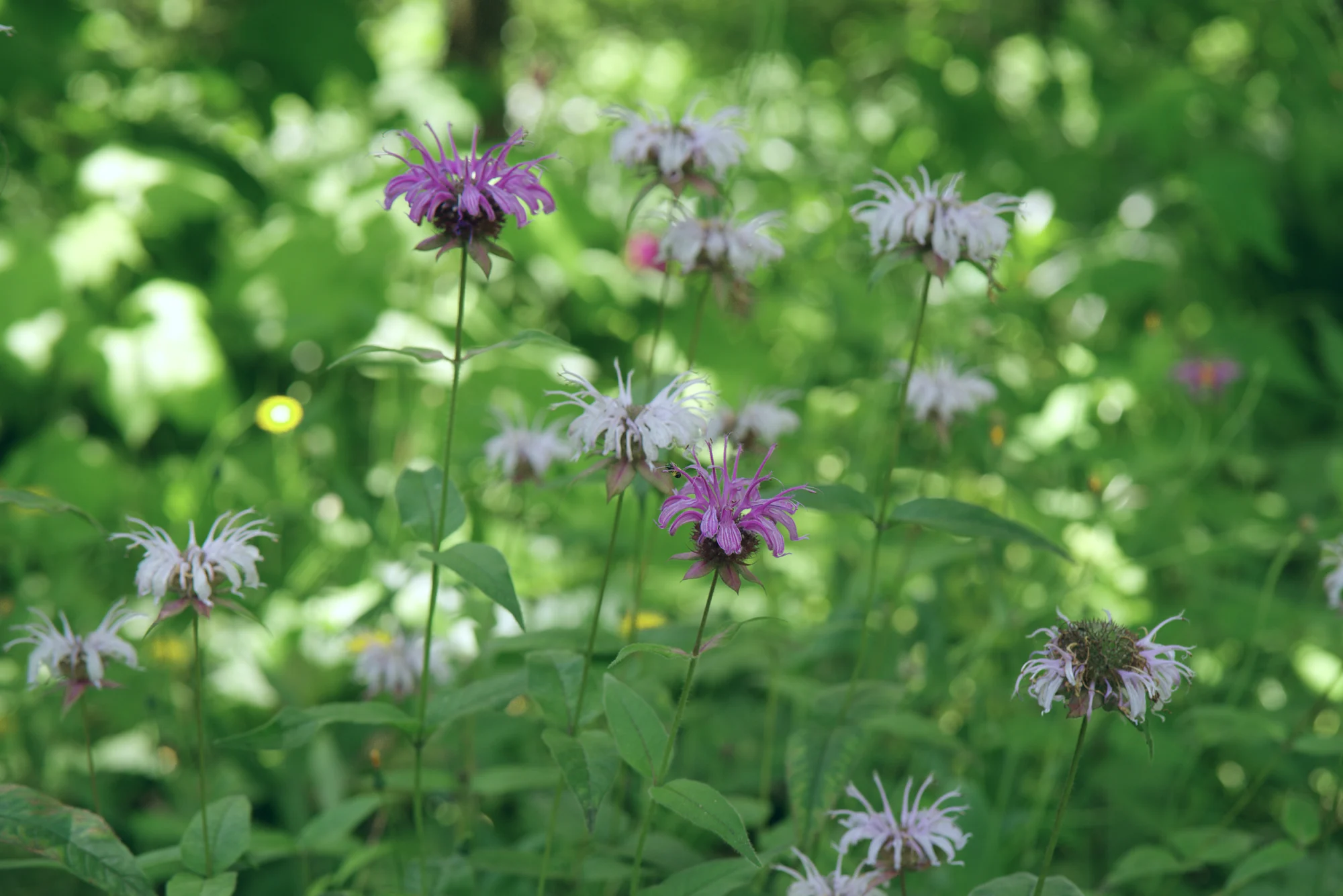
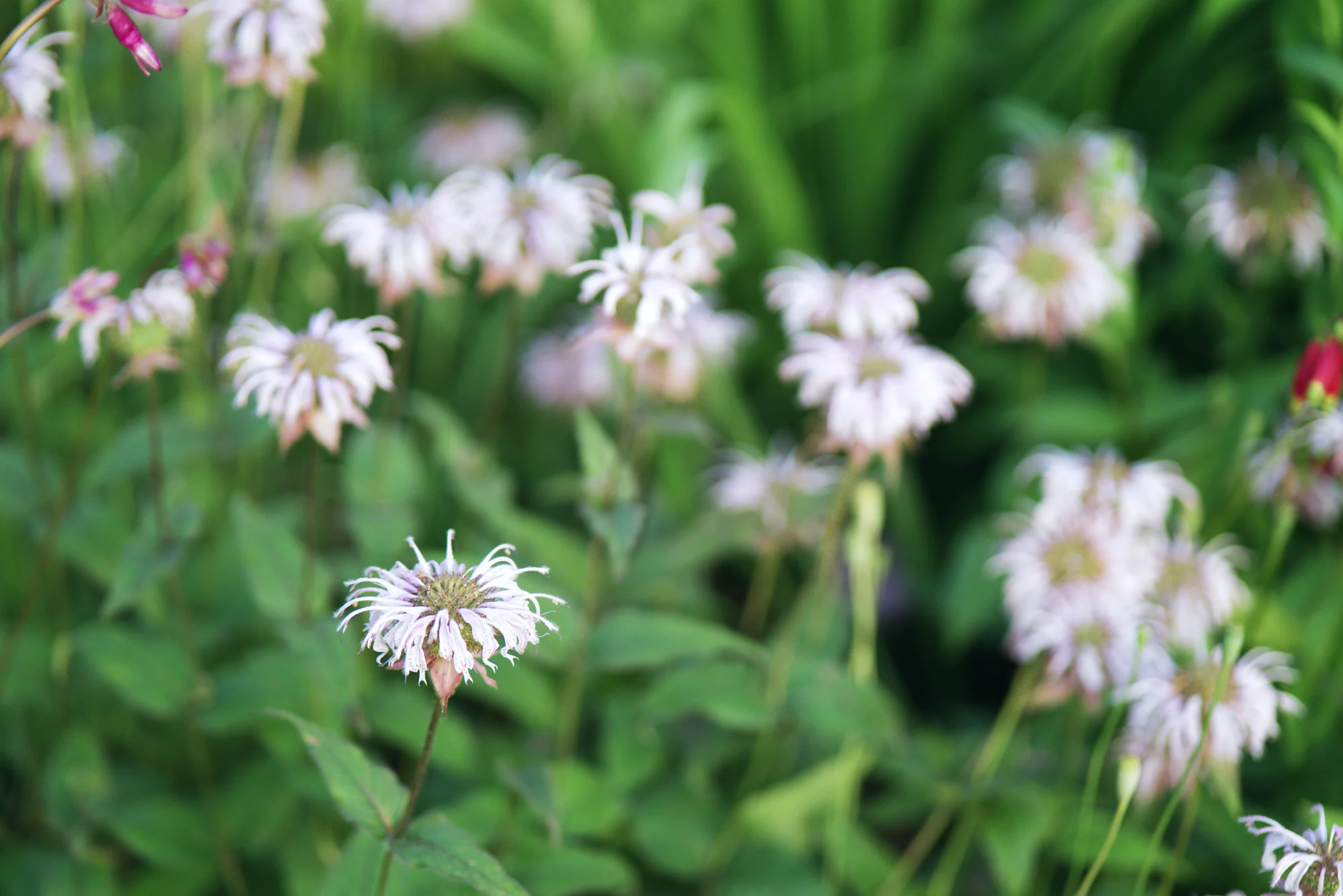
How to grow wild bergamot
When to plant
Spring is the easy choice for potted plants, so the roots can settle in before summer heat. Starting from seed? Easy. It doesn’t need a cold spell first like a lot of natives do, so you can scatter seed on bare soil in spring and walk away. See more native plants that are easy to start from seed.
Sun and soil
Give it full sun to part sun. It grows in loam, clay or sand and anything from average to dry. Skip the compost. Feed it well and it grows tall and soft, then flops over onto its neighbors by August.
Watering
Water it weekly the first summer while it gets established. After that it mostly takes care of itself. If the lower leaves yellow and drop in a long dry spell, that’s normal. Give it a deep drink anyway: thirsty plants get more mildew.
Spacing
Plant it 2 to 3 feet apart. It looks sparse the first year. Leave the gaps; moving air is what keeps mildew down.
Powdery mildew
White dust on the lower leaves in August? That’s powdery mildew. It looks worse than it is: Mt. Cuba Center calls it “generally only a cosmetic nuisance,” and wild bergamot holds up better than most bee balms. Spacing, sun and water in a drought keep it down. If a stem looks rough after it blooms, cut it to the ground and nobody will know.
If mildew really bugs you, try ‘Claire Grace’, a selection of wild bergamot. It scored 4.5 out of 5 in Mt. Cuba Center’s three-year trial of 40 bee balms, tied for the top spot. (New to the word? Here’s what a cultivar is.)
After it blooms
Snip spent flowers right away and you may get a second round of blooms. Or leave the seed heads: they dry into dark little pincushions that stand all winter and drop seed for next year’s plants.
Planting card
Monarda fistulosa
The trickLeave the dead stems standing all winter: native bees nest in the hollow stems, so cut them back to 12 to 24 inches in spring.
Where is wild bergamot native?
Native to 46 US states and Washington, D.C.
Sources: NatureServe, Royal Botanic Gardens, Kew (World Checklist of Vascular Plants) and the USDA PLANTS Database, compiled by The Plant Native. How we map native ranges
Wild bergamot vs. bee balm: what’s the difference?
Wild bergamot is a bee balm. “Bee balm” is the nickname for the whole Monarda genus, about 15 species native to North America. Most people picture scarlet bee balm, the red one, when they hear the name. Side by side:
Scarlet bee balm
- Red flowers
- Moist soil
- Hummingbird magnet
- 3 to 4 feet tall
- Native mostly to the eastern U.S.
Wild bergamot
- Lavender to pale pink flowers
- Dry to average soil
- Bee magnet
- 2 to 4 feet tall
- Native to 46 states
Both have square stems. Both smell like oregano when you crush a leaf. The real difference is the ground: scarlet bee balm wants moist soil, and wild bergamot is the one you plant where the hose doesn’t reach. Meet all four common natives in our beginner’s guide to native bee balms.
Beginner tip
Buy one pot, get a patch. Wild bergamot spreads by underground stems and reseeds, so one plant this spring can be a small drift in two or three years. Too much? Dig up the extras in spring and hand them to a neighbor.
What are good pairings for wild bergamot?
Pair it with other sun-loving natives that like average to dry soil and bloom before and after it: butterfly weed, purple coneflower, blazing stars, rattlesnake master, goldenrods and little bluestem to hold it all together.


Where can I buy wild bergamot?
Wild bergamot is one of the easier natives to find. Native nurseries usually carry it in pots in spring, and it’s widely sold as seed. Look for the straight species, Monarda fistulosa, or ‘Claire Grace’ if mildew worries you. A pot labeled just “bee balm” at a big-box store could be almost anything, so check the Latin name. Start with our list of native plant nurseries or order online.
FAQs
Is wild bergamot the same as bee balm?
Wild bergamot is one kind of bee balm. “Bee balm” covers the whole Monarda genus. Wild bergamot (Monarda fistulosa) is the lavender one that likes dry soil; scarlet bee balm (Monarda didyma) is the red one that likes it moist.
Does wild bergamot spread?
Yes, by underground stems and by seed, but it’s easy to pull or divide. Your soil decides how fast. In rich, moist beds it can get aggressive; in dry, poor ground it mostly stays put, and one Minnesota grower says they don’t consider it aggressive at all. Dig up a few edges every two to three years and it stays where you want it.
Is wild bergamot deer resistant?
Yes. Deer and rabbits usually leave it alone. The oregano taste seems to upset their stomachs. Deer will nibble almost anything when they’re hungry enough, but this is rarely first on the menu.
When does wild bergamot bloom?
Wild bergamot blooms in summer, mostly June through August. Farther south, it starts earlier; up north, July is more like it. Snip spent flowers and you may get a second round.
Does wild bergamot come back every year?
Yes. It’s a perennial, though each plant can be short-lived. Single plants may only last a few years, but it reseeds. Let a few seed heads ripen and the patch keeps itself going.
Can you make tea from wild bergamot?
Yes. The leaves and flowers make an herbal tea, and Indigenous peoples have used it for generations. The Blackfoot made a tea from the flowers and leaves for stomach aches, and the Menominee steeped it for chest congestion. The leaves also work in the kitchen, fresh or dried, anywhere you’d use oregano or thyme. Pick only from plants you know haven’t been sprayed.
Why does my wild bergamot have white spots on the leaves?
That’s powdery mildew, and it’s mostly cosmetic. Crowded, thirsty plants in a humid August get it worst. Space them 2 to 3 feet apart, give them full sun and cut back any rough-looking stems after they bloom. The plant will be fine.
Plant nerd fact
Named for a citrus it doesn’t smell like
The “bergamot” in wild bergamot is the bergamot orange, an Italian citrus grown for its fragrant oil (yes, the one in Earl Grey tea). Somebody thought the leaves smelled like it. Crush one yourself and you’ll smell oregano.
That’s not your imagination. Bee balm oils can be rich in thymol and carvacrol, the same compounds that give thyme and oregano their kick. Earl Grey it is not.
That baked strip by the driveway you’ve been ignoring? Give it one pot of wild bergamot this spring and see who shows up. Keep exploring with our beginner’s guide to native bee balms, our best native plants for dry areas or our hummingbird garden guide. Happy planting!
Sources
- Anderson, M. Kat. “Wild Bergamot, Monarda fistulosa L.” Plant Guide. USDA Natural Resources Conservation Service, 2000. plants.usda.gov. Accessed October 11, 2026.
- Coombs, George. Monarda for the Mid-Atlantic Region. Mt. Cuba Center Research Report, 2016. Accessed October 11, 2026.
- Hilty, John. “Wild Bergamot.” Illinois Wildflowers. Accessed October 11, 2026.
- Hilty, John. “Dufourea monardae.” Illinois Wildflowers. Accessed October 11, 2026.
- Iowa State University Extension and Outreach. “Growing Bee Balm in the Home Garden.” Accessed October 11, 2026.
- Lady Bird Johnson Wildflower Center. “Monarda fistulosa.” Native Plant Database. Accessed October 11, 2026.
- Missouri Department of Conservation. “Wild Bergamot.” Field Guide. Accessed October 11, 2026.
- Mt. Cuba Center. “Monarda Trial Results.” Accessed October 11, 2026.
- NatureServe. “Monarda fistulosa.” NatureServe Explorer. Accessed October 11, 2026.
- NC State Extension. “Monarda fistulosa.” North Carolina Extension Gardener Plant Toolbox. Accessed October 11, 2026.
- Otto, Clint R. V., et al. “Using Publicly Available Data to Quantify Plant–Pollinator Interactions and Evaluate Conservation Seeding Mixes in the Northern Great Plains.” Environmental Entomology 46, no. 3 (2017): 565–578. doi.org/10.1093/ee/nvx070.
- Prairie Moon Nursery. “Monarda fistulosa (Wild Bergamot).” Accessed October 11, 2026.
- Scora, Rainer W., and Ming-He Chang. “Monarda: A Source of Geraniol, Linalool, Thymol and Carvacrol-rich Essential Oils.” Purdue University New Crops. hort.purdue.edu. Accessed October 11, 2026.
- Tallamy, Douglas W., and Kimberley J. Shropshire. “Ranking Lepidopteran Use of Native versus Introduced Plants.” Conservation Biology 23, no. 4 (2009): 941–947. doi.org/10.1111/j.1523-1739.2009.01202.x. Host counts from the Shropshire-Tallamy Lepidoptera host plant data (UDELep), May 2025.

Similar plants
Updated Find more: Deer Resistant
The ads on this site help pay real native plant nerds to research and write these guides.
Garden notes
Notes from people who’ve grown it
Tips, wins, and the occasional disaster. If you’ve grown wild bergamot, share the advice you’d give to a neighbor.
No notes yet. Yours could be the first.
Grown wild bergamot? Tell the next person what you wish someone had told you.
Tap anywhere to close


