
Highlights
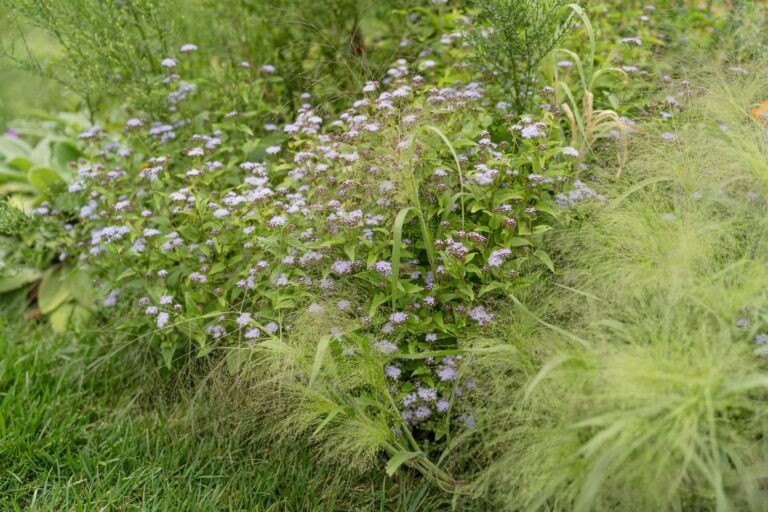
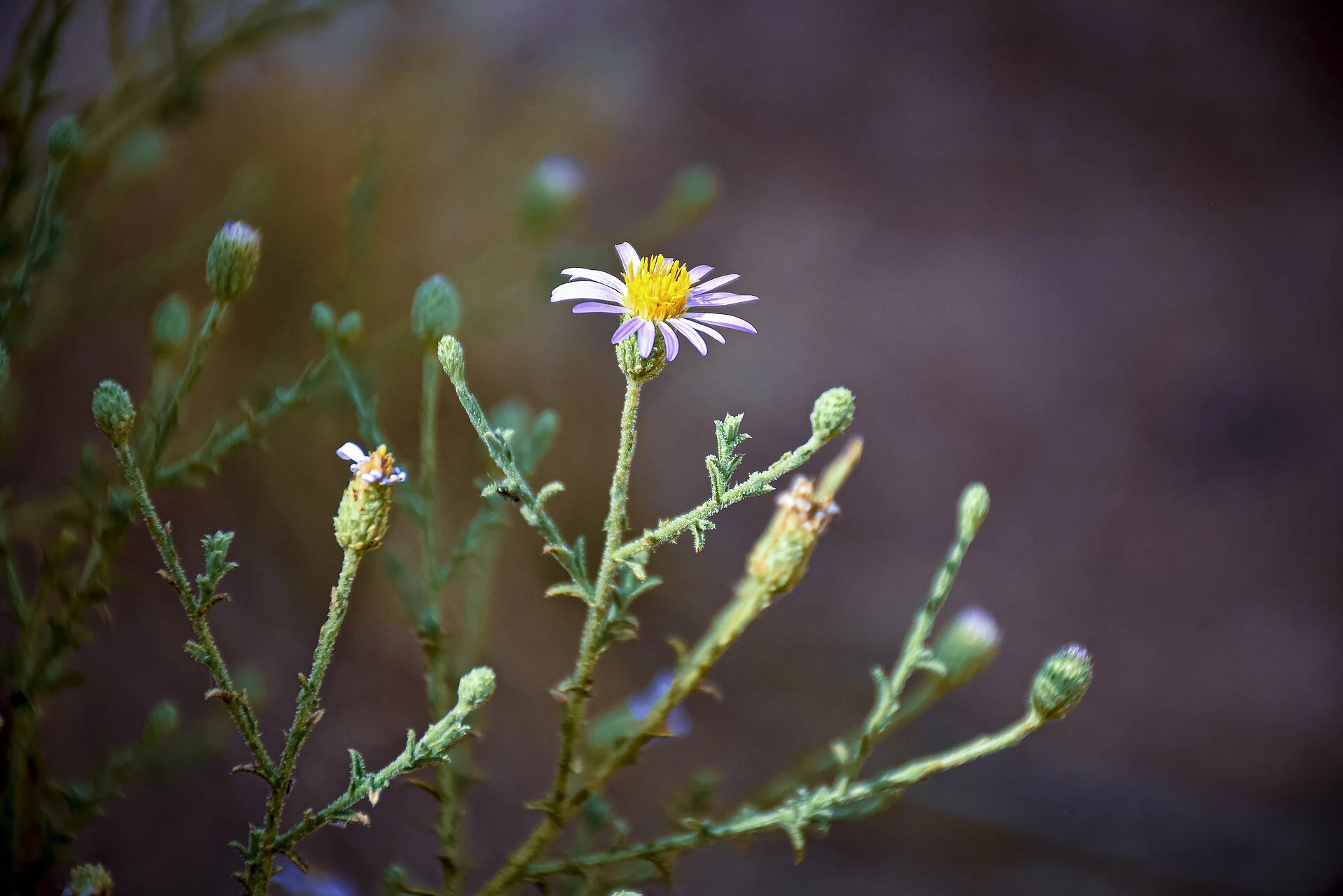
Western aster (Symphyotrichum ascendens) is late summer’s purple in the dry West: small violet-to-lavender daisies with gold centers, on stems a foot or two tall, from July into October. It grows wild in sagebrush, mountain brush and aspen country. It keeps flowering after most of the West has gone brown.
It spreads by underground stems into loose colonies, which makes it a good plant for a slope or a patch of bare ground you’d like to fill without replanting every year.
Is western aster a good choice for my yard?
Yes, if…
- You garden in the West. It’s native from the Rockies and Great Basin to the Pacific states, and east into the Dakotas and Nebraska.
- You want color in late summer. It blooms after most western natives finish.
- You have a bare slope to cover. The USDA says its extensive roots suit it to erosion control, and once established it’s relatively competitive against weeds like cheatgrass.
- You want a plant that fills in on its own. The underground stems do the spreading.
Skip it if…
- You garden east of the Great Plains. Plant an eastern aster instead, like New England aster.
- You want a tidy clump. It wanders. Give it room or a mowed edge.
- Your bed is shady. It wants sun.
- You keep sheep or cattle on the land. The USDA warns it can take up selenium from some soils and become toxic to grazing animals.
Why western aster matters
Late-season flowers are what bees in the West run on before winter, and asters are a big part of that. Jarrod Fowler’s list of western pollen specialists records asters as a host for 34 specialist bee species, bees that depend on the aster family for pollen. The Lady Bird Johnson Wildflower Center notes western aster has special value to native bees.
Asters host 162 native moths and butterflies in the Shropshire-Tallamy caterpillar records. Leave the stems standing over winter; the seed heads and hollow stems are still useful to wildlife long after the flowers are gone.
Where western aster shines in your yard
- A sunny slope you’d like covered and held in place.
- A dry-garden border with buckwheats and penstemons.
- A meadow planting, for purple after the grasses turn gold.
- Along a driveway or roadside edge, where it grows wild.
It keeps flowering after most of the West has gone brown.
Beginner tip
Cut western aster back by about a third in early summer if it gets floppy. It branches out, stays shorter and still blooms on time.
How to grow western aster
Sun and soil
Full sun. It grows wild in loamy soils from pH 5 to 8, and the USDA uses it on shallow, rocky and infertile soils, including roadsides.
Water
This is the tricky part. In the wild it grows on ground the USDA calls arid to mesic, but the Lady Bird Johnson Wildflower Center says it’s not reliably drought tolerant in gardens. Water it through its first summer, then give it a deep soak in long dry spells.
Starting from seed
Easy. The USDA says the seed does not require a cold period before it sprouts. Sow in spring or fall on bare, raked soil and keep it damp until seedlings appear.
Spacing
About 18 inches apart. The underground stems will fill the gaps within a couple of seasons.
Planting card
Symphyotrichum ascendens
The trickCut it back by a third in early summer if it flops; it branches and still blooms on time.
Where is western aster native?
Native to 13 US states
Sources: NatureServe, Royal Botanic Gardens, Kew (World Checklist of Vascular Plants) and the USDA PLANTS Database, compiled by The Plant Native. How we map native ranges
What are good pairings for western aster?
Pair it with other dry-ground western natives: buckwheats, penstemons, firewheel and Oregon sunshine, with rubber rabbitbrush for gold beside the purple.


Where can I buy western aster?
Look at native nurseries and seed companies in the Intermountain West and Rockies. It’s more common as seed than as plants. Start with our list of native plant nurseries or order online.
FAQs
Is western aster the same as Pacific aster?
Sometimes, by name. The USDA lists “Pacific aster” as another common name for western aster, but most botanists use Pacific aster for Symphyotrichum chilense, a coastal species. Check the Latin name when you buy.
How tall does western aster get?
Usually 8 inches to 2 feet. Flora of North America gives 20 to 60 centimeters, and the USDA has seen it taller in good conditions.
Does western aster spread?
Yes, by underground stems. Flora of North America calls it colonial, which means it forms patches. It’s steady, not explosive.
When does western aster bloom?
From July into fall. Utah State lists July to October.
Why is the taxonomy so confusing?
Because it’s a hybrid. Flora of North America says western aster arose from a cross between two other asters and still crosses back with them where they meet. Its old name was Aster ascendens.
Plant nerd fact
An aster born of two asters
Western aster is a species that started as a hybrid. Botanists trace it to a cross between western mountain aster and white prairie aster, and where the three grow together they still swap genes (Flora of North America). It’s a reminder that the lines between species are drawn by people. The plants don’t always agree.
If your western garden goes quiet in August, this is a good place to start. For a wetter-ground western aster, see Douglas aster, and for the rest, our beginner’s guide to native asters. Happy planting!
Sources
- Brouillet, Luc, et al. “Symphyotrichum ascendens.” Flora of North America North of Mexico, vol. 20, 2006. Accessed October 12, 2026.
- Fowler, Jarrod. “Pollen Specialist Bees of the Western United States.” 2020. Accessed October 12, 2026.
- Lady Bird Johnson Wildflower Center. “Symphyotrichum ascendens.” Native Plant Database. Accessed October 12, 2026.
- NatureServe. “Symphyotrichum ascendens.” NatureServe Explorer. Accessed October 12, 2026.
- Shropshire, Kimberley J., and Douglas W. Tallamy. “Lepidoptera of North America North of Mexico: An Annotated List Containing Geographic Ranges and Host Plant Records.” ZooKeys, 2025. Host counts from the UDELep data, May 2025.
- Tilley, Derek. “Plant Guide for Western Aster (Symphyotrichum ascendens).” USDA NRCS, Aberdeen Plant Materials Center, 2012. Accessed October 12, 2026.
- Utah State University Extension. “Western Aster.” Range Plants of Utah. Accessed October 12, 2026.

Similar plants
-
 Blue Vervain
-
 Lilies
-
 Red Twig Dogwood
-
 Black-Eyed Susans
-
 Trillium
-
 Columbines
-
 Prairie Smoke
-
 Sneezeweed
-
 Lupines
Updated Find more: Flower
The ads on this site help pay real native plant nerds to research and write these guides.
Garden notes
Notes from people who’ve grown it
Tips, wins, and the occasional disaster. If you’ve grown western aster, share the advice you’d give to a neighbor.
No notes yet. Yours could be the first.
Grown western aster? Tell the next person what you wish someone had told you.
Tap anywhere to close


