Highlights
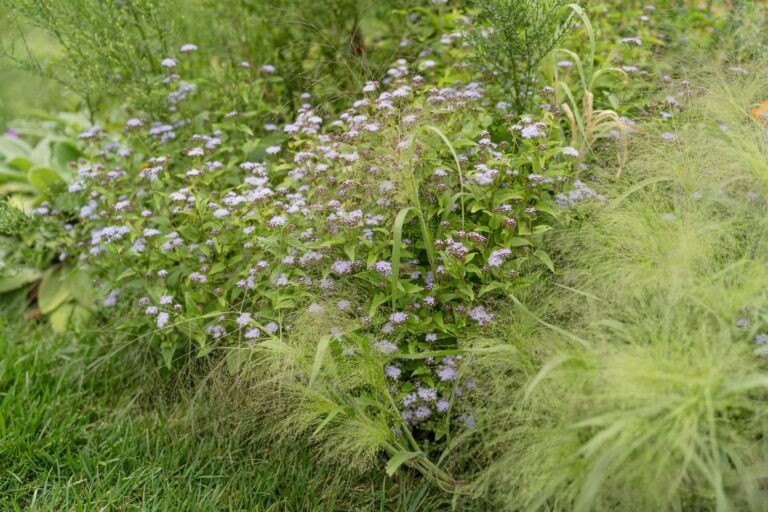
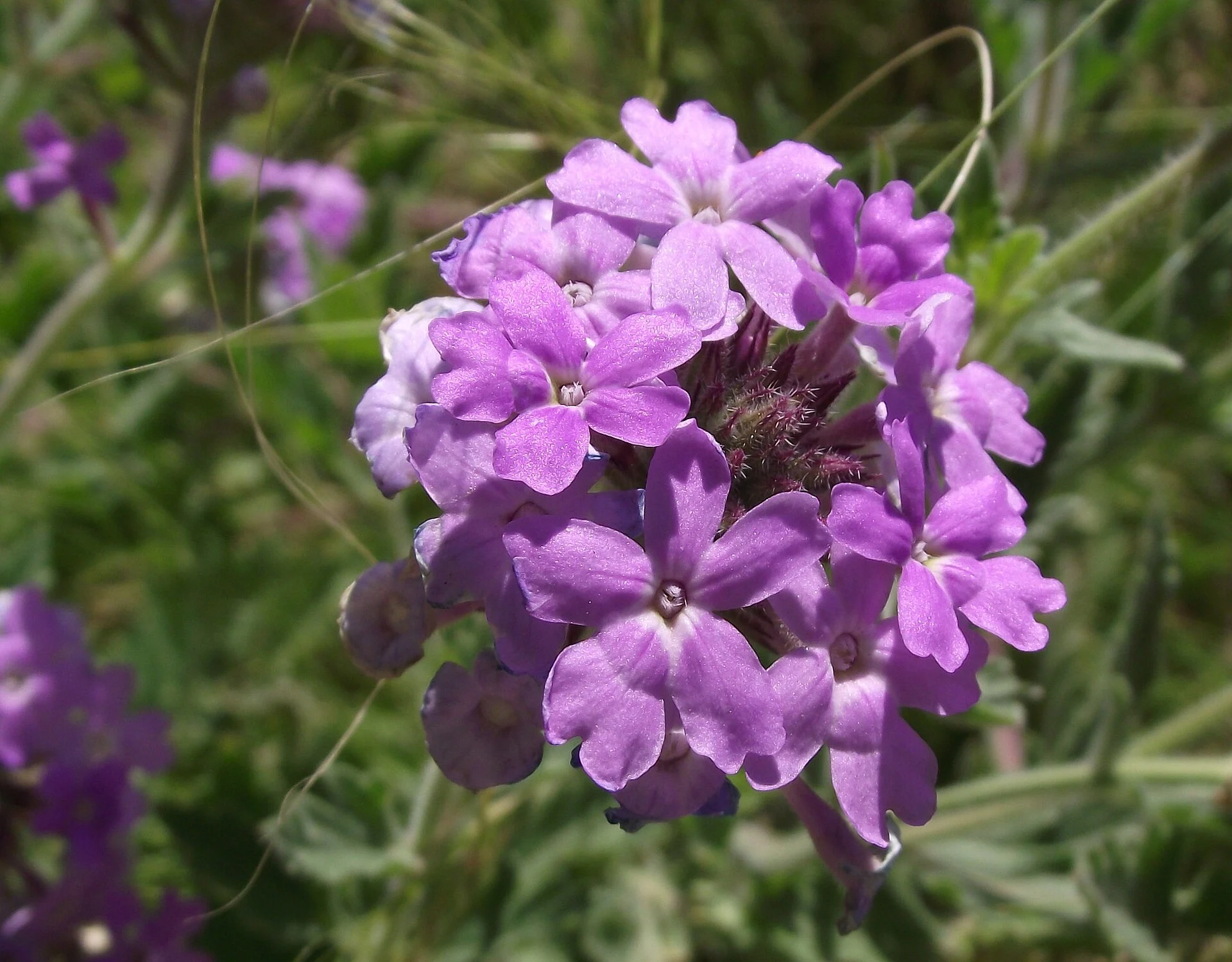
Between the rocks on a sun-baked slope, Goodding’s verbena rolls out a low mat of soft, lacy green leaves. In spring, rounded clusters of fragrant flowers in shades of purple and pink cover it. It looks like a desert tough guy, but it likes a drink now and then, and its bloom schedule follows the rain, not the calendar. The butterflies love it, and it looks great paired with many of the yellow flowers often found in southwestern gardens. Give it sun and fast-draining soil, and it does the rest.
Is Goodding’s verbena right for my yard?
Yes, if…
- You have a hot, sunny slope that nothing else wants to cover. This plant is a natural ground cover for that kind of spot.
- You’d rather have a soft, spreading mat than a tidy clump. This one wanders, and the wandering looks good.
- You want butterflies stopping by in spring.
- Your soil is rocky or sandy, the kind that drains before you finish watering.
- You garden in the desert Southwest, where this plant grows wild.
Skip it if…
- Your soil stays soggy or heavy.
- Your spot is deep shade. It wants at least a few hours of sun.
- You want a plant that lasts for decades. This one is short-lived (but replaces itself with seedlings!)
- You want flowers on a fixed schedule. Bloom time follows moisture.
- Your winters bring hard freezes. Its cold limit is somewhere between about 0°F and 24°F.
Where is Goodding’s verbena native?
Native to 9 US states
Sources: NatureServe, Royal Botanic Gardens, Kew (World Checklist of Vascular Plants) and the USDA PLANTS Database, compiled by The Plant Native. How we map native ranges
Goodding’s verbena grows wild mostly in the dry Southwest, in washes, on rocky slopes, and on grassy hillsides, generally below about 5,000 feet. It’s native to Alabama, Arizona, California, Colorado, Nevada, New Mexico, Oklahoma, Texas, and Utah, and to northwest Mexico.
If you garden higher up, a relative called prairie verbena (G. bipinnatifida) grows from Tucson elevations up to 7,000 feet. Its flowers look similar, but the leaves are more finely cut. Goodding’s verbena stays mostly below about 5,000 feet.
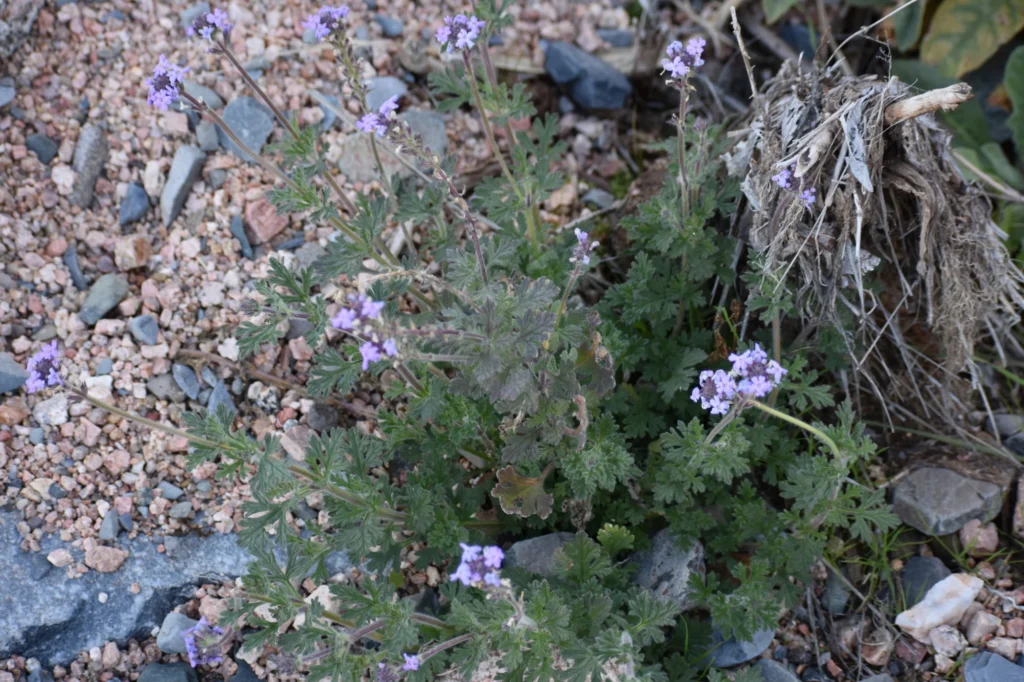
When you plant it, you’re planting something that already knows the neighborhood.
Why Goodding’s verbena matters
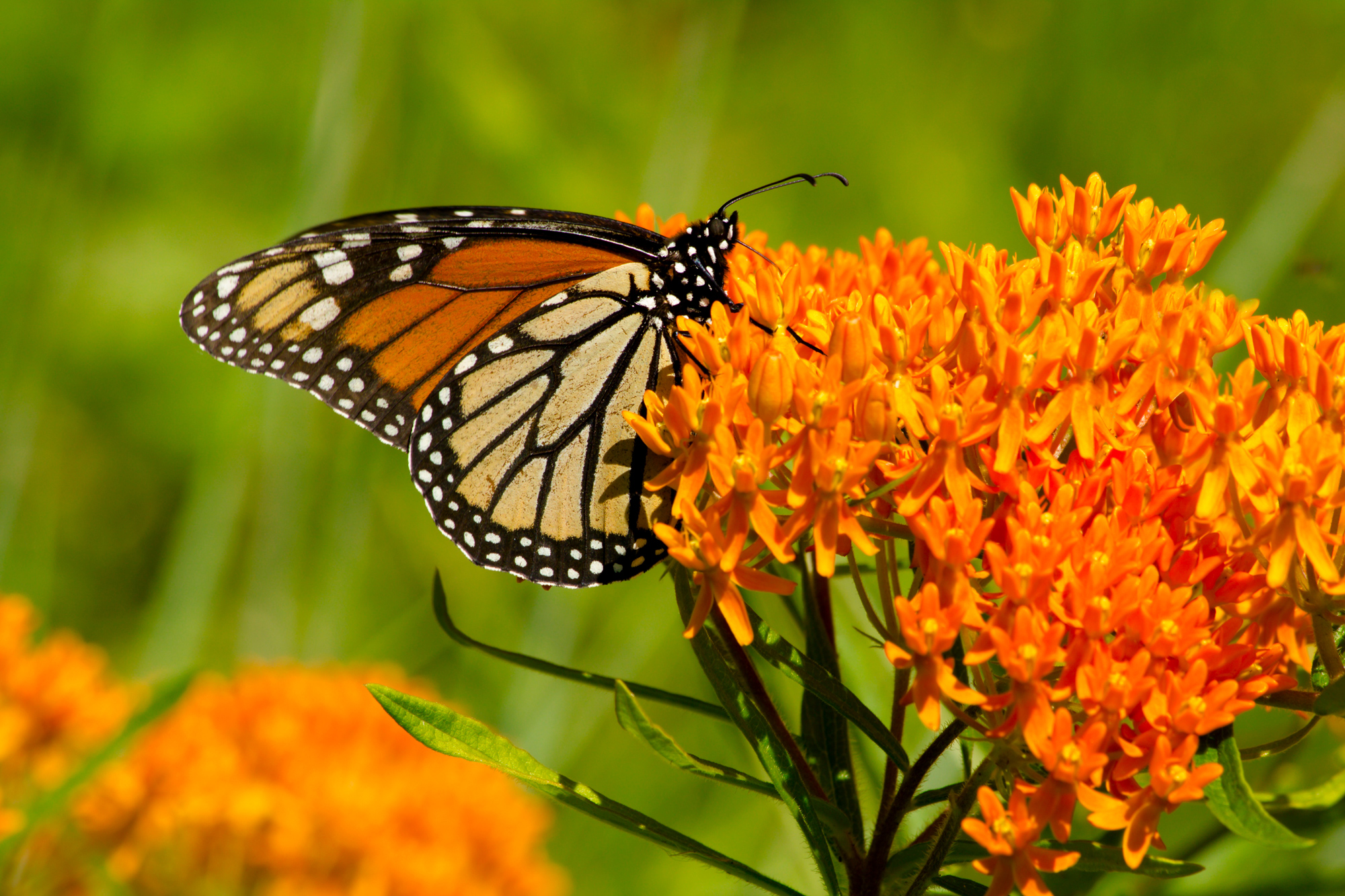
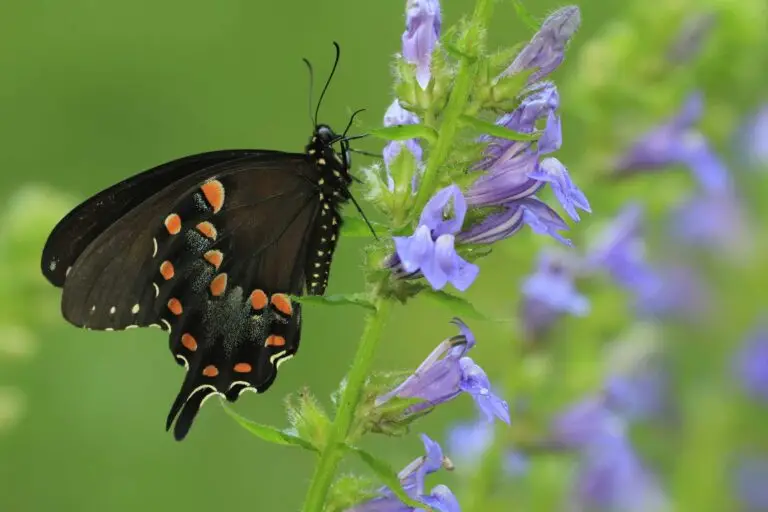
Many butterfly species visit these flowers during bloom season. Each rounded cluster packs a lot of small blooms into one stop, which makes an easy meal for anything looking for nectar. And because the plant can flower anywhere from February to October in parts of its range, depending on moisture, the welcome mat stays out for a long stretch.
It’s also a real piece of the desert landscape. It grows in washes, on dry slopes and mesas, and in pinyon forests, and it’s listed as useful for wildlife habitat, pollinators, and forage. When you plant it, you’re planting something that already knows the neighborhood.
Goodding’s verbena through the seasons
Spring
This is the main event. Flowers open from April to June, and in a good year they can start as early as February. If winter and spring rain comes up short, water regularly while it blooms. Early spring is also when seed goes in the ground.
Summer
Growth slows when the heat peaks, and the leaves can look a little ragged, especially in hot desert gardens like Phoenix. That’s normal for this plant. If it bothers you, cut it back hard after bloom. Otherwise, just snip off spent flower heads.
Fall
Where moisture allows, flowers can keep going as late as October. Let some seed drop, and next year’s seedlings are on their way. Some growers also sow seed in fall.
Winter
The low mat stays mostly green, with a cold limit between about 0°F and 24°F. In the mildest spots, you could see the flowers ramping back up as early as February!
Where Goodding’s verbena shines in your yard
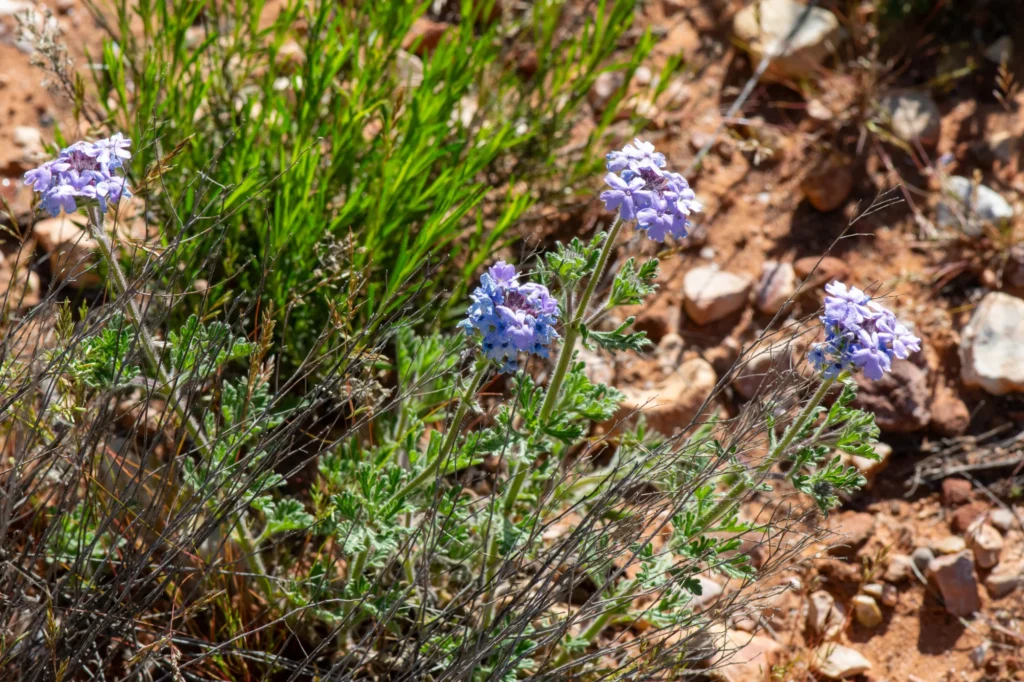
- Sunny slopes. That sloped strip beside your driveway that bakes all afternoon is its kind of spot. The low mat spreads across it and covers the ground.
- Rock gardens. Tuck it in around boulders and gravel and it spills between the stones.
- Group plantings. Set plants about 2 feet apart and they knit into one lavender-and-pink patch.
- Spring color beds. Lavender next to yellow is hard to beat. Pair it with yellow-flowering natives like desert marigold, and add penstemons for a mix of colors.
- A butterfly corner. Plant a patch you can see from a chair, then wait for visitors. Many butterfly species stop by during bloom season.
- Cut flower bouquets. Snip a few flower clusters for a vase and bring a bit of the patch inside.
How to grow Goodding’s verbena
Give it the right spot and the rest is easy.
Where to plant
Pick a spot with full sun to moderate shade and well-drained soil. Sandy or rocky soil is ideal, and a rocky, fast-draining slope works well. Fast drainage is the thing to get right, and everything else is forgiving. In a hot desert garden, a little shade can keep it lusher.
When to plant
Sow seed in early spring. Some Arizona growers sow in fall instead, and either can work. Seed sprouts better with light, so cover it with only 1/8 to 1/4 inch of soil. No chilling or other seed prep is needed.
Spacing
Thin seedlings to 8 to 12 inches apart before they bloom. If you’re planting nursery plants, set them about 2 feet apart in a group and they’ll knit into one patch.
Watering
Goodding’s verbena is a green, leafy mat, and it drinks like one. Give it moderate water. When winter and spring rain come up short, water regularly while it blooms to keep the flowers coming. In summer and fall, back off to an occasional drink. Feed it twice a year.
Planting card
Glandularia gooddingii
The trickCover seed with only 1/8 to 1/4 inch of soil; it sprouts better with light.
What to plant with Goodding’s verbena
Goodding’s verbena likes sun and dry soil, so the best partners like the same thing. Yellow daisies look especially good next to its pink-purple clusters.
- Desert marigold (Baileya multiradiata): yellow daisies against pink-purple clusters
- Penstemon: spikes of tubular flowers that stand up above the mat
- Blackfoot daisy (Melampodium leucanthum): a low, white-flowered partner for the same dry spot


Where can I buy Goodding’s verbena?
Look for a native plant nursery and ask for Goodding’s verbena by its botanical name, Glandularia gooddingii. Check the tag, because the old name Verbena gooddingii is still around and plenty of other verbenas share the common name.
Potential challenges
Deer and other nibblers
Deer ratings for this species haven’t been confirmed. In desert gardens, other visitors often matter more, like javelina, rabbits, ground squirrels, and packrats. A javelina guide lists verbena as rarely damaged, though that entry covers the whole genus and not this plant specifically. Rabbit and ground squirrel ratings haven’t been confirmed either. If critters visit your yard, plant a small test patch first and watch what happens.
It doesn’t stay forever
Goodding’s verbena is a short-lived perennial, and it comes with a backup plan. Think of a houseguest who leaves early and sends a cousin to take the room. The original plants fade, seedlings come up nearby, and the patch keeps going. Let some seed drop each year and they fill in bare spots each spring.
It can look worn out in summer
When the heat peaks, growth slows and the leaves can look ragged, especially in hot desert gardens like Phoenix. A hard cutback after bloom clears the tired growth if it bothers you. Snipping off spent flower heads is all it needs.
It likes to wander
It spreads into a mat up to 3 feet wide and drops seed. Seedlings can turn up outside the bed, and one plant database notes a weedy streak. Pull the extras while they’re small, or move them to a new spot.
The bloom runs on the rain’s schedule
In a dry year the show can be small or late. In a wet one, it can start as early as February and keep going into October. If the rain skips you, water regularly while it’s blooming. No pests or diseases are listed for this species.
A note on cultivars and relatives
Goodding’s verbena has gone by a few names. It was once filed under Verbena, and some sellers still use that name. A tag reading Verbena gooddingii is the same plant. The name likely honors Leslie Goodding, an Arizona botanist who taught at what is now Northern Arizona University and collected thousands of plants across the Southwest.
Prairie verbena (G. bipinnatifida) is a close relative with similar flowers and more finely cut leaves. It grows from Tucson elevations up to 7,000 feet, higher than Goodding’s verbena, which stays mostly below about 5,000 feet. Check the botanical name on the tag, and you’ll know which one you’re buying.
FAQs
What are common problems with Goodding’s verbena?
The most common problems with Goodding’s verbena are a short life, a worn-out look in summer heat, and flowers that wait on the rain. Snip spent flowers, and cut it back if it looks tired, let some seed fall, and the patch carries on. No pest or disease problems are listed for this species.
Will Goodding’s verbena come back every year?
Goodding’s verbena is a perennial that can come back each year, but the individual plants are short-lived. Plan on seedlings carrying the patch after the original plants fade. Cold matters too: sources put its limit between about 0°F and 24°F, and where freezes run harder you may need to reseed.
What is a good companion plant for Goodding’s verbena?
Desert marigold (Baileya multiradiata) is a great partner for Goodding’s verbena, and penstemons (Penstemon spp.) are close behind. Yellow daisies next to pink-purple clusters look like you planned them. Blackfoot daisy (Melampodium leucanthum) is another easy fit, since all of them like a sunny, well-drained spot.
Is Goodding’s verbena toxic to pets?
Toxicity to pets hasn’t been confirmed for Goodding’s verbena. One plant database flags it as toxic to some animals without saying which ones or how. Keep an eye on curious pets near the patch, and if yours chews on it, call your vet or an animal poison hotline.
Do butterflies like Goodding’s verbena?
Yes, butterflies visit Goodding’s verbena. Each rounded cluster packs lots of small flowers into one spot, like a snack plate for anything with a straw for a tongue. Whether caterpillars eat the leaves hasn’t been confirmed. Don’t count on it as a host plant.
Will deer eat Goodding’s verbena?
Deer ratings for Goodding’s verbena haven’t been confirmed. A related native, prairie verbena, is listed as deer resistant, though that doesn’t settle it for this plant. In the desert, javelina and rabbits are often the bigger worry, and a javelina guide lists verbena in general as rarely damaged.
Does Goodding’s verbena spread?
Yes, Goodding’s verbena spreads into a low mat up to 3 feet wide. It also drops seed, and seedlings can turn up outside the bed. Pull the extras while they’re small, or move them to a spot where you want more.
Plant nerd fact
Where the name verbena comes from
Verbena began in ancient Rome as a word for leafy branches, usually laurel, olive, or myrtle, used in religious rites, and it reached English by the 1560s. Goodding’s verbena doesn’t technically wear that name anymore, since it moved to the genus Glandularia, but everyone still calls it verbena, like a nickname that outlasted the official paperwork. Its own name likely comes from Leslie Goodding, a botanist who spent his life chasing plants across the Southwest. At 22, he was collecting near the Muddy River in Nevada, a spot now under Lake Mead, and the Goodding willow and a protected stretch of Sycamore Canyon in southern Arizona carry his name too.
Goodding’s verbena gives you a lush green mat that settles in between rocks, covers ground you were ready to give up on, and fills in bare spots each spring from its own seed. Lavender and pink flowers show up in spring, and many butterfly species follow. Give it moderate water and a spot in the sun to moderate shade, and snip a few clusters for a vase while you’re out there. Happy planting!
Sources
- Arizona Municipal Water Users Association. “Goodding’s Verbena.” Accessed October 25, 2026.
- Arizona State University Libraries. “Verbena gooddingii.” Accessed October 25, 2026.
- Arizona-Sonora Desert Museum. “Glandularia gooddingii (Goodding’s Verbena).” Accessed October 26, 2026.
- Kew Plants of the World Online. “Glandularia gooddingii (Briq.) Solbrig.” Accessed October 25, 2026.
- KNAU. “Earth Notes: Leslie Goodding.” Accessed October 25, 2026.
- Lady Bird Johnson Wildflower Center. “Glandularia gooddingii (Southwestern mock vervain).” Accessed October 25, 2026.
- NatureServe Explorer. “Glandularia gooddingii.” Accessed October 25, 2026.
- Online Etymology Dictionary. “Verbena.” Accessed October 26, 2026.
- The Plant Native. “Blackfoot Daisy.” Accessed October 25, 2026.
- The Plant Native. “Desert Marigold.” Accessed October 25, 2026.
- The Plant Native. “Penstemon.” Accessed October 25, 2026.
- University of Arizona Cooperative Extension. “Javelina Plant Resistance Ratings.” Accessed October 25, 2026.
- University of Arizona EcoRestore. “Southwestern mock vervain.” Accessed October 25, 2026.
- Xerces Society. “Pollinator and Beneficial Insect Plant List, Southwest Plateaus.” Accessed October 25, 2026.
Similar plants
-
 Desert Sand Verbena
-
 Desert Globemallow
-
 Red Dome Blanketflower
-
 Desert Marigold
-
 Desert Willow
-
 Rocky Mountain Bee Plant
-
 Blanketflowers
-
 Firewheel
-
 Pink Evening Primrose
Updated Find more: Pink Purple Flower Spring Summer Full Sun Part Sun Drought-Tolerant
The ads on this site help pay real native plant nerds to research and write these guides.
Garden notes
Notes from people who’ve grown it
Tips, wins, and the occasional disaster. If you’ve grown Goodding’s verbena, share the advice you’d give to a neighbor.
No notes yet. Yours could be the first.
Grown Goodding’s verbena? Tell the next person what you wish someone had told you.
Tap anywhere to close


