Highlights
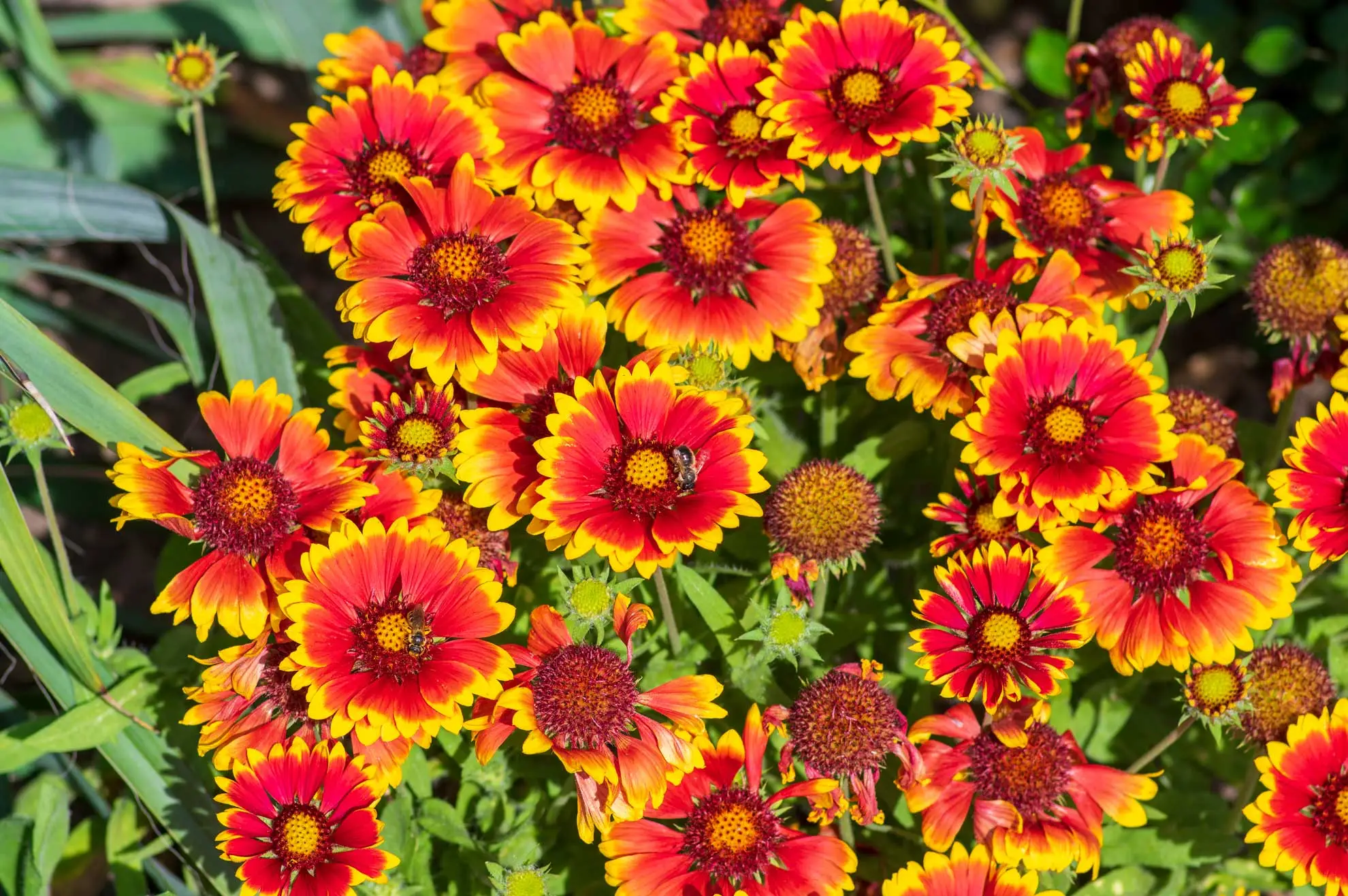
Blanketflowers are daisies with a sunset painted on the petals: red, orange, and gold, around dark domes or fuzzy pompoms. Nearly a dozen kinds are native to North America, from prairie roadsides to desert mesas to open pine woods. Some come back every year, and some live one season and leave seed behind. Bees love them, and you probably will too: they keep blooming long after the neighbors’ tidy lawns have gone brown. Pick the one that grows wild near you, give it sun and drainage, and it will bloom for months with very little help.
Are blanketflowers right for my yard?
Blanketflowers are the plant for the spot where everything else gave up. If that’s your yard, read on.
Yes, if…
- You have a hot, sunny spot where the soil drains fast, like a gravel bed, a slope, or that strip by the driveway.
- You want color that lasts for months, not weeks.
- You want a patch for bees and butterflies, plus seed heads for goldfinches in fall.
- You like the idea of scattering seed and letting a patch fill in a little wild around the edges.
- You want a plant that grows wild in your region. There is probably a blanketflower for you.
Skip it if…
- Your soil stays soggy or puddles after rain. Plants rarely survive winter in heavy soil.
- Your soil is rich and you plan to water often. Rich soil gives big, floppy plants with few flowers.
- You want a plant that lives for a decade. Several blanketflowers are annuals or short-lived perennials.
- You garden in deep shade. Pincushion daisy is happy in part shade, but most of the others want full sun.
Where are blanketflowers native?
Which blanketflower is native to you depends on where you live. These are the five in this guide:
- Blanketflower (G. aristata): British Columbia to Saskatchewan, south to northern Oregon, northern Utah, Colorado, and Kansas
- Firewheel (G. pulchella): Across the Great Plains and Southwest, from western South Dakota to Kansas and Louisiana, west to Colorado and Arizona. Sources differ on how far east it is native.
- Lanceleaf blanketflower (G. aestivalis): Alabama, Arkansas, Florida, Georgia, Illinois, Kansas, Louisiana, Missouri, Mississippi, North Carolina, Oklahoma, South Carolina, and Texas
- Pincushion daisy (G. suavis): Kansas, Oklahoma, and Texas, plus northeastern Mexico
- Red dome blanketflower (G. pinnatifida): Arizona, Colorado, Nevada, New Mexico, Oklahoma, Texas, and Utah, plus northern Mexico
The seed is patient; it waits in the soil for spring.
Why blanketflowers matter
Think of a blanketflower patch as an all-season diner for bees. The lights are on from spring until frost, and the customers keep coming: green metallic sweat bees, bumble bees, and many others. Blanketflowers are often among the last plants still blooming at the end of the season. That means they feed the last shift before the garden closes up for the year. Lanceleaf blanketflower is a standout for butterflies in late summer and fall.
At least two moths, the gaillardia flower moth and the painted schinia, have caterpillars that feed on blanketflowers. That makes a patch busier than it looks. And once the petals drop, the seed heads become a snack for birds, goldfinches especially.
Blanketflowers through the seasons
Spring
The early birds go first. Pincushion daisy can open as early as March, and red dome and lanceleaf blanketflower join in around April. Right now the plants are low, gray-green, and a little fuzzy. You won’t think much of them until the flowers start.
Summer
This is when blanketflowers eshine. Firewheel hits its stride from May through August, and blanketflower on the northern plains and in the Rockies peaks from July on. Heat that sends other plants to the shade doesn’t bother this group much. If a plant stalls mid-summer, cut it back and it may give you another round in fall.
Fall
Lanceleaf blanketflower keeps blooming into October, and a few others can too with enough rain. Leave some seed heads standing. They feed birds, and they’re how a patch of annuals comes back next year.
Winter
The perennials rest, and the annual firewheel disappears completely. Not to worry. The seed is patient, and it waits in the soil for spring. Cutting perennial plants back to about 6 inches in late summer may help them survive the winter.
Meet the native blanketflowers
Nearly a dozen blanketflowers are native to North America. Here are five to know, from the ones you’ll see most to the oddball. All five are listed as having special value to native bees.
Blanketflower (the OG)
Gaillardia aristata
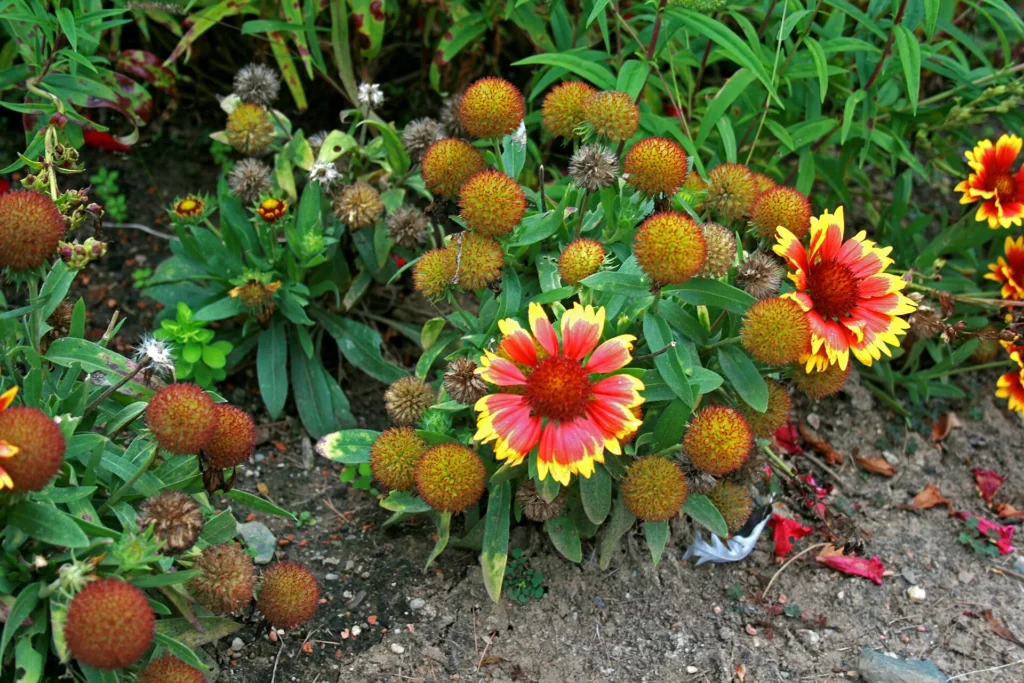
The northern one. It grows wild on dry plains, prairies, meadows, and mountain foothills from western Canada down to Colorado and Kansas, and it’s the one that carries the plain name “blanket flower.” The flowers are yellow with a purplish-brown center, and the stems and leaves are covered in stiff little hairs. Wear gloves. Its name even says so: aristata means “bristly.”
- Size and color: 1 to 3 feet; yellow petals, often with red or purple at the base, around a brownish-purple center
- Bloom time: Late spring or summer into fall
- Sun: Full sun
- Native region: Western Canada, the northern Rockies, and the plains south to Colorado and Kansas
- Lifespan: Perennial
Firewheel (Indian blanket)
Gaillardia pulchella
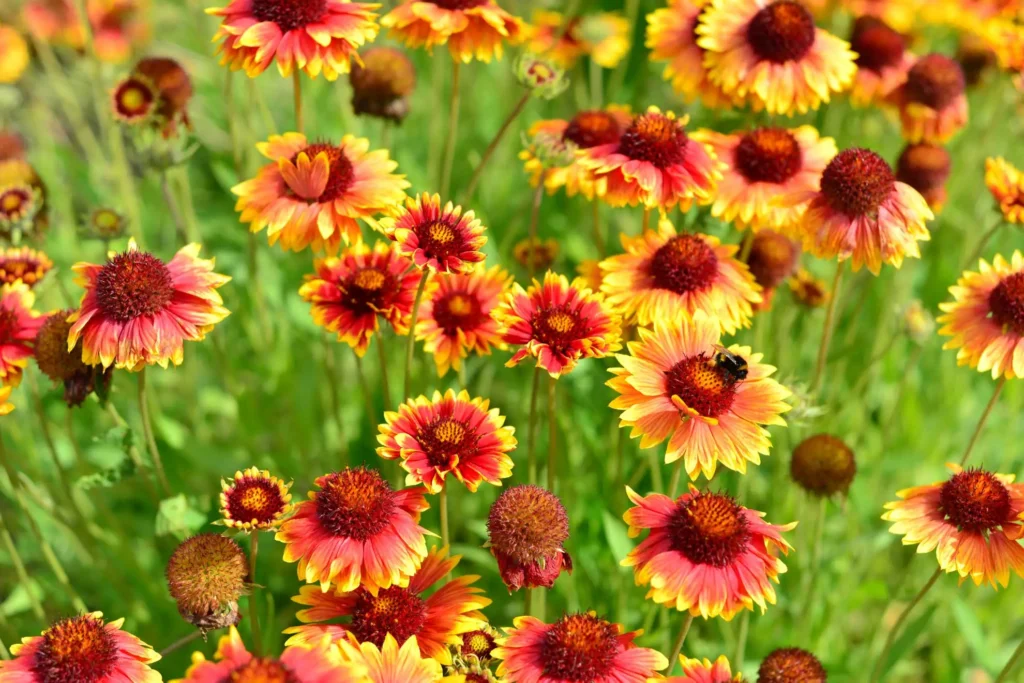
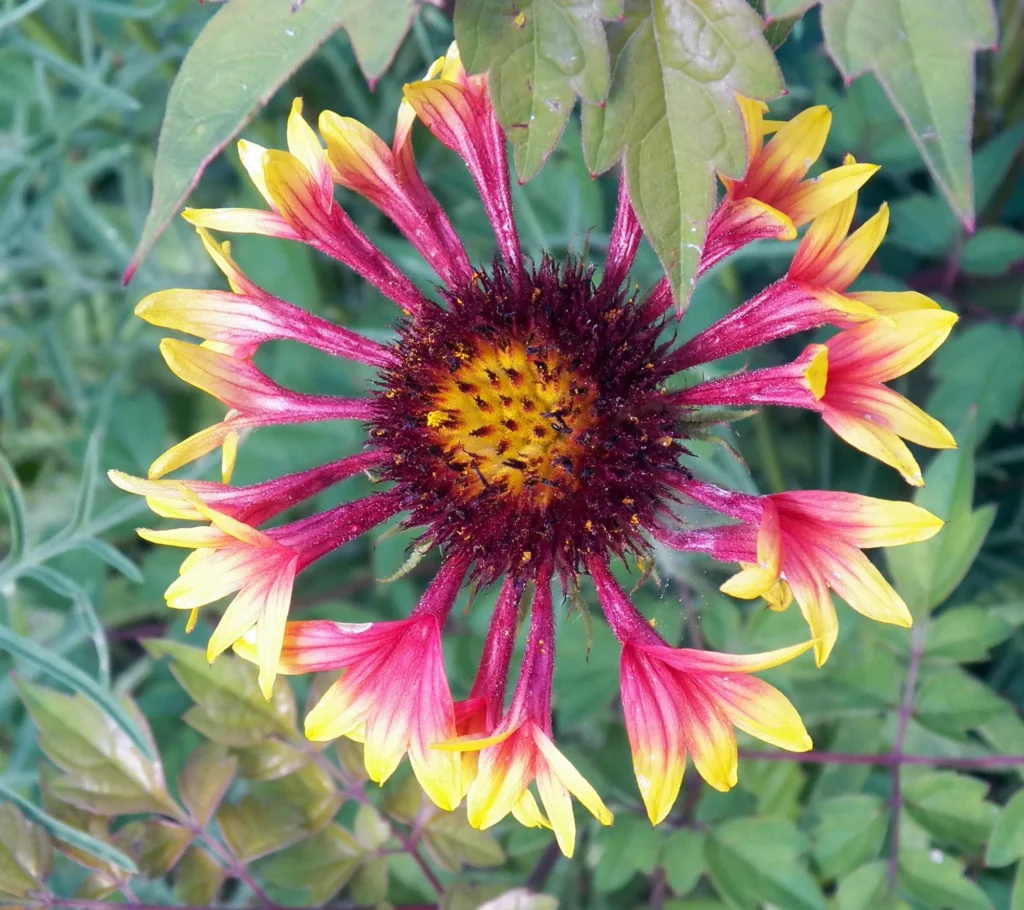
The roadside painter. Each flower has a red center, a yellow outer band, and a brown-red middle, and it shows up along Southwest roadsides and across prairies. The species name, pulchella, means “pretty,” which is hard to argue with. It’s an annual, and it keeps the party going by reseeding itself. Rich soil gets you big, floppy plants with few flowers, so skip the compost. Sow seed after your last frost, or rake it into loose soil in fall, and plan on 12 inches between plants. You’ll have better luck buying seed than plants, since nurseries mostly carry the perennial types.
- Size and color: 1 to 2 feet; red, yellow, and brown-red
- Bloom time: Late spring to frost, longer with plenty of rain
- Sun: Full sun or part shade
- Native region: The Great Plains and Southwest, from western South Dakota to Kansas and Louisiana and west to Colorado and Arizona
- Lifespan: Annual; a short-lived perennial in warm coastal areas
Lanceleaf blanketflower
Gaillardia aestivalis
The southern one. It grows in an upright clump about 8 to 12 inches wide, keeps blooming late, and gets mistaken for firewheel all the time. Its species name, aestivalis, means “of summer,” though it keeps blooming into October. Plan on a fairly short life, and let it drop seed to keep the patch going. If you garden in the Southeast or the south-central states, this is the one that’s native to your yard.
- Size and color: 1 to 2 feet; yellow petals around a red-brown center, with some pink and white forms
- Bloom time: April through October
- Sun: Full sun
- Native region: The south-central and southeastern U.S., from Texas and Kansas to Florida and North Carolina
- Lifespan: Perennial, but fairly short-lived
Pincushion daisy (perfumeballs)
Gaillardia suavis
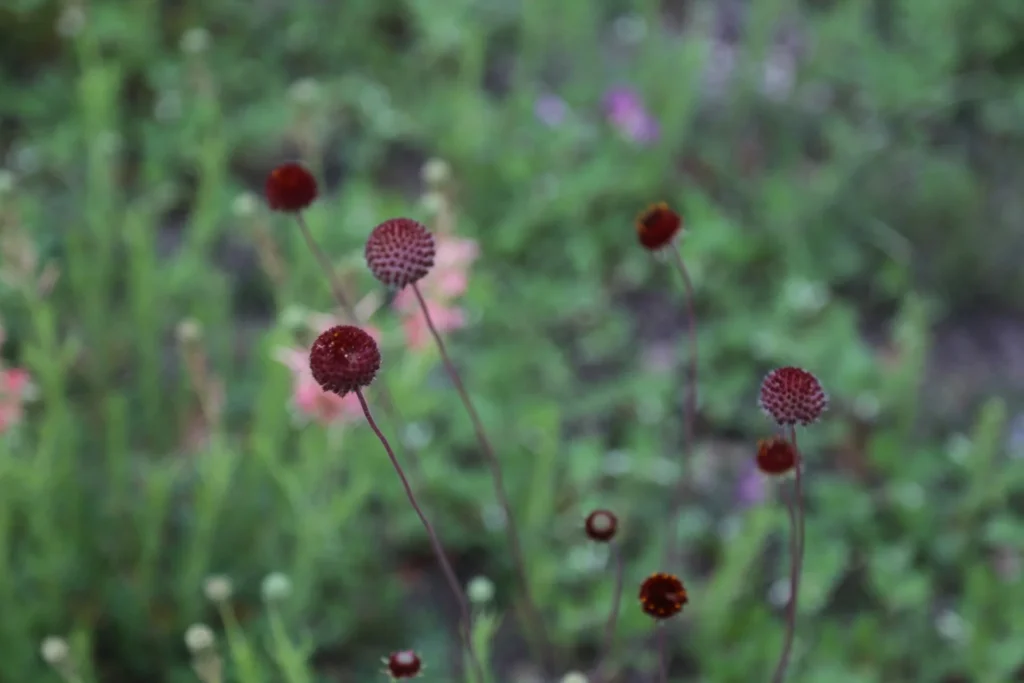
The oddball. Its petals are so short and fall off so soon that what’s left looks like a reddish-brown pompom. Its species name, suavis, means “sweet,” a fitting nod to those fragrant flowers. It’s the only one here that prefers part shade. If you want fireworks, this isn’t the one. If you want something to sniff on a warm spring day, it might be.
- Size and color: Up to about 30 inches, often shorter; red and brown
- Bloom time: March to May, and into fall with enough moisture and trimming of spent flowers
- Sun: Part shade
- Native region: Kansas, Oklahoma, and Texas, plus northeastern Mexico
- Lifespan: Perennial
Red dome blanketflower
Gaillardia pinnatifida
The desert-edge one. A small yellow daisy with a purplish-red dome in the middle, held up on a thin stalk like a lollipop. Its species name, pinnatifida, describes the leaves, which are cut into lobes down both sides, like a feather. It grows on mesas, plains, and in open clearings among pines, and it stays low, which makes it a good fit for the front of a gravel bed.
- Size and color: 4 to 14 inches in Arizona, up to about 2 feet; yellow petals with a purplish-red center
- Bloom time: April to June, and into October in warmer areas
- Sun: Full sun
- Native region: Arizona, Colorado, Nevada, New Mexico, Oklahoma, Texas, and Utah, plus northern Mexico
- Lifespan: Perennial
Which blanketflower is right for my region?
Not sure which to pick? Choose the one that’s native near you.
- Southwest: red dome blanketflower for gravel and desert-edge yards, and firewheel from Arizona and Colorado east across the southern plains.
- Great Plains and Midwest: firewheel, plus pincushion daisy in Kansas, Oklahoma and Texas.
- Northwest, northern Rockies and northern plains: blanketflower (G. aristata), the perennial of western Canada down to Colorado and Kansas.
- South and Southeast: lanceleaf blanketflower, from Texas and Kansas to Florida and North Carolina.
Where blanketflowers shine in your yard
- Meadow or prairie patch. Scatter seed with grasses and other sun-lovers and let them tangle into one patch.
- A hot strip by the driveway or street. Firewheel turns up along roadsides in the wild. A sunny, dry strip is familiar territory.
- Gravel or rock garden. The small types fit between stones and like sharp drainage.
- The front of a dry border. Compact types sit at the front and lift color above the plants around them.
- A pollinator patch. Plant a few together and bees and butterflies will find them.
- A cottage or cutting garden. Blanketflower’s flowers last well and are good for picking.
- A pot on the patio. Blanketflower and firewheel both do well in containers.
How to grow blanketflowers
Where to plant
Pick a spot with full sun and soil that drains well. Think of drainage as a colander, not a bathtub. Poor to average soil is fine. Pincushion daisy is the exception and prefers part shade.
When to plant
Sow seed in fall or spring. For firewheel, rake seed into loose topsoil in fall, or sow after your last frost. It sprouts in 1 to 2 weeks with moisture. Seed of blanketflower (G. aristata) can be slow and uneven to sprout. Scatter more than you think you need. Seedlings look a lot like young dandelions. Mark where you sowed.
Spacing
Give plants 8 inches to 2 feet, depending on the species. Firewheel does well about 12 inches apart, lanceleaf blanketflower forms clumps 8 to 12 inches wide, and blanketflower can spread 1 to 2 feet.
Watering
Water new plants regularly until they settle in. After that, dry soil is fine. Wet soil and poor drainage cause root rot, and extra summer water and trimming spent flowers can stretch out firewheel’s bloom.
Fertilizer
Skip it. Rich soil gives big, floppy plants with few flowers.
Deadheading and cutting back
You don’t have to deadhead, but trimming spent flowers tidies the patch and may bring more blooms. If flowering stalls in summer, cut plants back for a fall encore. Leave some seed heads for the birds and for next year’s plants.
What to plant with blanketflowers
Blanketflowers want the same things as their best neighbors: sun and dry, fast-draining soil. Beyond that, a few design tricks help. Pair them with blue or purple flowers and gray or blue-leaved plants for contrast, and tuck in a native grass to give the patch some movement. Here’s where to start.
Plains and eastern gardens
- Coneflowers, for purple against blanketflower’s fire colors
- Black-eyed Susans, which handle full sun and dry spots
- Coreopsis (tickseed), a yellow daisy that’s great in dry spots
- Little bluestem, a grass that’s very drought-hardy and turns copper in fall
- Blazing stars, for late-summer color
- Butterfly weed, which likes dry conditions and feeds monarchs
Southwest gardens
- Desert marigold, another months-long bloomer for hot, dry spots
- Blackfoot daisy, a low, honey-scented partner for gravel beds
- Penstemons, which add a different flower shape to the mix
Worth a look too: yarrow and sunflowers also pair well with blanketflowers. Choose a species native to your region.


Where can I buy blanketflowers?
Ask a native plant nursery for the blanketflower that grows wild in your region, and check the tag for the botanical name, because “blanket flower” is a nickname plenty of plants share. Many plants sold under that name are showy hybrids, and annual firewheel is easier to buy as seed than as a plant.
Potential challenges
Wildlife nibbling. Deer and rabbits usually avoid blanketflowers. Blanketflower (G. aristata) is listed as deer resistant, and firewheel is rated moderate. For the blanket flower group in Arizona, most reports say rabbits and javelina leave it alone. Elk rarely bother them either, though the data on elk is thin. About one in six reports shows serious javelina damage. Javelina are the wild card where they roam. Ratings for ground squirrels and packrats haven’t turned up.
Short lives. Firewheel is an annual, and lanceleaf blanketflower is fairly short-lived. The hybrids sold in stores average about two years, and poor drainage and heavy blooming shorten that. Outside dry regions, blanketflowers are often annuals or short-lived perennials. Letting a few seed heads drop keeps the patch going.
Wet feet. Soggy soil is the quickest way to lose any of them, and heavy soil makes winter survival unlikely. If your yard is clay, plant on a mound or in a raised bed, or pick another plant.
Seedlings and spills. Several reseed readily, and blanketflower (G. aristata) can become weedy. Clip spent flowers before they set seed if you want fewer seedlings.
Fuzzy leaves and leaf problems. The hairs on blanketflowers can irritate skin. Wear gloves if yours is sensitive. Blanketflower can get powdery mildew, leaf spot, and aster yellows, and firewheel can attract aphids and thrips. None of this is usually serious, and a spot with good air and drainage is the best defense.
A note on cultivars and relatives
Most blanketflowers in stores are hybrids sold as G. × grandiflora, a cross between blanketflower (G. aristata) and firewheel (G. pulchella). They bloom longer and have larger, longer-lived flowers than the native species, but the plants themselves are short-lived. Natives have cultivars too: lanceleaf blanketflower comes as ‘Burgundy’, with deep red flowers, and ‘Grape Sensation’, with grape-colored flowers and a longer life. If native is the goal, look for the plain species name on the tag.
FAQs
Do blanketflowers come back every year?
It depends on the kind: most blanketflowers are perennials, but firewheel (Gaillardia pulchella) is an annual. Even the perennials can be short-lived. Let a few seed heads drop to keep the patch going.
Do blanketflowers spread?
Most stay in clumps, but several reseed readily and can fill in a patch fast. Baby plants look like dandelion seedlings. Mark where you sowed, and clip spent flowers before they set seed if you want fewer seedlings.
Are blanketflowers invasive?
Blanketflowers are native North American plants, and not typically considered invasive. That said, some reseed readily and can get weedy, and firewheel has spread beyond its native range in places. Check which kind is native near you.
Where is the best place to plant blanketflowers?
Plant it in full sun with well-drained soil, and skip the rich stuff. Rich soil gives big, floppy plants with few flowers. Firewheel takes part shade, and pincushion daisy prefers it.
What’s the difference between blanket flower and firewheel?
Firewheel is one kind of blanketflower, and it’s the annual one. “Blanket flower” is the name for the whole group, and for the perennial G. aristata in particular. The hybrids sold in stores are a cross between the two.
What are some good companion plants for blanketflowers?
Pair them with other sun-lovers that like dry, well-drained soil, such as coneflowers and little bluestem on the plains and in eastern gardens, or desert marigold and blackfoot daisy in the Southwest. Blue or purple flowers and gray-leaved plants make good contrast.
Will deer eat blanketflowers?
Deer and rabbits usually avoid blanketflowers. In Arizona ratings for the group, most reports say rabbits and javelina leave it alone, but about one in six javelina reports shows serious damage.
Plant nerd fact
A name nobody agrees on
Nobody agrees on why blanketflower is called blanketflower. One story says the red, orange, and yellow bands look like blankets woven by Native peoples of the Southwest. Another says it’s the way wild plants form colonies that blanket the ground. The botanical name Gaillardia honors a French magistrate and amateur botanist, Gaillard de Charentonneau (who never set foot in North America). Whether he ever saw a blanketflower growing is not recorded.
A blanketflower patch is a good first win. It’s easy to grow, it blooms for months, and the bees will be grateful. Tuck some into the sunniest, driest corner you have, scatter some seed, and let them fill in. For more ideas, see our guide to native plants for dry areas and our guide to Southwest native plants. Happy planting!
Sources
- Arizona-Sonora Desert Museum. “Gaillardia.” Accessed October 24, 2026.
- Flora of North America. “Gaillardia pinnatifida.” Accessed October 24, 2026.
- Lady Bird Johnson Wildflower Center. “Gaillardia aestivalis (Lanceleaf Blanketflower).” Accessed October 25, 2026.
- Lady Bird Johnson Wildflower Center. “Gaillardia aristata (Common Gaillardia).” Accessed October 25, 2026.
- Lady Bird Johnson Wildflower Center. “Gaillardia pinnatifida (Red Dome Blanketflower).” Accessed October 24, 2026.
- Lady Bird Johnson Wildflower Center. “Gaillardia pulchella (Indian Blanket).” Accessed October 25, 2026.
- Lady Bird Johnson Wildflower Center. “Gaillardia suavis (Pincushion Daisy).” Accessed October 25, 2026.
- Missouri Botanical Garden. “Gaillardia aristata – Plant Finder.” Accessed October 25, 2026.
- Missouri Botanical Garden. “Gaillardia pulchella – Plant Finder.” Accessed October 25, 2026.
- NatureServe Explorer. “Search Results.” Accessed October 24, 2026.
- NC State Extension. “Blanket Flower (Gaillardia aristata).” Accessed October 24, 2026.
- NC State Extension. “Lanceleaf Blanket Flower (Gaillardia aestivalis).” Accessed October 25, 2026.
- The Plant Native. “Black-eyed Susans.” Accessed October 25, 2026.
- The Plant Native. “Blackfoot Daisy: A Low-Water, Honey-Scented Native for Sun.” Accessed October 24, 2026.
- The Plant Native. “Blazing Stars.” Accessed October 25, 2026.
- The Plant Native. “Butterfly Weed.” Accessed October 25, 2026.
- The Plant Native. “Coneflowers.” Accessed October 25, 2026.
- The Plant Native. “Desert Marigold: Low-Water, Months-Long Color for Southwest Yards.” Accessed October 24, 2026.
- The Plant Native. “Little Bluestem Native Plant – How to Plant + Where to Find.” Accessed October 25, 2026.
- The Plant Native. “Native Gorgeous Coreopsis (Tickseed) – A Beginner’s Guide.”
- The Plant Native. “Penstemon.” Accessed October 24, 2026.
- The Plant Native. “The Best Native Plants for Dry Areas.” Accessed October 25, 2026.
- The Plant Native. “Why Firewheel Makes a Great Native Garden Addition.” Accessed October 25, 2026.
- University of Arizona Cooperative Extension. “Elk Plant Resistance Ratings.” Accessed October 24, 2026.
- University of Arizona Cooperative Extension. “Gaillardia pinnatifida (red dome blanketflower).” Accessed October 24, 2026.
- University of Arizona Cooperative Extension. “Javelina Plant Resistance Ratings.” Accessed October 24, 2026.
- University of Arizona Cooperative Extension. “Rabbit Plant Resistance Ratings.” Accessed October 24, 2026.
- Wisconsin Horticulture Extension. “Blanket Flower, Gaillardia spp.” Accessed October 25, 2026.
- Xerces Society. “Plants for Pollinators: Blanketflower.” Accessed October 24, 2026.
Similar plants
Updated Find more: Beginner Guide Deer Resistant Flower
The ads on this site help pay real native plant nerds to research and write these guides.
Garden notes
Notes from people who’ve grown it
Tips, wins, and the occasional disaster. If you’ve grown blanketflower, share the advice you’d give to a neighbor.
No notes yet. Yours could be the first.
Grown blanketflower? Tell the next person what you wish someone had told you.
Tap anywhere to close


