
Highlights
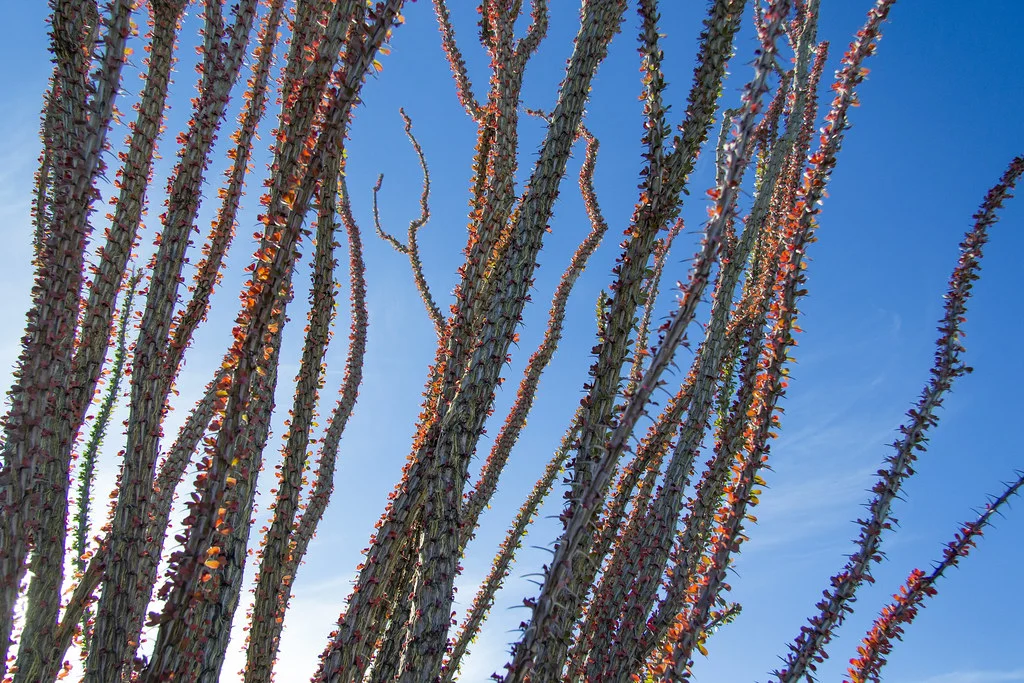
Ocotillo is a living sculpture that blooms. Tall, silvery canes striped with dark lines fan out like a vase of branches, and in spring each one lights up with a red-orange torch of flowers that hummingbirds and big carpenter bees love. After a rain, the canes pick up bright green leaves, and when the soil dries, the stripes and curved spines take center stage again. Plant one in the spot you want people to notice, and it works like an exclamation point for your whole yard.
Is ocotillo a good choice for my yard?
Yes, if…
- You have a slope that faces the sun. A south-facing hillside or a gentle to moderate grade gives ocotillo the warmth it likes and lets water run off before the roots can sit in it.
- You want height without planting a tree. Ocotillo goes up, not out, so it fits a back corner or the side of a courtyard.
- You want hummingbirds to show up in spring without hanging a feeder.
- You’d rather not drag a hose around. Once established, it wants water only every 2 to 4 weeks in the hottest stretch and little or none in cool months.
- You want a fence that grows itself. Plant individual ocotillo canes close together and you get a spiny living wall that even the neighbor’s dog will steer around.
Skip it if…
- Your soil stays soggy or turns to heavy clay that holds water.
- A sprinkler hits the spot. Too much water after planting can kill it.
- Your winters bring long, hard freezes. It handles a dip to about 10°F but doesn’t like a long cold spell.
- You want green leaves year-round. Ocotillo is bare when it’s dry.
- The spot is right beside a walkway where people brush past. The canes are spiny.
Where is ocotillo native?
Native to 5 US states
Sources: NatureServe, Royal Botanic Gardens, Kew (World Checklist of Vascular Plants) and the USDA PLANTS Database, compiled by The Plant Native. How we map native ranges
In the US, ocotillo grows wild in Arizona, California, Nevada, New Mexico, and Texas, and it continues south into northern Mexico.
Plant one in the spot you want people to notice, and it works like an exclamation point for your whole yard.
Why ocotillo matters
The flowers are red tubes full of nectar, and the line of visitors is longer than you’d guess. Hummingbirds and carpenter bees both work the blooms, along with verdins and orioles. In southern Arizona, the flowers open just as hummingbirds head north, and plants that bloom during that migration set more seed per flower.
The flower buds make nectar before they even open, and the insects that come for it may help cut down on plant-eating damage from other desert critters. Once the flowers fall, the party moves to the ground. Antelope ground squirrels eat the fallen flowers and seeds, and seed-eating birds and small mammals get in on it too. In one study, mule deer treated the flowers as a dry-season snack bar, when little else was in bloom.
Ocotillo through the seasons
Spring
This is the show. Bright bunches of red-orange flowers open at the tip of every cane, and the hummingbirds and bees arrive on schedule. Spring is also the best time to get a new plant in the ground.
Summer
Monsoon and other warm-season rains turn the bare canes green, and the leaves can come and go several times as the soil wets and dries. Ocotillo can also throw out a few flowers after summer rains. A late bloom is a bonus, not a given.
Fall
Ocotillo still follows the rain. A good soak brings out fresh leaves, and a dry spell sends them packing. There’s nothing for you to do but watch.
Winter
The leaves are gone, and now you can see every cane: pale gray, striped dark, and bristling with spines. Established plants need little or no water in the cool months, so enjoy the view and leave the hose coiled.
Where ocotillo shines in your yard
- Front yard centerpiece. One ocotillo with open space around it needs no supporting cast. The canes rise from the base in a vase shape you won’t find on any other desert plant, and the whole thing stands on its own.
- Courtyard or patio corner. Tall and open, it adds height without blocking the view.
- Warm, well-drained slope. A sunny slope gives the drainage it wants without any extra work.
- Property edge. The spiny canes make a screen or a fence line that people think twice about crossing.
- Window view. Plant it where you can watch hummingbirds work the flowers from your kitchen.
How to grow ocotillo
Where to plant
Pick a sunny, warm spot with sandy or gravelly soil. Test it first: fill the planting hole with water. If it drains within an hour, you’re set. If it’s still sitting there, choose another spot. If the plant came with a clear orientation, set the south side of the canes facing south, the way it grew.
When to plant
March through May gives the best results. Don’t panic if the leaves drop after planting; that’s normal, and most plants leaf out again within 6 to 9 months.
Spacing
Plan for a width of 3 to 6 feet, and give it about 6 feet to the next big plant.
Beginner tip
The easiest way to lose an ocotillo is to love it too much. Set a watering reminder for the first year or two, then put the hose away. To check a plant is alive, bend a cane. Pliable and green means it’s fine.
Watering
Water at least weekly in summer and twice a month in winter until it settles in, which can take 6 to 24 months. After that, it needs little or no water in cool months and a drink every 2 to 4 weeks in the hottest stretch. Overwatering after planting can kill it. Skip the compost, and if your soil is heavy, mix in about 30 percent coarse sand when you backfill. Don’t prune the tops, and don’t bother staking; for a bare-root plant that could tip over, a few large stones about 6 inches from the trunk will hold it.
Planting card
Fouquieria splendens
The trickBend a cane to check it’s alive: pliable and green means it’s fine.
What are good pairings for ocotillo?
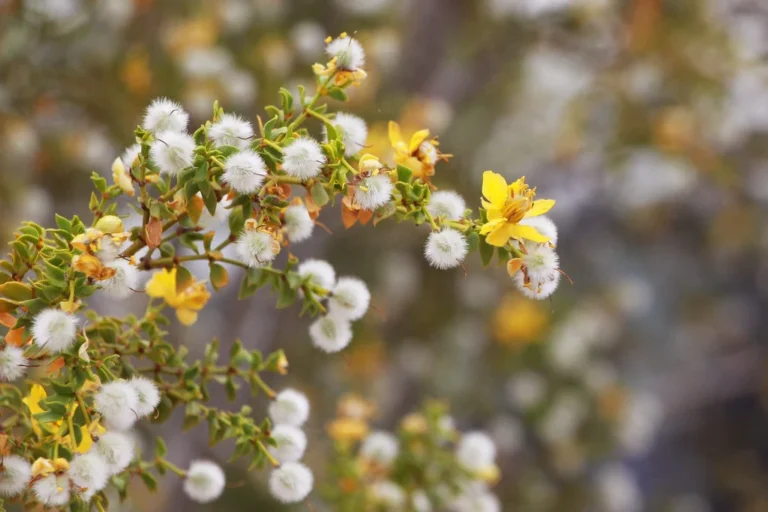
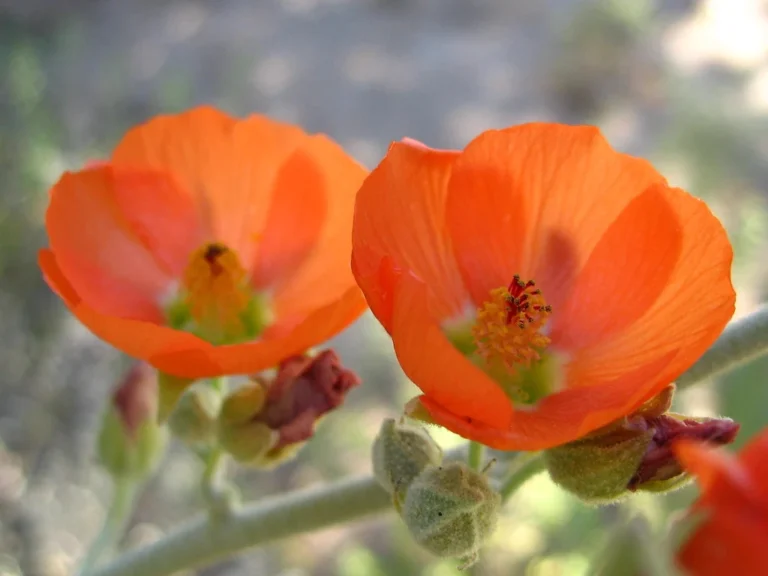
Ocotillo grows wild alongside fairydusters, brittlebush, creosote, and mesquites, so those are the easy matches. For color at its feet, try desert marigold, desert globemallow, and penstemons, which like the same fast-draining ground.




Where can I buy ocotillo?
Buy ocotillo from a native plant nursery that can tell you where its plants came from, since many nursery ocotillos are salvaged or collected from the wild. Look for Fouquieria splendens on the tag, and ask whether it’s bare-root or container-grown, since each gets planted a little differently.
Potential challenges
Deer and other nibblers
Deer use ocotillo lightly: in Arizona and New Mexico diet studies, it made up 1 to 5 percent of what deer ate. Ocotillo isn’t formally rated for deer, and the rabbit and javelina aren’t considered an active threat. Antelope ground squirrels eat fallen flowers and seeds, and desert bighorn sheep browse it in one Arizona mountain range. That makes for a plant most animals treat as an occasional snack, not the main course.
Too much water
This is the one that gets people. Soggy soil or a sprinkler overwatering a new plant can kill it, so give it fast-draining ground and a firm watering schedule for the first year or two.
A slow, bare start
A new ocotillo often drops its leaves after planting and stays stick-like for months. That’s normal, not a mistake. A cane that bends and shows green underneath is alive.
Pests and pruning
No insect pest or disease is documented for ocotillo. Leave the canes uncut, since it generally shouldn’t be pruned.
A note on cultivars and relatives
Ocotillo is the best-known member of a small family of about 11 species, mostly in Mexico, that includes several tree ocotillos and the boojum tree of Baja California. Despite the spines and the desert address, the family isn’t closely related to cacti.
FAQs
Is ocotillo a cactus or a succulent?
Ocotillo isn’t a cactus. It’s the best-known member of a small family that isn’t closely related to cacti. It just dresses like one, with spines, bare stems, and a desert address.
Is ocotillo hard to grow?
Not if the soil drains and you hold back on the hose. The first one to two years need a schedule, weekly in summer and twice a month in winter. After that, it mostly runs itself.
What is ocotillo good for?
Ocotillo is good for adding height and a spring flower show to a dry yard, and it feeds hummingbirds while it does. Planted close together, the spiny canes make a living fence. People have used it for a long time, too: the Cahuilla ate the flowers and fruits, and the bark resin is used to condition leather.
Is ocotillo poisonous to dogs?
Toxicity to dogs hasn’t been confirmed for ocotillo. The clearer hazard is the stout thorns along the canes, so plant it away from the spots where dogs and kids run.
Will deer eat it?
Deer rarely eat ocotillo. In Arizona and New Mexico diet studies, it made up 1 to 5 percent of what deer ate, though mule deer in one Mexican study did eat the flowers in the dry season. Rabbits and javelinas aren’t considered an active threat, and antelope ground squirrels eat the fallen flowers and seeds.
Plant nerd fact
A hummingbird flower run by bees
Red, tube-shaped flowers say “hummingbird,” but a 10-year watch in Big Bend National Park found carpenter bees doing most of the visiting. More than half the pollen stored in 16 carpenter bee nests came from ocotillo.
The canes have held up a lot of Southwest life. The Cahuilla used the dried stems for fences, houses, and shade roofs, and people still plant cut canes close together as a living fence, a row of sticks that goes green when the rain comes.
Ocotillo has the confidence of a plant that knows it looks cool. It spends months as a bundle of spiny sticks and doesn’t care what anyone thinks, then lights up in spring and everyone wants to know where you got it. The hummingbirds already knew. Find more natives that look great on their own, or browse the full plant library. Happy planting!
Sources
- Arizona-Sonora Desert Museum. “Ocotillo (Fouquieria splendens) Fact Sheet.” Accessed November 10, 2026.
- Kew. “Fouquieria splendens.” Plants of the World Online. Accessed November 10, 2026.
- Lady Bird Johnson Wildflower Center. “Fouquieria splendens (Ocotillo).” Accessed November 10, 2026.
- Marfa Public Radio. “Bees and Blooms: The Hidden Dance of Ocotillo Pollination in Big Bend.” Nature Notes, August 28, 2025. Accessed November 10, 2026.
- Native Plant Society of Texas. “Fouquieria splendens.” Accessed November 10, 2026.
- NatureServe. “Fouquieria splendens.” NatureServe Explorer. Accessed November 10, 2026.
- New Mexico State University. “Ocotillo.” Low Water Plants. Accessed November 10, 2026.
- THERYA. “Ocotillo Flowers as Food Resource for the Mule Deer During the Dry Season.” THERYA 8, no. 2 (2017): 185 to 188. Accessed November 10, 2026.
- University of Arizona Arboretum. “Sonoran Native Virtual Tour: Ocotillo.” Accessed November 10, 2026.
- University of Arizona Campus Arboretum. “Planthropology: Traditional Uses of Plants.” Accessed November 10, 2026.
- University of Arizona Cooperative Extension, Yavapai County. “Growing Ocotillo.” July 20, 2016. Accessed November 10, 2026.
- University of Arizona Cooperative Extension. “Javelina Plant Resistance Ratings (AZ2098a).” Accessed November 10, 2026.
- University of Arizona Cooperative Extension. “Ocotillo.” Accessed November 10, 2026.
- University of Arizona Cooperative Extension. “Rabbit Plant Resistance Ratings (AZ2098c).” Accessed November 10, 2026.
- USDA Forest Service. “Ocotillo.” Fire Effects Information System. Accessed November 10, 2026.
Similar plants
-
 Chuparosa
-
 Creosote Bush
-
 Fairydusters
-
 California Buckwheat
-
 Apache Plume
-
 Texas Sage
-
 Mesquites
-
 Desert Willow
-
Buckwheat
Updated Find more: Orange Red Deer Resistant Flowering Shrub Hummingbird Favorite Spring Summer Full Sun Dry Drought-Tolerant
The ads on this site help pay real native plant nerds to research and write these guides.
Garden notes
Notes from people who’ve grown it
Tips, wins, and the occasional disaster. If you’ve grown ocotillo, share the advice you’d give to a neighbor.
No notes yet. Yours could be the first.
Grown ocotillo? Tell the next person what you wish someone had told you.
Tap anywhere to close


