

Highlights
Rosebay rhododendron (Rhododendron maximum) looks like it would be right at home in an English garden as a magnificent hedge with beautiful flowers. However, it is native to the rolling landscapes of the Appalachian Mountains. It grows in the shade, forming dense thickets in moist valleys and on the rocky cliffs of waterfalls. When it flowers, the petals change color as they bloom. They start as pinkish buds, then turn into brilliant white flowers as they open. If you’ve been looking for a nice hedge that provides pollinator value, you’ve come to the right place.

Is rosebay rhododendron right for my yard?
Plant it if…
- You’re looking for a large hedge. Rosebay rhododendron can grow quite large in the wild, so it makes for a nice hedgerow.
- You have acidic soil. Rhododendrons are known to like acidic conditions, so plant it in the soil that’s too sour for other plants.
- You want a shade-blooming flower. Not only does it handle shade, but the pale colors of rosebay rhododendron want shade to thrive.
- You want to support specialized bees. Rosebay rhododendron attracts a variety of pollinators, including one species of bee that relies on rhododendrons.
- You want to attract hummingbirds. Hummingbirds are a major pollinator of native azaleas and rhododendrons, including rosebay rhododendron.
Skip it if…
- You want something small. Rosebay rhododendron may look dainty, but it loves to grow tall and wide.
- You want a shrub that loves the sun. Rosebay rhododendron is a bit shy, and too much sun will scorch the leaves.
- You have clay or waterlogged soil. Like many rhododendrons, rosebay rhododendron is prone to root rot.
- You’re a hobby beekeeper. Honey made from rosebay rhododendron can be just as toxic as the flower itself.
Where is rosebay rhododendron native?
Native to 19 US states
Sources: NatureServe, Royal Botanic Gardens, Kew (World Checklist of Vascular Plants) and the USDA PLANTS Database, compiled by The Plant Native. How we map native ranges
Rosebay rhododendron is native to the eastern United States, from Maine down to Alabama and Georgia. It naturally occurs in the Appalachian Mountains, growing on slopes, rocky areas, and valleys. It is particularly abundant in the Great Smoky Mountains, where it can be seen growing into grand, sprawling thickets of white flowers. You can see the state-by-state record at NatureServe Explorer.
With a cluster of flowers facing in each direction, a circle of creatures can all feast from the buffet of nectar.
Why rosebay rhododendron matters
Rosebay rhododendron is an evergreen shrub that provides plenty of interest to your garden. It grows fairly quickly, making it an excellent choice for a privacy hedge. It looks dainty with its pinkish white flowers, but this plant is also tough and resilient in the face of a variety of challenges.
The flowers also do something very interesting: they change color. When the flower buds first emerge, the pink petals are tightly wrapped in a teardrop shape. Then, as they open, the color goes from rosy to pale pink, then finally a brilliant white. These blooms are organized into globe-shaped clusters on the ends of the branches, absolutely covering the plant with color at the height of the flowering season.

This plant supports pollinators and specialized bees
Not only are these flowers pretty, but they also provide for pollinators. Rosebay rhododendron is far from picky; many pollinators are attracted to its nectar. Butterflies, hummingbirds, and bees all act as pollinators for rosebay rhododendron. The flowers themselves also make it much easier for multiple pollinators to feed at the same time. With a cluster of flowers facing in each direction, a circle of creatures can all feast from the buffet of nectar.
There is also one type of bee that relies on rosebay and other rhododendrons to survive. The azalea mining bee (Andrena cornelli) is a ground-nesting bee that has specialized to feed on azaleas and rhododendrons. These bees are solitary in nature, so it is hard to tell how many of them are out there. However, they are considered imperiled in some states, according to NatureServe Explorer. Especially if you live in the upper part of its range, planting rosebay rhododendron will provide critical food for the azalea mining bee, as well as many other pollinators.
Rosebay rhododendron is also native to a temperate rainforest
When we think of the natural beauty of the United States, we don’t tend to think of rainforests as part of the landscape. However, the southern Appalachian Mountains are home to a temperate rainforest on the Cashiers-Highlands Plateau.
In June of 2026, I had the fortune of getting to see this temperate rainforest for myself. The Cashiers-Highlands Plateau is one of the most biodiverse places on Earth, and one of the most biodiverse places in the eastern United States. The forest is full of different leaf shapes, and no two trees of the same species will occur next to each other. Beneath the forest canopy, huge rhododendrons dominate the hills in sprawling thickets.
I was there at just the right time to see the rosebay rhododendrons in bloom. The house we stayed at was surrounded by them, and my girlfriend and I collected fallen oak twigs out of their branches to start fires each evening. As we hiked to waterfalls, we weaved through shrubs that formed their own canopy below the trees. Standing by the water, they towered over us from the opposite side of the bank. They grew off of the rocky cliff faces, on steep slopes, and right on the edges of streams. In its natural habitat, rosebay rhododendron is truly a sight to behold, and planting one in your own yard brings a piece of that beauty home.
Where rosebay rhododendron shines in your yard
- Privacy hedges: Rosebay rhododendron grows quite large, with dense leaves and stems that can give you the privacy you need.
- Butterfly or pollinator gardens: Butterflies, bees, and other pollinators are attracted to the nectar of rosebay rhododendron. Pair it with other pollinator plants to create a lively garden.
- Woodland garden: This plant naturally thrives in the woodlands of the Appalachian Mountains, so planting it in a woodland garden will mimic its natural home. The large trees will create the shade that rosebay rhododendron needs.
- Shade garden: Rosebay rhododendron thrives in the shade, so it makes for a wonderful addition to a collection of shady plants.
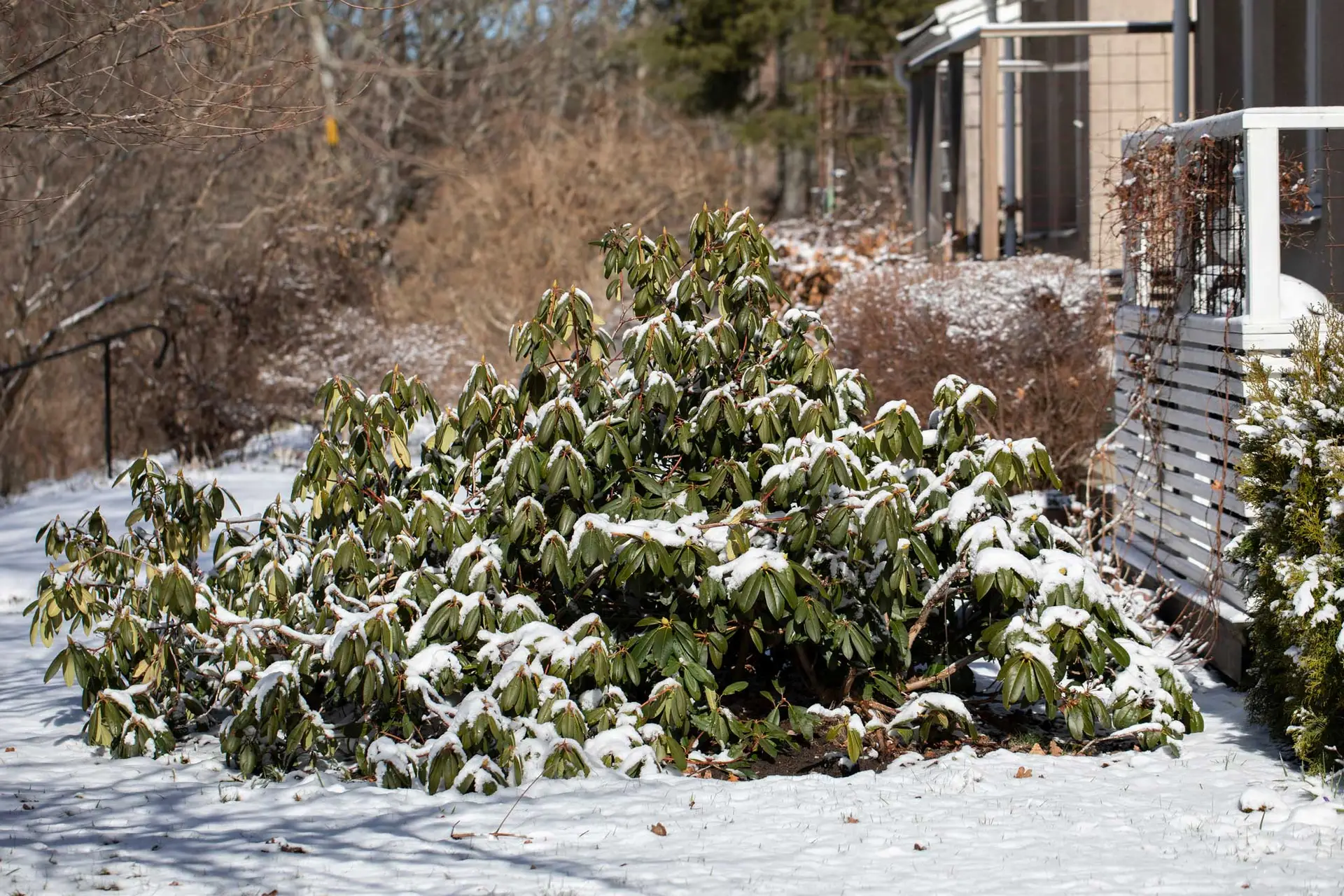
- Winter interest: Rosebay rhododendron is evergreen, so the leaves will stay on the plant through the dead of winter. Planting it as the backdrop to your garden will give you something green during the coldest months.
How to grow rosebay rhododendron
Where to plant
Shade is important. Dappled sunlight, part shade, or full shade: anything but full sun. With most plants, full sun results in the best flowers. However, rosebay rhododendron flowers just fine in the shade, so you can plant it somewhere you wish you could get flowers.
In terms of soil, acidic, moist, and well-drained are key considerations. Rosebay rhododendron likes it moist, but it cannot handle clay or compacted soils. It is very susceptible to root rot, so try to avoid somewhere that will give it wet feet. Adding wood chips, pine needles, fir bark, or compost can also improve drainage. Additionally, you may want to check your soil pH before planting, as the maximum pH rosebay rhododendron can handle is between 5.5 and 6. However, if you already have blueberries or azaleas in your garden, this plant will fit in without any extra work.
When to plant
Your local climate is an important factor to consider when deciding when to plant rosebay rhododendron. According to the American Rhododendron Society, “In colder areas, early spring planting is recommended… In hot areas, fall planting is recommended.” Since rosebay rhododendron is evergreen, it does not have the same dormancy period many deciduous plants do. Your choice of planting time depends much more on whether you have harsher winters or summers, as the plant is tougher after it has adapted to your garden.
Spacing
At least 12 feet of space is ideal, though rosebay rhododendron can grow much larger if you let it. It has a tendency to form dense thickets in the wild, so it will happily fill in more space if you let it. You can also do a bit of pruning to keep it in check if you want to.
Watering
The American Rhododendron Society recommends watering rhododendrons prior to planting. Once it has been planted, rosebay rhododendron can subsist off of rainfall alone. In fact, this plant is prone to root rot, so giving it too much extra water can do harm. The soil should be moist, not wet, and you’re more likely to overwater it than underwater it.
Planting card
Rhododendron maximum
Pruning
If your rosebay rhododendron is getting too big for your liking, you’re in luck, as it responds quite well to pruning. The best time to prune rosebay rhododendron is right after it flowers, so you’ll want to get out the pruners in midsummer. Late summer or fall is less desirable, as any new growth can be more sensitive to frost damage. The plant also sets its buds toward the end of the summer, so pruning too late can result in accidentally cutting off next year’s flowers.
Beginner tip
Avoid planting rosebay rhododendron near concrete structures, including foundations. This is because concrete can leach chemicals that create alkaline soil conditions. These conditions can be harmful to rosebay rhododendron, as it needs acidic soil in order to thrive.
Depending on your goal, there are different ways to prune your rhododendron. The American Rhododendron Society has a guide that discusses this in more detail. However, regardless of what you’re trying to accomplish, you’ll want to cut as close to the growth bud as you can when pruning. Short branch stubs can act as vectors for pests and diseases to enter through. Pruning close to the growth bud allows the wound to heal. These buds will then grow into new shoots, including new flower buds.
What pairs well with rosebay rhododendron?
This plant is a tough, shade-loving, and thicket-forming shrub with shallow roots. Ideal companion plants are trees and shrubs that can handle acidic soil conditions and a little bit of shade.


Where can I buy rosebay rhododendron?
Most big-box garden centers don’t carry true natives, but rosebay rhododendron is easier to find than you might think. Your best bets are a native plant nursery near you, a native plant society sale, or a trusted online grower that ships to your region.
Potential challenges with rosebay rhododendron
Phytophthora root rot
Among ornamental shrubs and trees, many are incredibly susceptible to a disease called Phytophthora root rot. This includes rhododendrons like the rosebay rhododendron, as their preferred moist soil conditions can also be a breeding ground for pathogens. Wet feet is the ultimate prize for Phytophthora.
Phytophthora is a water mold that behaves like a fungus and can spread through contaminated puddles or runoff. Once in the soil, it can survive for years with adequate moisture. When Phytophthora infects rosebay rhododendron, it will look like the plant has permanently wilted. The leaves will begin to droop, then die and fall off. It may appear as if the plant is experiencing drought-related stress. If you give it water, however, this will only make the problem worse. The roots underneath will already be starting to rot, and the plant will die only a few years after symptoms first appear.
This may sound scary, but there are ways to prevent Phytophthora root rot. First, make sure the planting site has good drainage. Heavy clay or compacted soil is not a good place to plant rosebay rhododendron. Planting the root ball high up in the soil and adding pine bark are also recommended. When planting, keep soil away from the base of the trunk, as this is where the infection will typically occur.
Exobasidium galls
This is something I encountered on my trip to Highlands, North Carolina in June 2026. At first, it looked like some kind of insect cocoon, growing on the leaves and spent flower clusters. However, these growths are the work of a fungus known as Exobasidium.
Exobasidium fungi primarily target plants in the Ericaceae family. Other than rhododendrons, these fungi can also infect camellias, blueberries, and cranberries. Unlike many other fungi, Exobasidium relies on infecting living tissue in order to survive. They are unlikely to kill the plant, but they can look pretty creepy if you find them on your plants. Exobasidium parasitizes its host plant, absorbing nutrients and distorting the tissue. This usually takes the form of swollen, fleshy galls on the leaves, stems, shoots, and even flowers. Once the fungus has matured, the galls will then turn white, covered in powdery spores.
If the infection is severe enough, it can stunt the growth of the plant, so it’s a good idea to take care of it quickly. Removing infected leaves or pruning branches is the simplest method. It is best to do so before the galls turn white, as removing them then may disperse the spores and lead to reinfection. After removal, take the galls out of the area and dispose of them. You may need to repeat this process for a few years in order to make sure there are no more spores.
High toxicity
Rosebay rhododendron is a very beautiful shrub, but it is less than ideal if you have curious kids or pets around. All parts of the plant contain grayanotoxins, a chemical that can cause fatal toxicity if ingested. Thankfully, it takes a fairly large amount of it to become toxic, and it doesn’t cause any harm when touched. Most poisonings happen through honey made from rosebay rhododendron nectar. As such, the plant poses little risk unless you are a hobby beekeeper.
A note on cultivars and related species
Rosebay rhododendron has been used as a parent in many hybrids, both with other native species and non-native species. The “International Rhododendron Register & Checklist” lists hundreds of hybrid cultivars, many of which include rosebay rhododendron. However, there are also some cultivars and natural varieties, and we have shared a few below:
- ‘Independence’: A cultivar with a dense, rounded form and clear pink flowers.
- ‘Leachii’: A cultivar with a more compact habit than the straight species.
- ‘Roseum’: While sold as a cultivar, this is a naturally occurring variety with pink or lavender flowers.
- ‘Summertime’: A white-flowered cultivar with pinkish edges and yellow or green spots on the throat.
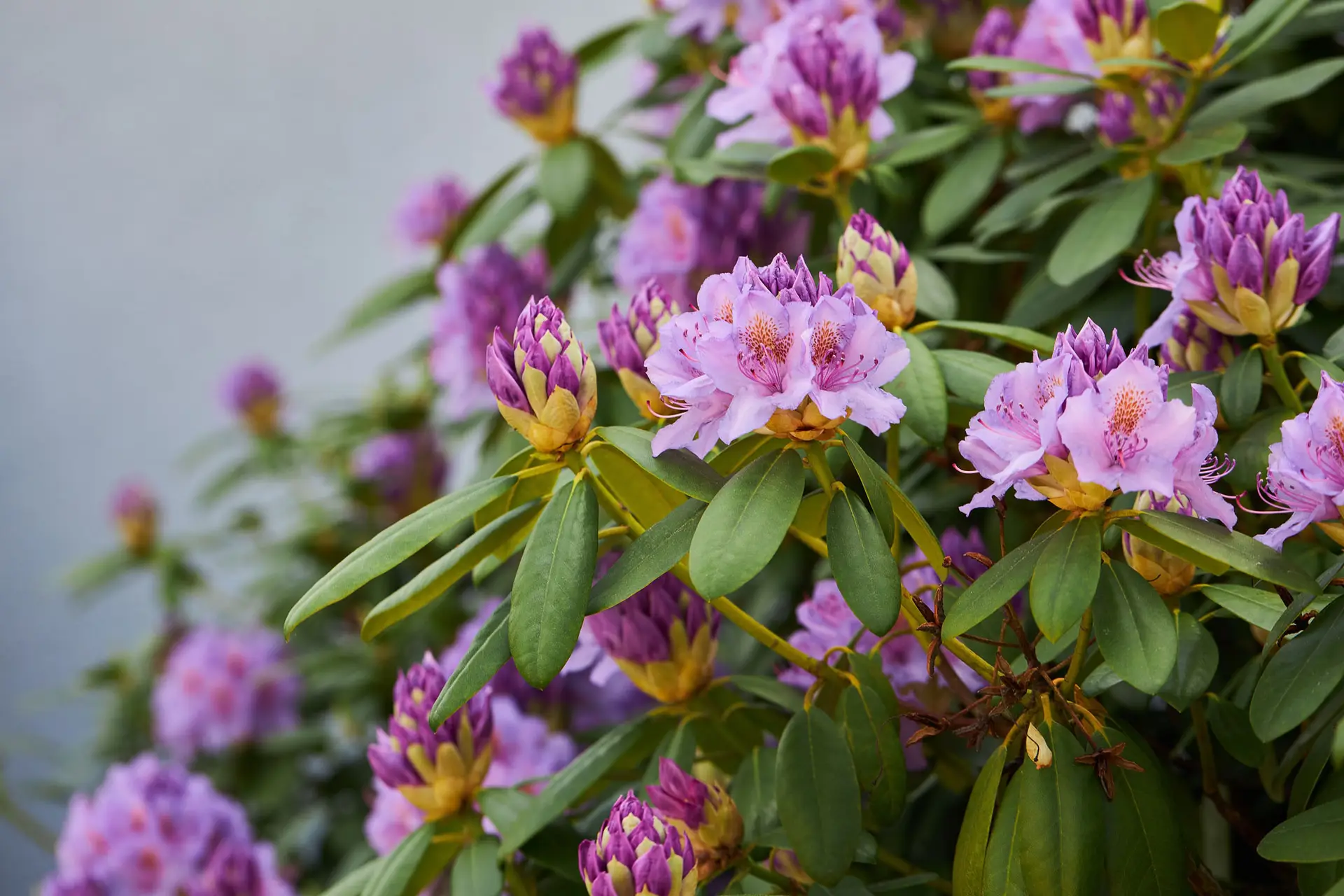
There is also another species of rhododendron referred to by the name rosebay. Rhododendron catawbiense, or the mountain rosebay, is a similar species that occurs in the same habitats in nature. Here is how to tell them apart:
Rosebay Rhododendron
Rhododendron maximum
- Pink buds that fade to white flowers
- Blooms later: Flowering tends to happen in June
- Grows up to 30 feet tall
- Native to the eastern United States
Mountain Rosebay
Rhododendron catawbiense
- Pink or purple flowers
- Earlier bloom time: Flowers as early as April
- Shorter shrub: Tops out around 20 feet tall
- Native to the Southeast United States
FAQs
Can rosebay rhododendron grow in full sun?
If you live in a cool climate that doesn’t have a lot of intense sun, maybe. But in general, no. Rosebay rhododendron was made for the shade, and too much sun can scorch the leaves. If you don’t have a properly shaded area, dappled sunlight is still enough. The key is to protect it from the afternoon sun.
How big does rosebay rhododendron get?
This depends heavily on the region you plant it in. In the North, it can grow 4–15 feet in height with a 12-foot spread. However, it becomes much larger as you travel south. In the South, it can top out at 30 feet tall, forming massive thickets in the wild. Practically speaking, rosebay rhododendron will grow as big as you let it in ideal conditions.
How toxic is rosebay rhododendron?
If eaten, toxins found in rosebay rhododendron are dangerous and potentially deadly. All parts of the rosebay rhododendron, like all members of the Rhododendron genus, contain chemicals known as grayanotoxins. If consumed, grayanotoxins can cause nausea, vomiting, slowed heart rate or breathing, and seizures. However, this plant is not harmful to the touch, and you would need to consume a significant amount to suffer from life-threatening toxicity.
The true risk of poisoning from grayanotoxins is in honey. No part of rosebay rhododendron is safe to consume, and this includes the pollen and nectar. When bees that pollinate this plant return to their hive, the honey they create will have grayanotoxins present in it. This is what causes the majority of rhododendron and azalea poisonings.
As a homeowner, simply planting rosebay rhododendron does not pose a significant risk. It won’t hurt you unless you plan to make honey out of it.
How fast does rosebay rhododendron grow?
Rosebay rhododendron is considered a fairly fast-growing shrub. However, the specifics of how fast depend on the level of light it gets. Dense shade results in a slower growth rate of 1–2 inches per branch during the growing season. On the other hand, partial shade or dappled sunlight can result in branch growth of 6–8 inches each year.
What is the rosebay rhododendron used for?
The usage of rosebay rhododendron is primarily ornamental. Due to the presence of grayanotoxins in all parts of the plant, it does not have the same medicinal or culinary uses as many other plants. The dense, multi-stemmed thicket also makes it a poor choice for firewood, though dead clusters of leaves make for a decent source of kindling in a pinch. However, the evergreen leaves and beautiful flowers are the major reason for its cultivation.
Is rosebay rhododendron evergreen?
Yes, rosebay rhododendron is a broadleaf evergreen. The leaves stay on year-round, giving you a bit of color when everything else is just bare sticks.
What is the difference between rosebay rhododendron and mountain laurel?
Rosebay rhododendron (Rhododendron maximum) and mountain laurel (Kalmia latifolia) often occur together in nature, forming thickets decorated with globe-like clusters of pinkish-white flowers and evergreen leaves. As such, it can be difficult to tell them apart at first glance. However, we have a few tips that can help you correctly identify which plant you’re looking at.
First, mountain laurel tends to be smaller. Though it can grow up to 35 feet in the right conditions, it will often stay shorter than that. The leaves are also smaller. While rosebay rhododendron has leaves that reach 8 inches long, mountain laurel leaves tend to top out at 5 inches with a point at the leaf tip. When it comes to the flowers, rosebay rhododendron has more distinct petals. It has five petals with rounded edges, and the stamens form a cluster in the center. Mountain laurel, on the other hand, has cup-shaped flowers with stamens that cling to the edges of the flower.
For a more in-depth comparison of rhododendrons, azaleas, and mountain laurels, head over to Rhododendron vs. Mountain Laurel vs. Azalea: What’s the Difference?
Plant nerd fact
A rosebay by any other name would be oleander.
Plant toxins and the history of poisonings are a world unto themselves. Oleander is among the more famous poisonous plants, sharing the spotlight with others like castor bean and poison hemlock. One popular legend details how this plant has killed campers that were unlucky enough to use its branches as skewers. You might be wondering—wait, why are we talking about oleander in a plant profile about rosebay rhododendron? The answer is in the name. Rosebay is also another name for oleander.
When it comes to common names, it gets confusing: many plants can share the same common name. However, there is enough information for us to speculate on, starting with the word “rhododendron.” To us, “rhododendron” refers to a group of shrubs in the aptly named Rhododendron genus. However, “rhododendron” in its original Greek simply means “rose tree,” with “rhodo” meaning rose and “dendro” meaning tree. Many plants went by the name “rhododendron,” including oleander.
European explorers who named this plant rhododendron may have imagined the Mediterranean plant when looking at the North American shrub for the first time. Oleander forms dense, rounded globes of five-petaled flowers in brilliant shades of pink. The resemblance is hard to miss.
Rosebay rhododendron also holds toxins: grayanotoxins found in its nectar caused poisonings from contaminated honey. The name “rosebay” is the tale of two beautiful, poisonous flowers.
Rhododendrons are a classic staple of English and formal gardens, but our own native rhododendrons are just as beautiful. Rosebay rhododendron is at home in the wooded slopes of the Appalachian Mountains, forming dense thickets of color-changing blooms. It brings an elegant touch to any garden, and the evergreen leaves provide a pop of color during the cold winter months. Of course, the flowers are not just appealing to us; the nectar attracts butterflies, hummingbirds, and even supports specialized bees. If you want colorful flowers, a lively garden, or an elegant shrub, then rosebay rhododendron is the perfect choice for your garden.
If you want to know about the other native members of the Rhododendron genus, check out our Beginner’s Guide to Native Rhododendrons or Beginner’s Guide to Native Azaleas. Curious about mountain laurels? Head over to our Beginner’s Guide to Native Mountain Laurels. Happy planting!
Sources
- American Rhododendron Society. “Glossary of Plant Terms.” rhododendron.org. Accessed July 22, 2026. https://www.rhododendron.org/glossary.htm.
- American Rhododendron Society. “Plant Culture and Care.” rhododendron.org. Accessed July 23, 2026. https://www.rhododendron.org/planting.htm.
- Anderson, Michelle D. 2008. “Rhododendron maximum.” In: Fire Effects Information System, [Online]. U.S. Department of Agriculture, Forest Service, Rocky Mountain Research Station, Fire Sciences Laboratory. https://www.fs.usda.gov/database/feis/plants/shrub/rhomax/all.html. Accessed July 23, 2026.
- Cornell University Woody Plants Database. “Rhododendron maximum.” woodyplants.cals.cornell.edu. Accessed July 22, 2026. https://woodyplants.cals.cornell.edu/plant/214.
- Froberg, Blake, Danyal Ibrahim, and R. Brent Furbee. “Plant Poisoning.” Emergency Medicine Clinics of North America 25, no. 2 (May 2007): 375–433. https://doi.org/10.1016/j.emc.2007.02.013. Accessed July 23, 2026.
- Hansen, Mary Ann. “Phytophthora Root Rot of Rhododendron and Azalea.” vtechworks.lib.vt.edu. Accessed July 26, 2026. https://vtechworks.lib.vt.edu/server/api/core/bitstreams/c0e7ea63-7e7a-48eb-8ee0-909be02f0246/content.
- Herrera, Javier. “The Reproductive Biology of a Riparian Mediterranean Shrub, Nerium oleander L. (Apocynaceae).” Botanical Journal of the Linnean Society 106, no. 2 (June 1991): 147–172. https://doi.org/10.1111/j.1095-8339.1991.tb02289.x. Accessed July 25, 2026.
- Jørgensen, Per M. “Linnaeus and the Rhododendron Names.” scholar.lib.vt.edu. Accessed July 25, 2026. https://scholar.lib.vt.edu/ejournals/JARS/v54n1/v54n1-jorgensen.html.
- Lady Bird Johnson Wildflower Center. “Kalmia latifolia (Mountain Laurel).” wildflower.org. Accessed June 26, 2026. https://www.wildflower.org/plants/result.php?id_plant=KALA.
- Lady Bird Johnson Wildflower Center. “Rhododendron catawbiense (Catawba Rosebay).” wildflower.org. Accessed June 22, 2026. https://www.wildflower.org/plants/result.php?id_plant=rhca8.
- Lady Bird Johnson Wildflower Center. “Rhododendron maximum (Great Laurel).” wildflower.org. Accessed June 22, 2026. https://www.wildflower.org/plants/result.php?id_plant=rhma4.
- Missouri Botanical Garden. “Phytophthora Root Rot of Trees and Shrubs.” missouribotanicalgarden.org. Accessed July 26, 2026. https://www.missouribotanicalgarden.org/gardens-gardening/your-garden/help-for-the-home-gardener/advice-tips-resources/insects-pests-and-problems/diseases/rot/phytophthora-root-rot-of-trees-and-shrubs.
- Native Plant Trust. “Rhododendron maximum ‘Independence’.” plantfinder.nativeplanttrust.org. Accessed July 22, 2026. https://plantfinder.nativeplanttrust.org/plant/Rhododendron-maximum-Independence.
- Native Plant Trust. “Rhododendron maximum var. roseum.” plantfinder.nativeplanttrust.org. Accessed July 22, 2026. https://plantfinder.nativeplanttrust.org/plant/Rhododendron-maximum-Roseum.
- NatureServe Explorer. “Andrena cornelli.” explorer.natureserve.org. Accessed July 27, 2026. https://explorer.natureserve.org/Taxon/ELEMENT_GLOBAL.2.982671/Andrena_cornelli.
- NatureServe Explorer. “Rhododendron maximum.” explorer.natureserve.org. Accessed October 6, 2026. https://explorer.natureserve.org/Taxon/ELEMENT_GLOBAL.2.155621/Rhododendron_maximum.
- North Carolina State Extension. “Kalmia latifolia.” plants.ces.ncsu.edu. Accessed July 26, 2026. https://plants.ces.ncsu.edu/plants/kalmia-latifolia/.
- North Carolina State Extension. “Rhododendron catawbiense.” plants.ces.ncsu.edu. Accessed July 22, 2026. https://plants.ces.ncsu.edu/plants/rhododendron-catawbiense/.
- North Carolina State Extension. “Rhododendron maximum.” plants.ces.ncsu.edu. Accessed July 22, 2026. https://plants.ces.ncsu.edu/plants/rhododendron-maximum/.
- Penn State Extension. “Azalea and Rhododendron Diseases.” extension.psu.edu. https://extension.psu.edu/azalea-and-rhododendron-diseases. Accessed July 26, 2026.
- Pettis, Steve. “Pest Alert: Rhododendron/Azalea/Camellia Leaf Gall.” henderson.ces.ncsu.edu, June 2, 2023. https://henderson.ces.ncsu.edu/news/pest-alert-rhododendron-azalea-camellia-leaf-gall/. Accessed June 23, 2026.
- Royal Horticultural Society. “The International Rhododendron Register & Checklist (Vol. 1).” rhs.org.uk. Accessed July 22, 2026. https://www.rhs.org.uk/plants/pdfs/plant-register-supplements/rhododendrons/the-international-rhodo-reg-checklist-vol-1.pdf.
- Royal Horticultural Society. “The International Rhododendron Register & Checklist (Vol. 2).” rhs.org.uk. Accessed July 22, 2026. https://www.rhs.org.uk/plants/pdfs/plant-register-supplements/rhododendrons/the-international-rhodo-reg-checklist-vol-2.pdf.
- Stewart, Amy. Wicked Plants: The Weed That Killed Lincoln’s Mother & Other Botanical Atrocities. Chapel Hill, NC: Algonquin Books of Chapel Hill, 2009.
- Suchard, Jeffrey R., Jerald Lim, and Kenneth Schmitt. “Food Poisoning by Oleander Skewers: Investigation of a Toxicologic Urban Legend.” Journal of Medical Toxicology 20, no. 2 (2024): 222–225. https://doi.org/10.1007/s13181-024-00993-3. Accessed July 25, 2026.
- USDA PLANTS Database. “Rhododendron maximum L. Great Laurel.” plants.usda.gov. https://plants.sc.egov.usda.gov/plant-profile/RHMA4. Accessed July 22, 2026.
- Vermont Atlas of Life. “Azalea Mining Bee (Andrena cornelli).” val.vtecostudies.org. Accessed July 27, 2026. https://val.vtecostudies.org/projects/vtbees/Andrena-cornelli/.
- Willis, C. Benton, Michael Goodnight, Jessica Velte, Marin T. Brewer, and Matthew Smith. “Odd Fruits: Gall and Leaf Spot Diseases Caused by Exobasidium Fungi.” EDIS 2026 (April 20, 2026). https://doi.org/10.32473/edis-pp389-2026. Accessed July 23, 2026.
Similar plants
-
 Mountain Laurels
-
 Azaleas
-
 Inkberry
-
 Highbush Blueberry
-
 Holly
-
 Virginia Sweetspire
-
 Possumhaw
-
 Ninebark
-
 Buttonbush
Updated Find more: Pink White Acidic Evergreen Evergreen Shrub Flowering Shrub Shrub Summer Part Sun Full Shade Moist
The ads on this site help pay real native plant nerds to research and write these guides.
Garden notes
Notes from people who’ve grown it
Tips, wins, and the occasional disaster. If you’ve grown rosebay rhododendron, share the advice you’d give to a neighbor.
No notes yet. Yours could be the first.
Grown rosebay rhododendron? Tell the next person what you wish someone had told you.
Tap anywhere to close


