




Highlights
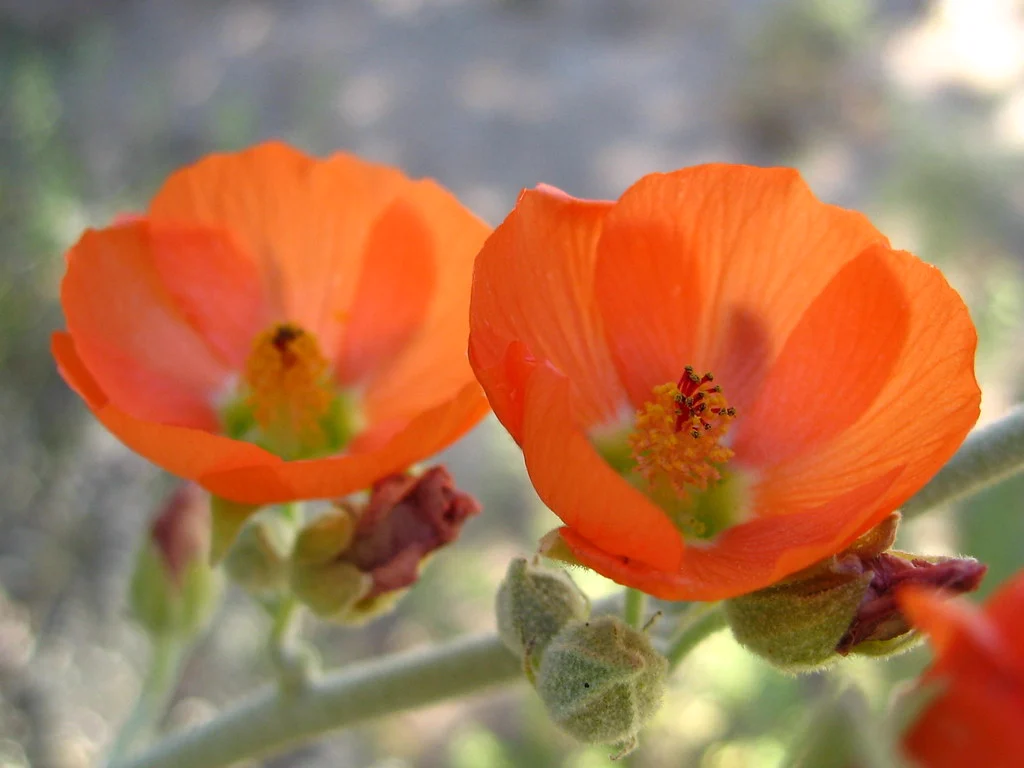
Imagine a burst of tiny apricot-colored teacups bringing all the buzz to your yard every spring. That’s what you get with desert globemallow (Sphaeralcea ambigua). In return, it asks for just a few things: full sun, rocky or sandy soil, and a gardener who forgets the hose. Spring is the big show, with flowers off and on through November. The plant reseeds, so one clump can become a whole patch. Seedlings sometimes bloom in a different color than their parent, which makes for a nice surprise! If the strip along your driveway has beaten every other plant, start here.
Is globemallow right for my yard?
Yes, if…
- Your driveway edge is a gravel pit where every plant you’ve tried has died. This one moves in like it’s been waiting for the spot.
- You love spring color but forget to water. Rainfall is enough for it.
- You’d like a garden that plants itself. It drops seed, and new plants pop up on their own.
- Bees are on your guest list. Native bees line up for these flowers.
- A cold winter makes you nervous. It’s hardy to -10°F, so most freezes don’t bother it.
Skip it if…
- Your yard is shady or soggy. It wants full sun and dry feet, so a spot under a downspout or in sprinkler range won’t work.
- You live well outside the desert Southwest. Check the native range below before you buy.
- You want a plant that stays put. It reseeds and spreads by underground stems, so it wanders.
- You like to rearrange. It hates being moved, so pick its spot once and stick with it.
- You brush past your plants a lot. The leaf hairs can irritate eyes, so keep it away from the front door or a tight path.
Where is desert globemallow native?
Native to 4 US states
Sources: NatureServe, Royal Botanic Gardens, Kew (World Checklist of Vascular Plants) and the USDA PLANTS Database, compiled by The Plant Native. How we map native ranges
It’s the first guest at an empty party, and it brings bees.
Why globemallow matters
Bees are the headline here. Globemallow’s many flowers give a steady supply of pollen and nectar to honeybees and other insects, with special value to native bees. The common checkered skipper butterfly visits too.
It also feeds bigger visitors. Desert tortoises eat it, and it’s a top pick for tortoise gardens. Bighorn sheep and other grazing animals browse it. Hummingbirds, moths, and butterflies may visit as well. It’s also on a short list of top native plants for Sonoran Desert insects, birds, and pollinators.
Out in the desert it shows up early on burned or disturbed ground and can crowd out invasive weeds. It’s the first guest at an empty party, and it brings bees.
Globemallow through the seasons
Spring
This is the main show in warm deserts. Bowl-shaped apricot flowers open in clusters along the stems, and bloom is heaviest now. After a very wet winter, plants can shoot up to 5 feet tall, so leave them elbow room.
Summer
In the hottest time of year, flowers get sparse and patchy, but a good rain can set off another round. In cooler gardens, bloom comes later, from July through September. When the flowers fade, brown, globe-shaped seed capsules take over.
Fall
Flowers keep turning up through November, so bees still have something to visit. Fall is also the time to sow seed. Seedlings from your patch may bloom in colors that differ from their parents, so every year can bring a small surprise.
Winter
Seed sown in fall usually sprouts over winter and grows fast in spring, so the work happens before you see it. The plant is hardy to -10°F, so most cold snaps are no problem. In mild deserts, a few flowers can show up in any month when there’s enough moisture
Where globemallow shines in your yard
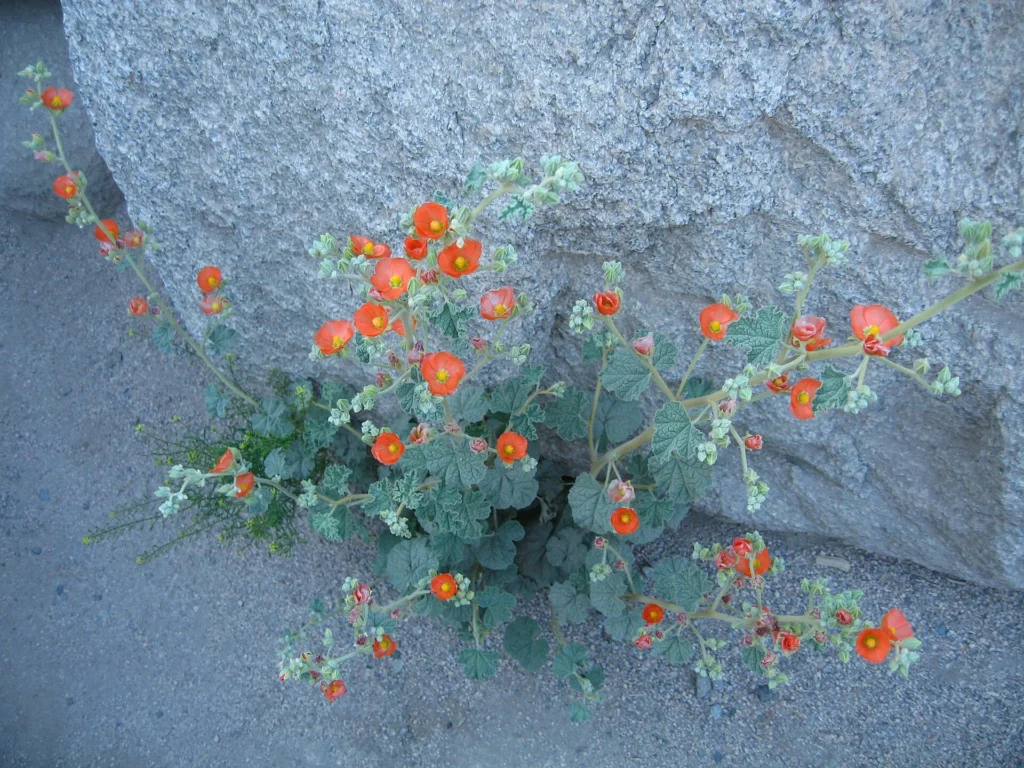
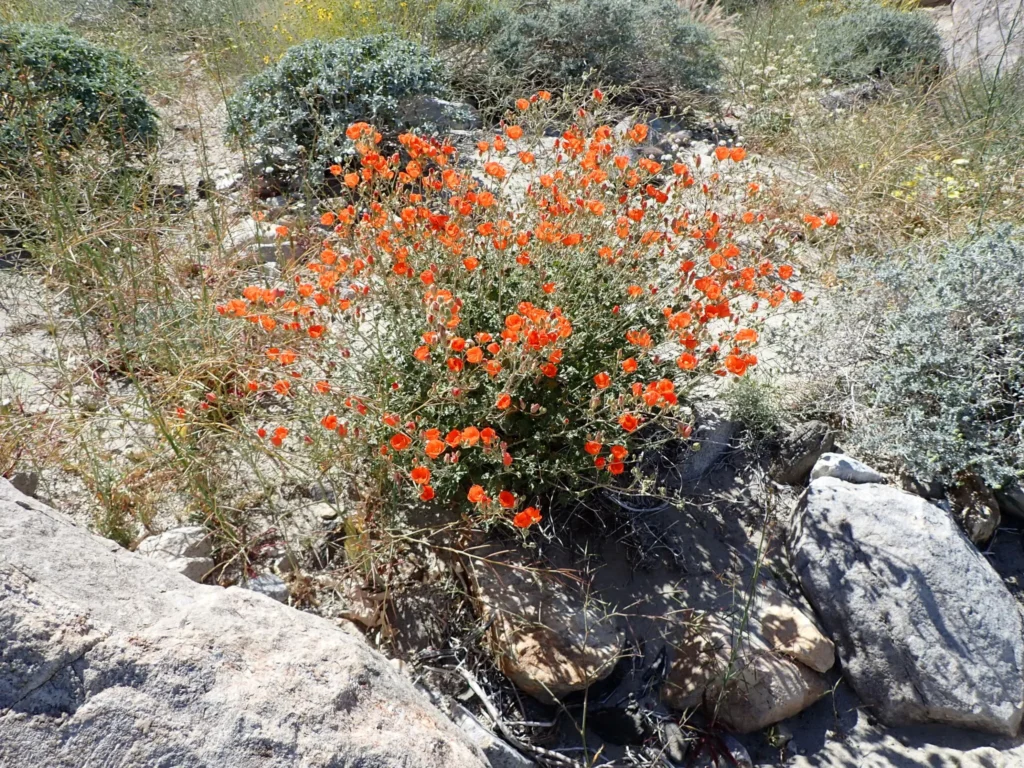
- Driveway and curb strips. The baking gravel between your driveway and the street is where most plants give up. Globemallow grows in dry, rocky or sandy soil like that in the wild, so it feels right at home.
- Roadside slopes and berms. In the wild it grows on dry, rocky slopes, and people use it for erosion control. Put it on a bank and it earns its spot.
- Front-yard pollinator patch. When it blooms, native bees and honeybees show up to work the flowers. Your front yard gets a steady hum for almost no effort.
- Tortoise-friendly yards. Desert tortoises eat it, and it’s a top pick for a tortoise garden. If one lives at your place, this is the salad bar.
How to grow globemallow
Where to plant
Pick a spot with full sun and fast-draining soil, like the gravel edge of a driveway or a sunny bank. Rocky or sandy is just right. Choose with care, because you only get one shot. This plant hates being moved. Its roots can reach 3 feet to the side, and a damaged root can kill it.
When to plant
Plant in fall. Sow untreated seed about ¼ inch deep, walk away, and let winter do the work. Seeds sprout over the cooler months, and by spring you’ve got a head start. If you miss fall, early spring works too.
Spacing
Give each plant 2 to 3 feet, because a mature clump grows 2 to 3 feet wide. Leave a little extra if you can. It reseeds and spreads, so new plants will crowd in sooner than you expect.
Watering
Keep the soil surface damp while seedlings get started so it doesn’t crust over. After that, put the hose away and let the rain handle it. A little extra water means more flowers, but that’s a bonus, not a requirement.
Planting card
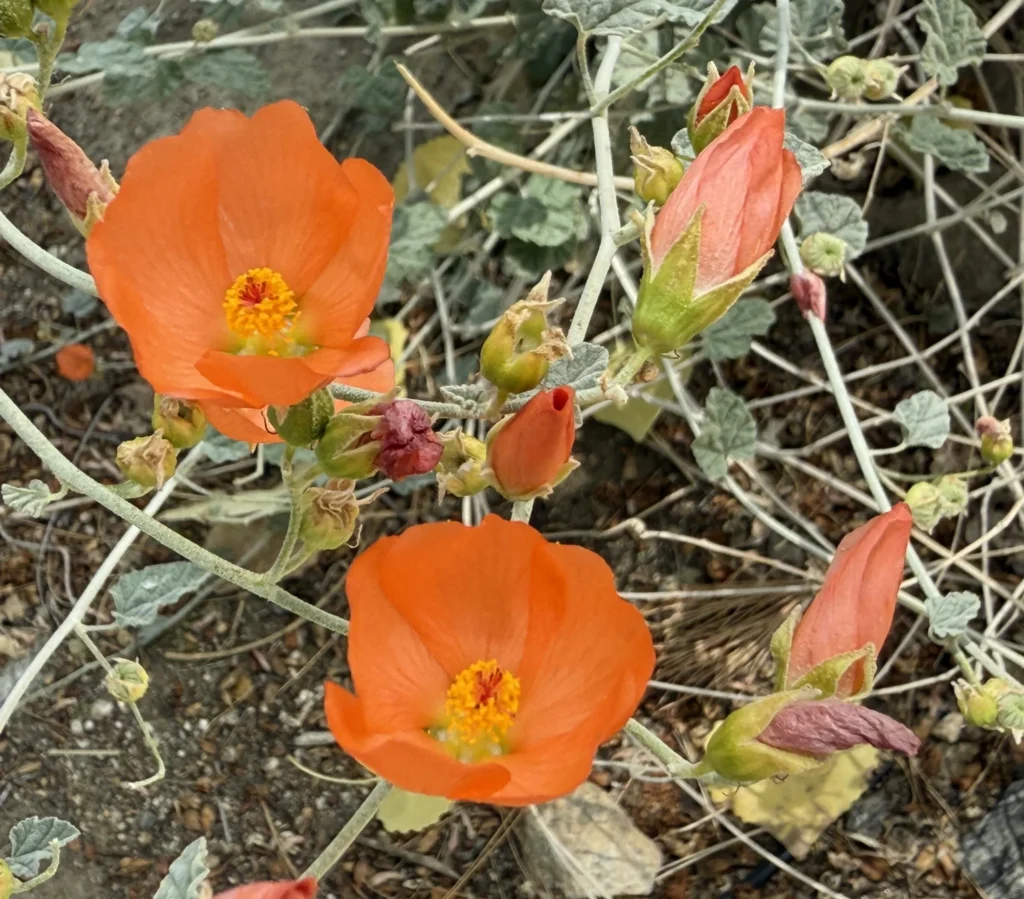
Sphaeralcea ambigua
The trickScatter untreated seed in fall and let winter rain do the work.
What to plant with globemallow
All of these like full sun and dry, well-drained soil. Orange pairs well with yellow, white, and pink.
- Desert marigold: bright yellow daisies on sandy, gravelly soil.
- Blackfoot daisy: white daisies with yellow centers, blooming roughly March to November.
- Fairydusters: soft pink puffs in spring.
- Apache plume: white flowers, then pink seed plumes.
- Penstemon: most bloom March to April in the Southwest; choose a species native to your region.
- Desert willow: pink, lavender, or white flowers on a much bigger plant.


Where can I buy globemallow?
Buy it from a native plant nursery near you, and check the botanical name on the tag, because several globemallows look alike and are easy to mix up. Buy a plant you can set in its final spot the first time, since it doesn’t like being moved.
Potential challenges
Deer, rabbits, and other nibblers. Deer usually leave it alone, though deer resistant doesn’t mean deer proof. Rabbits rarely bother it in gardens, but jackrabbits do eat globemallow in the wild, and bighorn sheep browse it. If a few leaves go missing, don’t worry: it reseeds, and the patch fills back in on its own.
Spreading and reseeding. It reseeds and spreads by underground stems, so it can take over garden spaces. You’ll see it coming; pull the suckers you don’t want. Seedlings may bloom in a different color, so expect a few surprises.
Itchy leaves. Tiny hairs on the leaves can irritate eyes, which is how it got the nickname “sore eye poppy.” Keep your hands away from your face while you work around it
A short life. Individual plants don’t last long, but the patch keeps going by dropping seed.
A note on cultivars and relatives
Desert globemallow is usually apricot orange, but some plants have pink, lavender, or white flowers (sometimes called Parish mallow). Several globemallows are near twins, including Emory’s globemallow (S. emoryi) and caliche globemallow (S. laxa). Only a close look at the seeds under a microscope reliably separates desert globemallow from S. laxa, so check the botanical name on the tag.
FAQs
Is globe mallow invasive?
Desert globemallow is native to the desert Southwest, but it can reseed and spread enough to crowd out neighbors in a garden. Expect to pull suckers, and know it can turn weedy in some regions. Plant it where it has room to roam.
Where is the best place to plant a mallow plant?
Plant desert globemallow in full sun, in dry, well-drained rocky or sandy soil. The gravel edge of a driveway, a sunny roadside strip, or a rocky slope is its kind of place. Pick the spot with care, because it doesn’t like being moved.
Do hummingbirds like globe mallow?
Maybe, but hummingbird visits are less documented than bee visits. Bees are the sure bet, with native bees, honeybees, and butterflies all stopping by.
Does mallow grow back every year?
Yes, desert globemallow is a perennial, though each plant is fairly short-lived. It keeps the patch going by dropping seed, so the patch keeps filling in.
Will deer or rabbits eat desert globemallow?
Deer and rabbits rarely damage it, though jackrabbits do eat globemallow in the wild. Deer resistant doesn’t mean deer proof, but a nibble here and there won’t wipe out a plant that reseeds.
When does desert globemallow bloom?
It blooms mostly in spring in warm deserts and later in cooler gardens, with flowers on and off into fall. A good rain can set off another round of blooms.
How much water does desert globemallow need?
Globemallow needs very little water: once settled, natural rainfall can be enough. Extra water means more flowers though, so a little help is a bonus, not a rule.
Plant nerd fact
The sore eye plant
The Spanish name mal de ojo means “sore eye,” and the plant’s name in O’odham means the same thing. The star-shaped hairs on the leaves can irritate eyes, and they probably evolved to discourage grazers. It’s also called “sore eye poppy.” Oddly, the Shoshoni made an eyewash from globemallow, though it’s unclear which species they used. The Yavapai used the stems to make trays for drying saguaro fruit and slabs of pounded mescal.
If you’ve been staring at the gravel strip by your driveway, wondering what could possibly live there, this is your answer. Scatter seed in fall, and by spring you could have apricot flowers and a line of bees at the curb. Give it room, go easy on the hose, and let it fill in. Next year’s plants may pop up where you didn’t plan them, and some will bloom in a different color than their parents. If it wanders farther than you like, pull the suckers you don’t want. For more plants that like the same conditions, browse our Southwest garden guide. Happy planting!
Sources
- Arizona Native Plant Society. “Plant Profile: Desert Globemallow.” Accessed October 31, 2026.
- Arizona-Sonoran Desert Museum. “Building Your Desert Tortoise Garden.” Accessed October 23, 2026.
- Arizona-Sonoran Desert Museum. “Malvaceae (Mallow Family).” Accessed October 31, 2026.
- Arizona-Sonoran Desert Museum. “Plant Fact Sheet: Desert Globe Mallow.” Accessed October 31, 2026.
- Desert Botanical Garden. “Celebrate Native Plant Month with Desert Botanical Garden’s Curated List of Top 10 Plants.” Accessed October 23, 2026.
- Kew Science. “Sphaeralcea ambigua A.Gray.” Accessed October 23, 2026.
- Lady Bird Johnson Wildflower Center. “Sphaeralcea ambigua.” Accessed October 23, 2026.
- NatureServe. “Sphaeralcea ambigua.” Accessed October 23, 2026.
- Red Butte Garden. “Deer Resistant Plants.” Accessed October 23, 2026.
- Red Butte Garden. “Deer Resistant Plants.” University of Utah. Accessed October 31, 2026.
- Red Butte Garden. “Desert Globemallow.” Accessed October 23, 2026.
- University of Arizona Cooperative Extension, Yavapai County. “Sphaeralcea ambigua.” Accessed October 23, 2026.
- University of Arizona Cooperative Extension. “Deer Plant Resistance Ratings.” Accessed October 23, 2026.
- University of Arizona Cooperative Extension. “Rabbit Plant Resistance Ratings.” Accessed October 23, 2026.
- University of Arizona Cooperative Extension. “Rabbit Plant Resistance Ratings.” Accessed October 31, 2026.
- University of Arizona. “Desert Globemallow.” Accessed October 23, 2026.
- USDA Forest Service. “Lepus californicus, black-tailed jackrabbit.” Accessed October 23, 2026.
- USDA Natural Resources Conservation Service. “Plant Guide: Desert Globemallow.” Accessed October 31, 2026.
- USDA Natural Resources Conservation Service. “Plant Guide: Desert Globemallow” (PDF). Accessed October 31, 2026.
- Utah State University Extension. “Desert Globemallow.” Accessed October 23, 2026.
Similar plants
-
 Red Dome Blanketflower
-
 Desert Sand Verbena
-
 Desert Marigold
-
 Blackfoot Daisy
-
 Goodding’s Verbena
-
 Blanketflowers
-
 California Fuchsia
-
 Antelope Horns Milkweed
-
 Pink Evening Primrose
Updated Find more: Orange Deer Resistant Flower Spring Summer Fall Full Sun Dry Drought-Tolerant
The ads on this site help pay real native plant nerds to research and write these guides.
Garden notes
Notes from people who’ve grown it
Tips, wins, and the occasional disaster. If you’ve grown desert globemallow, share the advice you’d give to a neighbor.
No notes yet. Yours could be the first.
Grown desert globemallow? Tell the next person what you wish someone had told you.
Tap anywhere to close


