




Highlights
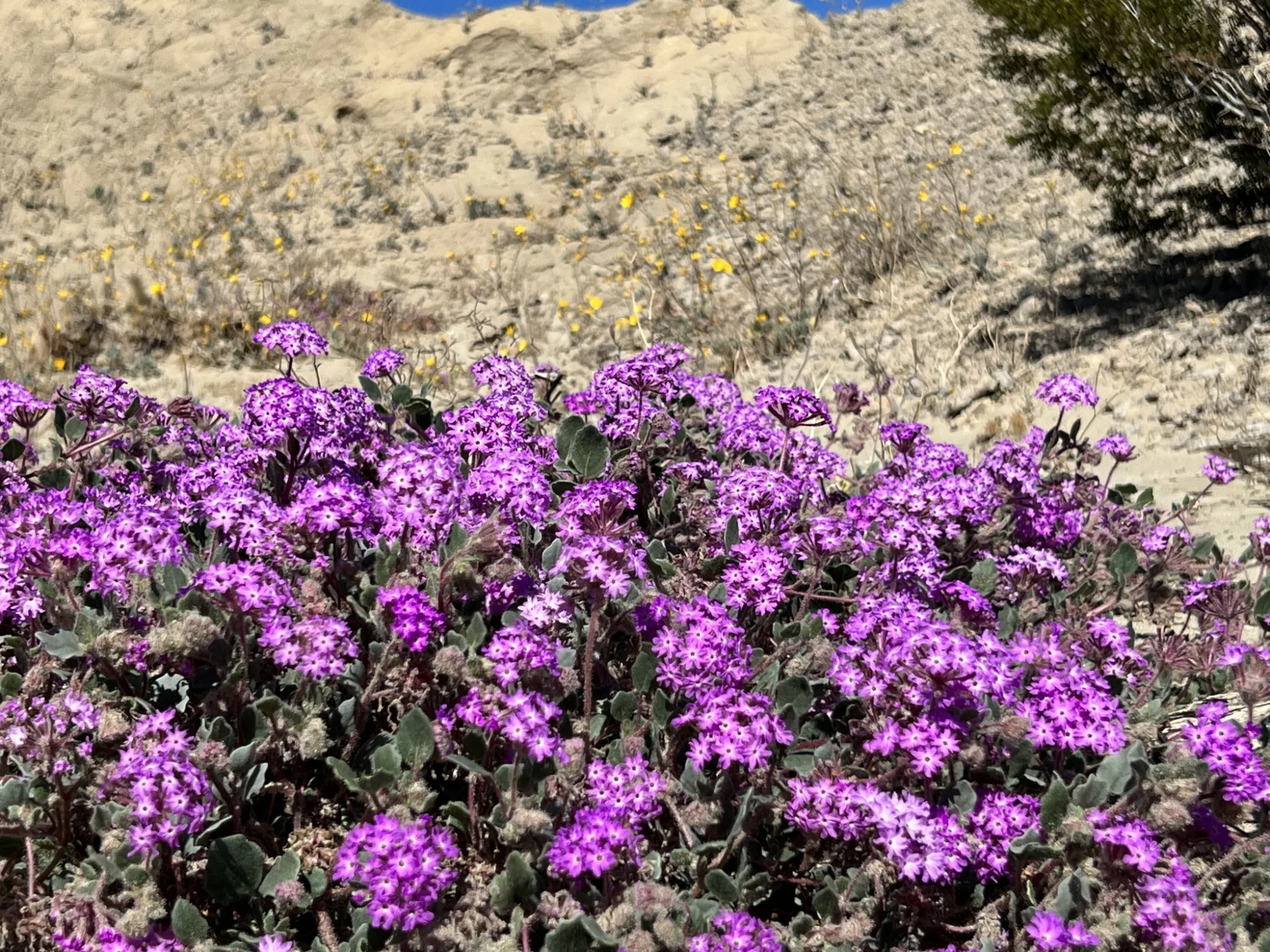
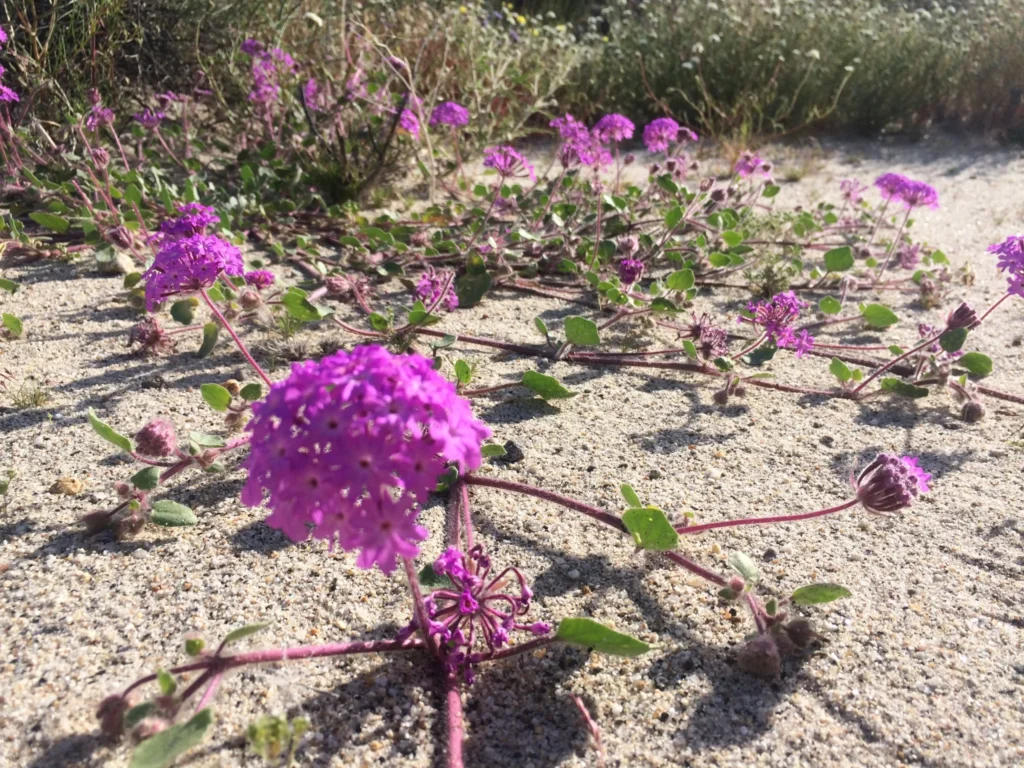
Desert sand verbena rolls out a soft, sticky mat and covers it with clusters of very fragrant, bright magenta-purple flowers. It stays low, 3 to 6 inches tall, and sprawls up to 20 inches wide, like a throw rug for the dry, sandy spot where nothing else wants to grow. Native bees, butterflies, and moths visit the sweet-scented, trumpet-shaped blooms. It is an annual, which sounds like a catch, but it drops seed and can come back on its own, though you might want to add a little extra seed in the fall to be sure. Give it sun, sand, and very little water.
Is sand verbena right for my yard?
Yes, if…
- You have a hot, sunny spot with sandy or gravelly soil that drains the minute it rains.
- You want color that thrives on almost no water. The hose can stay coiled.
- You want a low, soft cover for a gravel bed or the edge of a path.
- You want a fragrant patch near a seat or doorway, where you can lean in and enjoy it.
- You don’t mind scattering fresh seed in a year when the patch doesn’t come back on its own.
- You want native bees, butterflies, and moths dropping by for a visit.
Skip it if…
- Your soil is heavy clay or stays soggy. This plant needs excellent drainage, and wet feet are a quick way to lose it.
- Your yard is shady. A dim corner won’t do for a plant that wants full sun.
- You want a perennial that shows up in the same spot and shape every year. This one is an annual, and the patch can shift around and look different from year to year.
- You live far from the Southwest. This plant grows wild in the desert Southwest. Check your region and ask a local native nursery for a closer match if needed.
- You don’t like sticky plants. The stems and leaves are sticky, and sand clings to them like a gritty coating.
Where is desert sand verbena native?
Native to 4 US states
Sources: NatureServe, Royal Botanic Gardens, Kew (World Checklist of Vascular Plants) and the USDA PLANTS Database, compiled by The Plant Native. How we map native ranges
A sandy patch that looks empty is just waiting.
Why sand verbena matters
Desert sand verbena is a busy stop for pollinators. In California, records list 17 native bee species, 12 native butterflies, and six moths visiting, from bumble bees to painted ladies to the white-lined sphinx moth. Think of it as a roadside diner for anything small and winged that happens to be passing through.
It also does a job on loose ground. After winter rain the plant spreads into a low mat that helps hold sand in place, and erosion control is one of its listed uses. In the wild it grows in the dune communities of the Mojave and Sonoran deserts, right where little else can get a grip.
Sphinx moths are part of the story too. Their caterpillars commonly feed on sand verbenas, and a few chewed leaves just mean your patch is feeding someone.
Sand verbena through the seasons
Spring
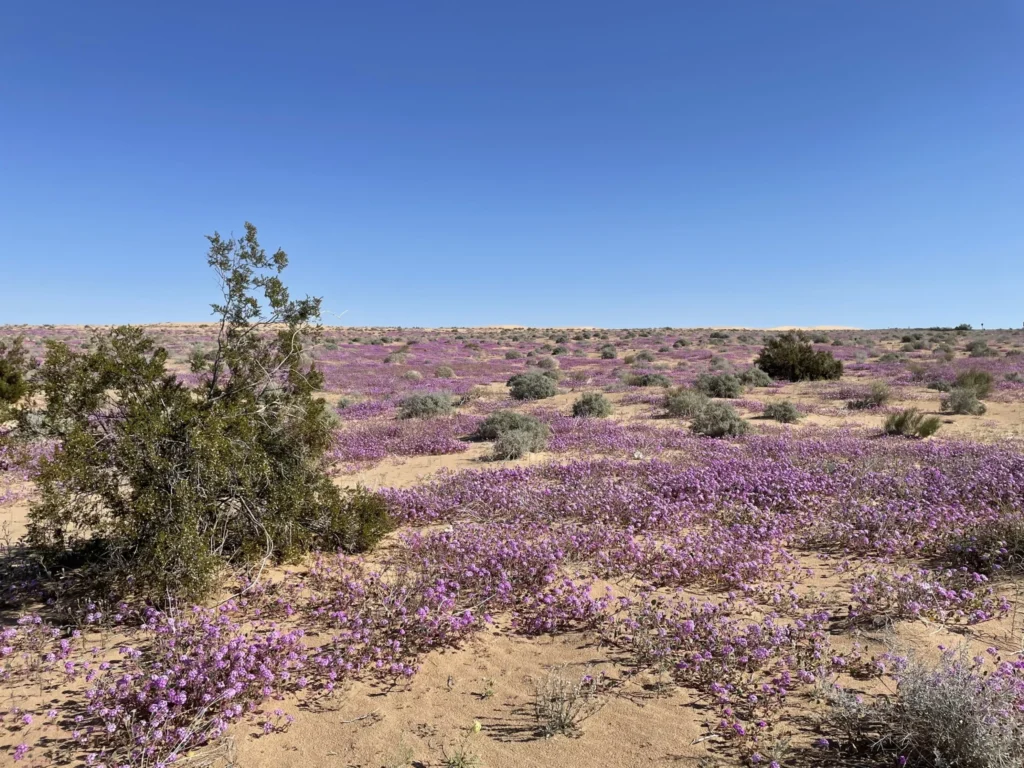
This is the main event. The mat unrolls across the sand like a rug, and the purple-pink flower heads open in clusters, starting as early as February in warm areas.
Summer
The show winds down, though blooms can hang on into July and sometimes even longer. Each spent flower leaves seeds tucked inside of a papery fruit, like tiny packets waiting to be mailed.
Fall
Sowing time. Scatter seed in late summer or fall, and then walk away. There’s nothing to prune or cut back. This one is easy to leave alone.
Winter
Winter rain is the alarm clock. It wakes the seeds and the mat starts to form. A sandy patch that looks empty is just waiting.
Where sand verbena shines in your yard
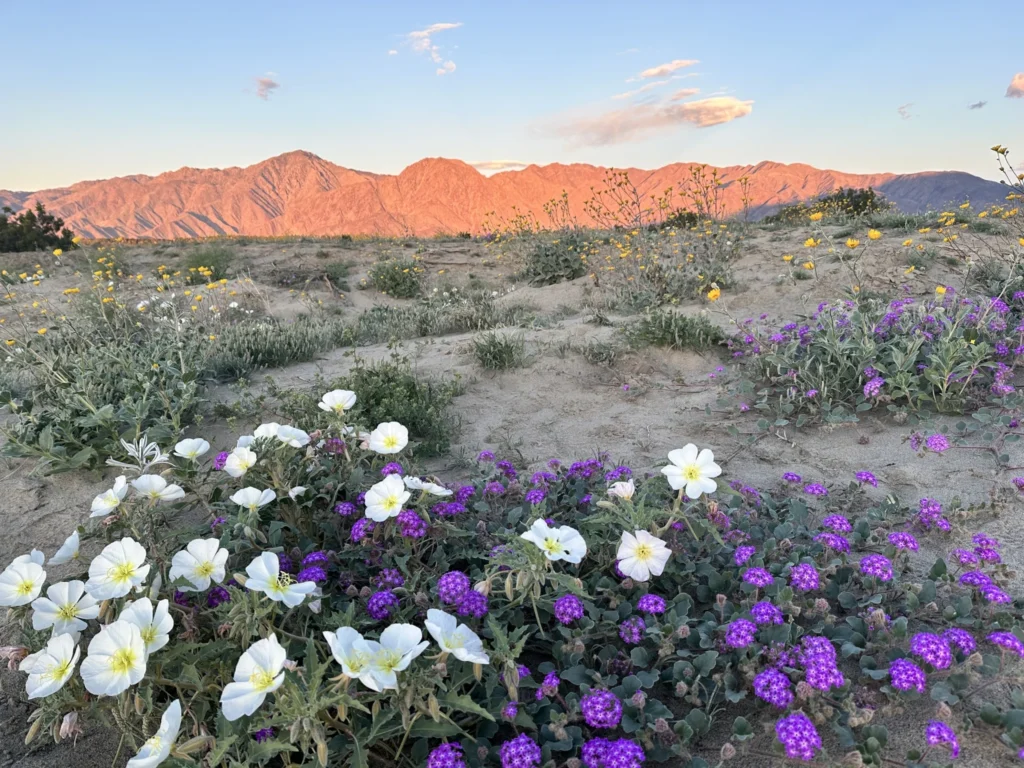
- Rock garden. Sand, sun, and fast drainage are just what this plant asks for, and the mat softens all that hard rock.
- Sandy slope. The low mat helps hold loose soil in place when winter rain comes.
- Path edge.At 3 to 6 inches tall, it hugs the edge of a walkway without getting in anyone’s way.
- Between taller plants. It fills the gaps around shrubs and perennials with a low carpet of color.
- Pollinator patch. Plant it where you can watch the bees, butterflies, and moths come and go.
How to grow sand verbena
Where to plant
Pick your hottest, sandiest spot, the one that bakes all afternoon and drains the minute it rains. This plant wants full sun and very well-drained soil, so skip any low corner where water pools.
When to plant
Sow seed in late summer, fall, or early spring. Don’t panic if the patch looks slow, since seeds can sprout over several weeks instead of all at once. Slipping the seed out of its papery fruit first may help it get going.
Spacing
Each plant can sprawl up to about 20 inches wide. Scatter the seed thinly and leave it elbow room to stretch out.
Watering
Sand verbena needs very little water. Once seedlings are up, rain is usually all they need, so put the hose away.
Planting card
Abronia villosa
The trickScatter seed in late summer or fall, and let winter rain wake it up.
What to plant with sand verbena
Pick plants that like the same hot, dry spot, and let the low purple mat fill in around them.


Where can I buy sand verbena?
Buy seed from a native plant nursery or native seed company, and look for Abronia villosa on the tag, since several plants share the name sand verbena.
Potential challenges
Deer and other animals
No deer, rabbit, or javelina ratings are listed for desert sand verbena in the plant guides we used, so there are no promises here. Sphinx moth caterpillars feed on sand verbenas, so expect a few chewed leaves. The University of Arizona’s plant database notes the plant may be toxic to some animals but doesn’t name which, so keep pets and livestock from snacking on it.
Soggy soil
This plant needs excellent drainage. Wet feet are the quickest way to lose a patch, so plant it on a slope or in a sandy raised spot if your yard holds water.
It’s an annual
The plant dies after setting seed, so any return comes from seed, not roots. Some years it may look thick, and some years it may be a bit patchy (or even gone!). Let the seeds drop each year, and it doesn’t hurt to scatter a few more the first couple of years, just in case.
Spreading
Once it settles in, desert sand verbena can drift into spots you didn’t plant, tucking itself into gravel and cracks along a path. Pull the seedlings you don’t want while they’re small, or leave them and see what they do!
A note on cultivars and relatives
Sand verbena is a nickname shared by a group of Abronia plants, and they don’t all want the same care. Coastal sand verbena (A. maritima), for example, is an evergreen magenta mat that spreads up to 4 feet. It likes more moisture than this dry-sand annual and is grown in hanging pots as well as in the ground. Check the botanical name on the tag before you buy, and look for Abronia villosa.
FAQs
Is sand verbena a true verbena?
No, desert sand verbena isn’t a true verbena. Garden verbena belongs to the verbena family, and desert sand verbena belongs to the four o’clock family. They share a nickname, not a family tree. Check the botanical name on the tag, Abronia villosa, to be sure which plant you’re buying.
Is sand verbena toxic to pets?
Toxicity for desert sand verbena hasn’t been confirmed. Treat it as unknown and keep dogs and cats from nibbling it. A close relative, fragrant sand verbena (A. fragrans), is listed by the ASPCA as non-toxic to dogs, cats, and horses, yet the University of Arizona’s plant database notes that desert sand verbena may be toxic to some animals but doesn’t say which..
How many years does sand verbena last?
Desert sand verbena is an annual and only lives one year. However, it drops seed and often returns on its own. You can scatter a little fresh seed to help it out.
What is a good companion plant for sand verbena?
Any plant that likes a hot, dry, sunny spot works. Try blackfoot daisy or penstemon and let the purple-pink mat fill in around them.
Do you cut down sand verbena in autumn?
No, you don’t need to cut it back. Desert sand verbena is an annual and finishes on its own. Leave the spent plants until the seed has dropped, because that seed is your chance at a patch next year. Once it has fallen, pull the dry mat for a tidy look, or let it lie like a faded rug.
Do butterflies like sand verbena?
Yes, butterflies visit desert sand verbena, along with native bees and moths. In California, painted lady butterflies and white-lined sphinx moths are among the confirmed visitors.
Can sand verbena grow in containers?
It can grow in a pot, but it’s less proven than the garden verbena you may be picturing. Despite the name, desert sand verbena isn’t a true verbena. It comes from open desert sand, and full sun with a sandy, very well-drained mix is the closest match. Treat a pot as an experiment, with the ground as the safer bet.
Will deer eat desert sand verbena?
Deer ratings for desert sand verbena aren’t listed in the plant guides we used, so there’s no promise either way. Rabbits and javelina aren’t rated either, but sphinx moth caterpillars feed on sand verbenas.
Plant nerd fact
Sand armor
Walk the Kelso Dunes in the Mojave and you can see desert sand verbena wearing a coat of sand. Researchers call it “sand armor,” and wearing it is probably both a blessing and a curse. The sand can block light the plant needs, but it may also shield the leaves from sandstorms and cut the drying effect of wind. We do know that the sand armor helps defend sand verbenas from hungry caterpillars. In tests on a close relative from the California coast, 86 percent of white-lined sphinx moth caterpillars chose clean leaves over sandy ones. The caterpillars that ate from sandy leaves grew more slowly, and their poor jaws were worn down to almost nothing. They’ll still eat sand verbenas, but they can pay dearly for this snack.
Desert sand verbena is a lot of plant for very little work. It spreads a fragrant purple carpet over dry, gravelly ground, feeds bees, butterflies, and moths, and wears a coat of sand that slows down hungry caterpillars. Scatter the seed around your favorite boulder in late summer or fall, and winter rain can take it from there. It’s an annual, so keep a handful of seed around for the years the patch comes in thin. For more plants that thrive in hot, dry spots, see our best native plants for Southwest gardens. Happy planting!
Sources
- Arizona Native Plant Society. “Abronia villosa.” Accessed October 24, 2026.
- Arizona-Sonoran Desert Museum. “Coastal Sand Verbena (Abronia maritima).” Plant fact sheet. Accessed October 24, 2026.
- ASPCA. “Sand Verbena.” Toxic and non-toxic plants. Accessed October 24, 2026.
- Calscape. “Hairy Sand Verbena (Abronia villosa).” Accessed October 24, 2026. ).
- EcoRestore, University of Arizona. “Desert Sand Verbena.” Accessed October 24, 2026.
- Lady Bird Johnson Wildflower Center. “Abronia villosa (Desert Sand Verbena).” Native Plants Database. Accessed October 24, 2026.
- National Park Service, Mojave National Preserve. Science newsletter, 2018 (article on sticky plants by Eric LoPresti). Accessed October 24, 2026.
- NatureServe. “Abronia villosa.” NatureServe Explorer. Accessed October 24, 2026.
- NC State Extension. “Verbena × hybrida (Garden Verbena).” Plant Toolbox. Accessed October 24, 2026.
- The Plant Native. “Best Native Plants for Southwest Gardens.” Accessed October 24, 2026.
- Theodore Payne Foundation. “Abronia villosa var. villosa.” Native Plant Database. Accessed October 24, 2026.
- Theodore Payne Foundation. “Abronia villosa, Desert Sand Verbena (Seed).” Accessed October 24, 2026.
Similar plants
-
 Desert Globemallow
-
 Red Dome Blanketflower
-
 Goodding’s Verbena
-
 Desert Marigold
-
 Pink Evening Primrose
-
 California Fuchsia
-
 Antelope Horns Milkweed
-
 Desert Willow
-
 Blackfoot Daisy
Updated Find more: Pink Purple Flower Spring Summer Full Sun Dry Drought-Tolerant
The ads on this site help pay real native plant nerds to research and write these guides.
Garden notes
Notes from people who’ve grown it
Tips, wins, and the occasional disaster. If you’ve grown desert sand verbena, share the advice you’d give to a neighbor.
No notes yet. Yours could be the first.
Grown desert sand verbena? Tell the next person what you wish someone had told you.
Tap anywhere to close


