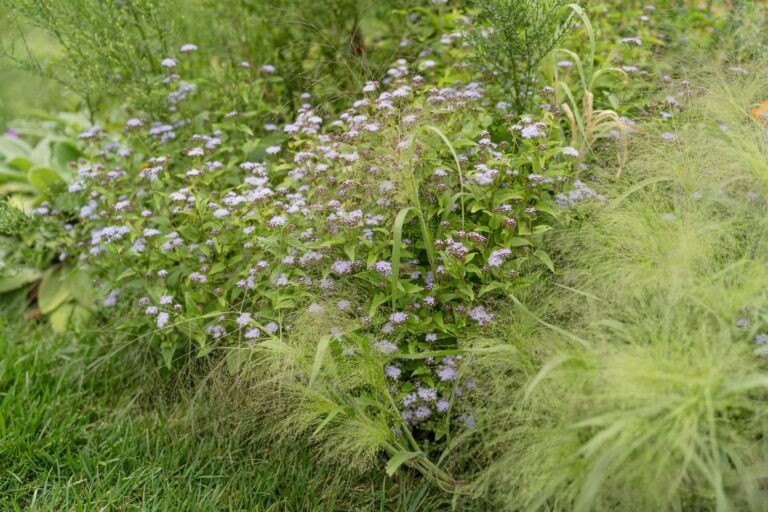

An evergreen is the plant your yard leans on in February, when everything else is shades of brown and sticks. Pines and spruces stay green, thanks to needles. Hollies, rhododendrons and mountain laurels keep their leaves. There are even a few ferns that stay green at ankle height. Many native evergreens are also caterpillar food champions: pines (Pinus genus) are host plants for a whopping 409 native moths and butterflies, according to the Shropshire-Tallamy caterpillar records.
With all these options, which one fits your yard? Sun, soil and region will help you decide. This guide gives you some options quickly, then sends you to the page for the plant you want.
Why native evergreens matter
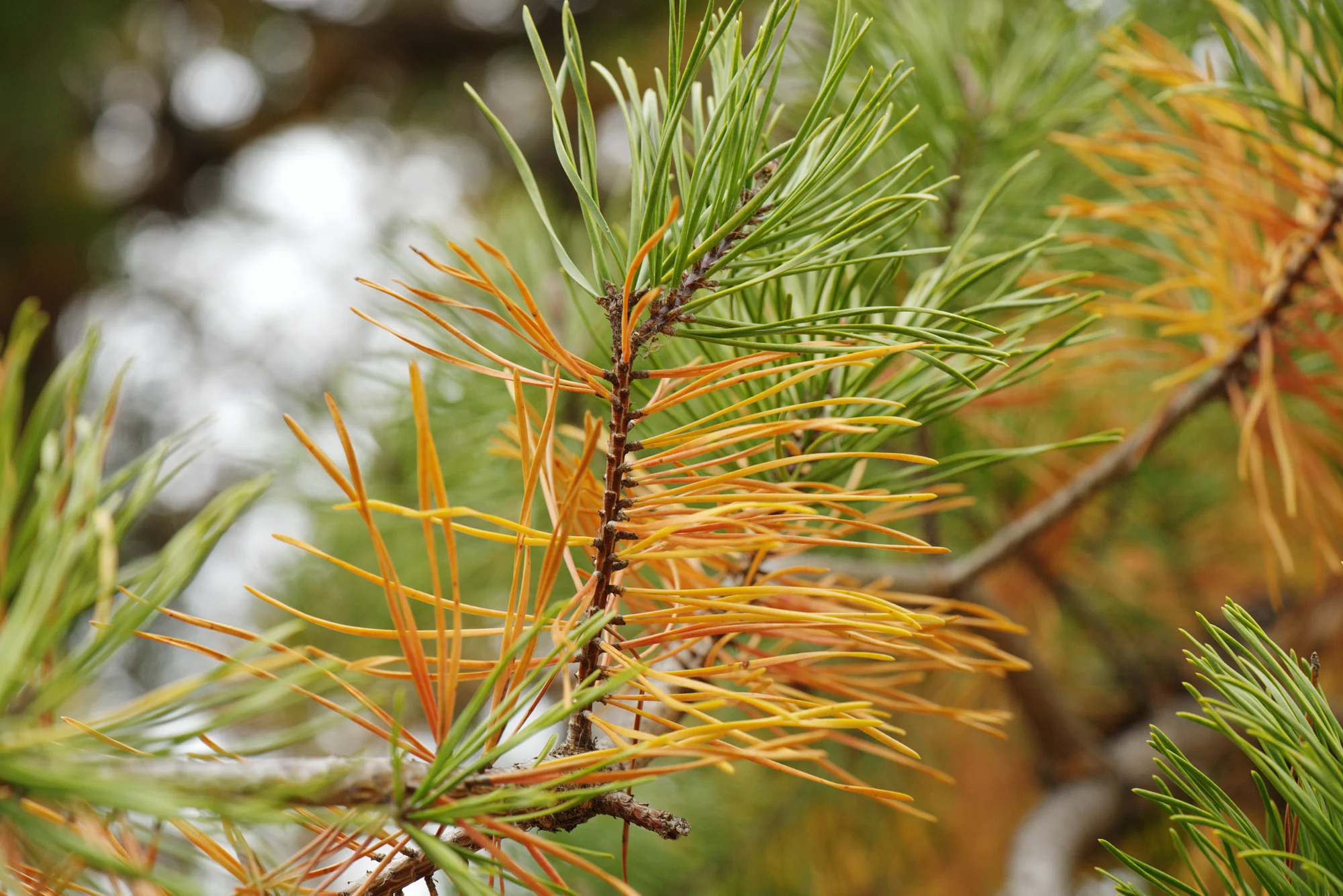
Start with caterpillars. Pines (Pinus) host 409 native moths and butterflies in the Shropshire-Tallamy caterpillar records, spruces (Picea) 262 and hemlocks (Tsuga) 169. Junipers add 111.
Cover in the worst weather
Dense evergreen branches are shelter when the hardwoods are bare, and eastern hemlock gives winter and severe-weather cover. White-tailed deer lean on them too: northern white cedar is highly preferred by white-tailed deer for both shelter and browse.
Seeds for the specialists
Red crossbills come in at least 11 different types, and their bill size tracks the size of the cones they work. Clark’s nutcrackers bury pine seeds by the thousands, and after fires limber pine forests regrow largely from nutcracker seed caches. Pinyon seeds have no wings at all, so the trees depend upon the behavior of four corvid species to spread.
Berries when nothing else is fruiting
The evergreens with leaves add winter fruit. Holly berries ripen in late summer or fall and stay on the branch well into winter, when robins and cedar waxwings need them most. American holly alone supports 25+ birds.
Pinyon seeds have no wings at all, so the trees depend upon the behavior of four corvid species to spread.
Beginner tip
Before you shop, count the hours of direct sun on your spot. Full sun points to a pine or a juniper. Cool, moist shade points to a hemlock. Cool, moist shade also suits a rhododendron or a fern. Then check the region list below.
Evergreens with needles
Each group has its own guide with species, sizes, zones and where to buy.
Native pines: sun, sand and speed
Thirty-seven pine species are native to the U.S. and Canada, from a 10 to 20 foot pinyon in the Southwest to a 60 to 120 foot longleaf in the Southeast. Most want full sun and good drainage, and several handle poor, sandy ground. Loblolly has the most rapid growth rate of all pines, but pinyon is slow, so growth speed depends on the species. Pick a pine for a sunny screen, a dry slope or a big open yard.
Native spruces: cold country and cover to the ground
Seven spruces are native to North America, and they are northern and mountain trees. Region matters more here than anywhere else. Colorado blue spruce is native to the Rockies, yet the University of Minnesota says it is “no longer recommended for Minnesota landscapes,” and in Michigan trials Black Hills spruce, a native form of white spruce, resisted the canker fungus that hit blue spruce hard.
Native hemlocks: the shade answer, with homework
Eastern hemlock can survive in as little as 5 percent of full sunlight, deeper shade than any other big native evergreen here. It is also under attack from hemlock woolly adelgid, which can kill mature trees in as little as 2 to 4 years. Treatment works. Penn State notes that one imidacloprid treatment typically lasts four to six years, so an eastern hemlock is a promise to check it every spring. In the Northwest, western and mountain hemlock are the natives to plant.
Native cedars and junipers: the tough sites
America’s cedars are junipers, arborvitae, white cedars, incense cedar and Alaska yellow cedar. Eastern red cedar has the best drought resistance of any conifer native to the eastern United States, while Atlantic white cedar prefers sandy, peaty, moist to wet, acidic soil. Native arborvitae is a lovely hedge, but deer damage can be a serious problem. Out West, Rocky Mountain juniper is the dry-country pick.
Bald cypress: the conifer that drops its needles
Not every conifer is evergreen. Bald cypress is deciduous, turning orange to cinnamon-brown before it drops its needles in fall, and it handles a wide range of soil conditions, including standing water. It’s the one to plant in a wet yard where most pines would struggle.
Evergreens with leaves
Not every evergreen has needles. These keep their leaves all winter, and most of them add what a conifer can’t: flowers, berries or both. Eastern plants come first, then western.
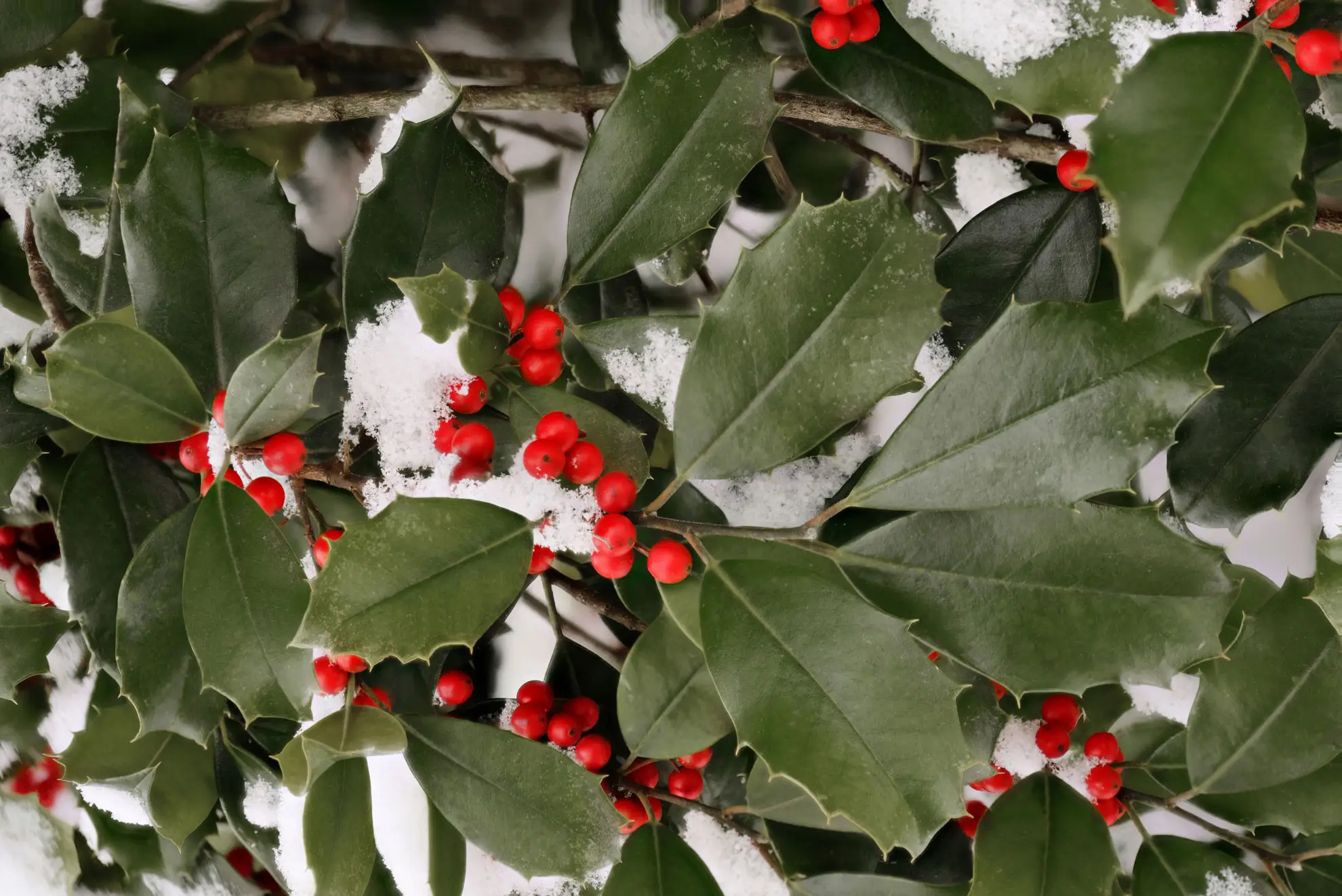
American holly: the Christmas card holly, only native
A tall evergreen pyramid of spiny, dark green leaves, with red berries that hang on through winter. It feeds 25+ birds, and deer generally leave those spines alone. Plant it as a screen from Massachusetts to Florida and west to Texas. Only female trees carry berries.
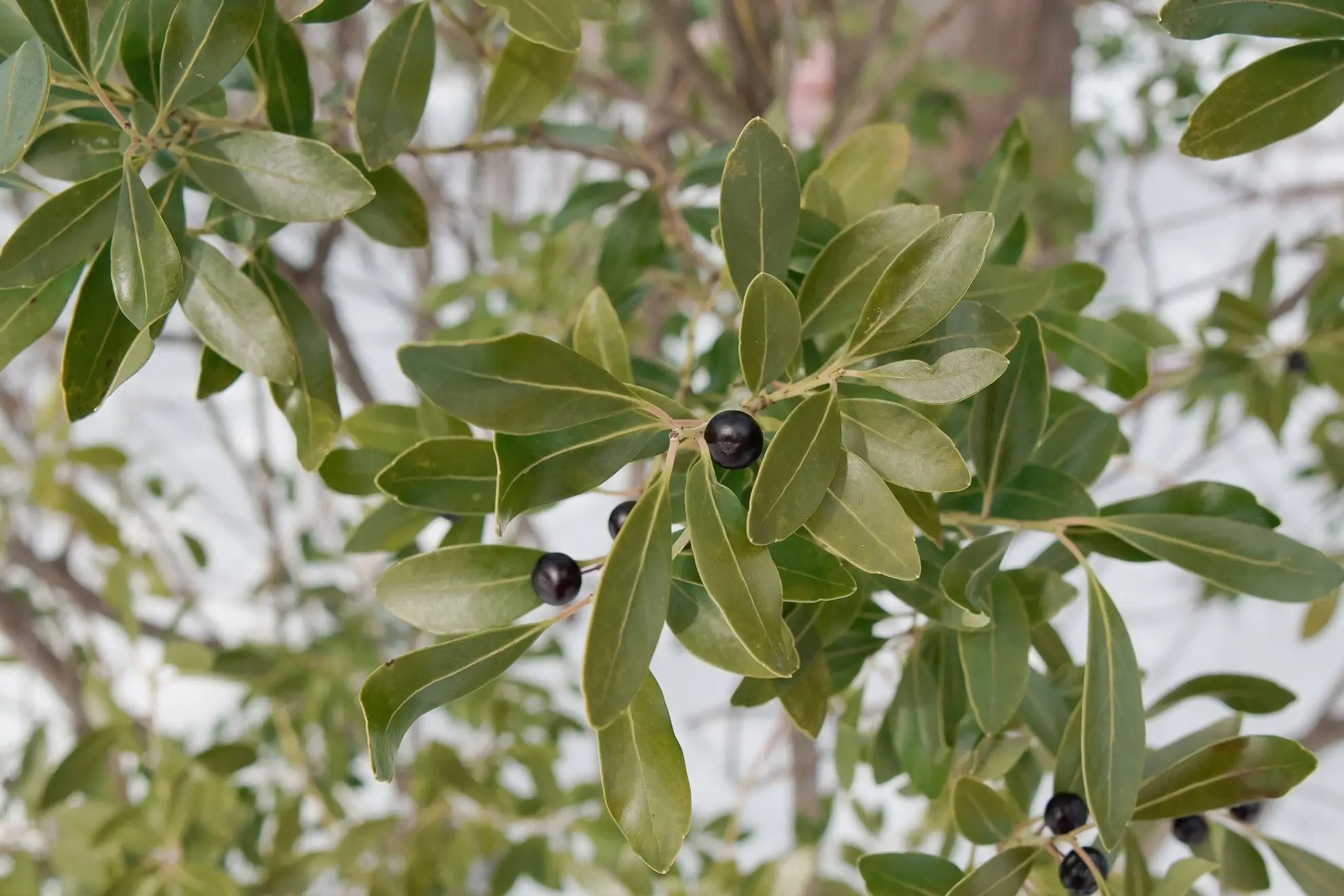
Inkberry: the boxwood swap
Inkberry is a holly too, with inky black berries instead of red. It gives you the tidy green mound people buy boxwoods for, and it’s happiest where the soil stays moist, in sun or part shade. Want berries for the birds? Plant a male and a female.

Mountain laurel: an evergreen that isn’t boring
Glossy leaves all year, then clusters of tiny geometric flowers in spring, on branches that twist as they age. It’s a shrub for shade and part shade. It needs no fertilizer, and after the first year it’s happy with rain.

Rosebay rhododendron: the big hedge for shade
In the Appalachians it forms dense thickets in moist, shady valleys. The buds start pink and open white. Give it shade and acidic soil that drains (soggy clay rots the roots), and give it room, because it wants to be a tall shrub or a small tree.

Southern magnolia: the South’s evergreen icon
Glossy dark leaves, scented ivory flowers for weeks in late spring and summer, and a dense canopy that holds its leaves all the way to the ground. The straight species can reach 80 feet tall with a 50-foot spread. Measure first, or look for a compact cultivar.
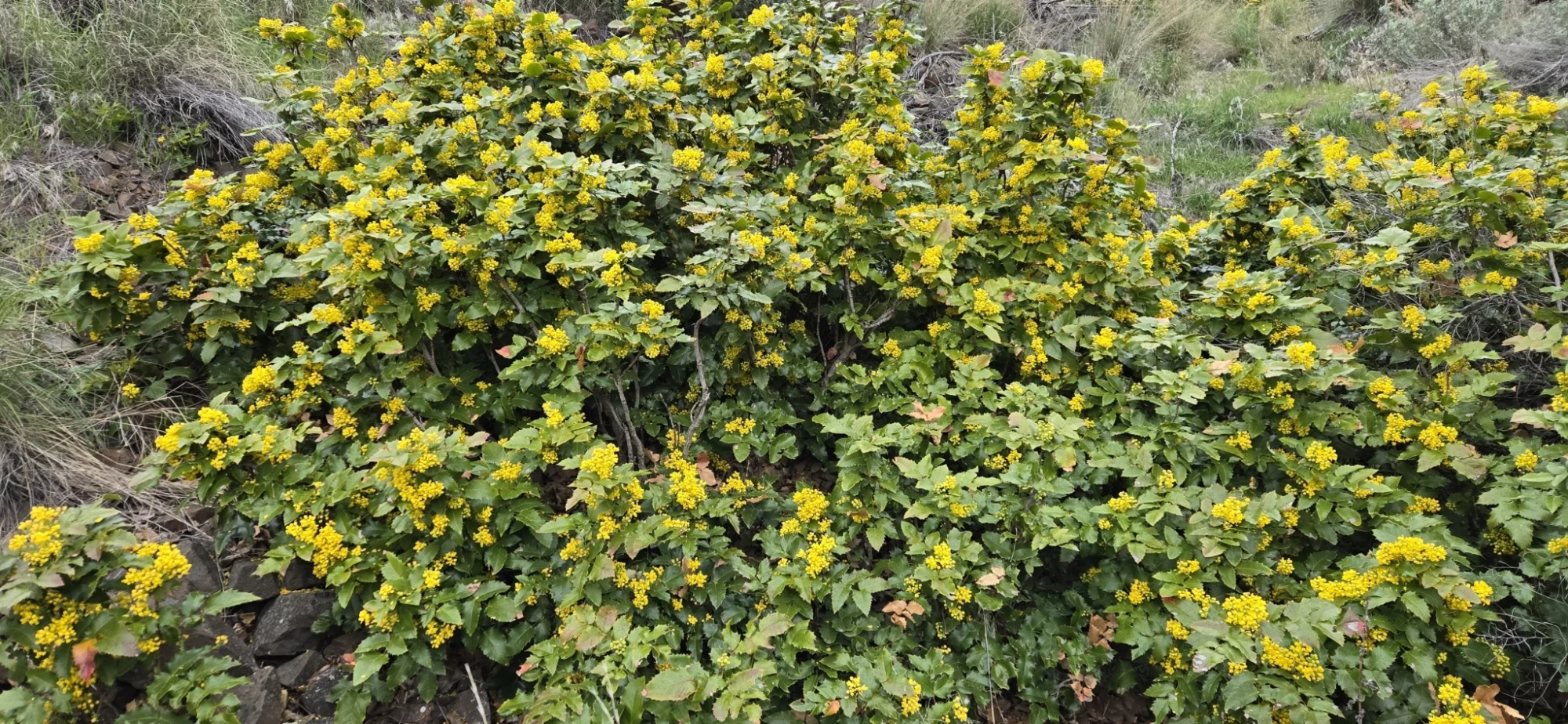
Oregon grape: holly-shaped leaves for western shade
Spiny leaves that turn purplish-bronze in the winter, bright yellow flowers in early spring, then dusty blue-black berries. It grows best in light shade and handles dry summers once it’s settled. Rutgers rates it “rarely damaged” by deer. Keep it off the path, though. Every leaflet ends in spines.
Salal: the green under the big trees
Florists sell its leaves as lemon leaf. At home on the Pacific coast, it covers the dim, rooty ground under conifers, staying low in sun and reaching 4 to 10 feet in shade and good soil. Once it settles in it spreads by underground stems, so give it room or a hard edge.
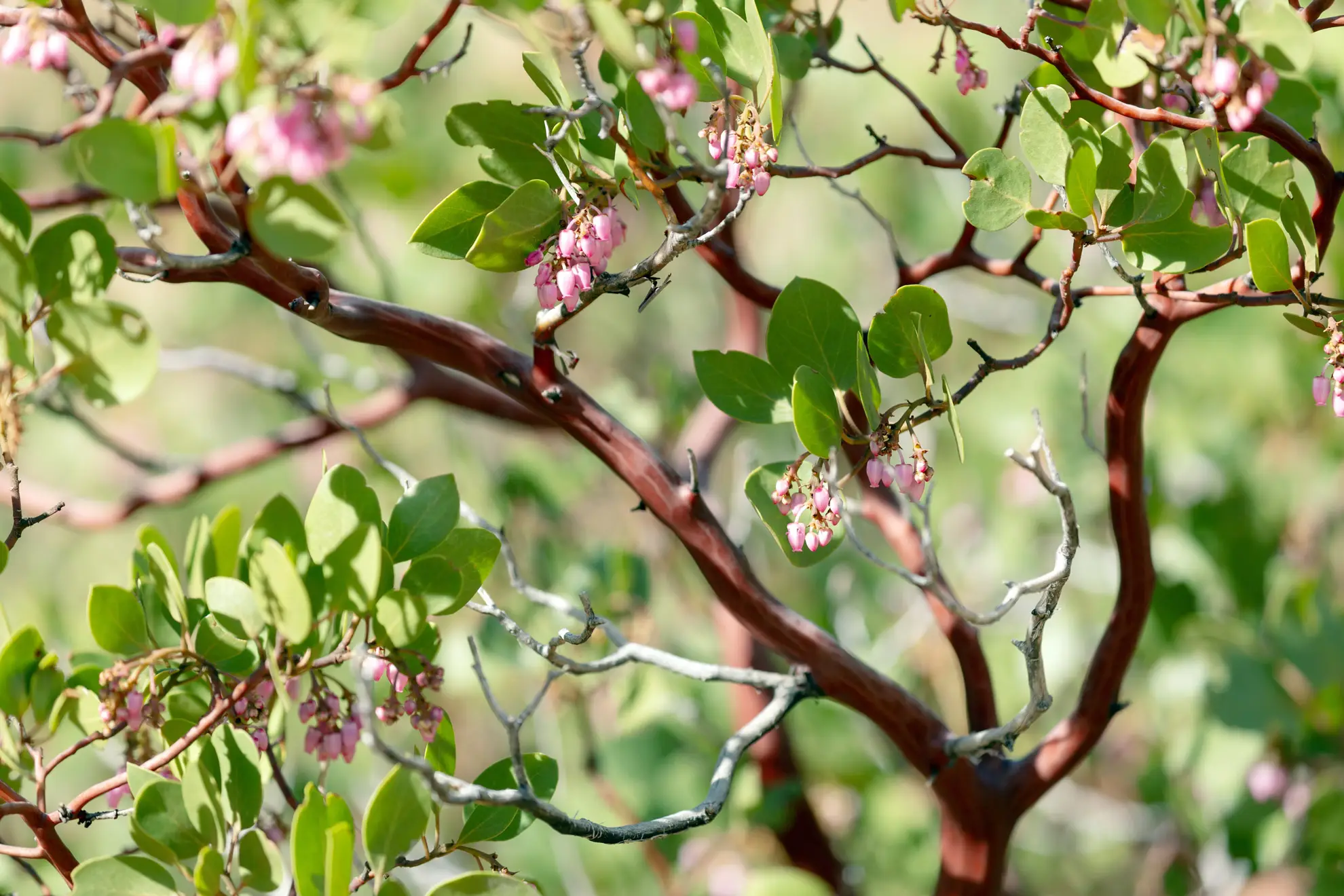
Manzanitas: red bark and dry summers
Western shrubs with smooth red bark that peels and gleams with age, and flowers from winter into early spring. They want full sun, fast drainage and very little water once established. They’re slow. Think anchor, not filler.

Toyon: California’s winter berries
Glossy leaves, white flowers in spring, and clusters of bright red berries that last into winter. Toyon grows as a big shrub or a small multi-trunk tree, in full or part sun and soil that drains, and it needs little water once established. It’s native to California only.
Evergreens for the ground
Winter green doesn’t have to be tall. These cover the bare spots under trees and on slopes.
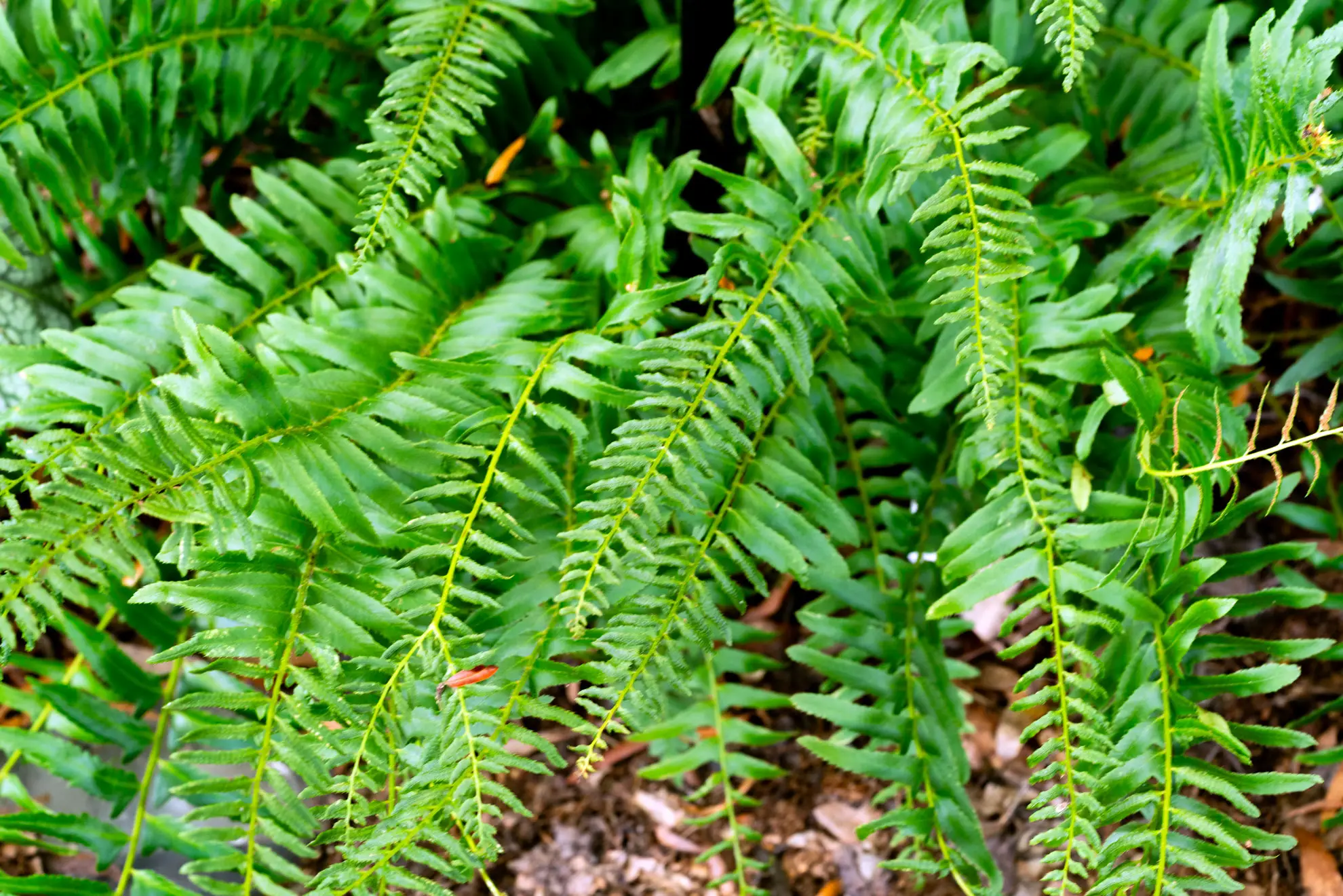
Christmas fern: green in February
A tidy clump of glossy fronds, 1 to 2 feet tall, that stays green all winter in the shade. Once it settles in it’s fine in dry shade, which is unusual for a fern, and its dense roots hold soil on a slope. It’s slow, so plant several if you want a patch.
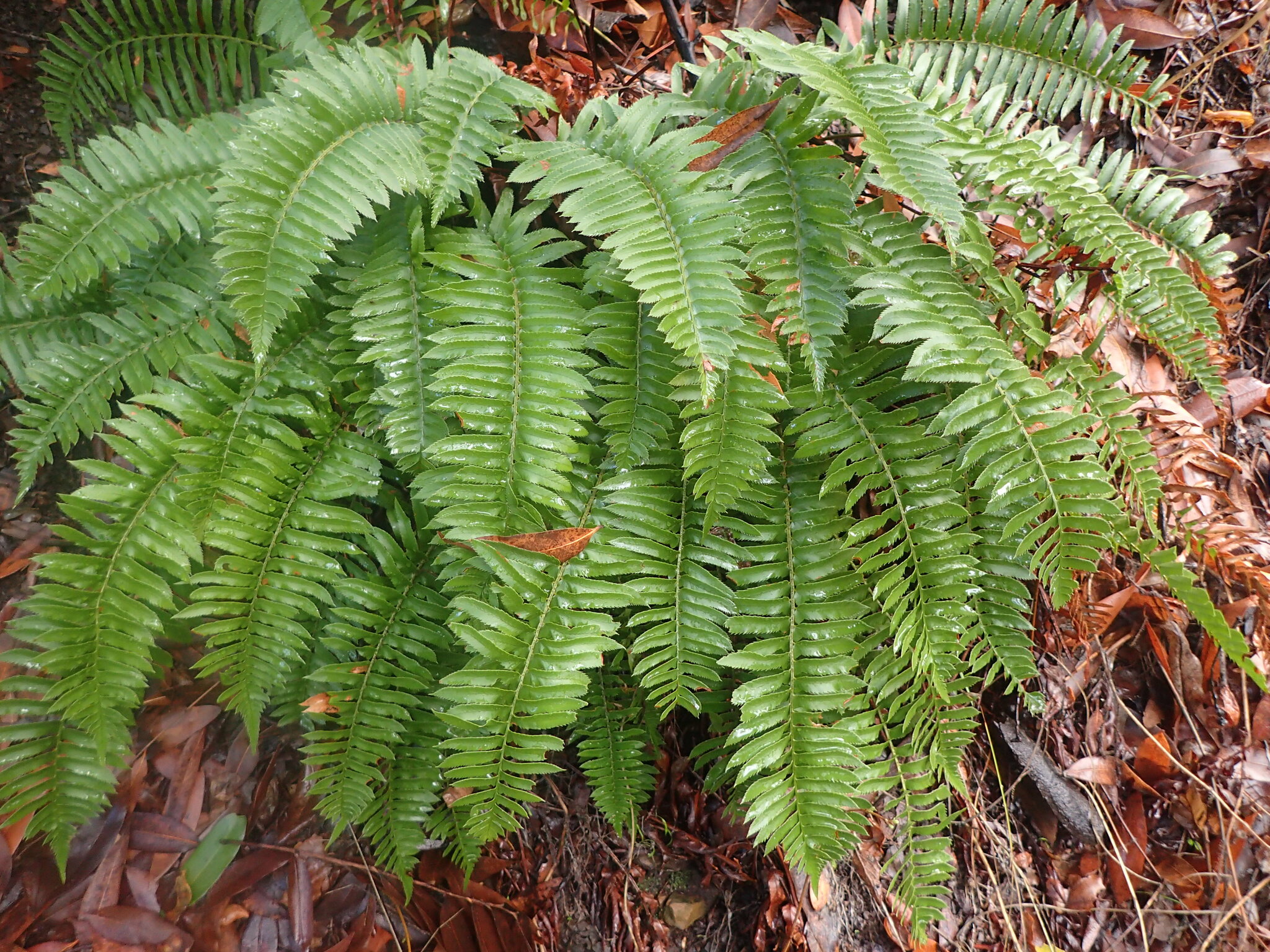
Western sword fern: the Northwest’s forest floor
Big, arching, dark green fronds in a fountain from one crown. It handles deep shade and stays put, and it grows wild from Alaska to California. Keep it out of full sun, where the fronds will burn.
Kinnikinnick: a manzanita that lies down
A mat of small glossy leaves on red-barked stems, 6 to 12 inches high, creeping across sand, rock and gravel. It’s hardy to USDA Zone 2 and wants fast drainage. Skip it where summers are hot and humid.
Which evergreen is right for my region?
Conifers and hollies for sun; rhododendrons, mountain laurel and ferns for shade; and in the West, manzanitas where it’s dry and salal where it’s damp. By region:
- Northeast: eastern white pine or red pine for sun, red or white spruce for a windbreak, eastern hemlock in shade if you’ll treat it, northern white cedar on limy ground. For leaves, American holly, inkberry, mountain laurel and rosebay rhododendron, with Christmas fern underneath.
- Mid-Atlantic: eastern white, pitch or Virginia pine; eastern red cedar for dry sites; Atlantic white cedar for wet, acidic ground. American holly for a screen, inkberry where it’s damp, mountain laurel and rosebay rhododendron in shade.
- South: longleaf, loblolly or shortleaf pine, bald cypress in wet spots, and red spruce only high in the mountains, where it grows as low as 4,500 feet in the southern Appalachians. Southern magnolia and American holly for big evergreen leaves, inkberry and Christmas fern lower down.
- Midwest: jack and red pine in the north, shortleaf pine farther south, Black Hills spruce for windbreaks, eastern red cedar almost anywhere dry. Christmas fern in shade and kinnikinnick on sand.
- Southwest: two-needle pinyon, ponderosa pine, Rocky Mountain juniper, and Colorado blue or Engelmann spruce up high. Manzanitas and kinnikinnick for dry ground. In eastern Texas and Oklahoma, American holly and Christmas fern are native too.
- California: ponderosa pine and incense cedar in the mountains, western redcedar and Sitka spruce on the north coast. Toyon and manzanitas where summers are dry; Oregon grape, salal and western sword fern in cooler shade.
- Northwest: western redcedar, western hemlock and Sitka spruce near the coast, shore pine in sand, Engelmann spruce east of the Cascades. Underneath them, Oregon grape, salal and western sword fern.
Where can I buy native evergreens?
Ask for the species by its Latin name, buy small, and skip the European pines and spruces that fill garden-center lots. Start with our list of native plant nurseries or order online.
Native evergreen FAQs
Are all evergreens conifers?
No. Conifers are the ones with needles or scales, and cones. Hollies, rhododendrons, mountain laurels and southern magnolia keep broad leaves all winter, and Christmas fern is an evergreen with no flowers or cones at all.
Which native evergreens grow in shade?
Eastern hemlock, rosebay rhododendron, mountain laurel and Christmas fern in the East; salal and western sword fern in the West. Eastern hemlock can survive in as little as 5 percent of full sunlight. Oregon grape likes light shade but needs a few hours of sun to flower.
What can I plant instead of boxwood?
Inkberry. It’s a native evergreen holly with the same tidy look. Give it moist soil, and plant a male and a female if you want the black berries.
Which native evergreen grows fastest?
Loblolly pine, in the South. NC State says it has the most rapid growth rate of all pines. Eastern white pine is also rated rapid, and it grows much farther north.
Start with region and light, and the choice gets simple: a pine for the sunny dry spot, a cedar for the hard one, a holly for a screen with berries, a rhododendron or a fern for the shade. Then follow the Meet button to the plant you want.
Still deciding? Our guides to native plants for privacy, native plants that look good year-round and deer-resistant native plants pick up where this one stops. Happy planting!

Sources
- Cornell Lab of Ornithology. “Red Crossbill Life History.” All About Birds. Accessed October 12, 2026.
- Flora of North America Editorial Committee. “Pinus” and “Picea.” Flora of North America North of Mexico, vol. 2. Accessed October 12, 2026.
- Gymnosperm Database. “Picea pungens.” Accessed October 12, 2026.
- Jackson, David R. “An Integrated Approach to Hemlock Woolly Adelgid Mitigation.” Penn State Extension, updated November 24, 2021. Accessed October 12, 2026.
- Jarosz, Andrew M., Dennis W. Fulbright, Bert M. Cregg, and Jill O’Donnell. “Spruce Decline in Michigan: Disease Incidence, Causal Organism and Epidemiology.” MDARD Hort Fund final report. Michigan Nursery and Landscape Association. Accessed October 12, 2026.
- McCarty, Elizabeth P., and Karla M. Addesso. “Hemlock Woolly Adelgid (Hemiptera: Adelgidae) Management in Forest, Landscape, and Nursery Production.” Journal of Insect Science 19, no. 2 (2019): iez031.
- NC State Extension. “Pinus strobus,” “Pinus taeda,” “Pinus palustris,” “Pinus edulis,” “Tsuga canadensis,” “Abies balsamea,” “Juniperus virginiana,” “Thuja occidentalis,” “Chamaecyparis thyoides”, “Taxodium distichum,” “Berberis aquifolium” and “Polystichum munitum.” Extension Gardener Plant Toolbox. Accessed October 12 and November 22, 2026.
- Oregon State University. “Gaultheria shallon” and “Arctostaphylos uva-ursi.” Landscape Plants. Accessed November 22, 2026.
- Royal Botanic Gardens, Kew. “Cedrus.” Plants of the World Online. Accessed October 12, 2026.
- Rutgers New Jersey Agricultural Experiment Station. “Landscape Plants Rated by Deer Resistance.” Accessed October 12 and November 22, 2026.
- Shropshire, Kimberley J., and Douglas W. Tallamy. “Lepidoptera of North America North of Mexico: An Annotated List Containing Geographic Ranges and Host Plant Records.” ZooKeys, 2025. Host counts from the UDELep data, May 2025.
- University of Minnesota Extension. “Choosing Evergreens for Your Landscape.” Accessed October 12, 2026.
- USDA Forest Service. Fire Effects Information System. “Pinus flexilis.” Accessed October 12, 2026.
- USDA Forest Service. Silvics of North America, vol. 1, Conifers: “Tsuga canadensis,” “Picea rubens,” “Pinus edulis” and “Thuja occidentalis.” 1990. Accessed October 12, 2026.
Updated
The ads on this site help pay real native plant nerds to research and write these guides.


