Highlights
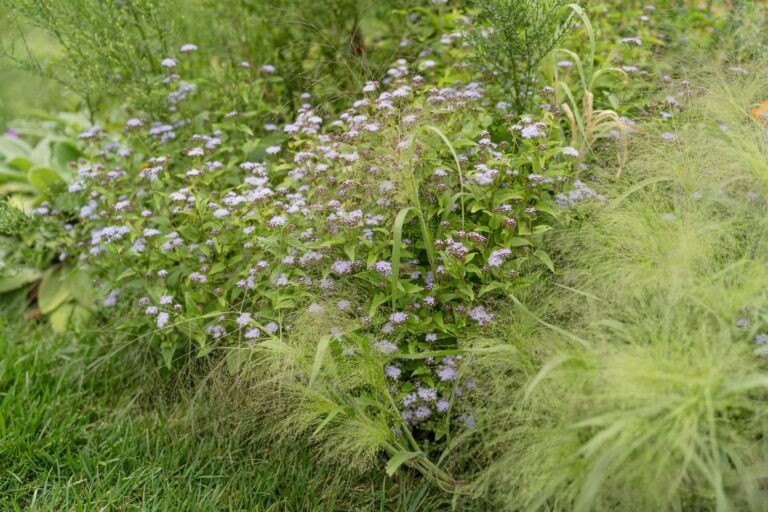
Oregon grape (Berberis aquifolium) is a western evergreen with spiny, holly-shaped leaves that turn purplish-bronze in the winter. In early spring it pushes out short, crowded clusters of bright yellow flowers, mildly fragrant, at the tips of the stems. By fall those have turned into dusty blue-black berries with a pale bloom, like tiny grapes, and the birds come for them.
It’s been Oregon’s state flower since 1899. Nurseries still sell it under its older name, Mahonia aquifolium, so don’t let the tag throw you: it’s the same plant.
Is Oregon grape a good choice for my yard?
Yes, if…
- You have light shade. It grows best in light shade, though it needs a few hours of sun a day to flower.
- You want something green all winter. The leaves stay on and color up in the cold.
- Your summers are dry. Once settled, it’s drought tolerant, and the Lady Bird Johnson Wildflower Center rates its water use low.
- Deer eat everything else. Rutgers rates it “rarely damaged.”
Skip it if…
- You’re outside its range. It’s native to five western states, and NC State warns that outside of its native habitat it can become invasive.
- Your soil is alkaline. The leaves yellow; NC State flags chlorosis on high pH soils.
- Your only open spot is hot and sunny. Sun and wind scorch the leaves, and in a UC irrigation trial a compact form did poorly at hot inland sites in Shasta and San Diego counties.
- It would line a path. Every leaflet ends in spines. Bare ankles will find out.
Why Oregon grape matters
It blooms early, from March into May, when a hungry bee doesn’t have many choices. NC State lists it as a pollinator plant and notes that birds are attracted to fruits, which ripen September to October in Oregon. The National Park Service puts it plainly: tall Oregon grape feeds and shelters wildlife.
Across the genus, barberries (Berberis) host 12 native moths and butterflies in the Shropshire-Tallamy caterpillar records. That’s a short list. It comes on top of early flowers and fall fruit. In a dry western shade garden, that’s a lot of work from one prickly shrub.
A yellow you can’t see from outside
Under the bark, the stems and roots are bright yellow. The color comes from berberine, which NC State notes runs through the bark, leaves, roots and sap. Okanagan-Colville people used the inner bark as a bright yellow dye for basket materials, wool and porcupine quills, and the Makah, Skagit and other Northwest nations dyed with it too. The Upper Skagit pulped and dried the berries into cakes for winter.
Where Oregon grape shines in your yard
- Under tall trees, in the bright shade at the edge of the canopy.
- A low, informal hedge that thickens on its own as it suckers.
- The east side of the house, with morning sun and afternoon shade.
- A woodland edge with western sword fern at its feet and salal beside it.
- A winter view from the kitchen, where the bronze leaves and March flowers get noticed.
Beginner tip
Plant three small pots 3 to 4 feet apart instead of one big plant. They read as a deliberate group from day one, they cost less, and they’ll knit together as they sucker.
How to grow Oregon grape
Light and shelter
Think dappled light. In the wild it’s common under open-canopy Douglas-fir forests, and a University of Washington propagation sheet describes its preferred spot as cool, moderate shade with no severe winter wind. The Lady Bird Johnson Wildflower Center agrees on the wind: protect this plant from drying winter winds. Too much shade, though, and you’ll get leaves without flowers.
Soil
It likes moist, well-drained, acid loams. Acidic to neutral soil keeps the leaves dark green.
Water
Water regularly the first year or two while the roots settle, then ease off. In the UC Landscape Plant Irrigation Trials, ‘Compacta’ rated best at a 40 percent watering level. It doesn’t want pampering.
Spacing
Plants grow 3 to 6 feet tall and 2 to 5 feet wide, upright with few branches. They have a tendency to sucker and form colonies, so three plants set 3 to 4 feet apart slowly close into a low hedge. It’s a slow-growing plant, so be patient.
For a smaller spot, ‘Compacta’ matured at 2 to 3 feet tall and 3 to 4 feet wide in the UC trial. Pests are rarely serious; NC State says to watch for aphids, scale and whiteflies.
Planting card
Berberis aquifolium
The trickGive it morning sun and afternoon shade, out of drying winter wind.
Where is Oregon grape native?
Native to 5 US states
Sources: NatureServe, Royal Botanic Gardens, Kew (World Checklist of Vascular Plants) and the USDA PLANTS Database, compiled by The Plant Native. How we map native ranges
Which Oregon grape is which?
Three western barberries go by Oregon grape. This one is the tall Oregon grape. Creeping Oregon grape (Berberis repens) is a groundcover only 4 to 12 inches tall that likes more sun. Cascade Oregon grape (Berberis nervosa) stays low too, 4 to 24 inches, and grows in sun or shade. In California, Berberis pinnata is so close that Flora of North America calls the two sometimes difficult to separate.
East of its range, two Asian barberries cause the confusion. Japanese barberry (Berberis thunbergii) is deciduous, with only a single spine at each node and red berries. Leatherleaf mahonia (Berberis bealei) is an evergreen NC State calls an invasive species in North Carolina. Neither is a stand-in for Oregon grape, and Oregon grape isn’t an eastern swap for them either.
It has also jumped the fence in Europe, where a genetic study looked at invasive Mahonia populations alongside nursery cultivars.
In a dry western shade garden, that’s a lot of work from one prickly shrub.
What are good pairings for Oregon grape?
Borrow from a Northwest forest edge. Put western sword fern and salal around it, with inside-out flower or western wild ginger as a carpet underneath. Red-flowering currant and vine maple make good taller neighbors, and trilliums fill in for spring.


Where can I buy Oregon grape?
It’s one of the easier western natives to find, often labeled Mahonia. Check the tag for aquifolium, and pass on Berberis thunbergii and Berberis bealei. For small spaces, look for ‘Compactum’. Start with our list of native plant nurseries or order online.
FAQs
Can you eat Oregon grape berries?
Yes, but they’re sour. The Park Service calls them edible and seedy, though sour, so most people cook them, and they make good jelly. NC State adds that the berries contain berberine, which can cause stomach upset, especially with children, so start with a little.
Is Oregon grape poisonous?
Mildly. NC State rates it low severity, and the risk sits mostly in the bitter parts. Eating the bark, leaves or roots may cause minor illnesses such as vomiting or diarrhea.
Is Oregon grape a grape?
No. It’s a barberry, in the family Berberidaceae. The waxy bloom on the blue berries makes the clusters look like grapes, and that’s where the name comes from.
Does Oregon grape spread?
Slowly, by suckers. In its home range that just means a thicker clump. Outside it, NC State warns it can become invasive, so plant it where it belongs.
Is Oregon grape deer resistant?
Mostly. Rutgers rates it “rarely damaged,” and NC State lists it as deer resistant. Its low cousin isn’t immune: the Forest Service notes that Cascade Oregon grape is browsed by black-tailed deer in some areas.
Why are my Oregon grape leaves turning yellow?
Usually alkaline soil. Yellow leaves with green veins point to chlorosis. Crispy brown edges are a different problem: scorch from hot sun or wind.
Plant nerd fact
Seven years to pick a flower
The Oregon Horticultural Society put Oregon grape forward as state flower at its 1892 convention, over bearded gaillardia, Washington lily, wake robin and madrone. The legislature made it official in 1899.
Even the state’s own encyclopedia can’t settle the Latin. Its state symbols entry names the flower Mahonia aquifolium, and its Oregon grape article calls it Berberis aquifolium.
Oregon grape asks for light shade, soil that drains and a little patience. In return you get green leaves all winter and blue berries for the birds (or your jelly jar). Happy planting!
Sources
- Daw, Sonya. “Oregon Grape.” Featured Creature, National Park Service, December 2018, updated May 15, 2025. Accessed October 12, 2026.
- Flora of North America Editorial Committee. “Berberis pinnata.” Flora of North America, vol. 3. eFloras. Accessed October 12, 2026.
- Harper, Hannah. “Propagation Protocol for Berberis aquifolium.” ESRM 412, University of Washington, 2010. Accessed October 12, 2026.
- Lady Bird Johnson Wildflower Center. “Mahonia aquifolium (Holly-leaved Barberry).” Native Plant Database. Accessed October 12, 2026.
- Lang, Frank A. “Oregon Grape.” Oregon Encyclopedia, Oregon Historical Society, 2014, updated May 25, 2022. Accessed October 12, 2026.
- Minore, Don, Paul O. Rudolf, and Franklin T. Bonner. “Mahonia Nutt. Oregon-grape.” In Woody Plant Seed Manual. USDA Forest Service. Accessed October 12, 2026.
- Nalla, Lasya. “Compact Oregon Grape.” UC Landscape Plant Irrigation Trials, University of California, Davis, 2024. Accessed October 12, 2026.
- Native American Ethnobotany Database. “Mahonia aquifolium.” Accessed October 12, 2026.
- NatureServe. “Berberis aquifolium.” NatureServe Explorer. Accessed October 12, 2026.
- NC State Extension. “Berberis aquifolium,” “Berberis thunbergii” and “Berberis bealei.” Extension Gardener Plant Toolbox. Accessed October 12, 2026.
- Oregon State University. “Berberis aquifolium.” Landscape Plants. Accessed October 12, 2026.
- Ross, C. A., H. Auge, and W. Durka. “Genetic Relationships among Three Native North-American Mahonia Species, Invasive Mahonia Populations from Europe, and Commercial Cultivars.” Plant Systematics and Evolution 275 (2008): 219–229. doi.org/10.1007/s00606-008-0066-3.
- Rutgers New Jersey Agricultural Experiment Station. “Landscape Plants Rated by Deer Resistance.” Accessed October 12, 2026.
- Shropshire, Kimberley J., and Douglas W. Tallamy. “Lepidoptera of North America North of Mexico: An Annotated List Containing Geographic Ranges and Host Plant Records.” ZooKeys, 2025. Host counts from the UDELep data, May 2025.
- Tucker, Kathy. “Oregon State Symbols.” Oregon Encyclopedia, Oregon Historical Society, updated December 12, 2023. Accessed October 12, 2026.
- USDA Forest Service. “Mahonia nervosa” and “Mahonia repens.” Fire Effects Information System. Accessed October 12, 2026.

Similar plants
-
 California Lilacs
-
 Manzanitas
-
 Rhododendron
-
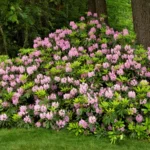 Rosebay Rhododendron
-
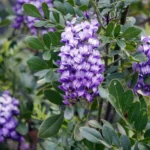 Texas Mountain Laurel
-
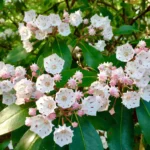 Mountain Laurels
-
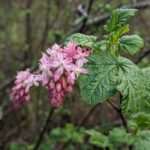 Red-Flowering Currant
-
 Buckwheat
-
 Roses
Updated Find more: Deer Resistant Edible Evergreen Evergreen Shrub Flowering Shrub Shrub
The ads on this site help pay real native plant nerds to research and write these guides.
Garden notes
Notes from people who’ve grown it
Tips, wins, and the occasional disaster. If you’ve grown Oregon grape, share the advice you’d give to a neighbor.
No notes yet. Yours could be the first.
Grown Oregon grape? Tell the next person what you wish someone had told you.
Tap anywhere to close


