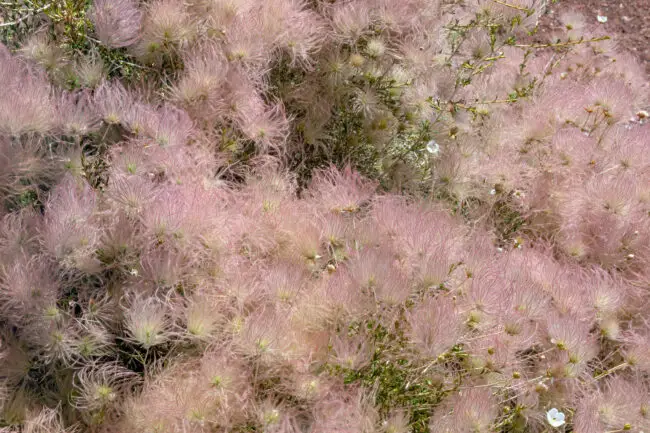
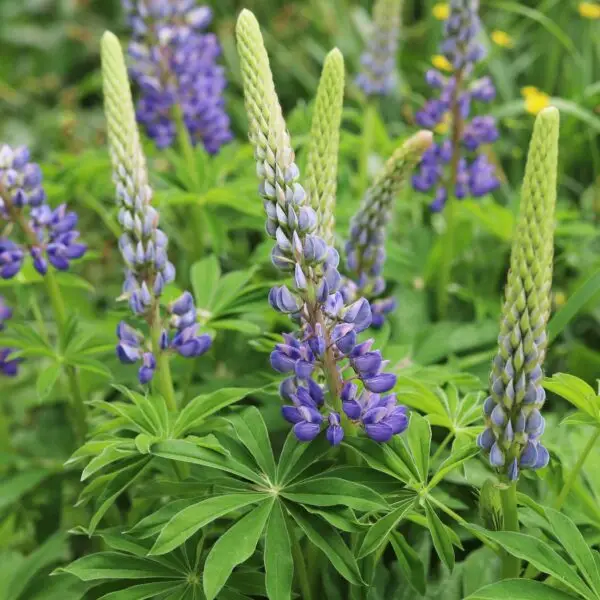
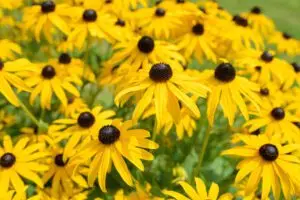
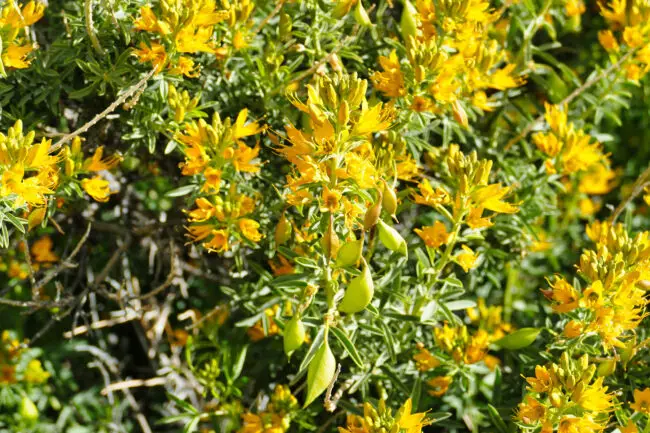
California is, botanically speaking, absurdly privileged. The state has more native plant species than any other in the continental United States, roughly 6,500, many of which exist nowhere else on earth. The chaparral hillsides outside Los Angeles look different from the redwood understory north of San Francisco, which look different from the Central Valley grasslands, which look different from the high Sierra meadows, which look nothing at all like the Mojave. Nevada, just over the border, adds Great Basin sagebrush steppe and Mojave desert to the conversation, an austere and deeply underrated plant palette with its own dedicated cast of characters.
If Willy Wonka were into plants instead of candy, he would definitely have a garden in California.
“
If Willy Wonka were into plants instead of candy, he would definitely have a garden in California.
”
The piles of Californian native options mean there is no single answer to “which native plants should I grow in California or Nevada?” There are a few thousand.
We’re not going to try and cover even a fraction of what’s available. Instead, we’ll shine a light on some native home garden MVPs, organized by region. We will also cover the impostor question: what are all the plants in California and Nevada yards that everyone assumes are native but are actually from South Africa, Australia, or the Mediterranean?
First, an introduction—
Meet your new nerd friend: CalSCAPE.
Let us give credit where credit is definitely due. There is an online tool that makes everything easier: CalSCAPE. CalSCAPE (California Native Plant Landscaping Exchange), run by the California Native Plant Society, is a database that lets you enter your zip code and get a list of native plants for your specific area. No matter where your yard is within the full buffet of California plant communities—coastal sage scrub, valley grassland, mixed evergreen forest, Mojave desert—they’ve got you.
How to use CalSCAPE
Enter your zip code. Filter by sun, water, and plant type. Get a list of species that are native to your backyard. They even include links to native-friendly nurseries to help find the plants you love.
Every species page includes photos, growing advice, and a list of nurseries in your area that carry it. It is the most useful tool for native plant gardening in California, and it is FREE.
Nevada gardeners: CalSCAPE is California-specific.
For Nevada native plant sourcing, the Springs Preserve native plant database and the USDA PLANTS Database are reliable starting points.
Does getting dropped into a database sound like a chore?
I get it. You’re busy. Let’s make it a little easier. Here are California native stand-outs, perfect for almost all CA yards:
Statewide Standouts: The Plants That Work Almost Everywhere
Many native plants are adapted to specific conditions in specific places. A handful are different: native across such a wide range of California and Nevada habitats. Here are some of these wide-ranging West Coast icons.
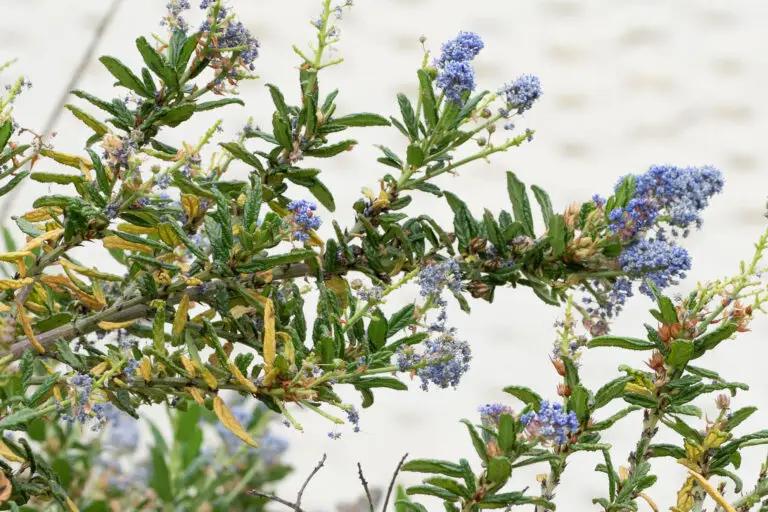
Ceanothus (California Lilac)
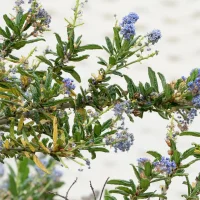
The Ceanothus genus contains roughly 60 native California species ranging from low ground covers to 15-foot tree-like shrubs, blooming in shades from white through pale blue to deep cobalt. There is a Ceanothus for almost every California climate and garden situation.
The common denominator: full sun, excellent drainage, no summer water once established, and an explosive bloom in spring that turns the plant into a solid wall of blue and brings every native bee in the neighborhood to your yard.
Read our California lilacs (Ceanothus) profile for more.
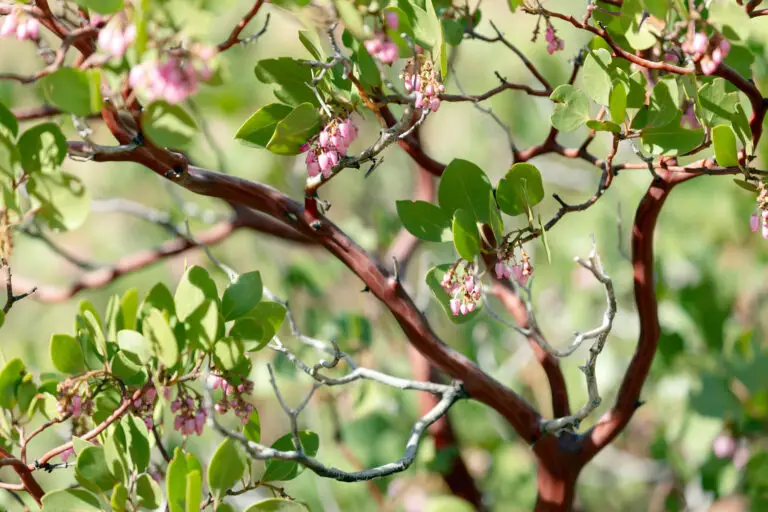
Manzanitas
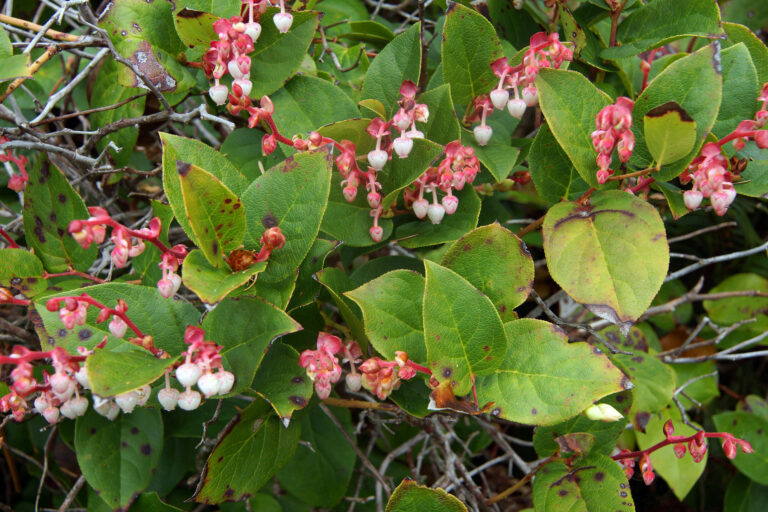
Manzanitas are California’s undersung living icon. The entire manzanita genus Arctostaphylos includes 60+ California species, from ground-hugging kinnikinnick (A. uva-ursi) to large tree-like shrubs stretching 20 feet.
You can spot most manzanitas by their trademark reddish-purple peeling bark that looks hand-painted through all seasons. Urn-shaped white to pink flowers in late winter bring Anna’s hummingbirds. Round red-brown berries feed bears, coyotes, foxes, and birds through summer and fall.
For a home landscape, we have a recommendation: Vine Hill Manzanita ‘Howard McMinn’ (Arctostaphylos densiflora ‘Howard McMinn.’) It’s one of the most reliable all-around manzanitas for California gardens.
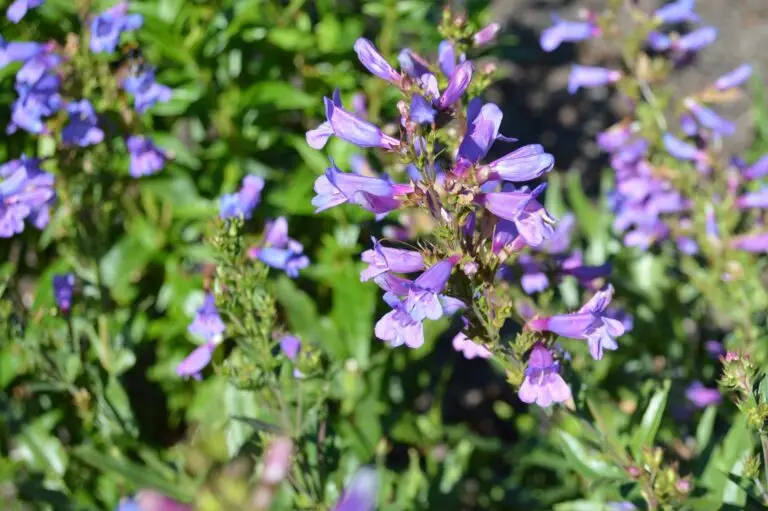
Penstemons
Penstemons are the hummingbird magnets. The Penstemon genus is one of the largest in North America, and California and Nevada are home to dozens of native species.
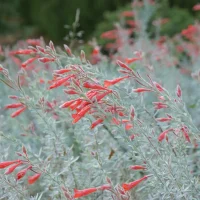
Three penstemons stand out for home gardens. Showy penstemon (Penstemon spectabilis) lights up Southern California hillsides in spring with 3-foot spikes of blue-violet flowers. Foothill penstemon (Penstemon heterophyllus) is smaller and bluer, blooming along the coast ranges and foothills from the Bay Area south. And firecracker penstemon (Penstemon eatonii) sends up brilliant scarlet tubes from the Great Basin and Mojave into Nevada’s higher elevations, a hummingbird favorite at a time when little else is blooming.
All penstemons want full sun and drainage; none want to sit in muddy soil over winter. If you have a sunny, well-drained spot and want hummingbirds (trick question), plant penstemons.
Read our Penstemon Plant Profile for more.
“
Unloading the dishwasher will take you longer than it takes to plant California poppies.
”
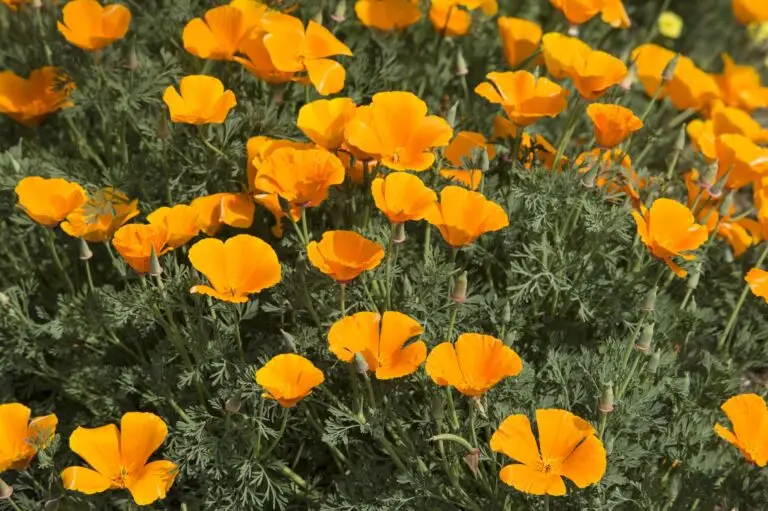
California Poppy
Zero surprises to see this stellar flower on this list, right? California poppy (Eschscholzia californica) is the state flower and perhaps the easiest California native to grow.
Sow seed directly on bare, dry soil in fall.
That’s it.
Those were the directions to plant. Unloading the dishwasher will take you longer than it takes to plant California poppies. This laziest of gardening chores will return blooms from January through May in shades of gold and orange. Your lawn will look slightly embarrassed by comparison.
It self-sows freely and will return year after year if you let some seed fall. It grows from sea level to mountain foothills across the entire state. It is technically a perennial in mild climates but is commonly grown as an annual. There is no lower-barrier entry point into California native plant gardening. Get a package of seeds and don’t overthink it.
Read our California Poppy Plant Profile for more.
Now, let’s meet some regionally specific natives built for either Southern or Northern Californian landscapes. We’ll start with Southern California:
Southern California: Chaparral and Coastal Sage Scrub
The landscape of Southern California, from San Diego to Los Angeles and inland to the Inland Empire, is a mix of chaparral and coastal sage scrub. These two plant communities are so intertwined that it’s hard to tell them apart.
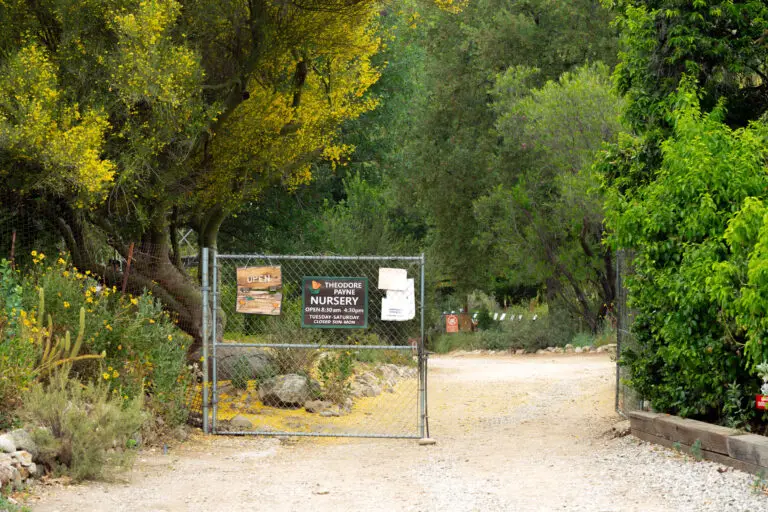
They share a palette of aromatic shrubs, drought-adapted perennials, and scattered oaks that is both beautiful and nearly indestructible once established. The plants below are the workhorses of Southern California native gardening, the ones you’ll see at Theodore Payne Foundation in LA, at California Botanic Garden, and in the yards of every gardener who has been planting native for more than a season.
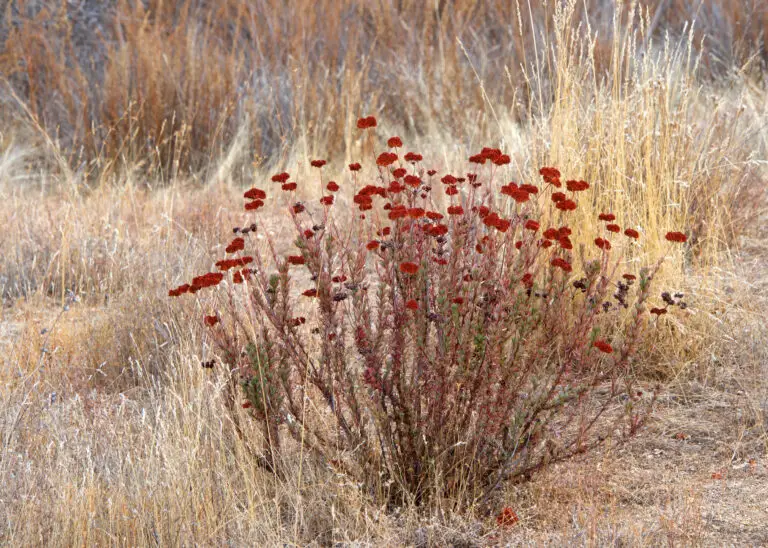
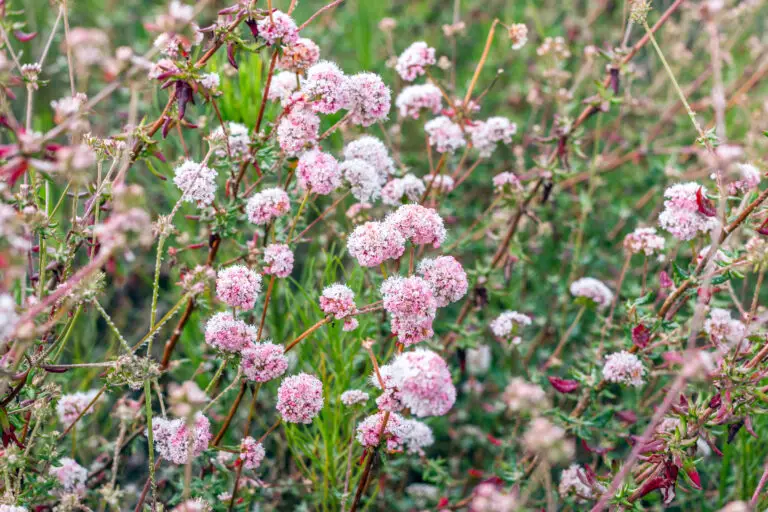
California Buckwheat
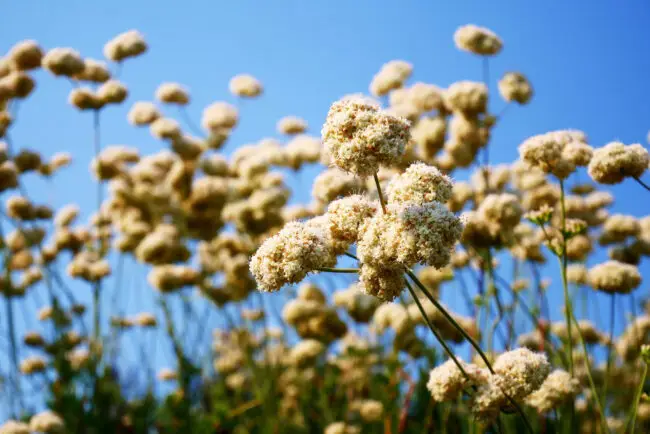
California buckwheat (Eriogonum fasciculatum) is another under-planted pollinator workhorse for California. It’s a low, rounded shrub (2-4 feet tall and wide) with clusters of tiny white to pale pink flowers that open in late spring and last for months, fading to a warm rust-brown that looks good into fall.
At peak bloom, the flower heads are so dense with native bees, butterflies, and tiny beneficial wasps that the entire plant hums. California buckwheat grows across Southern California, the Central Valley foothills, and into the western edge of the Mojave, handling full sun, rocky soil, and months without rain. It is one of the most valuable pollinator plants in the state, and it looks great without a sprinkler IV drip.
Beginner Tip
Pampas grass, iceplant, Mexican feather grass, and periwinkle are non-native and invasive. These plants cause documented harm to California’s native plant communities. If you have any of these in your yard, the California Invasive Plant Council has removal guides. Replacing them with native plants is a good first step as you begin your native garden.
“
“Hollywood” really should be called Toyonwood.
”
Toyon
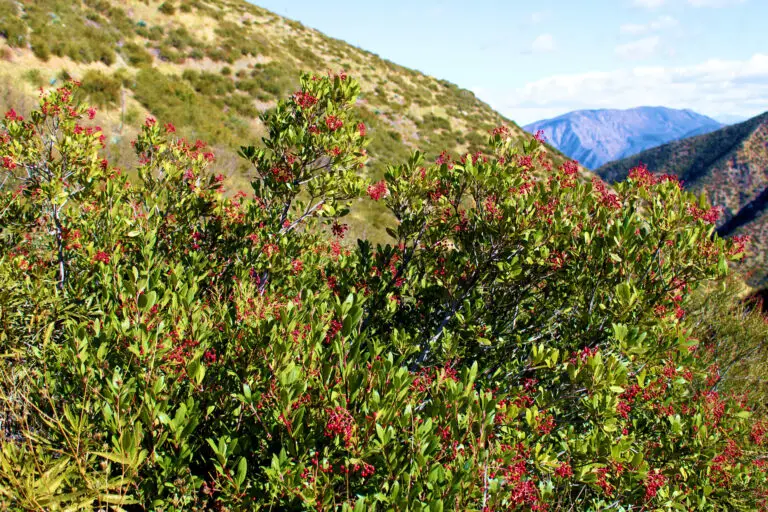
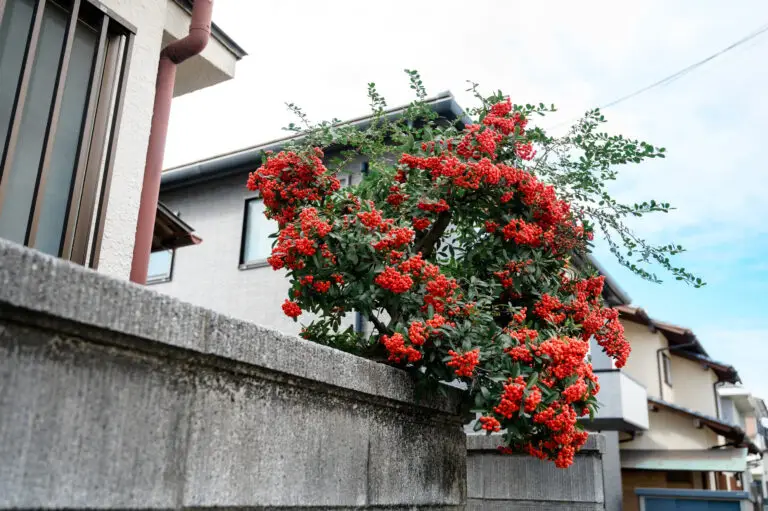
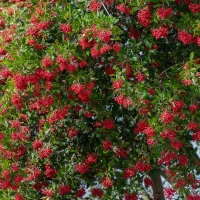
Toyon (Heteromeles arbutifolia) is why it’s called Hollywood. Toyon comes from the Tongva word for the plant. But when early settlers swept in from the east, they saw this plant and mistook it for holly. “Hollywood” really should be called Toyonwood.
Toyon a large shrub or small tree (6-15 feet), evergreen, with clusters of small white flowers in summer and bright red berries in winter that are important bird-food sources in Southern California. Cedar waxwings, American robins, and hermit thrushes descend on a fruiting toyon in December like a bowl of punch at a party.
It thrives where you think plants would not: poor soil, drought, and coastal conditions are all fine. It belongs in almost every Southern California yard that has room for a 10-foot plant.
Visit our Toyon Plant Profile for more.
We’ll stop there, for now. Here are all The Plant Native plant profiles that work well in SoCal gardens:
Bay Area and Northern California: Fog and Foothills
Northern California’s native plant palette is organized around moisture, be it fog, mist, or rain. This consistent water supports redwood forests, mixed evergreen woodlands, and coastal prairies. The inland foothills have a more Mediterranean character with wet winters and dry summers. The Bay Area sits at the intersection, which is why Bay Area native plant gardening can feel more complicated than anywhere else in the state. (As a Palo Alto kid, I know from experience that some hard-core plant nerds in the area can be, shall we say…a little intimidating, too.)
Here are a few Norcal plant friends that play nice in yards.
Red Flowering Currant
Red flowering currant (Ribes sanguineum) has really got it all: good smells, gorgeous flowers, edible fruit, and memorable oak-like leaves. It is one of the most spectacular late-winter and early-spring native shrubs in the entire state. The flowers open in February and March, weeks before most other plants have done a thing, in drooping clusters of deep rose-pink that look almost tropical against bare winter branches.
Anna’s hummingbirds are usually the first visitors, making the plant fun to watch. It sticks to a medium-sized shrub at 5-8 feet, thrives in sun to part sun, with moderate water needs. In the right spot, it’s ready to shine with neglect. You can prune lightly after bloom if you want to keep it in-bounds, then you’re done with attention until next February.
The Central Valley: Rare and Worthy
The Central Valley is the most transformed landscape in California. Its agriculture has replaced most native plants over the past 150 years. What remains of the native plant communities is genuinely beautiful and garden-worthy. Valley gardeners have access to plants adapted to the Central Valley’s specific combination of hot dry summers, cold wet winters, and heavy clay soils that most other regions don’t share.
Valley Oak
Grow an icon. Valley oak (Quercus lobata) is the definitive tree of California’s interior: deeply lobed leaves, massive spreading canopy at maturity, and a lifespan measured in centuries.
This is not a tree for small yards. A mature valley oak can reach 70 feet tall and 100 feet wide, and it’s not going to stop and ask for your permission before getting there. But for gardeners with the space and the patience, valley oak is one of the highest-wildlife-value trees in North America: Douglas Tallamy’s research documented more than 500 caterpillar species associated with oaks in North America. Plant one for someone who will be alive in 2125.
Blue Elderberry
Blue elderberry (Sambucus nigra ssp. caerulea) is the fast-growing native for gardeners who need size quickly. It reaches 15-25 feet as a large shrub or small tree, with flat-topped white flower clusters in late spring and powdery blue-black berries in summer that are consumed by an enormous range of birds. It’s also a host plant for the pale swallowtail butterfly and the valley elderberry longhorn beetle, a federally threatened species found only in Central Valley riparian areas.
It handles Central Valley heat, average soil, and moderate drought once established. For a garden near a river corridor or seasonal drainage, this might be your plant.
Great Basin Nevada and the Mojave: Desert Warriors
Nevada is a range of botanical territories. Most of the state falls into a cold desert climate filled with sagebrush and bunchgrasses at elevations above 4,000 feet. It’s a tough place to be a plant, unless you’ve been there for thousands of years.
And then the southern tip of Nevada, around Las Vegas and the Mojave, is a different universe: lower, hotter, with Mojave desert plants including Joshua trees and creosote bushes that can handle 100+ degrees but can’t survive the harsh winters in northern Nevada. Both sides of the spectrum are awesome.
Palo Verdes
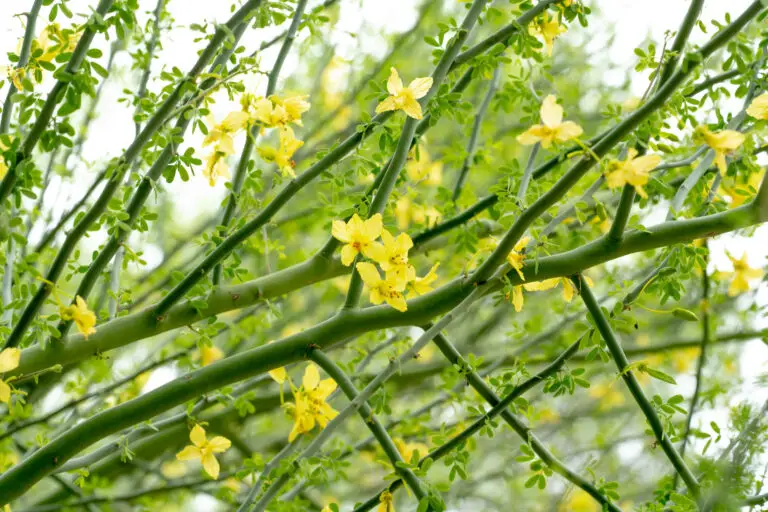
The green-barked trees of the Mojave and Sonoran deserts are some of the most striking native plants in North America. Blue palo verde (Parkinsonia florida) and foothills palo verde (Parkinsonia microphylla) are both native to southeastern California, from the edges of Joshua Tree National Park south through the Coachella Valley and east to the Arizona border. Both drop their tiny leaves during drought and photosynthesize through their green bark, a trick that keeps them alive and green-looking through the hottest, driest months.
For desert California and southern Nevada gardens, palo verde is the signature shade tree.
Read our Palo Verde Plant Profile for more.
Rubber Rabbitbrush
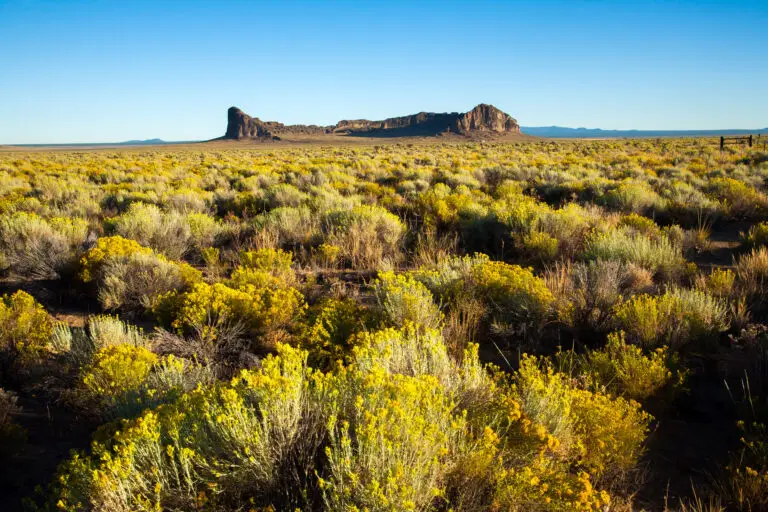
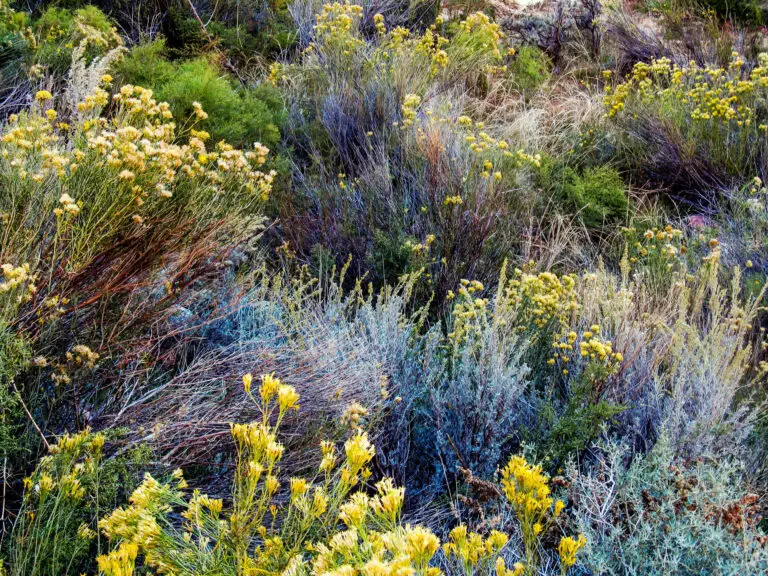
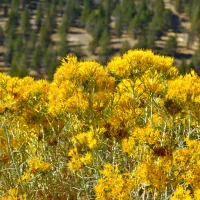
Rubber rabbitbrush (Ericameria nauseosa) turns the desert a soft, glowing gold in September and October. When most of the landscape is dry and brown, rubber rabbitbrush opens masses of bright yellow flowers that run through the pollinator season into fall. It’s a 2-5 foot silver-stemmed shrub that handles alkaline soil, road salt, and extreme drought with a teenage-like eyeroll. Monarch butterflies depend on it as a fall migration fuel stop.
Its common name comes from jackrabbits sheltering under its canopy; but this snuggled-up generosity extends to quail, sparrows, and other ground-nesting birds. In a Great Basin garden, it is a must-have.
Here are all the native plant profiles on the site ready for high-desert gardens:
California Native Nurseries
Where to find your new favorite plants? Skip the big box stores and the disappointment that always happens when you visit one (spoiler alert: they only stock a few natives.) Instead, find your plants and your people and visit a plant nursery that specializes in native plants. We’ve compiled a list of 100+ native nurseries that are worth a visit.
Wow, inspired yet? It’s hard not to feel overserved after scrolling through a verdant jewel box of California and Nevada plant life.
These plants have lots of fans: California’s native plant community is one of the most active and passionate in the country. Scroll through CalSCAPE to find what’s native to your zip code. Visit Theodore Payne Foundation for fun events, seeds, and a stellar native nursery. The California Botanic Garden will show you what a yard can look like after you’ve been doing this for 80 years. Nevada gardeners, start at the Springs Preserve and work backward from there.
If you’re feeling overwhelmed, scroll back up and pick one plant that connects with you. Head to a native nursery and find one. Plant it during an overcast morning. After it’s settled in, do it again. Nobody arrives at a yard full of native plants all at once. Commit to a lifetime of exploring as much West Coast plant life as you can, knowing that no single person could ever see or know it all. Head over to our Beginner’s Guide to Native Penstemons or our Beginner’s Guide to California Buckwheat for more inspo. Happy California and Nevada planting!