




Highlights
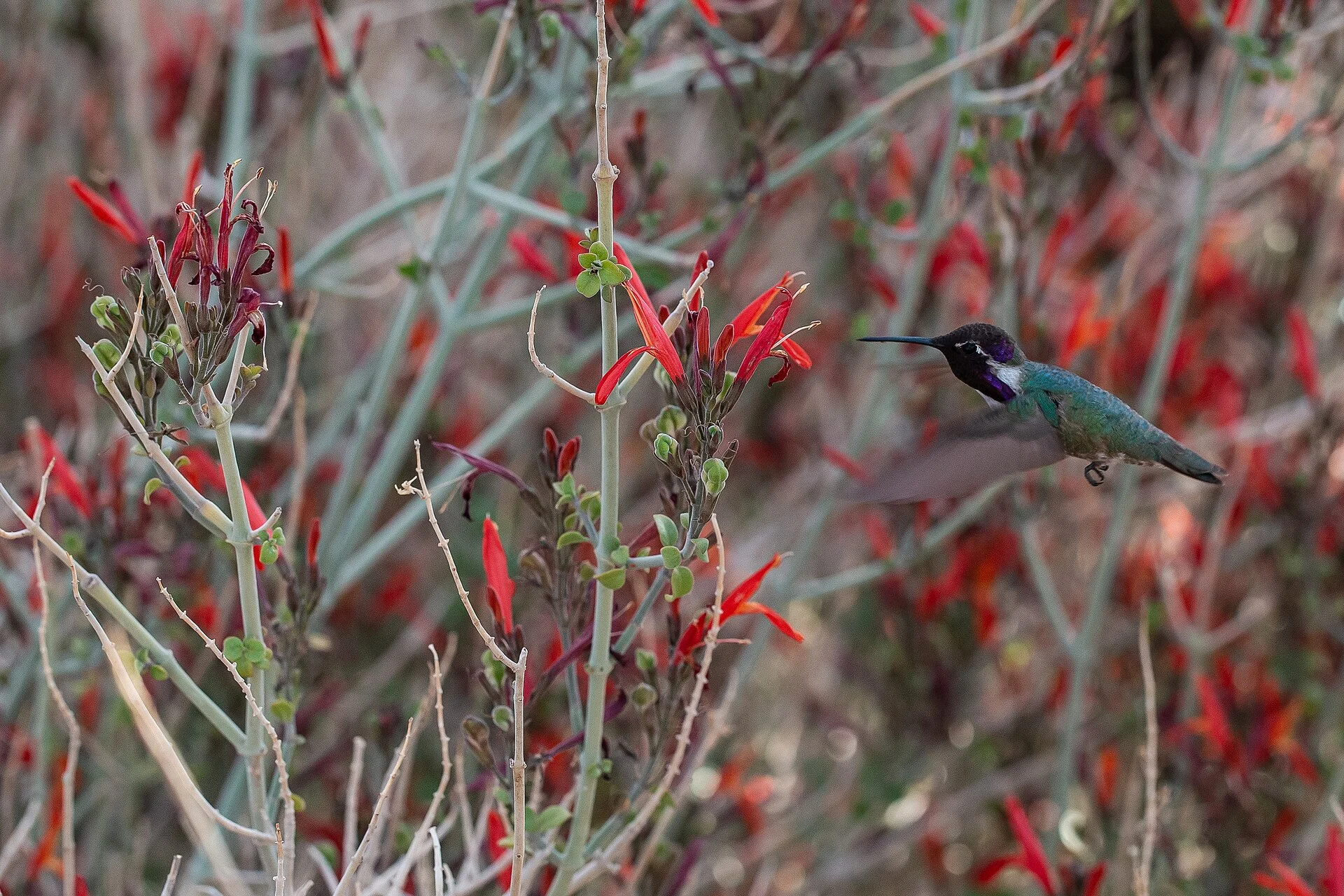
Chuparosa’s bright red flowers are shaped for hummingbirds, and the hummingbirds know it. The two evolved to go together like peanut butter and jelly, and if you plant one you’ll have hummingbirds to watch, without the chore of mixing the sugar water and filling the feeder. It grows into a loose, airy shrub of slender green stems that looks at home beside boulders, gravel, and other desert natives. Because it’s often nearly leafless while it blooms, the red tubes stand out against thin green stems, which makes it a good pick for a corner that needs a spot of color. The flowers open in late winter and spring, when much of the yard is still waking up.
Is chuparosa a good choice for my yard?
Yes, if…
- You have a sun-baked slope, a rock garden, or a spot beside a boulder that could use some color.
- You want hummingbirds outside your favorite window.
- You like a shrub that looks like it grew there on its own, with a loose, natural shape.
- Your soil drains fast: gravel, sand, or rocky ground.
- You’d rather water every week or two, or even less once the plant settles in.
Skip it if…
- Your soil stays soggy. Chuparosa wants water to drain away, and too much of it brings weak growth and fewer flowers.
- Your winters bring long freezes. A quick dip into the low 20s is fine, but a freeze that hangs around in the mid-20s or colder can damage the plant.
- Your yard is mostly shade. Full sun gets you the most flowers and a tighter shape.
Where is chuparosa native?
Native to 2 US states
Sources: NatureServe, Royal Botanic Gardens, Kew (World Checklist of Vascular Plants) and the USDA PLANTS Database, compiled by The Plant Native. How we map native ranges
In the US, chuparosa grows wild only in Arizona and California, mostly in southern Arizona and southeastern California, along rocky desert washes between about 1,000 and 4,000 feet. It also grows in northwest Mexico.
Put one where you can see it from your favorite chair, and you’ll soon be checking the window more than your phone.
Why chuparosa matters
Chuparosa and hummingbirds are a matched set. The flowers are held high, with the pollen-bearing parts placed so a feeding hummingbird gets dusted and carries that pollen to the next bloom. The bird leaves with a meal, and the shrub gets the pollen it needs to set seed.
Hummingbirds on long trips lean on it. Rufous hummingbirds heading from Mexico to Alaska follow its bloom path through the desert Southwest. Black-chinned hummingbirds, which return to Arizona each spring, also arrive in time for the bloom.
Hummingbirds aren’t the only visitors. Honeybees drink the nectar, and linnets and sparrows nip off the flowers to eat the nectar-filled bases.
Chuparosa through the seasons
Spring
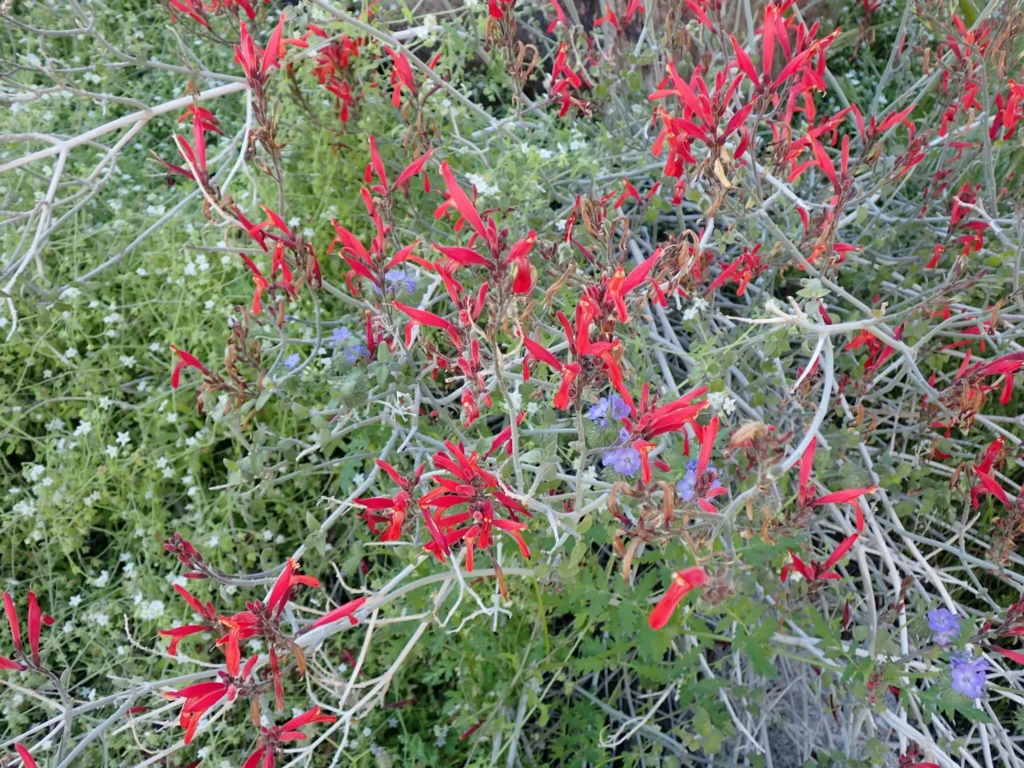
Spring is when chuparosa hits its stride. Clusters of red tubes open at the ends of the stems. The shrub is often nearly leafless while it blooms, which puts every flower on display.
Summer
Summer is the rest stop. When the soil dries out, chuparosa stops blooming and drops its leaves. The green stems keep making food until rain brings the leaves back, and a bare look in July is the plant working as designed.
Fall
Fall is the comeback. When rain returns, the thin stems fill back in with bright green leaves. Flowers can open in almost any month, and a stray red tube in fall is normal.
Winter
In yards with mild winters, big blooms can appear even in the cooler months. A quick dip into the low 20s is fine, and if a long freeze does cut the plant back, it usually regrows from the roots when warm weather returns.
Where chuparosa shines in your yard
- A sun-baked slope. Plant a few together and let them fill in as one loose, red-tipped patch.
- Beside a boulder or in a rock garden. The thin stems and gravel-colored backdrop make the red flowers pop.
- Against a south-facing wall. The extra shelter helps if frost visits your yard.
- The edge of a rain garden or dry creek bed. The zone where water pools briefly after a storm and then drains away is where it thrives.
- Along a fence or patio edge. Let it fill in as a loose screen with a hummingbird show built in.
How to grow chuparosa
Where to plant
Give it full sun and ground that drains fast. Full sun gets you the most flowers and a tighter shape, and any well-drained soil will do: gravel, sand, decomposed granite, or rocky ground. Think of the spot where storm water runs through and doesn’t stay.
When to plant
Plant during the monsoon season in its home range. If you’re starting from seed, sow it as it is, since the seed germinates without any special treatment.
Spacing
Leave about 4 feet of room for each plant, since a typical mature shrub spreads about that wide. Set them 4 to 6 feet apart if you want a patch. Water decides final size, and a drier schedule keeps the shape tighter.
Watering
Once it settles in, water deeply and not often. Guides range from about once a month to once every week or two, depending on where you garden. Extra water works against you: it brings weak, soft growth and fewer flowers.
Planting card
Justicia californica
The trickKeep it on the dry side and it holds a tighter shape.
What are good pairings for chuparosa?
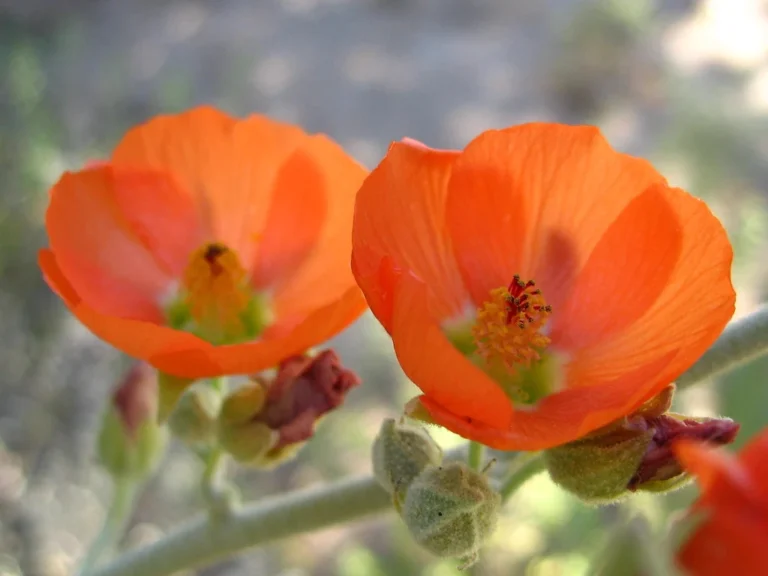
Pair it with other sun-lovers that like dry, well-drained soil. Desert globemallow brings apricot orange, pink, or white cups, desert marigold and palo verdes bring yellow, and fairydusters add red or white puffs. Blackfoot daisy fills the low spots at its feet, and desert ironwood gives it a tree to stand beside. Creosote bush, ocotillo, and brittlebush grow well alongside it too.


Where can I buy chuparosa?
Buy it from a native plant nursery, and read the tag for Justicia californica, because some still sell it under the old name Beloperone californica. Red is the classic flower color, but it’s worth asking what color yours will be if you want to avoid a surprise orange or yellow.
Potential challenges
Deer, rabbits, and other nibblers
Chuparosa mostly gets a pass. In Arizona survey ratings, deer and rabbits rarely damaged it, and a list from gardeners and nursery staff in north central Arizona calls it less palatable to both. Javelina, ground squirrels, and packrats aren’t rated for chuparosa, and the only sure protection from any of them is a fence or cage.
Cold snaps
A quick dip into the low 20s is fine, but a freeze that lingers in the mid-20s or colder can damage chuparosa. It can freeze to the ground and usually grows back. Planting it against a south-facing wall gives it some shelter.
Too much water
Extra water brings weak, soft growth and fewer flowers, and a bigger, denser shrub is also the one that tempts people to hack it into a gumdrop. Keep it on the dry side and it holds a tighter shape and its loose, natural look.
Seedlings
Chuparosa readily self-seeds, and the ripe pods snap open and send seed outward. Pull the seedlings you don’t want while they’re small.
A note on cultivars and relatives
Most chuparosa sold is the classic red-flowered plant, and orange and yellow forms turn up too. Kew accepts two varieties of the species, J. californica var. californica and var. conferta. Beloperone californica is an older name for the same plant, and you may see it on older tags and books.
Chuparosa also has two close relatives you may run into. Red justicia (Justicia candicans) is native to Arizona and Mexico, with bright red flowers that open in fall, and it’s more frost-sensitive, so it wants a sheltered spot. Mexican honeysuckle (Justicia spicigera) has orange flowers and grows wild in Mexico and farther south, not in the US, though it’s grown in Southwest gardens.
FAQs
What does chuparosa mean in Spanish?
Chuparosa is Spanish for “hummingbird.” In Mexico it’s another word for the bird, alongside the general word, colibrí. The shrub earned the name from its most frequent customers, and the word reads like a job description: chupar means “to suck,” and rosa means “rose.”
Is chuparosa native to Arizona?
Yes, chuparosa grows wild in southern Arizona. It also grows in southeastern California and northwest Mexico, mostly along rocky washes and slopes.
How big does chuparosa get?
A typical chuparosa grows into a mound about 4 feet tall and wide, and some reach 5 or 6 feet. Water decides how big it gets, and a drier schedule keeps it tighter.
Will deer eat it?
Deer rarely bother chuparosa. In Arizona survey ratings, deer and rabbits rarely damaged it. Javelina, ground squirrels, and packrats aren’t rated for it in the guides we used, and a fence or cage is the only sure protection from any animal.
Will chuparosa survive frost?
Chuparosa handles a quick dip into the low 20s, but a long freeze can damage it. If frost does cut it back, trim off the damaged parts, and it usually regrows from the roots when warm weather returns.
Is chuparosa safe around kids and pets?
Toxicity hasn’t been confirmed for chuparosa. One plant guide includes a general caution about large amounts of the fruit, and pet toxicity isn’t listed in the guides we used. In its home range, the nectar has been eaten by sucking it from the flowers, which is history rather than an invitation to snack.
Plant nerd fact
The hummingbird’s mother
The O’odham name for chuparosa, vipismal jeej, translates to “hummingbird’s mother,” which is a lot of credit to hand a shrub. Its red blossoms are also said to taste like cucumber, which is not what you’d expect from a flower that looks like a lipstick tube.
Most shrubs have to earn their spot in a yard. Chuparosa shows up with its own fan club, a crowd of hummingbirds that already know where the party is. Put one where you can see it from your favorite chair, and you’ll soon be checking the window more than your phone. Linnets and sparrows come for the flowers too, so hummingbirds won’t be the only birds worth watching. That’s a trade worth making. Happy planting!
Sources
- Arizona State University Libraries. “Justicia californica.” Accessed November 8, 2026.
- Arizona-Sonora Desert Museum. “Hummingbirds.” Accessed November 8, 2026.
- Arizona-Sonora Desert Museum. “Plant Care Information: Chuparosa.” Accessed November 8, 2026.
- Audubon Southwest. “Hummingbird’s Choice Award Goes to Chuparosa.” Accessed November 8, 2026.
- Calscape. “Chuparosa (Justicia californica).” Accessed November 8, 2026.
- Desert Botanical Garden. “Chuparosa: A Plant for Every Season.” Accessed November 8, 2026.
- Kew. “Justicia californica (Benth.) D.N.Gibson.” Plants of the World Online. Accessed November 8, 2026.
- Lady Bird Johnson Wildflower Center. “Justicia californica.” Accessed November 8, 2026.
- NatureServe. “Justicia californica.” NatureServe Explorer. Accessed November 21, 2026.
- Real Academia Española. “Chuparrosa.” Diccionario de la lengua española. Accessed November 9, 2026.
- University of Arizona Campus Arboretum. “Dunbar Spring Neighborhood: Justicia californica.” Accessed November 8, 2026.
- University of Arizona Cooperative Extension. North central Arizona deer and rabbit plant list (AZ1237). Accessed November 8, 2026.
- University of Arizona Cooperative Extension. “Deer Plant Resistance Ratings” (AZ2098b). Accessed November 8, 2026.
- University of Arizona Cooperative Extension. “Javelina Plant Resistance Ratings” (AZ2098a). Accessed November 8, 2026.
- University of Arizona Cooperative Extension. “Rabbit Plant Resistance Ratings” (AZ2098c). Accessed November 8, 2026.
Similar plants
-
 Fairydusters
-
 Apache Plume
-
 Creosote Bush
-
 California Buckwheat
-
 Desert Willow
-
 Mesquites
-
 Texas Sage
-
 Triangleleaf Bursage
-
Buckwheat
Updated Find more: Red Deer Resistant Flowering Shrub Hummingbird Favorite Spring Winter Full Sun Dry Drought-Tolerant
The ads on this site help pay real native plant nerds to research and write these guides.
Garden notes
Notes from people who’ve grown it
Tips, wins, and the occasional disaster. If you’ve grown chuparosa, share the advice you’d give to a neighbor.
No notes yet. Yours could be the first.
Grown chuparosa? Tell the next person what you wish someone had told you.
Tap anywhere to close


