Highlights
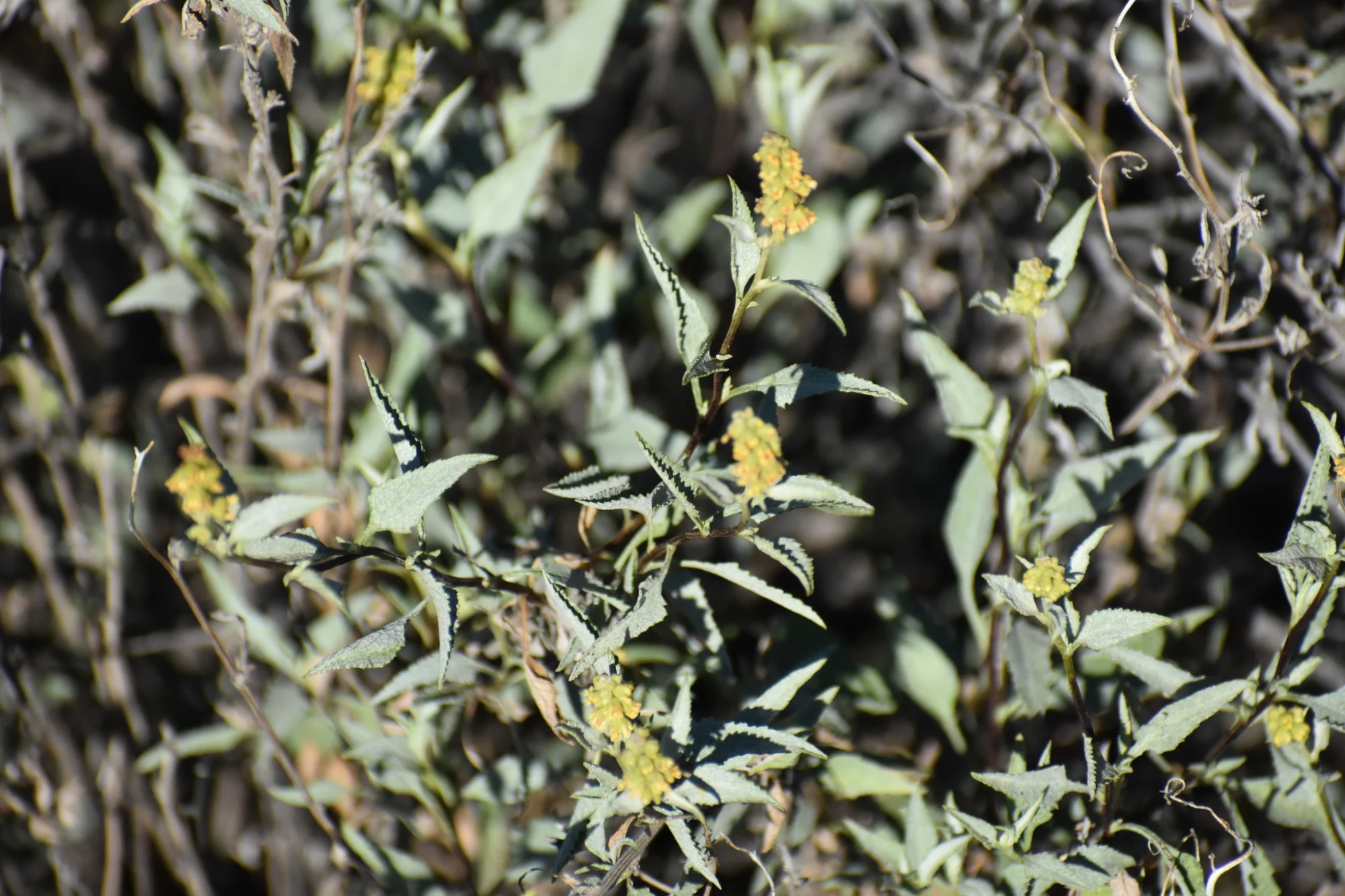
Walk through Arizona’s Sonoran Desert and the soft gray-green mounds around the saguaros are probably triangleleaf bursage (Ambrosia deltoidea). Its small, triangle-shaped leaves are gray-green on top and whitish and hairy underneath, and they look dusted with silver against red rock and gravel. This plant is all about backdrop and texture rather than color. In late winter and spring, tiny yellow-green flowers open at the tips of the stems, adding a new seasonal dimension. Tuck it beside cacti and it softens their spines. If you’re looking to create a vibe that captures the beauty of the desert, triangleleaf bursage will help you build the foundation.
Is triangleleaf bursage a good choice for my yard?
Yes, if…
- You have an open, exposed patch that needs a first plant. Bursages are among the few desert plants that can settle bare sites before anything else.
- You want a soft gray-green filler that calms down a cactus garden and makes greener plants next to it pop.
- You have a slope or wash edge that needs holding in place. The roots reach about three feet down.
- You live in the Sonoran Desert and want a plant that already knows your rainfall.
Skip it if…
- Hay fever is a problem in your house. This plant is related to ragweed and its pollen is highly allergenic, so don’t make it the star of the yard.
- You want showy flowers. The blooms are tiny and green.
- Your yard is outside the Sonoran Desert, or gets regular lawn-style watering. Check the range below before you buy.
- You want leaves that look full all year. It drops leaves during extreme heat and dry spells.
Where is triangleleaf bursage native?
Native to 1 US state
Sources: NatureServe, Royal Botanic Gardens, Kew (World Checklist of Vascular Plants) and the USDA PLANTS Database, compiled by The Plant Native. How we map native ranges
Triangleleaf bursage is native to Arizona, where it grows across the Sonoran Desert. It also grows in Baja California and Sonora, Mexico.
Think of it as the plant’s way of mailing itself around.
Why triangleleaf bursage matters
This plant won’t win a pollinator contest. It’s wind-pollinated, doesn’t host many insects, and most animals aren’t interested in eating it. It has a different job though: it’s one of the first plants that move onto exposed ground, where most desert seedlings can’t survive on their own. It builds the shade, and opens the way for the neighbors to move in. Under its canopy, the soil surface stays cooler and holds more nitrogen, which is why young saguaros, palo verdes, ocotillos, and pincushion cacti can start life tucked beside one.
The seeds feed birds, small mammals, and ants. The ants, in turn, feed horned lizards. Its fallen leaves also soften the soil and help rain soak in, so erosion rarely shows up where it’s well established.
Triangleleaf bursage through the seasons
Spring
The tiny yellow-green flower spikes wrap up their little show, and the spiny burs ripen by late spring. Most of the plant’s new leaves have come in over winter and early spring.
Summer
In the worst heat and dry stretches, the plant drops leaves, and some stems, and waits it out. It greens up again when moisture returns, and seeds form after summer rain.
Fall
Fall rain means more seed, and the burs hitch rides on passing fur and feathers. Think of it as the plant’s way of mailing itself around.
Winter
This is when most new leaves unfold, and flowers start up in late winter. It handles cold down to about 22°F.
Where triangleleaf bursage shines in your yard
- Gravel strip by the driveway. Reflected heat is its happy place.
- Rocky slope. The deep roots hold the ground, and the plant blends right in with the rocks.
- Cactus garden. It softens the spiny edges and sets off greener neighbors.
- Base of a saguaro or palo verde. This is where it works as a nurse plant, the way it does in the wild.
- Top edge of a rain garden. It’s suited to the driest zone, up high where water rarely pools.
- Curbs and medians. It’s been used in highway median plantings.
How to grow triangleleaf bursage
Where to plant
Pick the sunniest, rockiest spot you have. Gravelly slopes, desert flats, and the sandy edge of a wash are all natural homes for it.
When to plant
Wild seedlings come up in open ground after rain, so plant ahead of your wet season and let the sky do some of the watering.
Spacing
A mature plant spreads about two feet wide, so give each one two to three feet. They’ll knit into a soft drift.
Beginner tip
Skip the lawn-style watering and let the three-foot roots go looking for their own water.
Watering
Rain does most of the work. This shrub lives where yearly rainfall runs about 4 to 12 inches.
Planting card
Ambrosia deltoidea
The trickTuck it at the base of a young cactus, where it can shade the roots the way it does in the wild.
What are good pairings for triangleleaf bursage?
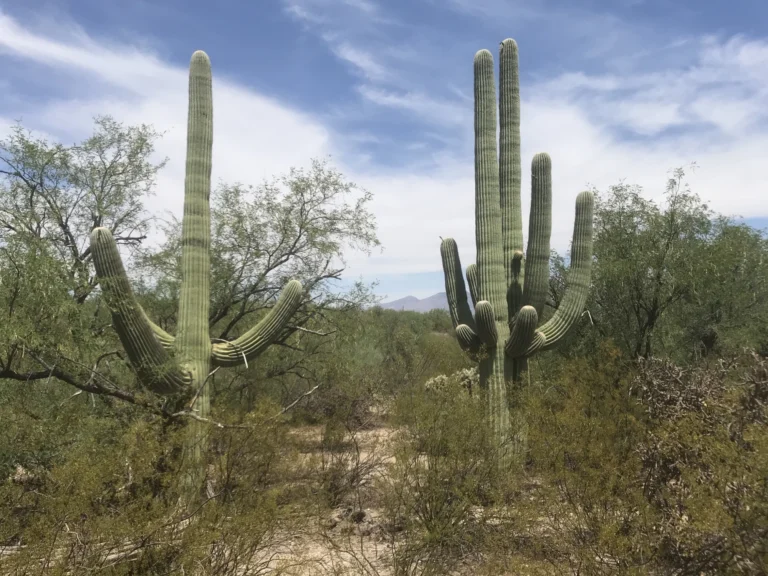
Pair it with its natural neighbors: saguaro, foothills palo verde, mesquite, jojoba, ocotillo, and pincushion cactus. Together they make a yard that looks like a stretch of Sonoran Desert you didn’t have to hike to.


Where can I buy triangleleaf bursage?
Look for it at native plant nurseries in the Sonoran Desert, and buy it by the botanical name, Ambrosia deltoidea, since tags may say triangle bur ragweed, burrobush, or just bursage. Native seed suppliers sell it too if you’d rather start from seed.
Potential challenges
Nibbling animals. Mammals mostly leave it alone. It’s described as highly unpalatable to mammalian herbivores, and deer, javelina, and rabbit resistance ratings from the University of Arizona don’t list it. Rabbits do eat seedlings in open ground, so a newly planted bursage may need a little protection until it gets going. Fresh cuttings tied to new transplants may deter rabbits.
Leaf drop. In extreme heat and dry spells it drops leaves, and sometimes stems. That’s how the plant gets through a hard stretch, and it fills back in when moisture returns. Plant it among cacti and shrubs and the gaps won’t draw the eye.
Seeds and burs. It sets abundant seed, and the spiny burs cling to fur, socks, and feathers. Seedlings pop up in open ground nearby, so you may get free plants. Keep it away from the path your dog runs.
A note on cultivars and relatives
No cultivars turned up in the sources used, but a few relatives are worth knowing. White bursage (Ambrosia dumosa) is among the most arid-adapted perennials in North America. It has small, white, deeply divided leaves, grows in fine valley soils, and sits bare through most of the year. Canyon ragweed (A. ambrosioides) is a taller, woody shrub up to about six feet, with large, dark gray-green leaves up to seven inches long. It likes moister spots and seems to need some summer rain. Hollyleaf bursage (A. ilicifolia) has especially attractive leaves and grows in wetter pockets of the hottest, driest desert. Triangleleaf bursage is the one for rocky or caliche ground in the Arizona Upland.
FAQs
Will deer eat triangleleaf bursage?
Probably not, since it doesn’t taste very good to most mammals. Deer aren’t mentioned in the plant guides used, and the plant is described as highly unpalatable. Rabbits will eat seedlings in open ground, and javelina and rabbit resistance ratings from the University of Arizona don’t list it.
Is triangleleaf bursage the same as ragweed?
It’s a close relative of ragweed, but it’s not the same plant. Both belong to the genus Ambrosia. That said, bursage is wind-pollinated and its pollen is highly allergenic, so it’s best as a supporting plant, not the main one.
Does triangleleaf bursage stay green all year?
Mostly, but it drops leaves in extreme heat and dry spells. Most new leaves come in winter and early spring, and it greens up again when moisture returns.
How big does triangleleaf bursage get?
It makes a rounded mound about one to two feet tall and about two feet wide. Some sources list plants up to about 32 inches tall.
How long does triangleleaf bursage live?
Up to about 50 years in the wild! Believe it or not, that’s relatively short for a desert shrub. But like all desert survivors, it still sets plenty of seed to keep the patch going.
Is triangleleaf bursage the same as white bursage?
White bursage (Ambrosia dumosa) is a different plant. Triangleleaf bursage dominates the Arizona Upland, while white bursage takes over in the lower Colorado River area and the Mojave Desert. Triangleleaf bursage tends to grow along moister gully edges, and white bursage likes finer, drier soils.
Plant nerd fact
The desert’s healer
Desert land managers have a job title for bursage: healer. When ground gets disturbed or washed thin, a short list of native plants moves in first to patch it up, and triangleleaf bursage is one of them. Its roots reach about three feet down, its fallen leaves and stems soften the soil so rain can soak in, and its shade cools the ground for seedlings that couldn’t make it alone. Where it’s well established, erosion rarely shows up. Plant a few and you’re giving your yard the same head start.
Triangleleaf bursage is the silvery little shrub that makes a desert yard look like it grew there on its own. It loves a sun-baked spot, asks for very little water, and gives young cacti and shrubs the shade they need to get started. Tuck a few beside your saguaro or along the gravel edge of the driveway, and the mounds will look planned, not accidental. For more plants that thrive in the same heat, browse our Southwest garden guide. Happy planting!
Sources
- Arizona Municipal Water Users Association. “Triangleleaf Bursage.” Accessed November 7, 2026.
- Arizona Native Plant Society. “Using Native Succession Plants.” Accessed November 7, 2026.
- Arizona-Sonora Desert Museum. “Genus Ambrosia.” A Natural History of the Sonoran Desert. Accessed November 7, 2026.
- Boyce Thompson Arboretum. “Bursage.” Plant list (archived). Accessed November 7, 2026.
- Lady Bird Johnson Wildflower Center. “Ambrosia deltoidea.” Native Plant Database. Accessed November 7, 2026.
- NatureServe. “Ambrosia deltoidea.” NatureServe Explorer. Accessed November 7, 2026.
- SEINet Portal Network. “Ambrosia deltoidea.” Arizona State University. Accessed November 7, 2026.
- University of Arizona Campus Arboretum. “Ambrosia deltoidea.” Accessed November 7, 2026.
- University of Arizona Cooperative Extension. Javelina Plant Resistance Ratings. AZ2098a. Accessed November 7, 2026.
- University of Arizona Cooperative Extension. Rabbit Plant Resistance Ratings. AZ2098c. Accessed November 7, 2026.
- USDA Forest Service. “Ambrosia deltoidea.” Fire Effects Information System. Accessed November 7, 2026.
Similar plants
-
 Texas Sage
-
 Texas Mountain Laurel
-
 Fairydusters
-
 Apache Plume
-
 Creosote Bush
-
 California Buckwheat
-
Buckwheat
-
 Mesquites
-
 American Plum
Updated Find more: Yellow Shrub Spring Winter Full Sun Dry Drought-Tolerant
The ads on this site help pay real native plant nerds to research and write these guides.
Garden notes
Notes from people who’ve grown it
Tips, wins, and the occasional disaster. If you’ve grown triangleleaf bursage, share the advice you’d give to a neighbor.
No notes yet. Yours could be the first.
Grown triangleleaf bursage? Tell the next person what you wish someone had told you.
Tap anywhere to close


