




Highlights
Willows are the first thing awake in a wet yard. Before the maples leaf out, their bare stems light up with catkins: silver fur on pussy willow, then little yellow bottlebrushes full of pollen. For a bee coming out of winter, that’s breakfast. There are dozens of willows native to North America, from knee-high prairie shrubs to river trees taller than a house. Nearly all of them want sun and consistently wet soil, and most grow so easily you can start one from a stick.
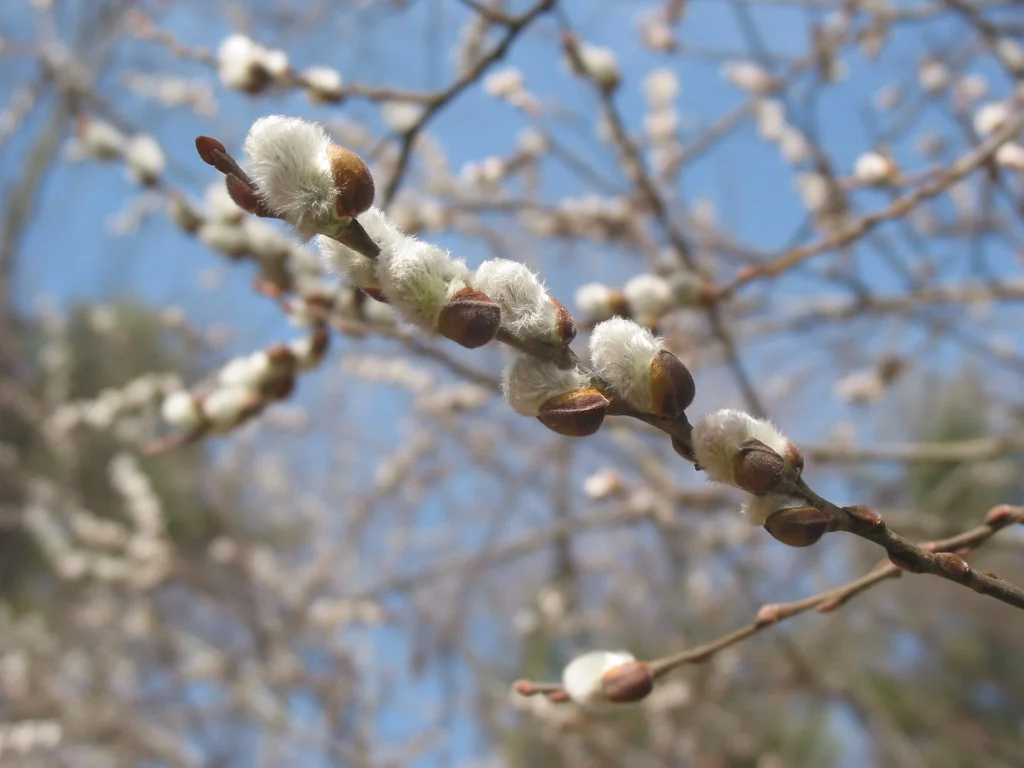
Is a native willow a good choice for my yard?
Yes, if…
- You have a wet spot in the sun. A soggy low corner, a pond edge, or a rain garden that floods every spring all work perfectly.
- You want to feed early bees. Willows bloom in late winter and early spring, and 14 kinds of eastern bees collect pollen from willows and almost nothing else.
- You want the most caterpillars per square foot. Willows host 694 native moths and butterflies, including the viceroy, mourning cloak and red-spotted purple. Yes, that number is correct.
- You need to hold a slope or bank. Willow roots knit soil fast, which is why the USDA uses them to stabilize eroding streambanks.
Skip it if…
- The spot is near a sewer line, septic field, or water pipe. Willow roots go looking for water and can clog drains. Give them space from structures.
- You want a tidy plant that stays put. Most willows sucker, sprawl, and drop twigs. They look best where a little wildness is welcome and you have space for the spread.
- Your yard is dry and shady. Prairie willow handles dry ground, but every willow needs sun and water.
- Deer are annoying where you live. Rutgers rates willows “occasionally severely damaged.” Young plants need protection.
Why native willows matter
Breakfast for the first bees
Willows bloom when almost nothing else does. In a study of black willow flowers, mining bees (Andrena) made up 69 percent of the visitors, and the authors called its early flowers “an important nutritive resource” for insects just out of hibernation. Some of those mining bees collect willow pollen and nothing else: Fowler and Droege list 14 willow specialists in the eastern U.S. alone.
A caterpillar powerhouse
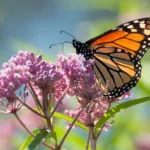
In the Shropshire-Tallamy caterpillar records, willows host 694 native moths and butterflies, one of the highest counts of any plant group in North America. The viceroy is the famous one. It looks like a monarch, and in bird feeding trials it turned out to be just as distasteful. Both butterflies are bad to eat; they just advertise it with the same orange.
Both butterflies are bad to eat; they just advertise it with the same orange.
Willow, weeping willow, or pussy willow?
Sad news: the weeping willow in every pond painting isn’t native. Weeping willows are Salix babylonica, and they come from eastern Asia. NC State warns weeping willow roots can damage water and sewer pipes, too. Our native willows are mostly upright shrubs and small trees, with the big black willow as the exception.
“Pussy willow” is a nickname for any willow with big, silky catkins. There are a few species that answer to this description, so you’ll need to check the scientific name when you buy. The native one is Salix discolor. The fuzzy branches sold at the florist in February are often its Asian and European cousins, so check the Latin name before adding to your garden. If there is no Latin name, skip it.
Boy willows and girl willows
Every willow plant is either male or female. And here’s where it gets interesting. Male plants carry the silky gray “pussies” that turn gold as the stamens open. Female plants carry slimmer, greenish catkins that turn into fluffy seed. If you want branches for a vase, ask the nursery for a male plant.
Meet the native willows
Here are six willows, picked so every region has at least one. Check your state’s range for each one before you buy.
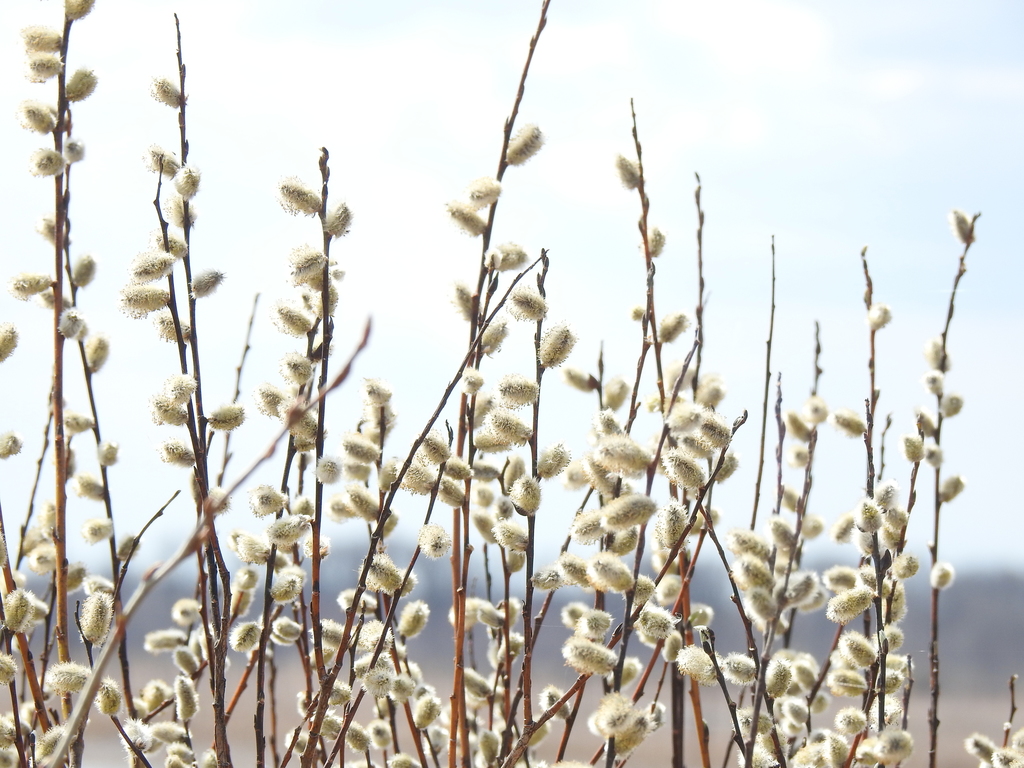
American pussy willow
Salix discolor
This one blooms in late-winter, just when you really need to see something growing. Silver catkins open on bare stems in February and March, often before anything else in the yard. It grows as a big multi-stemmed shrub, and you can cut it to the ground every few years to keep the growth at manageable eye level.
- Height: 10 to 20 feet
- Catkins: February to March
- Sun: full sun to part sun
- Soil: moist to wet
- Native regions: Northeast, Mid-Atlantic, Midwest and Northwest
Black willow
Salix nigra
The river tree. On good, low-lying, water-rich land, it can reach about 50 feet in just 10 years, with long, narrow leaves and nearly black bark. When the wind blows, it looks like it’s covered in gentle green party streamers. Black willow is at home on a large expanse of wet property, or a streambank or a pond edge. Just keep it away from your house.
- Height: 30 to 80 feet
- Catkins: February to June, depending on latitude
- Sun: full sun to part sun
- Soil: moist to wet
- Native regions: Northeast, Mid-Atlantic, South, Midwest and Southwest
Prairie willow
Salix humilis
The small, tough one. It stays a mounded shrub, and it’s the willow for ground that dries out. Prairie Moon calls it more drought tolerant than any other willow. Catkins come in early spring, before the leaves.
- Height: 3 to 10 feet
- Catkins: March to May
- Sun: full sun
- Soil: dry to wet
- Native regions: Northeast, Mid-Atlantic, South and Midwest
Sandbar willow
Salix interior
The bank building champion. It moves onto bare sandbars and gravel bars and holds them in place thanks to a thicket of suckering stems. That same habit is why Iowa State says it’s not for home landscapes. Use it for big erosion jobs, not front yards.
- Height: 5 to 10 feet in gardens, taller in the wild
- Catkins: April to July, the longest bloom of any willow here
- Sun: full sun
- Soil: moist sand or gravel; takes flooding
- Native regions: Northeast, Mid-Atlantic, South, Midwest, Southwest and Northwest
Coyote willow
Salix exigua
The western basket willow. Its long, slender, gray-green leaves and whippy stems were a go-to for basketry across the West. It spreads by root sprouts into dense colonies along streams and ditches.
- Height: 3 to 15 feet
- Catkins: spring, with or just after the leaves
- Sun: full sun to part shade
- Soil: wet sand or gravel
- Native regions: Midwest, Southwest, California and Northwest
Arroyo willow
Salix lasiolepis
California’s creek willow. It blooms as early as January, before its leaves, which makes it one of the first bee flowers of the year in the West. It forms thickets along streams, springs, and arroyos.
- Height: 5 to 30 feet
- Catkins: January to June, before the leaves
- Sun: full sun
- Soil: wet; needs reliable water
- Native regions: Southwest, California and Northwest
Which willow is right for my region?
In the East and Midwest, start with pussy willow. In California and the Southwest, start with arroyo willow. Then pick by space.
- Northeast, Mid-Atlantic and Midwest: American pussy willow for a yard, prairie willow for drier sunny spots, black willow if you have a streambank and room.
- South: black willow along water, prairie willow in sunny clearings.
- Southwest: arroyo willow and coyote willow along washes and ditches that get water.
- California: arroyo willow, with coyote willow where there’s room for it to spread.
- Northwest: pussy willow east of the Cascades, coyote and arroyo willow along streams.
Where native willows shine in your yard
- The soggy low spot where lawn turns to mud every April.
- Pond and stream edges, where the roots hold the bank.
- A rain garden’s back edge, for a shrub willow kept low by cutting.
- A pollinator hedge that blooms weeks before anything else.
- A cutting garden, for pussy willow branches in February.
How to grow native willows
Start from a stick
Willows root from cut branches, which is why streambank crews plant them as live stakes. In late winter, cut a pencil-to-thumb-thick piece of last year’s growth about 2 to 3 feet long, push most of it into wet soil, and leave a few buds above ground. By summer it has leaves.
Sun and water
Full sun for every species, part sun if that’s all you have. Moist to wet soil for all but prairie willow. Water new plants through the first summer even in a damp spot.
Keep it away from pipes
Willow roots are shallow, wide, and thirsty. NC State cautions they can seek out water and sewer pipes. Plant well away from sewer lines, septic fields, and drains.
Cut it back
Shrub willows love a hard pruning. Every few years in early spring, cut the oldest stems to the ground. You get fresh, straight stems with the most dramatic catkins, and the plant stays a manageable size.
Beginner tip
Bring a few bare branches inside in late winter and stand them in a vase of water. Pussy willow catkins open in a couple of weeks, and the stems often grow roots. Plant them in spring and you have more willows.
What are good pairings for native willows?
Pick plant neighbors that like the same wet, sunny ground. Buttonbush and winterberry share the shrub layer, and swamp milkweed, Joe Pye weed and blue vervain fill in below with summer flowers after the catkins are long gone.


Where can I buy native willows?
Native nurseries sell pussy willow, black willow and prairie willow, and many sell live stakes by the bundle in late winter for streambank projects. Look for the Latin name: plenty of “pussy willows” for sale are Asian or European species. Start with our list of native plant nurseries or order online. A friend with a willow can also hand you a dozen cuttings for free.
Native willow FAQs
Are willow roots really a problem for pipes?
Yes, near water and sewer lines. NC State warns that willow roots can clog sewers or drains. Nobody publishes a safe distance, so plant willows out in the yard, not beside the house, the septic field or the sewer line.
Is weeping willow native?
No. Weeping willow comes from eastern Asia. If you love the look of a big willow by water and have the room, black willow is the native choice.
Can I grow a willow from a cutting?
Yes, and it’s the easiest way. Cut dormant stems in late winter, push them into wet soil and keep them watered. The USDA plants willows along eroding streams this way, as live stakes.
How fast do willows grow?
Fast. Shrub willows put on several feet a year in wet soil. Black willow can reach about 50 feet in 10 years on ideal river-bottom ground.
Do deer eat willows?
Often. Rutgers rates willows “occasionally severely damaged,” and young plants get browsed hard. Cage new willows until they’re taller than a deer can reach.
Which willow is best for a small yard?
American pussy willow, cut back every few years. Left alone it reaches 20 feet, but a hard spring cut keeps it at 6 to 10 feet and full of catkins. Prairie willow stays small without the cutting.
Plant nerd fact
Willow bark is where salicin was found
Willow bark has been used for fevers and pain for centuries. In 1828, the German pharmacist Johann Buchner isolated the bitter compound behind it and named it salicin, after Salix. Aspirin came later, made from salicylic acid. Its name nods to a different plant: meadowsweet, then called Spiraea, which is where the “spir” comes from (Desborough and Keeling).
If you have a wet, sunny corner, a willow will fill it faster than anything else on this site, and feed the bees on the coldest days of spring while it does. For more ideas for wet ground, see our native plants for rain gardens. Happy planting!
Sources
- Desborough, Michael J. R., and David M. Keeling. “The Aspirin Story: From Willow to Wonder Drug.” British Journal of Haematology 177 (2017): 674–683. doi.org/10.1111/bjh.14520.
- Flora of North America Editorial Committee. “Salix interior,” “Salix humilis” and “Salix lasiolepis.” Flora of North America North of Mexico, vol. 7. Accessed October 12, 2026.
- Fowler, Jarrod, and Sam Droege. “Pollen Specialist Bees of the Eastern United States.” 2020. Accessed October 12, 2026.
- Iowa State University Extension. “Sandbar Willow.” Accessed October 12, 2026.
- Lady Bird Johnson Wildflower Center. “Salix discolor” and “Salix humilis.” Native Plant Database. Accessed October 12, 2026.
- NC State Extension. “Salix nigra,” “Salix discolor” and “Salix babylonica.” Extension Gardener Plant Toolbox. Accessed October 12, 2026.
- Pitcher, J. A., and J. S. McKnight. “Salix nigra.” Silvics of North America, vol. 2. USDA Forest Service, 1990. Accessed October 12, 2026.
- Prairie Moon Nursery. “Salix humilis (Prairie Willow).” Accessed October 12, 2026.
- Ritland, David B., and Lincoln P. Brower. “The Viceroy Butterfly Is Not a Batesian Mimic.” Nature 350 (1991): 497–498. doi.org/10.1038/350497a0.
- Row, John M., and Wayne A. Geyer. “Black Willow, Salix nigra.” USDA NRCS Plant Guide, 2010. Accessed October 12, 2026.
- Rutgers New Jersey Agricultural Experiment Station. “Landscape Plants Rated by Deer Resistance.” Accessed October 12, 2026.
- Shropshire, Kimberley J., and Douglas W. Tallamy. “Lepidoptera of North America North of Mexico: An Annotated List Containing Geographic Ranges and Host Plant Records.” ZooKeys, 2025. Host counts from the UDELep data, May 2025.
- Simon, Sandra J., et al. “Characterization of Salix nigra Floral Insect Community and Activity of Three Native Andrena Bees.” Ecology and Evolution (2021). doi.org/10.1002/ece3.7369.
- Stevens, Michelle, Greg Fenchel, and Chris Hoag. “Coyote Willow, Salix exigua.” USDA NRCS Plant Guide. Accessed October 12, 2026.
- Tilley, Derek, and Loren St. John. “Effects of Long-Term Refrigerated Storage on Hardwood Willow Cuttings.” USDA NRCS Plant Materials Technical Note 57, 2012. Accessed October 12, 2026.

Similar plants

Updated Find more: Beginner Guide Shrub Tree
The ads on this site help pay real native plant nerds to research and write these guides.
Garden notes
Notes from people who’ve grown it
Tips, wins, and the occasional disaster. If you’ve grown willow, share the advice you’d give to a neighbor.
No notes yet. Yours could be the first.
Grown willow? Tell the next person what you wish someone had told you.
Tap anywhere to close


