




Highlights
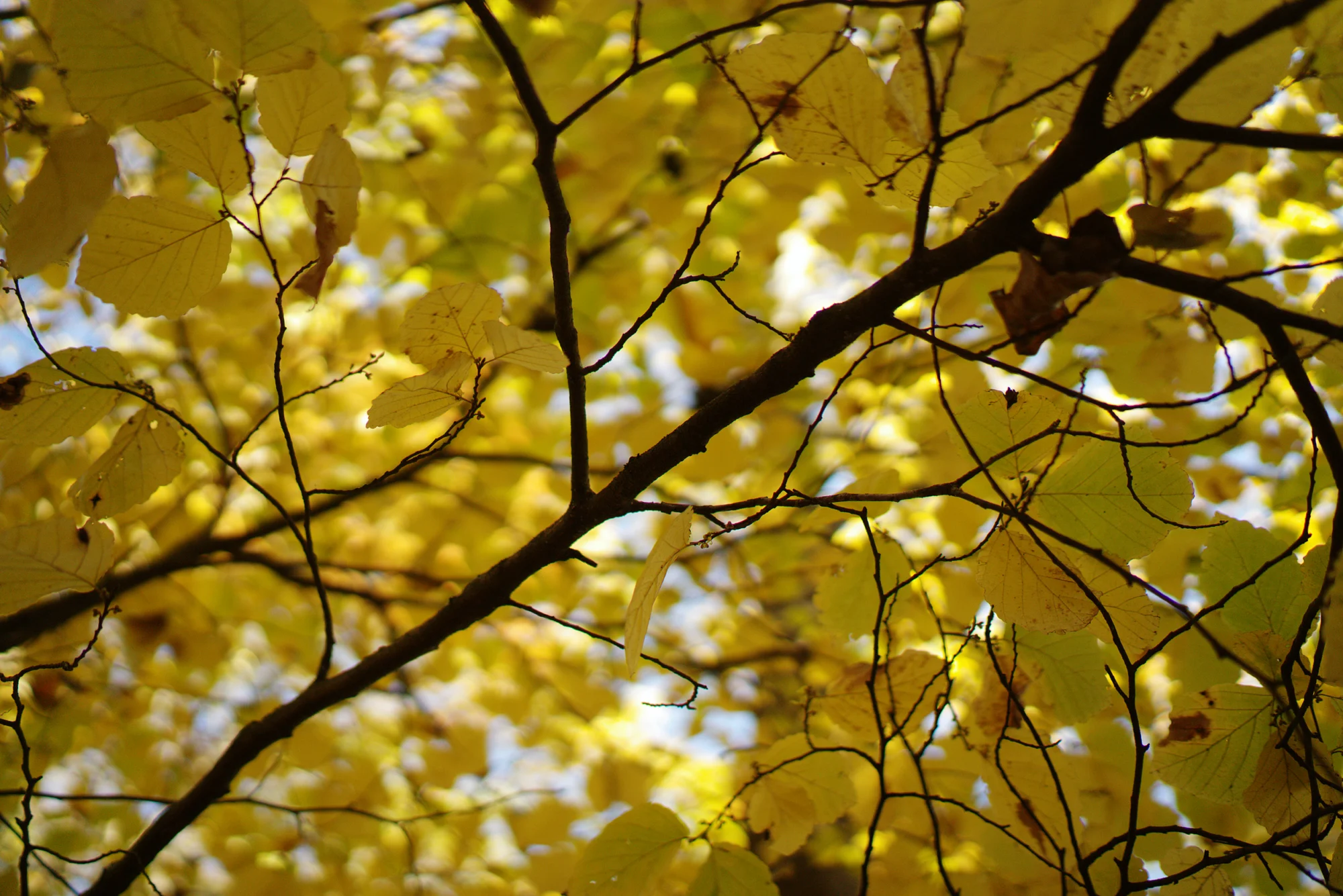
Common witch hazel (Hamamelis virginiana) flowers when you think the garden is winding down. In October and November, after the rest of the yard has gone brown, its twigs fill with small yellow blooms, each one four crinkly petals that look like tiny cartoon explosions. Often the leaves are still hanging on and have turned the same highlighter yellow, so the whole plant glows like its plugged in.
It’s a multi-stemmed shrub that slowly becomes a small tree, usually 10 to 20 feet tall, and it grows wild in woods from Maine and Minnesota down to Florida and east Texas. Once it settles in, you can forget it for years.
Is common witch hazel a good choice for my yard?
Yes, if…
- You want a flower in November. It blooms after nearly every other native shrub has quit for the year.
- You have part shade. In the wild it grows under taller trees in moist woods, thickets and bottomlands. More sun gives you more flowers, so morning sun with afternoon shade is a sweet spot.
- Your soil is acidic, even if it’s clay. NC State lists it for moist, acidic soil, heavy clay included.
- You want a small tree you can plant and mostly forget. Water it the first summer and it takes it from there.
- You want to feed caterpillars. Witch hazels host 78 species of native moths and butterflies.
Skip it if…
- You need a big screen this year. It grows slowly at first, so a small plant takes several years to fill a space.
- Your soil is alkaline or full of lime. Common witch hazel has low tolerance for limey soil. Its cousin, Ozark witch hazel, handles higher pH better (see our witch hazel guide).
- Your spot bakes dry every summer. It’s a woodland plant; the Lady Bird Johnson Wildflower Center says to avoid extremely dry situations.
- You garden west of the Great Plains. It isn’t native there. Check the range below.
Where is common witch hazel native?
Native to 33 US states and Washington, D.C.
Sources: NatureServe, Royal Botanic Gardens, Kew (World Checklist of Vascular Plants) and the USDA PLANTS Database, compiled by The Plant Native. How we map native ranges
Common witch hazel grows wild across the eastern half of North America, from Nova Scotia, Quebec and Ontario south to Florida and east Texas. In Texas it sticks mostly to the moist southeast. In the Ozarks, meet its cousin too: Ozark witch hazel (Hamamelis vernalis) blooms in late winter instead of fall, and our guide to native witch hazels compares the two.
This year the flowers popped in November, just when I needed to see a flower.
Why common witch hazel matters
A flower in November is food in November. When common witch hazel blooms, nights are dropping below freezing and almost nothing else in the woods is in flower. In a Connecticut study that watched the plant for more than 20 years, the most common visitors were tiny fungus gnats, and small bees carried plenty of its pollen.
Owlet moths come, too. On nights at or just below freezing, these moths shiver to warm up their flight muscles, then go looking for nectar. Biologist Bernd Heinrich first described the moths working witch hazel flowers in the 1980s.
It’s a host plant
Witch hazels host 78 species of native moths and butterflies. Look for caterpillars of the witch hazel dagger moth, figure-seven moth and anointed sallow. They nibble the leaves, the birds eat the caterpillars, and the plant carries on. Wild turkeys eat the seeds, too.
In Emily’s yard
I have common witch hazel planted along my driveway, where I can see it from my kitchen window and enjoy that highlighter yellow from October into December. It is the easiest small tree. I planted it on a Saturday in May, watered it through the first summer (especially during dry stretches), and that was it. No water, no fertilizer, not really any attention since. In two years it has doubled in size. This year the flowers popped in November, just when I needed to see a flower.
Common witch hazel through the seasons
Fall
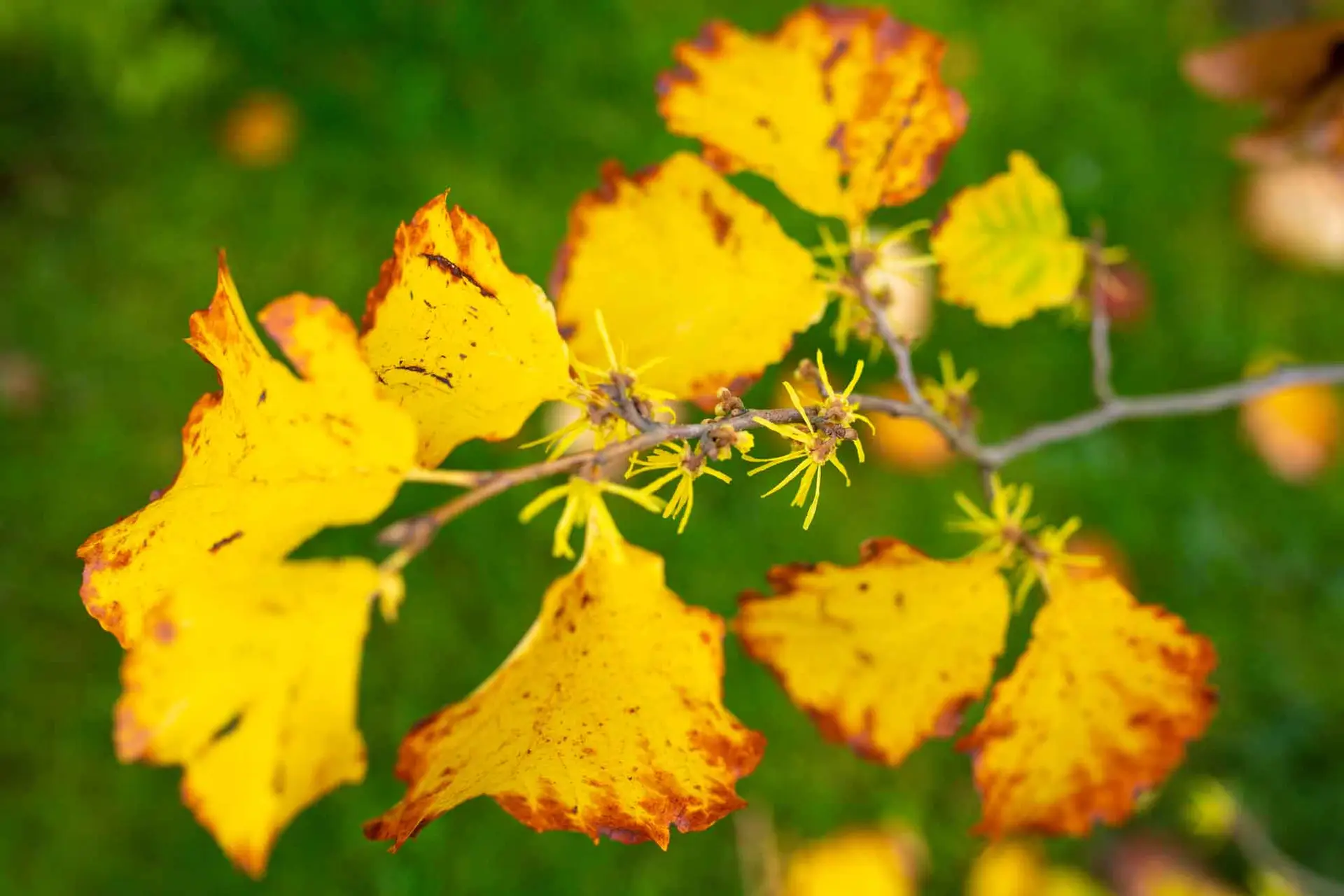
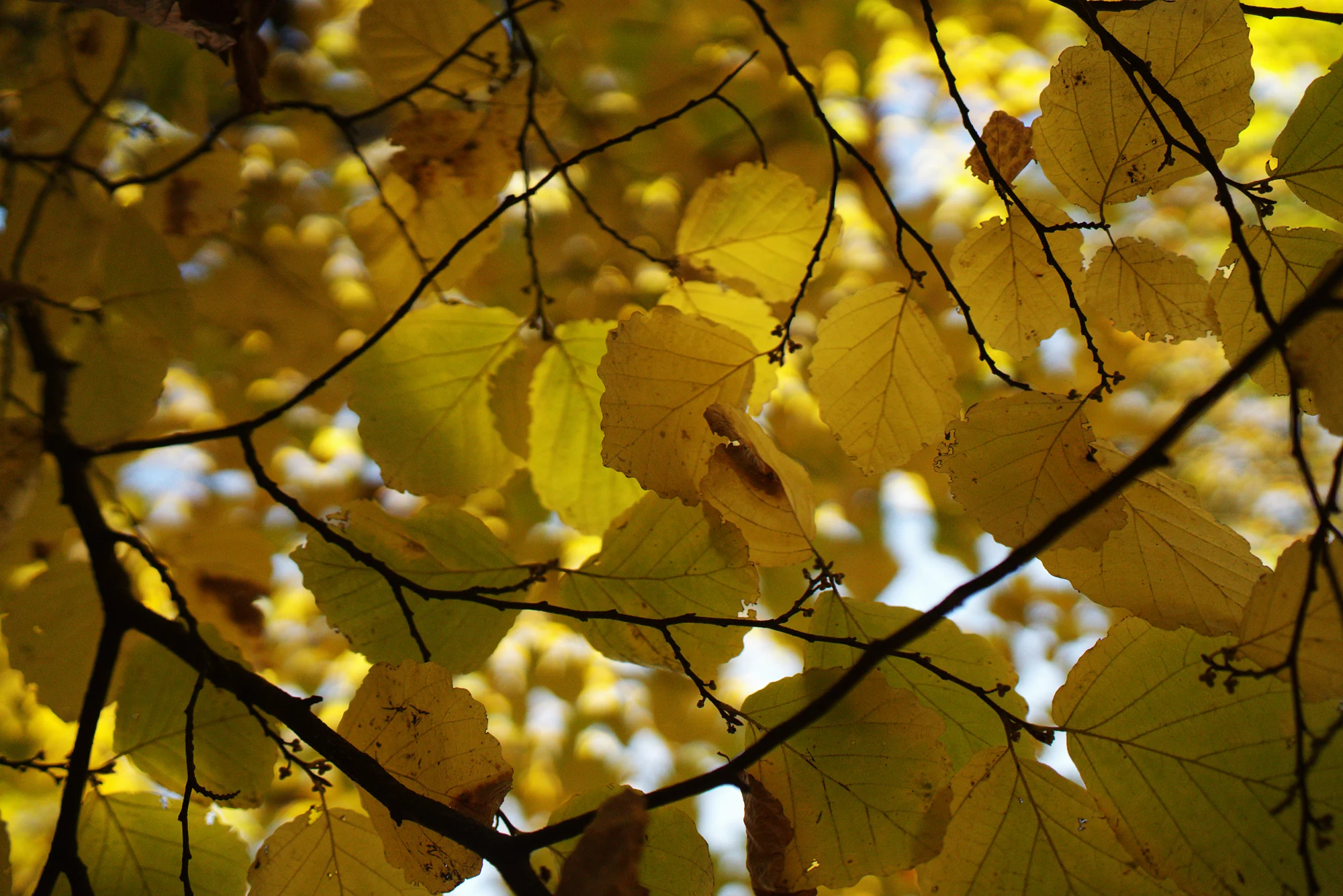
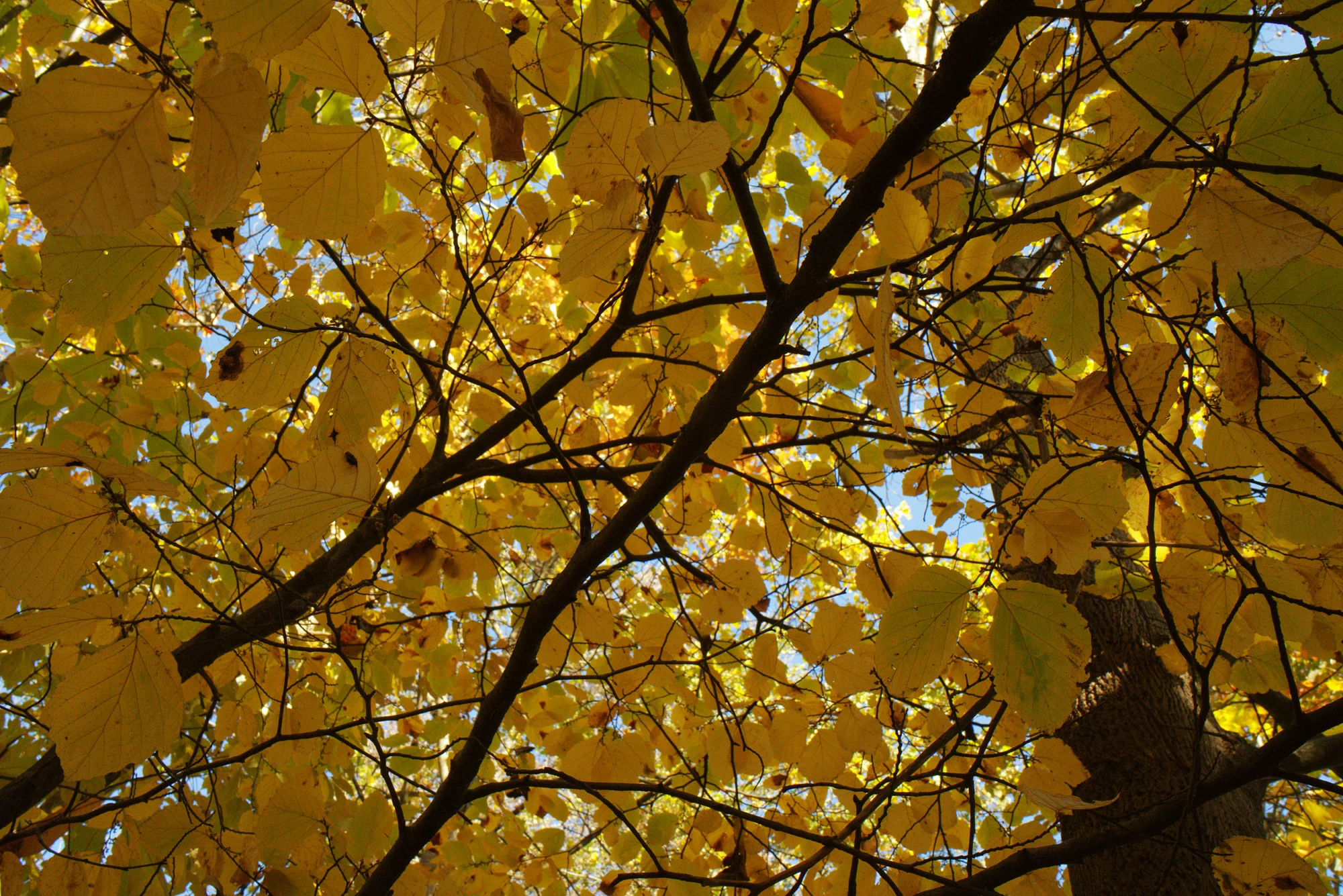
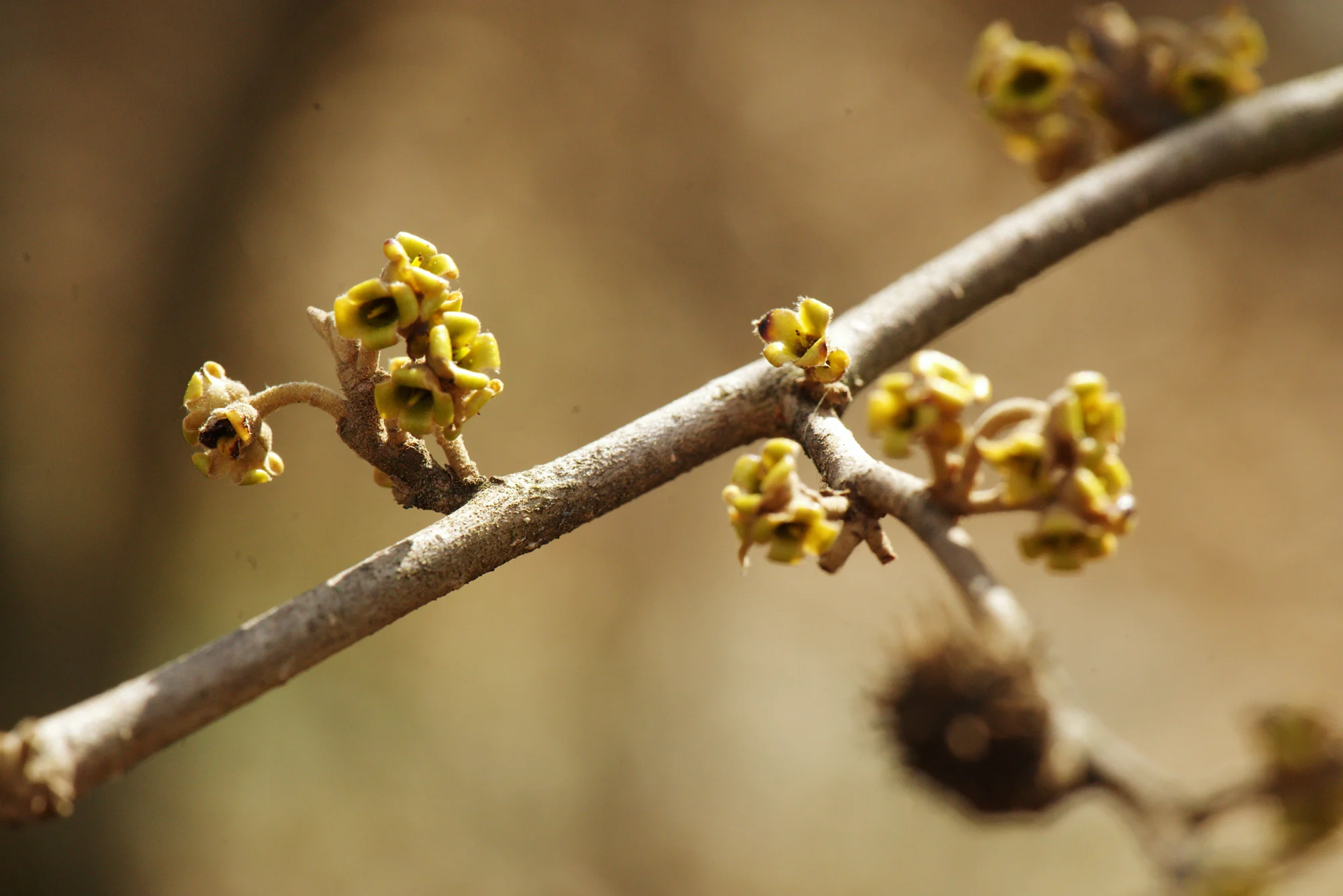
The leaves turn gold, and the flowers open from late September into late November, sometimes while the leaves are still on. The yellow petals are under an inch long and hug the twigs in little clusters.
Winter
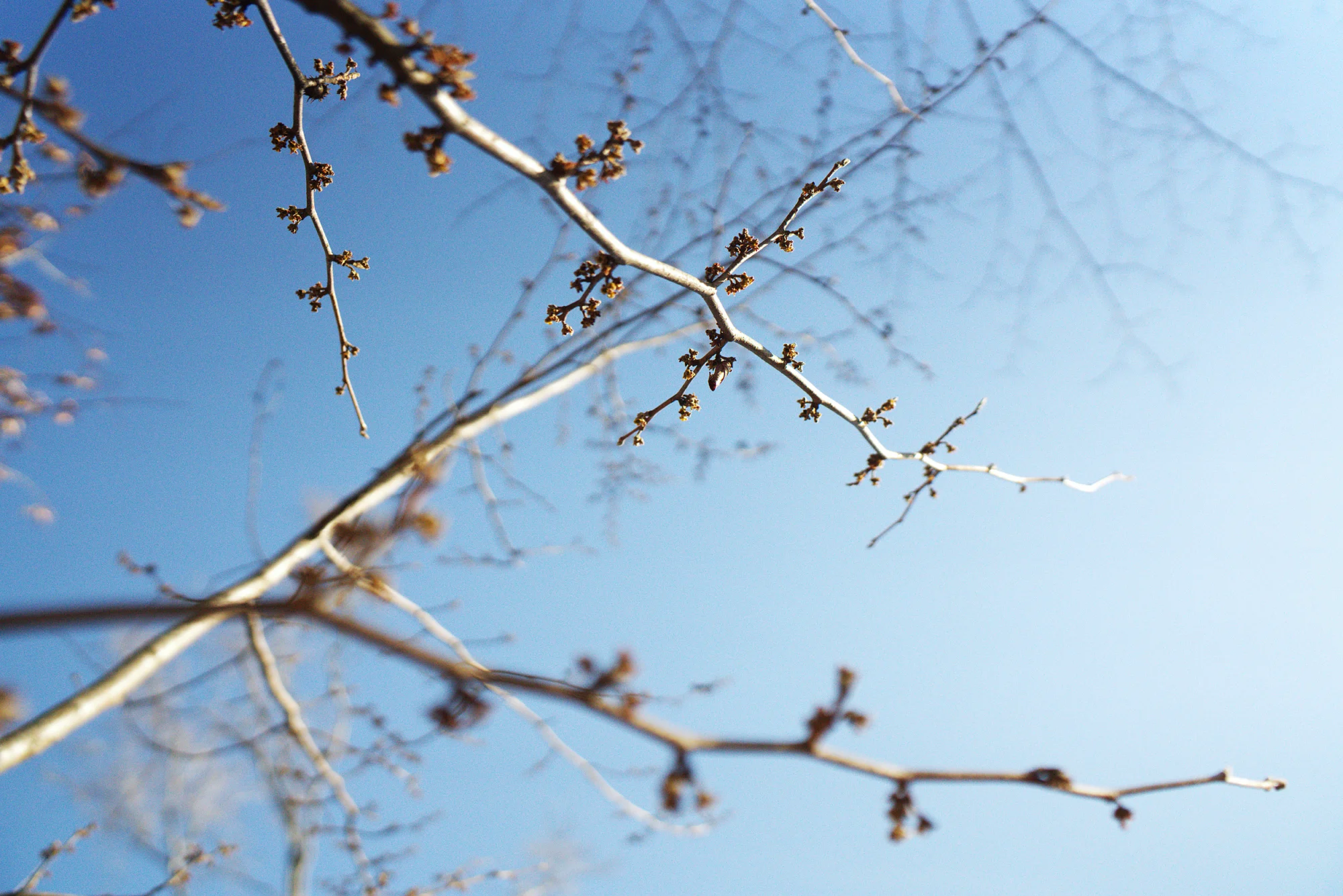
The petals drop and the bare, zigzag branches take over. Up close, the winter leaf buds look like little deer hooves.
Spring
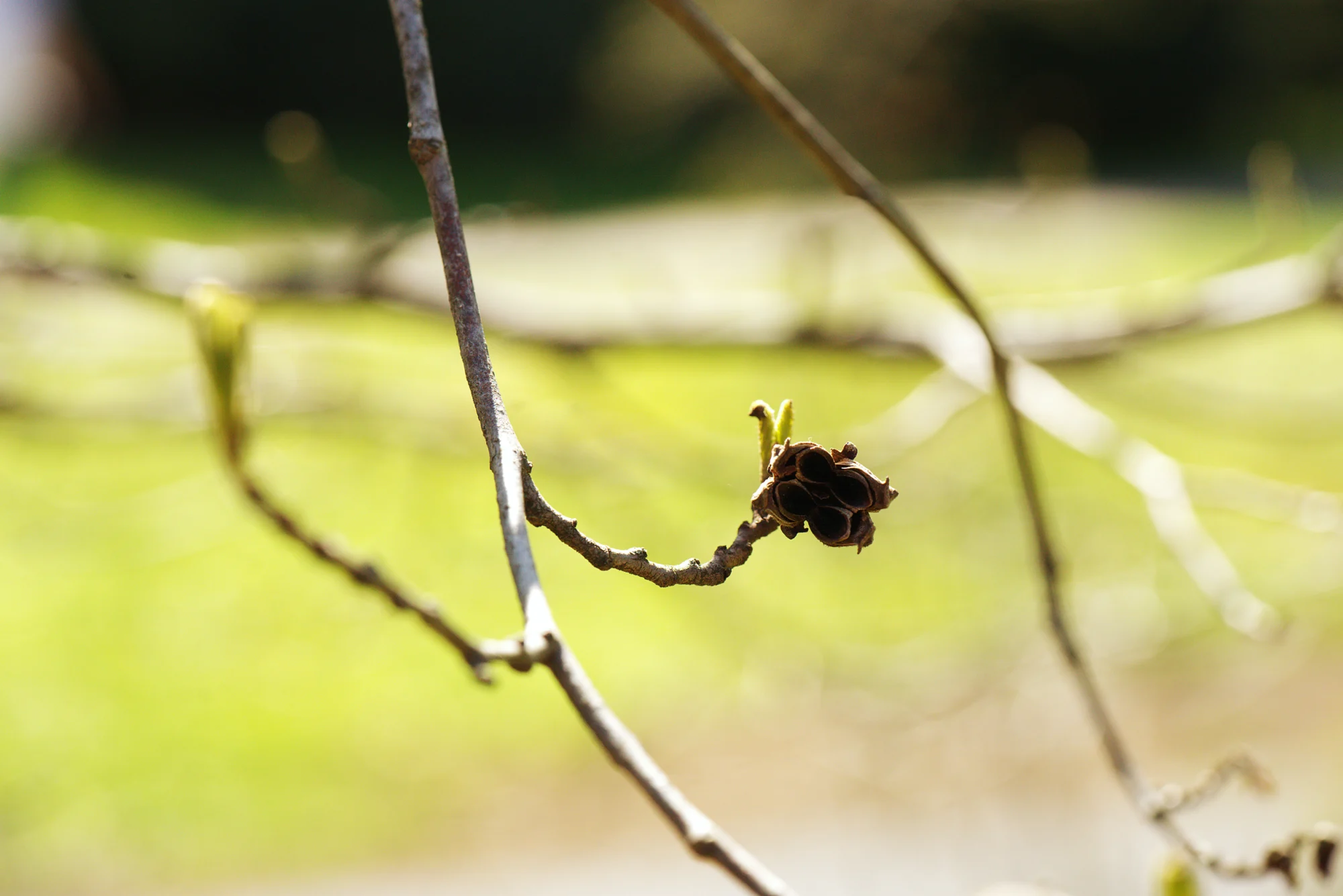
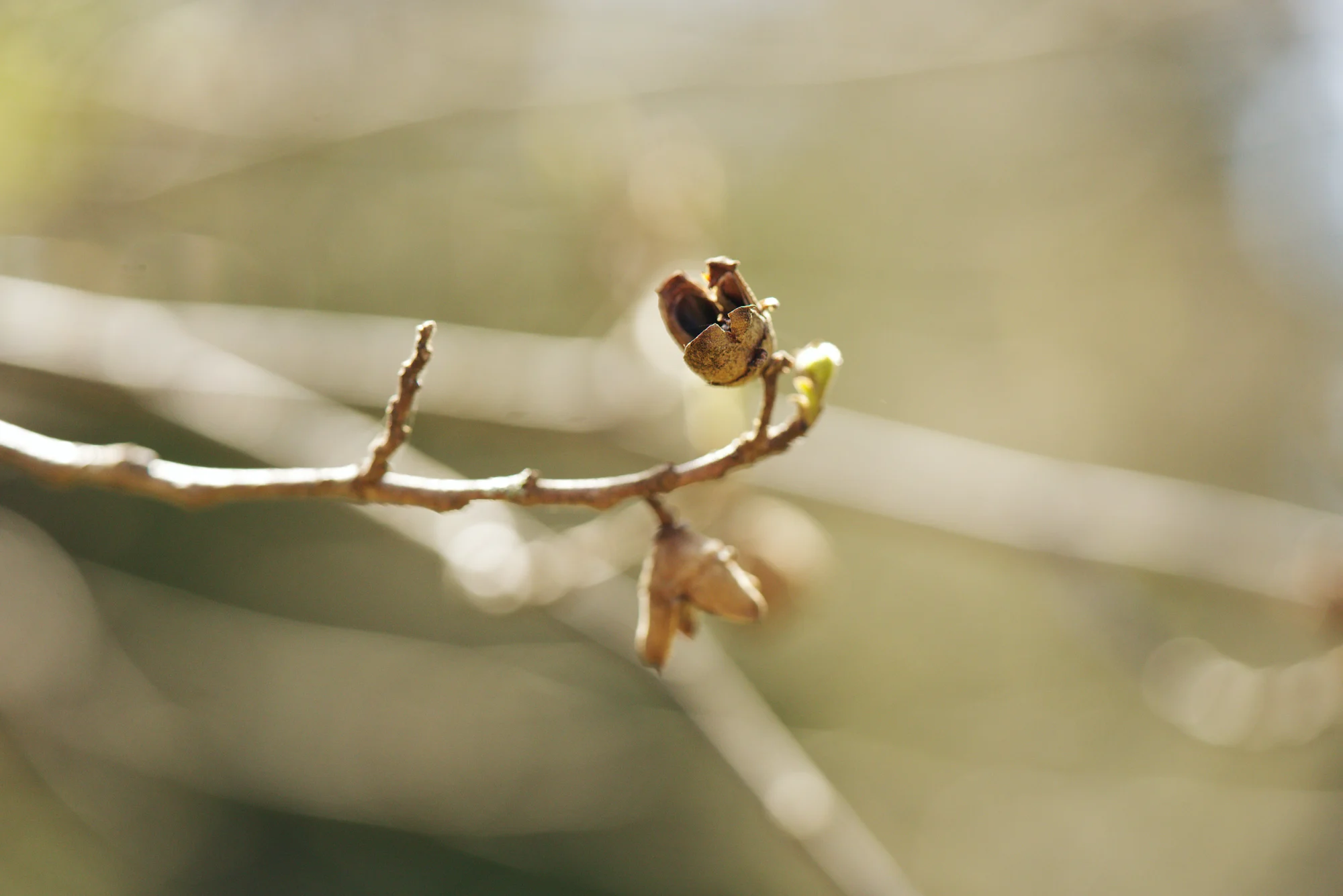
New leaves unfold beside last year’s woody seed capsules. Those capsules take a full year to ripen, so you’ll often see old fruit and new growth on the same twig.
Summer
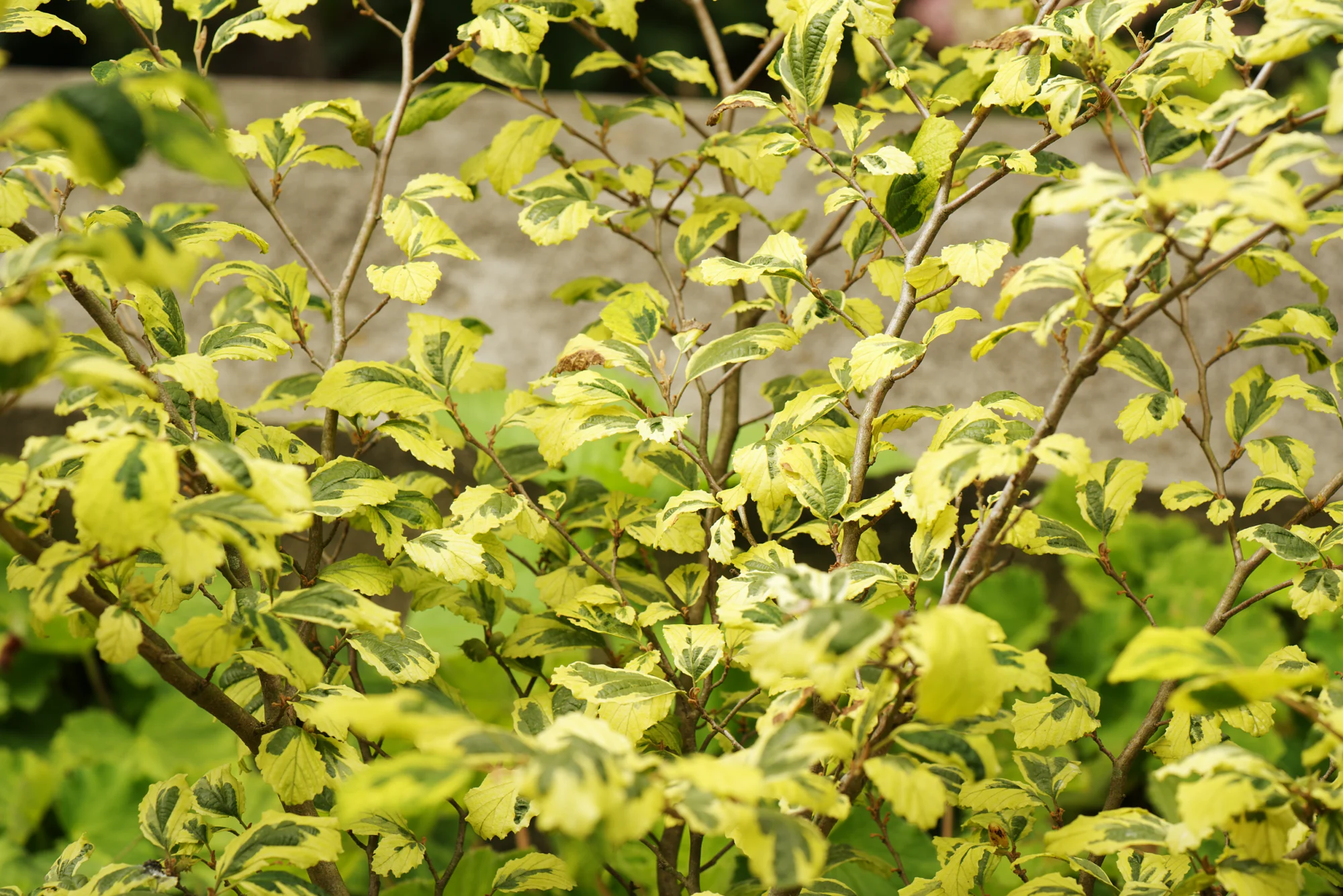
A full, leafy shrub. The leaves are 3 to 6 inches long with wavy edges and lopsided bases, and they make good shade for the plants underneath.
Where common witch hazel shines in your yard
- In view of a window. It blooms when you’re mostly indoors, so plant it where you’ll see it from the kitchen or a favorite chair.
- Along a driveway or front walk. Anywhere you pass every day in November.
- Under tall trees. It’s an understory plant by nature and looks right at a woodland edge.
- An informal screen or hedgerow. Several planted together grow into a loose, leafy screen by midsummer.
- A damp low spot. It handles occasional flooding and fits on streambanks and the edges of rain gardens.
- A small specimen tree. Pruned up to a few trunks, it can work near a patio.
How to grow common witch hazel
When to plant
Spring or early fall, from a nursery pot. Spring gives it a full season to settle in before winter.
Sun and soil
Part shade to full sun. It flowers best with more sun, and full sun makes a fuller, more even plant. Give it moist, acidic, well-drained soil; clay and loam are both fine. Avoid limey soil.
Watering
Water deeply through the first summer, especially in dry stretches. After that it mostly looks after itself, though it doesn’t like drought, so give it a long soak if a dry spell drags on for weeks.
Beginner tip
Buy a plant, not seeds. Witch hazel seeds need 60 days of warmth and then 90 days of cold before they’ll sprout, and in the wild they can sit in the leaf litter for up to two years. (I know, what dedication, right?) Skip all this years-long waiting and buy a plant from a native nursery.
Spacing
It grows 15 to 20 feet wide in time. Plant it about 15 feet from other shrubs, and a little closer if you want a screen that knits together.
Planting card
Hamamelis virginiana
The trickPlant it in view of a window you look out of in November.
What are good pairings for common witch hazel?
Pick neighbors that like the same part shade and moist, acidic soil. Spicebush blooms yellow at the other end of the year, in early spring, and fothergilla adds white bottlebrush flowers in April. Winterberry carries red berries through the winter. Underneath, Christmas fern, Pennsylvania sedge and foamflower fill in the shade.


Where can I buy common witch hazel?
It’s one of the easier native shrubs to find, but read the label. Many garden centers sell Asian hybrid witch hazels (Hamamelis × intermedia) tagged only “witch hazel.” You want Hamamelis virginiana. A native nursery is your safest bet: start with our list of native plant nurseries, order online, or check a native plant society sale near you.
Potential challenges
Not much goes wrong. NC State lists no serious pests, and most of what shows up is cosmetic.
Cone-shaped bumps on the leaves
Those little green or red cones are galls made by the witch hazel cone gall aphid, which spends part of its life inside them. They look odd, but they don’t harm the plant. Leave them be.
Spots and powdery leaves
Leaf spot and powdery mildew show up now and then, usually late in a humid summer. Rake up fallen leaves in fall and give the plant some air.
Pruning
Pruning is mostly for shape. If you want a small tree instead of a big shrub, pick a few strong trunks and remove the low, crossing stems once the flowers are done.
A note on cultivars
We recommend the straight species, the plant that grows wild. If you want a named selection, these are all Hamamelis virginiana, so they’re still native. Mt. Cuba Center hasn’t trialed witch hazels, so there’s no head-to-head data on which ones the bees and moths prefer.
- ‘Harvest Moon’ is vase-shaped with lemon-yellow flowers.
- ‘Little Prospect’ was found as a natural sport at a nursery and has leaves edged in pale yellow all season.
- ‘Mohonk Red’ has petals that are pale red at the base and straw-colored at the tips, on a rounded shrub about 10 feet tall.
FAQs
When does common witch hazel bloom?
October and November, sometimes into December. In a long Connecticut study it flowered from late September to late November. If you want winter flowers instead, Ozark witch hazel blooms in January and February.
Is common witch hazel a shrub or a tree?
Both. It usually grows as a multi-stemmed shrub 10 to 15 feet tall, and in a happy spot it can become a small tree of 20 feet or more. Prune it to a few trunks if you want it to read as a tree.
How fast does common witch hazel grow?
Slow to medium. Missouri Extension calls it a slow grower, so it won’t fill a space in one summer. Emily’s doubled in size in its first two years with no care beyond watering that first summer.
Do witch hazel flowers smell?
Faintly. Researchers describe a faint odor, and you’ll catch it best on a mild, sunny afternoon with your nose right up to a cluster. On a cold, gray day you may not smell anything at all.
Why does my witch hazel have flowers and seed pods at the same time?
Because its seeds take a full year to ripen. Last fall’s flowers become this fall’s capsules, which split open right as the new flowers appear. The genus name Hamamelis means “fruit together” for this reason. Don’t expect many pods: in tests of more than 40,000 flowers, fewer than 1% set fruit.
Is common witch hazel deer resistant?
Mostly. Rutgers rates it “seldom severely damaged,” but deer do browse the leaves and stems now and then. Protect young plants with a cage for the first couple of winters.
Can I make my own witch hazel from my shrub?
Not the kind in the drugstore bottle. That witch hazel is distilled commercially from cut brush, and a single company in East Hampton, Connecticut, makes nearly all the witch hazel used throughout the world. Enjoy yours in the yard.
Plant nerd fact
It shoots its seeds across the yard
As a ripe capsule dries, it squeezes its two shiny black seeds until they pop out like a pinched watermelon seed. Researchers measured the launches: about 11 feet on average, and up to 16 feet. Stand near one on a quiet fall afternoon and you might hear it fire.
Common witch hazel is the easy kind of native: plant it where you’ll see it in November, water it one summer, and let it be. For its late-winter cousin and the rest of the family, see our beginner’s guide to native witch hazels, or browse more host plants for butterflies and moths. Happy planting!
Sources
- Anderson, Gregory J., and James D. Hill. “Many to Flower, Few to Fruit: The Reproductive Biology of Hamamelis virginiana (Hamamelidaceae).” American Journal of Botany 89, no. 1 (2002): 67–78. https://doi.org/10.3732/ajb.89.1.67.
- Chicago Botanic Garden. “Hamamelis virginiana ‘Mohonk Red’.” Accessed November 1, 2026.
- Donohue, Mary M. “Witch Hazel: Connecticut’s Wonder Shrub.” Connecticut Explored, Spring 2007. Accessed November 1, 2026.
- Lady Bird Johnson Wildflower Center. “Hamamelis virginiana.” University of Texas at Austin. Accessed November 1, 2026.
- Miller, D. Glenn. “A Witch in the Woods.” Northern Woodlands, October 30, 2023. Accessed November 1, 2026.
- NatureServe. “Hamamelis virginiana.” NatureServe Explorer. Accessed November 1, 2026.
- NC State Extension. “Hamamelis virginiana.” North Carolina Extension Gardener Plant Toolbox. Accessed November 1, 2026.
- Plant Delights Nursery. “Hamamelis virginiana ‘Little Prospect’.” Accessed November 1, 2026.
- Rutgers New Jersey Agricultural Experiment Station. “Landscape Plants Rated by Deer Resistance.” Accessed November 1, 2026.
- Starbuck, Christopher J. “Witch Hazel.” Missouri Environment & Garden, University of Missouri Integrated Pest Management, January 2009. Accessed November 1, 2026.
- Tallamy, Douglas W., and Kimberley J. Shropshire. “Ranking Lepidopteran Use of Native versus Introduced Plants.” Conservation Biology 23, no. 4 (2009): 941–947. https://doi.org/10.1111/j.1523-1739.2009.01202.x. Host counts from the Shropshire-Tallamy Lepidoptera host plant dataset (2025).

Similar plants
-
 Black Willow
-
 Buttonbush
-
 Bald Cypress
-
 Spicebush
-
 Vernal Witch Hazel
-
 Highbush Blueberry
-
 American Elderberry
-
 Fringe Tree
-
 Eastern Flowering Dogwood
Updated Find more: Yellow Flowering Shrub Tree Fall Full Sun Part Sun Rain Garden Moist Host Plant
The ads on this site help pay real native plant nerds to research and write these guides.
Garden notes
Notes from people who’ve grown it
Tips, wins, and the occasional disaster. If you’ve grown common witch hazel, share the advice you’d give to a neighbor.
No notes yet. Yours could be the first.
Grown common witch hazel? Tell the next person what you wish someone had told you.
Tap anywhere to close


