

Highlights
Black willow (Salix nigra) is the big native willow of rivers and floodplains, the tree that leans out over the water on every muddy bank from Maine to Texas. It grows fast, with long, narrow leaves that flicker silver in the wind and bark furrowed so dark it gave the tree its name.
It’s also a caterpillar magnet. Willows host 694 native moths and butterflies, including the viceroy, the monarch look-alike. If you have a wet, sunny edge and plenty of room, few trees will fill it faster.
Is black willow a good choice for my yard?
Yes, if…
- You have a streambank, pond edge or floodplain. That’s where it grows wild, and where it earns its keep.
- You need to stop a bank from washing away. The USDA calls its root system excellent for stabilizing eroding lands.
- You want shade in a hurry. On ideal river-bottom sites, young trees reach about 50 feet in 10 years.
- You’re planting for wildlife, not for neatness. Caterpillars, early bees, nesting birds: this tree feeds a crowd.
Skip it if…
- It would be anywhere near the house or a sewer line. The roots are shallow and spreading, and NC State warns they may seek out water and sewer pipes.
- You want a tidy tree. The wood is soft and weak and cracks in wind, ice and snow, so expect twigs and branches on the ground.
- You want a tree for the next century. Black willow is short-lived; the USDA says it averages 65 years.
- You have a regular backyard. For a smaller wet spot, plant American pussy willow and cut it back every few years.
Why black willow matters
Willows bloom early, and black willow flowers right around leaf-out, when bees are hungry and choices are few. In one study of its flowers, mining bees (Andrena) made up 69 percent of the visitors, and the authors called its blooms “an important nutritive resource” for insects coming out of hibernation.
The viceroy’s tree
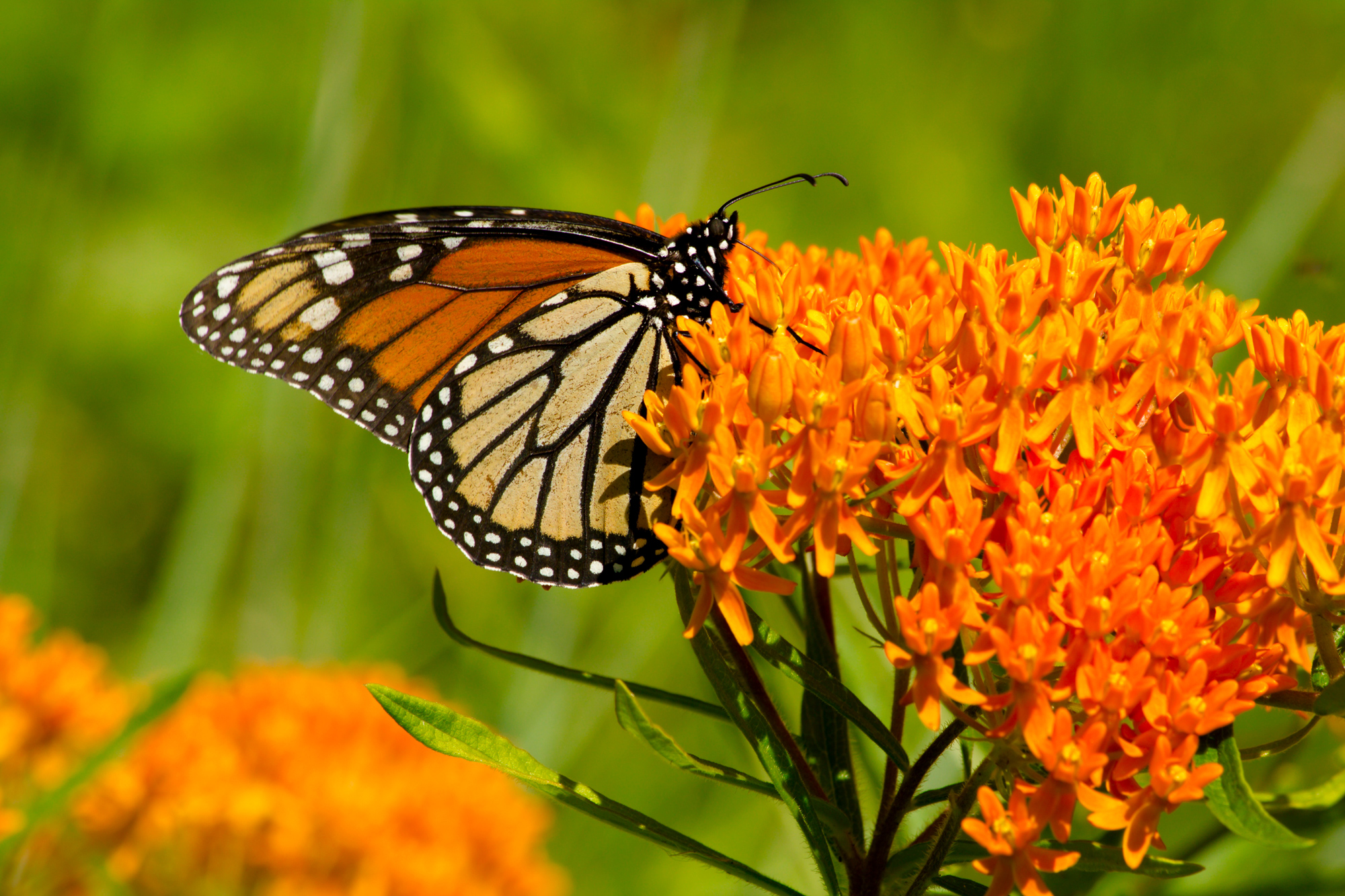
Viceroy caterpillars eat willow leaves, and the butterflies they become are near twins of monarchs. For decades the viceroy was the textbook example of a harmless copycat. Then a 1991 study fed both to birds and found viceroys were just as distasteful as monarchs. Later work found viceroys carry bitter phenolic compounds from their willow host. Both butterflies taste bad, and they share one warning sign.
Where black willow shines
- Streambanks and creek edges, where its roots hold soil in floods.
- Pond margins on a big property, leaning out over the water.
- Riparian buffers between a field or lawn and a stream.
- Wildlife corners of large lots, where twigs on the ground don’t matter.
Both butterflies taste bad, and they share one warning sign.
Beginner tip
Cut a few live stakes from a friend’s black willow in February instead of buying a tree. Push ten into the bank and expect most of them to grow.
How to grow black willow
Where to plant
Full sun to part shade, in soil that stays moist to wet. It’s hardy in zones 4 to 9. Pick a spot where a big, leaning, informal tree looks right: a creek bank, the far side of a pond, the wet back corner of a large lot. Keep it well away from the house, sewer lines and septic fields.
Start one from a stick
In late winter, cut a dormant stem of last year’s wood about 2½ to 3 feet long and push most of it into wet ground, leaving a few buds showing. The USDA plants black willow along streams the same way, as live stakes, and most of them root on their own.
Watering
If you planted it in the right spot, the ground does the watering. Give a nursery tree a deep soak every week through its first summer if rain doesn’t.
Pruning
Very little. Take out broken branches after storms and anything hanging over a path. Don’t expect a neat shape; that’s not this tree’s gift.
Planting card
Salix nigra
The trickStart it from a stick: push a 3-foot dormant cutting into wet ground in late winter and it roots on its own.
Where is black willow native?
Native to 37 US states and Washington, D.C.
Sources: NatureServe, Royal Botanic Gardens, Kew (World Checklist of Vascular Plants) and the USDA PLANTS Database, compiled by The Plant Native. How we map native ranges
What are good pairings for black willow?
Pair it with plants that share the wet edge. Buttonbush grows right in the water, swamp milkweed and Joe Pye weed bloom below it in summer, and native irises and cardinal flower work the muddy margin.


Where can I buy black willow?
Native nurseries sell black willow as small trees, and many sell bundles of live stakes in late winter for streambank work. Start with our list of native plant nurseries or order online. If a neighbor has one, a few dormant cuttings are free.
FAQs
How fast does black willow grow?
Very fast on the right site. In the lower Mississippi Valley, 10-year-old trees in natural stands average about 49 feet. In a backyard expect less, but still several feet a year in wet soil.
How big does black willow get?
Usually 30 to 80 feet, smaller in the North and on poorer ground. NC State lists 70 to 80 feet for a mature tree in good conditions.
Are black willow roots bad for pipes?
They can be. NC State says the shallow roots can clog sewers or drains. No one publishes a safe distance, so keep it far from the house, the septic field and any sewer line.
Is black willow deer resistant?
No. Rutgers rates willows “occasionally severely damaged,” and the Forest Service rates black willow as fair food for deer. Cage young trees and live stakes.
Did aspirin come from black willow?
Not directly. Willow bark gave us salicin, which a German pharmacist isolated in 1828 and named after Salix. Aspirin was made decades later from salicylic acid, and its name comes from meadowsweet (Spiraea), not willow (Desborough and Keeling).
What’s the difference between black willow and weeping willow?
Black willow is native and grows upright and leaning; weeping willow is Asian and droops. Weeping willow is the one in pond paintings. Black willow is the one already growing along the creek.
Plant nerd fact
Its seeds have days, not years
Black willow seeds ride the wind on cottony fluff, and they have to land somewhere wet, fast. They stay alive for only a few days, so they need bare, damp mud right when they fall. That’s why new black willows show up on fresh sandbars after a spring flood.
If you have a creek and room to spare, black willow is the native tree for it. For smaller yards and the other native willows, see our beginner’s guide to native willows. Happy planting!
Sources
- Desborough, Michael J. R., and David M. Keeling. “The Aspirin Story: From Willow to Wonder Drug.” British Journal of Haematology 177 (2017): 674–683. doi.org/10.1111/bjh.14520.
- Lady Bird Johnson Wildflower Center. “Salix nigra.” Native Plant Database. Accessed October 12, 2026.
- NatureServe. “Salix nigra.” NatureServe Explorer. Accessed October 12, 2026.
- NC State Extension. “Salix nigra.” Extension Gardener Plant Toolbox. Accessed October 12, 2026.
- Pitcher, J. A., and J. S. McKnight. “Salix nigra.” Silvics of North America, vol. 2. USDA Forest Service, 1990. Accessed October 12, 2026.
- Prudic, Kathleen L., et al. “Isolation, Identification, and Quantification of Potential Defensive Compounds in the Viceroy Butterfly and Its Larval Host-Plant, Carolina Willow.” Journal of Chemical Ecology 33, no. 6 (2007): 1149–1159. doi.org/10.1007/s10886-007-9282-5.
- Ritland, David B., and Lincoln P. Brower. “The Viceroy Butterfly Is Not a Batesian Mimic.” Nature 350 (1991): 497–498. doi.org/10.1038/350497a0.
- Row, John M., and Wayne A. Geyer. “Black Willow, Salix nigra.” USDA NRCS Plant Guide, 2010. Accessed October 12, 2026.
- Rutgers New Jersey Agricultural Experiment Station. “Landscape Plants Rated by Deer Resistance.” Accessed October 12, 2026.
- Shropshire, Kimberley J., and Douglas W. Tallamy. “Lepidoptera of North America North of Mexico: An Annotated List Containing Geographic Ranges and Host Plant Records.” ZooKeys, 2025. Host counts from the UDELep data, May 2025.
- Simon, Sandra J., et al. “Characterization of Salix nigra Floral Insect Community and Activity of Three Native Andrena Bees.” Ecology and Evolution (2021). doi.org/10.1002/ece3.7369.
- Tilley, Derek, and Loren St. John. “Effects of Long-Term Refrigerated Storage on Hardwood Willow Cuttings.” USDA NRCS Plant Materials Technical Note 57, 2012. Accessed October 12, 2026.
- USDA Forest Service. “Salix nigra.” Fire Effects Information System. Accessed October 12, 2026.

Similar plants
-
 Pines
-
 Bald Cypress
-
 Cucumber Magnolia
-
 Tulip Poplar
-
 Witch Hazels
-
 Fringe Tree
-
 Holly
-
 American Holly
-
 Serviceberry
Updated Find more: Tall Tree Tree
The ads on this site help pay real native plant nerds to research and write these guides.
Garden notes
Notes from people who’ve grown it
Tips, wins, and the occasional disaster. If you’ve grown black willow, share the advice you’d give to a neighbor.
No notes yet. Yours could be the first.
Grown black willow? Tell the next person what you wish someone had told you.
Tap anywhere to close


