
Highlights
In late winter, while most of the country is still brown, a thorny little tree in South Texas covers itself in orange-yellow puffballs that smell like warm honey. That’s sweet acacia, or huisache, and it has five native cousins across Texas and the desert Southwest. One is a knee-high, thornless shrub with white pompoms. Another hooks your sleeve as you walk by and won’t let go.
The names on the nursery tags have changed (more on that below), but the plants haven’t. They’re built for full sun, thin soil and long dry spells, and their prickly branches make some of the safest nesting spots a desert bird can find.
Is a native acacia a good choice for my yard?
Yes, if…
- You garden in Texas or the desert Southwest. Every species here grows wild in Texas, the desert Southwest or both, and a few reach California, Florida or Kansas.
- You want fragrance when nothing else is blooming. Sweet acacia flowers from January to April, and its blossoms are grown in southern Europe for perfume.
- You want to feed bees. Guajillo flowers are excellent bee forage for honey, and catclaw’s fragrant flowers make nectar too.
- You want a shrub that lives on rainfall. Sweet acacia is rated low water use, and whitethorn can live more than 100 years on desert slopes.
- You want to give birds a safe place to nest. Catclaw thickets give a host of wildlife food, shelter and nesting sites.
Skip it if…
- You live outside their range. These are plants of the hot, dry South and Southwest. In the humid East or the cold North, pick a native shrub from your own region.
- The spot is next to a path or play area. Catclaw is armed with stout, curved spines all along its branches, and most of the others have sharp spines too.
- You want a plant that stays put. Sweet acacia can form dense thickets from suckers, and fern acacia spreads by underground rhizomes.
- Goats, horses or a nibbling dog share the yard. The Native Plant Society of Texas warns that catclaw twigs and leaves are poisonous to animals and humans, and guajillo can poison grazing animals that eat too much of it.
Why native acacias matter
In a place with little shade and less water, a thorny shrub is real estate. The U.S. Forest Service says catclaw gives food, shelter, nesting sites, and nesting material to a long list of animals, from quail eating the seeds to bighorn sheep resting in its shade. Deer browse it hard: catclaw can make up 18 percent of a mule deer’s summer diet.
Bees and caterpillars
The flowers are the draw for bees, especially early ones like guajillo and sweet acacia. The caterpillar numbers are modest but real. Vachellia acacias host 30 native moths and butterflies in the Shropshire-Tallamy caterpillar records; Senegalia hosts 18 and Acaciella 13. Guajillo feeds the long-tailed skipper and Reakirt’s blue, and fern acacia feeds the caterpillars of the moth Sphingicampa raspa.
Don’t count on the nitrogen
Lots of legumes trade sugar to soil bacteria in exchange for nitrogen, and you’ll read that every acacia does. Catclaw may not. In controlled experiments, nodulation has not occurred, which means no nitrogen-fixing root nodules formed at all. Nobody has tested the others carefully, so plant acacias for their flowers and cover, not as free fertilizer.
Acacia, mesquite or palo verde?
In the desert, half the trees seem to be thorny legumes with feathery leaves, so it helps to look at the flowers. Acacias bloom in round puffballs or short, fuzzy spikes. Mesquites hang longer yellow catkins and follow them with long bean pods. Palo verdes have green bark and bright yellow flowers that cover the tree in April for three to five weeks. Desert ironwood is the only species in its genus, with blue-green leaves, and it grows almost nowhere but the Sonoran Desert. All of them make good desert neighbors.
The Australian acacias to skip
Here’s the twist. The plants that still carry the name Acacia are Australian wattles, and some of them escape gardens in California. Cal-IPC lists silver wattle, Acacia dealbata, as a moderate invasive and blackwood, Acacia melanoxylon, as a limited invasive, and it scores Acacia saligna as a high potential risk. If the tag says Acacia, it’s probably not one of ours.
Meet the native acacias
Six native acacias, from a fern-leaved shrub that dies back every winter to a perfume tree you can stand under. Check your state before you buy: three of them grow wild only in Texas and the desert Southwest.
Sweet acacia
Vachellia farnesiana
The perfume tree, called huisache in Texas. Its little orange-yellow puffballs are so fragrant that the tree is commonly cultivated in southern Europe for a perfume made from the flowers, sold as cassie. It’s a small, spreading tree with sharp, needle-like thorns on the trunk and branches. Where it first came from is debated: it’s widely distributed in tropical America, and people have spread it around the world by planting it.
- Height: 15 to 25 feet
- Bloom: January to April, orange-yellow puffballs
- Sun: full sun
- Soil: dry and well drained; alkaline soil is fine
- Cold: frost often kills early flowers at the north edge of its range
- Native regions: South, Southwest and California
Catclaw acacia
Senegalia greggii
The one with the nickname. People call it wait-a-minute bush, because its curved spines grab your clothes and make you stop. In return it’s one of the desert’s best wildlife shrubs, with fragrant, cream to pale yellow flower spikes that make nectar. Bees turn it into catclaw honey. It grows as anything from a low shrub to a small tree.
- Height: 3 to 30 feet
- Bloom: April to October, cream to pale yellow spikes
- Sun: full sun
- Soil: dry, rocky and well drained
- Cold: grows wild where winter lows reach 10°F
- Native regions: Southwest and California
Whitethorn acacia
Vachellia constricta
The desert hedge. Young stems carry paired white spines, and small, fragrant yellow puffballs show up in spring and again after late-summer rains. The bee story is mixed: the University of Arizona calls the flowers good bee forage, while the Arizona-Sonora Desert Museum says they offer no nectar and sparse pollen. NatureServe lists it as mescat acacia.
- Height: 6 to 20 feet, usually under 10
- Bloom: May to August, after rain
- Sun: full sun
- Soil: dry, rocky and well drained
- Cold: hardy to at least 0°F
- Native regions: Southwest
Fern acacia
Acaciella angustissima
The soft one. Fern acacia is a mounding, thornless acacia with leaves cut so fine they look like a fern, and white to cream puffballs all summer. It dies back to the ground in winter and comes back from the roots, spreading by rhizomes. It’s the caterpillar host for a moth, Sphingicampa raspa.
- Height: 1 to 6 feet; 1 to 3 feet in most gardens
- Bloom: May to September, white to cream puffballs
- Sun: full sun
- Soil: dry and well drained
- Cold: dies back in winter and regrows in spring
- Native regions: South, Midwest and Southwest
Guajillo
Senegalia berlandieri
The honey shrub of South Texas. Its white to cream puffballs come early, February to April, and the flowers are excellent bee forage for honey. The leaves are fine and lacy. Texans sometimes call it thornless catclaw, though it’s sparingly armed with small prickles. It hosts the caterpillars of the long-tailed skipper and Reakirt’s blue.
- Height: 3 to 16 feet
- Bloom: February to April, white to cream puffballs
- Sun: full sun
- Soil: dry and well drained
- Cold: hardy to 16°F
- Native regions: Southwest (Texas)
Blackbrush acacia
Vachellia rigidula
The South Texas thicket maker. Blackbrush covers itself in fragrant 2-inch spikes of white or yellow flowers in spring, then settles back into a dense, thorny shrub. It suckers readily, so give it room or plant it where a thicket is welcome. The Native Plant Society of Texas lists it for bees, birds and butterflies.
- Height: 6 to 19 feet
- Bloom: March to June, white or yellow spikes
- Sun: full sun
- Soil: dry and well drained
- Cold: no published hardiness rating
- Native regions: Southwest (Texas)
Which acacia is right for my region?
In Texas, start with guajillo or blackbrush acacia. In Arizona and New Mexico, start with whitethorn or catclaw. Then match the plant to your space and your patience for thorns.
- Southwest: Texas has all six. In Arizona and New Mexico, whitethorn and catclaw are the backbone, with fern acacia for a thornless option. Catclaw also reaches Nevada and Utah.
- California: catclaw in the deserts, and sweet acacia in the warmest spots.
- South: sweet acacia along the Gulf Coast and in Florida, and fern acacia in Louisiana, Arkansas and Florida.
- Midwest: fern acacia, at the north edge of its range in Kansas and Missouri.
Where native acacias shine in your yard
- A wildlife hedge of catclaw or blackbrush along a back fence, where birds can nest out of reach.
- A small patio tree where sweet acacia can perfume a sitting area in late winter.
- A dry, rocky slope that never gets watered, for whitethorn or catclaw.
- The front of a sunny bed, where thornless fern acacia can fill in with soft, lacy leaves.
- A bee garden anchored by guajillo for the earliest spring flowers.
Beginner tip
Want free plants? Save a few pods from a neighbor’s sweet acacia. The seeds have hard coats and need scarification, so rub each one on sandpaper or nick it with nail clippers before you sow it. Water can’t get in until you do.
How to grow native acacias
Sun and soil
Full sun, and soil that drains fast: rocky, sandy or gravelly ground is perfect. Sweet acacia is happy in alkaline soil. Skip the compost and the rich mulch, which the Native Plant Society of Texas specifically warns against for catclaw.
Plant small, and plant once
Catclaw does not transplant well. Buy a small plant, pick the spot carefully and leave it there. Water deeply while it settles in, then taper off; these are low-water plants once their roots are down.
Thorns, suckers and pruning
Wear leather gloves and long sleeves for any pruning, and plant thorny species a few steps back from paths. Sweet acacia can sucker into a thicket, so pull or cut sprouts you don’t want while they’re small. Watch for twig girdlers, too: acacia beetles can girdle limbs up to 3 inches across, and the dead branch tips are the giveaway.
Why the tag says Vachellia, not Acacia
For most of the last century, all of these plants were Acacia. Then botanists concluded the genus was really several separate groups. In 2003 they proposed tying the name to an Australian wattle, and in 2005, at the International Botanical Congress in Vienna, the name Acacia was officially tied to an Australian species, Acacia penninervis. The Melbourne congress in 2011 confirmed it.
That left our acacias needing new names. Most went to Vachellia (sweet acacia, whitethorn, blackbrush) and Senegalia (catclaw, guajillo), and fern acacia went to Acaciella. The plants didn’t move; the name did. Nurseries and older books still use Acacia farnesiana and Acacia greggii, and the Native Plant Society of Texas still lists fern acacia as Acacia angustissima, so search under both names when you shop.
The plants didn’t move; the name did.
What are good pairings for native acacias?
Mix your acacias with other sun-loving, dry-ground natives. Texas mountain laurel and desert willow make good small-tree partners, and blackfoot daisy, desert marigold, fairydusters and native salvias fill in below with flowers for hummingbirds and bees.


Where can I buy native acacias?
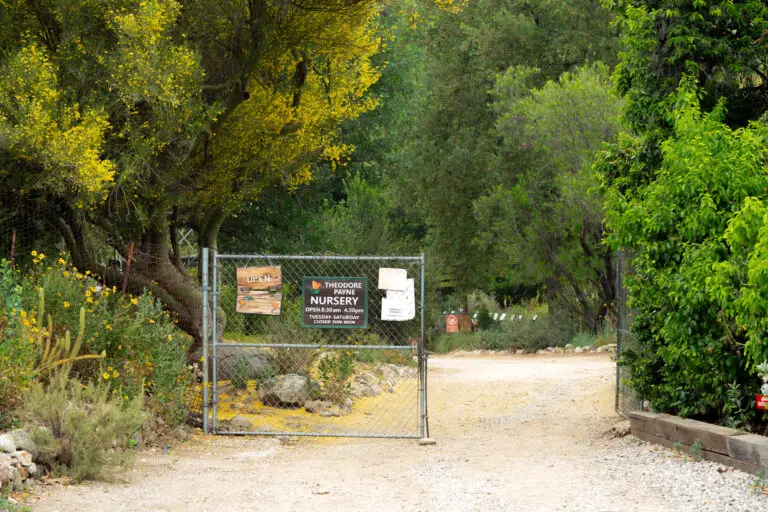
Native nurseries in Texas, Arizona and New Mexico are your best bet, and native plant society sales often carry guajillo, blackbrush and fern acacia. Look for the new and old Latin names on the tag, and pass on anything labeled plain Acacia with a species you don’t recognize: it may be an Australian wattle. Start with our list of native plant nurseries or order online.
Native acacia FAQs
Which acacia is best for a small yard?
Fern acacia. It stays 1 to 3 feet tall in most gardens and has no thorns at all. If you want a small tree instead, sweet acacia tops out around 15 to 25 feet.
Are native acacias thorny?
Most of them, yes. Catclaw has curved spines along its branches, whitethorn has paired white spines, and sweet acacia’s stipular spines run to about 35 mm, close to an inch and a half. Fern acacia is the thornless exception.
Do deer eat acacias?
Yes. Sweet acacia has minimal deer resistance, and deer, rabbits and grazing animals all browse catclaw. Protect young plants with a cage until they’re a few feet tall.
Are acacias poisonous?
Some can be, so use caution with animals. The Native Plant Society of Texas warns that catclaw twigs and leaves are poisonous to animals and humans. Guajillo can cause potentially fatal poisoning in grazing animals that eat a lot of it. Neither is a reason to skip them in a yard; just don’t plant them in a goat pen.
Will an acacia take over my yard?
It can spread, but it won’t run wild within its range. Sweet acacia suckers into thickets and fern acacia creeps by rhizomes. Both have become weeds far from home: sweet acacia in parts of Australia, and fern acacia carries a high potential of invasiveness outside its range. Plant them only where they’re native.
Is huisache the same as sweet acacia?
Yes. Huisache, sweet acacia, perfume acacia and cassie are all names for Vachellia farnesiana. Texans usually say huisache, which comes from Nahuatl and means “many thorns.”
Plant nerd fact
The vote that kept Acacia in Australia
The decision that renamed our acacias was no landslide. When the proposal came up in Vienna in 2005, the count was 45.1 percent in favor and 54.9 percent against, short of the 60 percent the meeting normally needed. Officials ruled the name conserved anyway, and the botanist G. Moore later published a paper calling it “an attempt at minority rule.” Six years later in Melbourne, 68 percent voted to accept it, and the wattles kept the name.
If your yard is hot, dry and sunny, an acacia gives you fragrance, bees and a safe place for birds, all on rainwater. Pair it with palo verdes, desert ironwood or mesquites for a yard that looks like it belongs in the desert. Happy planting!
Sources
- Arizona-Sonora Desert Museum. “Fabaceae (Legume Family).” A Natural History of the Sonoran Desert. Accessed October 12, 2026.
- Arizona-Sonora Desert Museum. “Blue Palo Verde, Parkinsonia florida” and “Ironwood Tree.” Accessed October 12, 2026.
- Australian National Botanic Gardens. “Acacia Conserved.” Centre for Australian National Biodiversity Research, 2015. Accessed October 12, 2026.
- California Invasive Plant Council. “Acacia dealbata,” “Acacia melanoxylon” and “Acacia saligna Risk Assessment.” Accessed October 12, 2026.
- Centre for Plant Biodiversity Research. “Vachellia farnesiana var. farnesiana.” Fact sheet. Accessed October 12, 2026.
- Lady Bird Johnson Wildflower Center. “Vachellia farnesiana (Huisache).” Native Plant Database, University of Texas at Austin. Accessed October 12, 2026.
- Maslin, B. R. “Generic and Subgeneric Names in Acacia following Retypification of the Genus.” Muelleria 26, no. 1 (2008): 7–9. Accessed October 12, 2026.
- Moore, G. “The Handling of the Proposal to Conserve the Name Acacia at the 17th International Botanical Congress: An Attempt at Minority Rule.” Bothalia 37, no. 1 (2007). doi.org/10.4102/abc.v37i1.308.
- Native Plant Society of Texas. “Senegalia greggii,” “Vachellia constricta,” “Acaciella angustissima,” “Senegalia berlandieri” and “Vachellia rigidula.” Native plant database. Accessed October 12, 2026.
- NatureServe. “Acacia farnesiana,” “Senegalia greggii,” “Vachellia constricta,” “Acaciella angustissima,” “Senegalia berlandieri” and “Vachellia rigidula.” NatureServe Explorer. Accessed October 12, 2026.
- Royal Botanic Gardens, Kew. “Senegalia greggii” and “Acacia rigidula.” Plants of the World Online. Accessed October 12, 2026.
- Shropshire, Kimberley J., and Douglas W. Tallamy. “Lepidoptera of North America North of Mexico: An Annotated List Containing Geographic Ranges and Host Plant Records.” ZooKeys, 2025. Host counts from the UDELep data, May 2025.
- Southwest Desert Flora. “Vachellia farnesiana, Sweet Acacia” and “Acaciella angustissima, White-ball Acacia.” Accessed October 12, 2026.
- University of Arizona Campus Arboretum. “Dunbar Spring Neighborhood: Senegalia greggii.” Accessed October 12, 2026.
- University of Arizona Desert Legume Program. “Vachellia constricta” and “Senegalia berlandieri.” Accessed October 12, 2026.
- University of Arizona Yavapai County Cooperative Extension. “Acacia greggii.” Yavapai Plants. Accessed October 12, 2026.
- U.S. Department of Agriculture, Forest Service. “Senegalia greggii.” Fire Effects Information System. Accessed October 12, 2026.
- World Flora Online. “Acaciella angustissima.” Accessed October 12, 2026.
- WorldWideWattle. “The Name Issue.” Accessed October 12, 2026.
Similar plants
Updated Find more: Beginner Guide Shrub Tree
The ads on this site help pay real native plant nerds to research and write these guides.
Garden notes
Notes from people who’ve grown it
Tips, wins, and the occasional disaster. If you’ve grown acacia, share the advice you’d give to a neighbor.
No notes yet. Yours could be the first.
Grown acacia? Tell the next person what you wish someone had told you.
Tap anywhere to close


