





Highlights
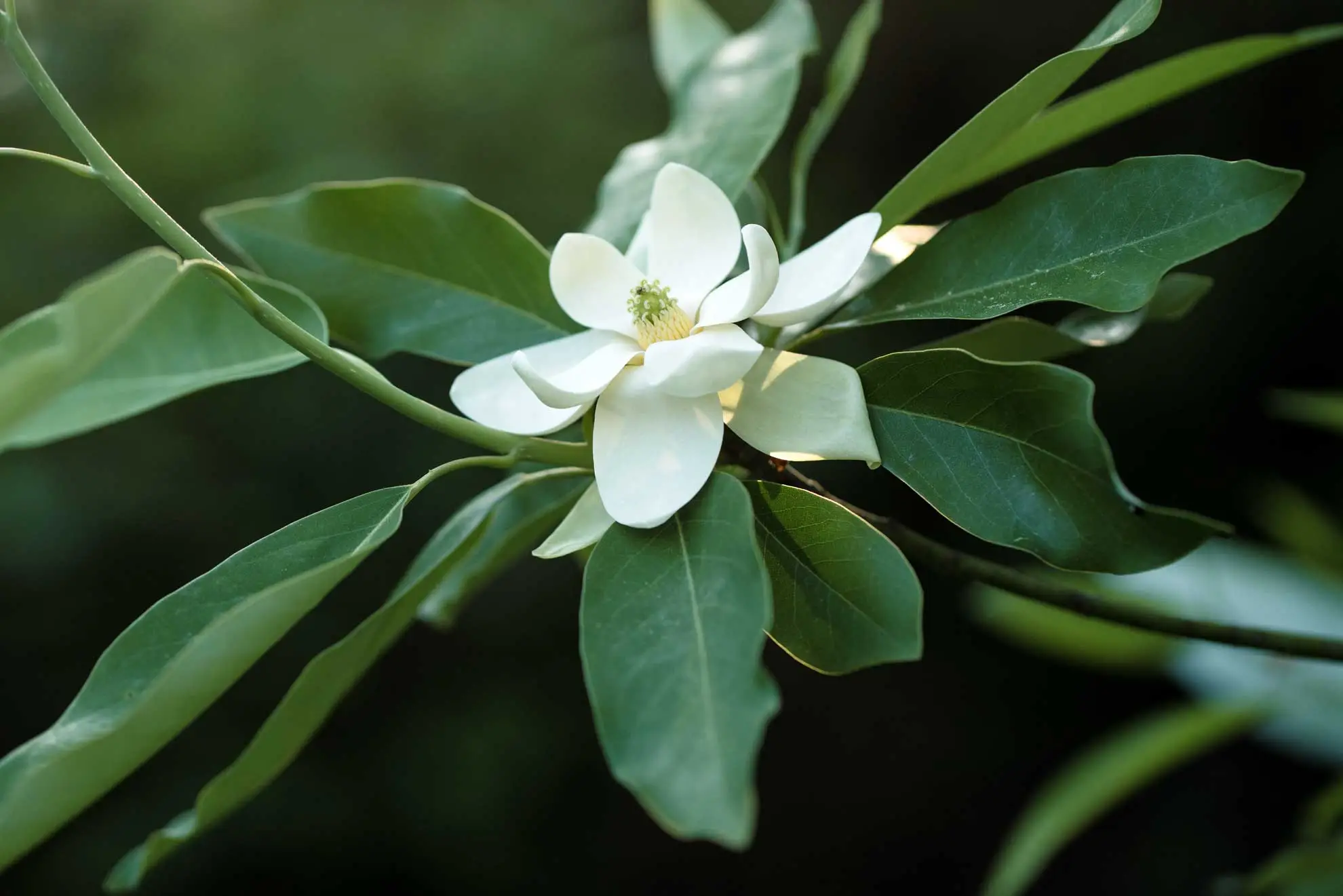
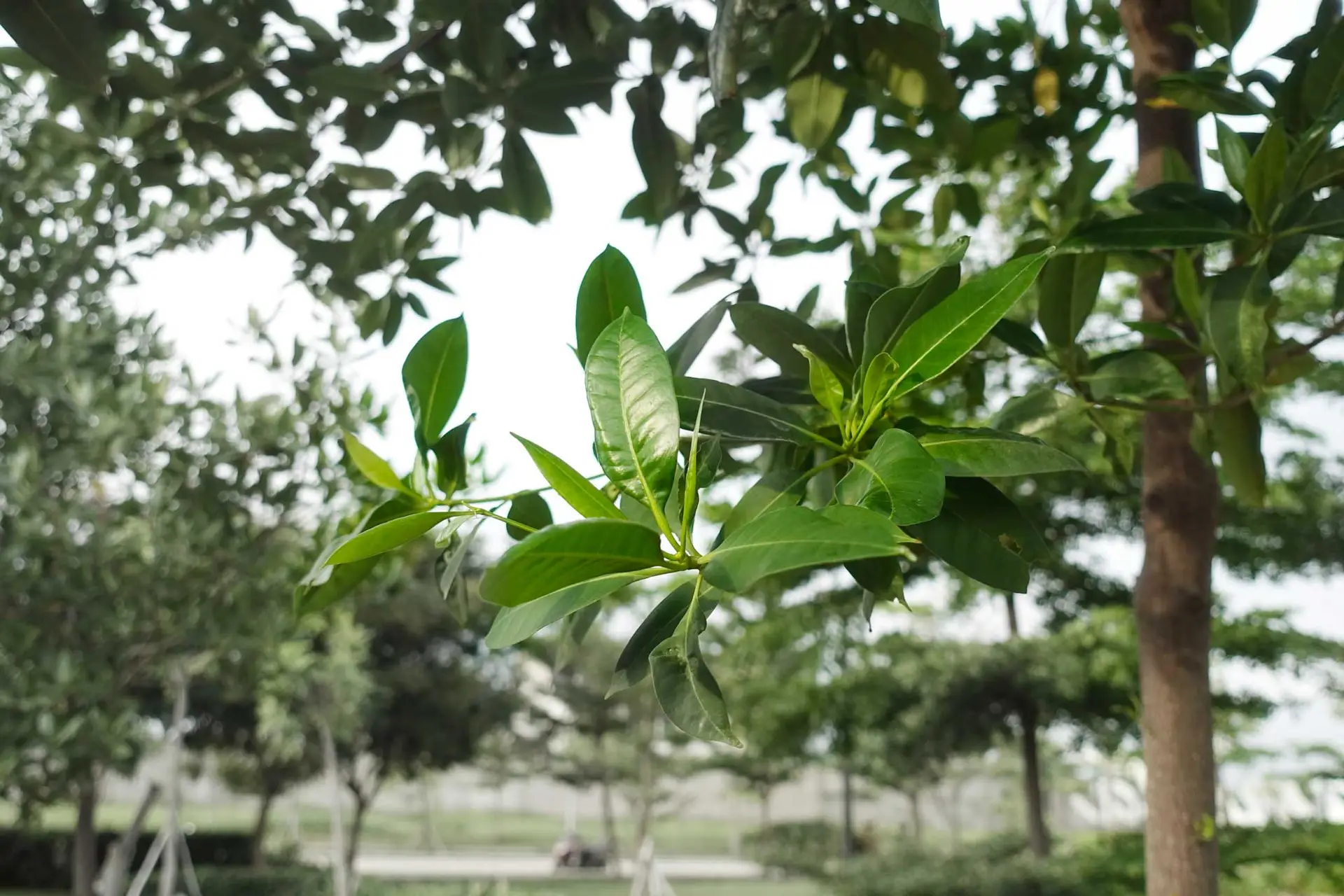
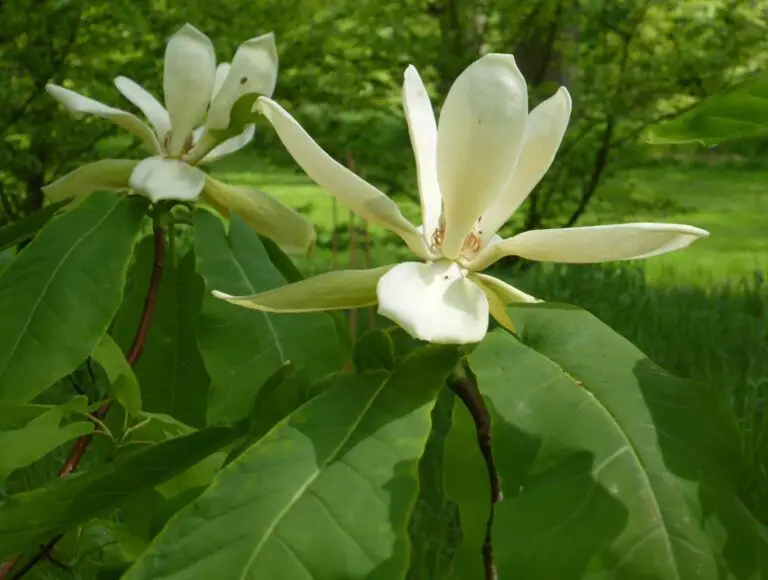
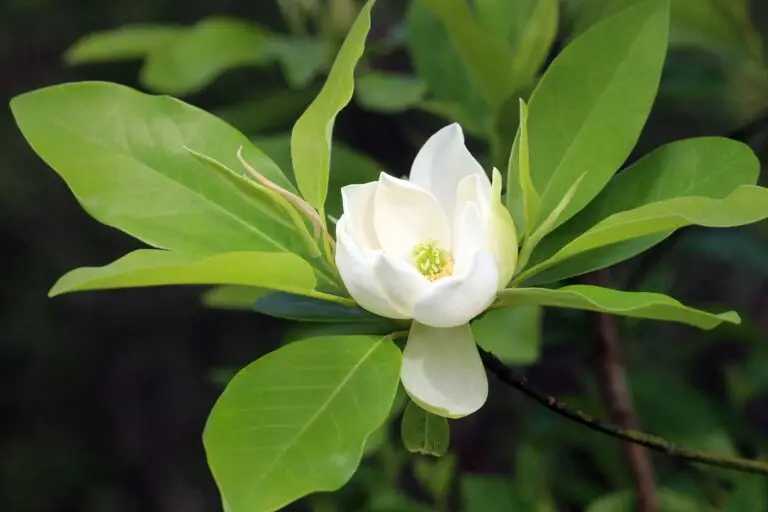
Sweetbay magnolia is one of the most beautiful native trees in the eastern US. It grows 15 to 35 feet tall with glossy, dark green leaves that flash silvery-white underneath when the wind catches them. In late spring, it opens creamy white, lemon-scented flowers that perfume the entire yard, followed by red seed clusters that songbirds love. Semi-evergreen to evergreen depending on your climate and happy in wet soils. If you want a gorgeous, low-maintenance native tree, this is the one.
Is sweetbay magnolia right for my yard?
Plant it if…
- You want a beautiful, fragrant flowering tree. The creamy white blooms smell incredible, and the glossy leaves look good all year (evergreen in the South, semi-evergreen further north).
- You have wet or soggy soil. Most trees hate wet feet. Sweetbay magnolia loves them. In the wild, it grows in swamps and along stream banks.
- You want to support butterflies. Sweetbay is a host plant for the eastern tiger swallowtail and the sweetbay silkmoth. Birds eat the red seeds in fall.
- You want a smaller tree. At 15 to 35 feet, sweetbay fits under power lines and in smaller yards where a full-size shade tree would be too big.
- You want four-season interest. Glossy leaves (silvery underneath), fragrant flowers, bright red seed pods, and clean winter form. Something to look at in every season.
Skip it if…
- Your soil is dry and alkaline. Sweetbay magnolia prefers moist, acidic soil. It can handle average garden soil with occasional watering, but bone-dry, chalky ground is a dealbreaker.
- You are outside its native range. Scroll down to the range map. Sweetbay is native to 17 eastern states, from Massachusetts to Florida. If you are in the Midwest or West, this is not your tree.
- You want a big shade tree. Sweetbay stays relatively small (15 to 35 feet in most gardens). If you need heavy shade over a large area, look at native oaks instead.
- You need a fully evergreen tree in a cold climate. North of about zone 7, sweetbay is deciduous or semi-evergreen, dropping most or all of its leaves in winter. In zones 8 and warmer, it stays evergreen.
Where is sweetbay magnolia native?
Native to 17 US states and Washington, D.C.
Sources: NatureServe, Royal Botanic Gardens, Kew (World Checklist of Vascular Plants) and the USDA PLANTS Database, compiled by The Plant Native. How we map native ranges
Sweetbay magnolia is native to 17 US states and Washington, D.C. Its range stretches along the East Coast from Massachusetts to Florida, and along the Gulf Coast west to Texas. It grows naturally in swamps, bogs, stream banks, and low-lying wet forests. In the coastal Southeast, it can reach 60 feet or taller, while in the northern part of its range, it typically stays 15 to 25 feet and behaves more like a large shrub.
According to the Arnold Arboretum, sweetbay magnolia populations in the Northeast are somewhat rare and localized. When they were discovered in Massachusetts in the early 1800s, plant enthusiasts collected them so aggressively that wild populations were nearly wiped out in the northern states. The southern populations are much more robust and widespread.
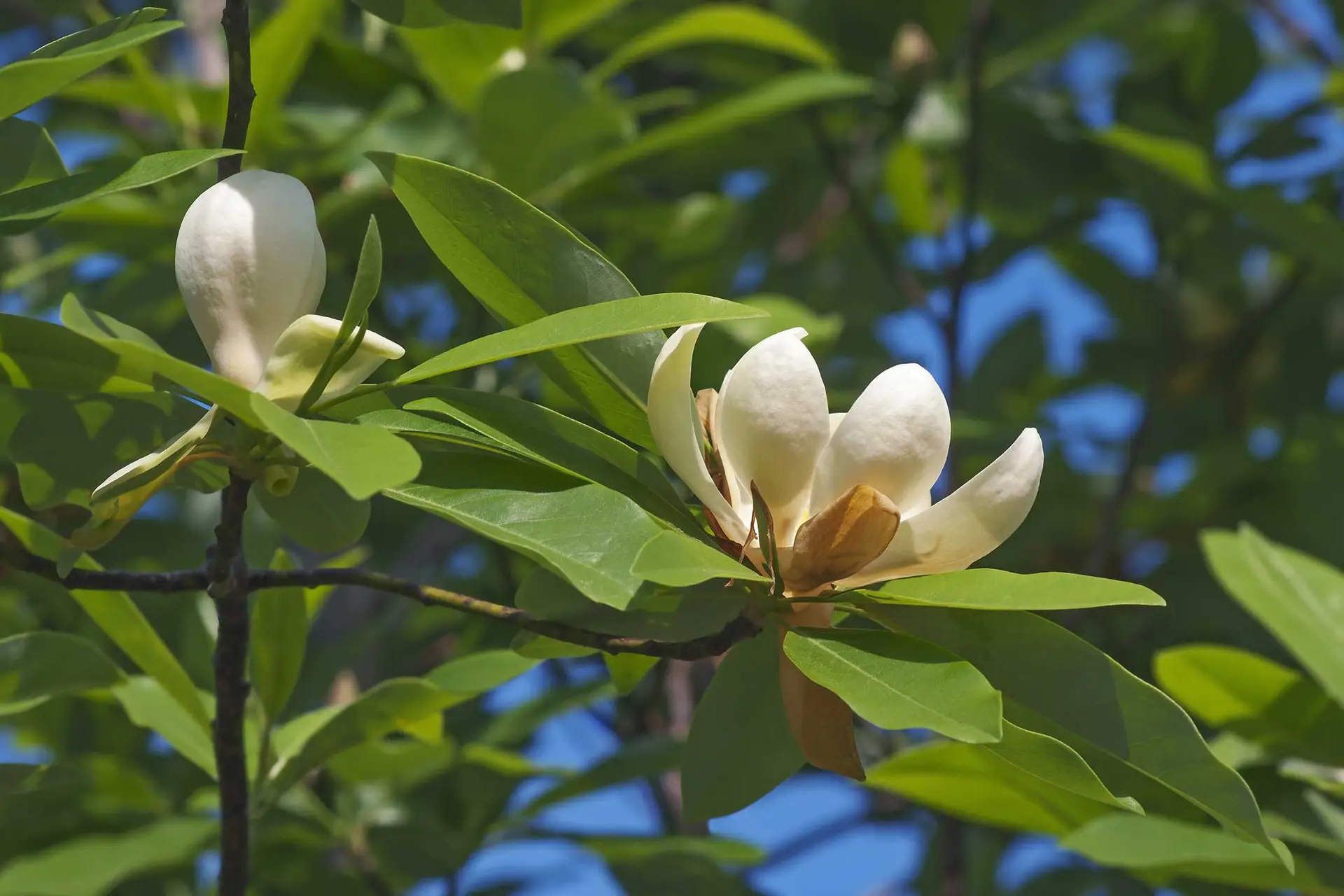
It is one of the few trees that is genuinely happy in wet ground, making it perfect for rain gardens, stream banks, low spots, and areas where other trees struggle.
Why sweetbay magnolia matters
Sweetbay magnolia is a host plant for some of the most recognizable butterflies and moths in the eastern US. According to the National Wildlife Federation, magnolias support multiple species of Lepidoptera (butterflies and moths) whose caterpillars feed on the leaves. The most famous is the eastern tiger swallowtail, one of the largest and most striking butterflies in North America. The sweetbay silkmoth (Callosamia securifera) is another, a gorgeous giant silk moth that feeds exclusively on sweetbay and a few related species.
The flowers matter too, and they are ancient. Magnolias are among the oldest flowering plants on Earth, dating back over 95 million years. According to a study published in Arnoldia (the journal of Harvard’s Arnold Arboretum), sweetbay magnolia flowers are pollinated primarily by beetles, a relationship that predates the evolution of bees by tens of millions of years. Those creamy, fragrant petals are not designed for bees or butterflies. They are designed for beetles, which crawl inside and eat pollen, getting dusted in the process. It is one of the oldest pollination partnerships still happening in your yard.
Beyond pollinators, the bright red seeds that appear in fall are eaten by songbirds, wild turkeys, quail, and small mammals. The dense branching provides nesting sites. And the tree itself stabilizes wet ground and stream banks with its roots. For a tree this beautiful, it does a remarkable amount of work behind the scenes.
Where sweetbay magnolia shines in your yard
- Rain garden or wet area: One of the best native trees for wet ground. It thrives where most trees fail.
- Patio tree: Small enough to plant near a patio or deck where you can enjoy the fragrant flowers up close on summer evenings.
- Front yard specimen: Glossy evergreen leaves, gorgeous flowers, and a graceful shape. Serious curb appeal.
- Woodland edge: Handles part shade beautifully and fits naturally at the edge of a wooded area.
- Stream bank or pond edge: Right at home along water, stabilizing the bank with its roots while looking beautiful.
- Small yard tree: Stays 15 to 35 feet in most gardens. Fits under power lines and in tight spaces where larger trees cannot go.
- Butterfly garden anchor: Host plant for tiger swallowtails and silkmoths, plus the flowers feed pollinators. The backbone of a butterfly garden.
How to grow sweetbay magnolia
Where to plant
Full sun to part shade, in moist to wet, acidic soil. According to the Missouri Botanical Garden, sweetbay magnolia is best grown in moist, organically rich, acidic soils in full sun to part shade. It is one of the few trees that is genuinely happy in wet ground, making it perfect for rain gardens, stream banks, low spots, and areas where other trees struggle. It will also grow in average garden soil as long as you water during dry spells, especially in the first few years.
When to plant
Spring or fall are the best times to plant, giving the roots lots of time to get established.
Spacing
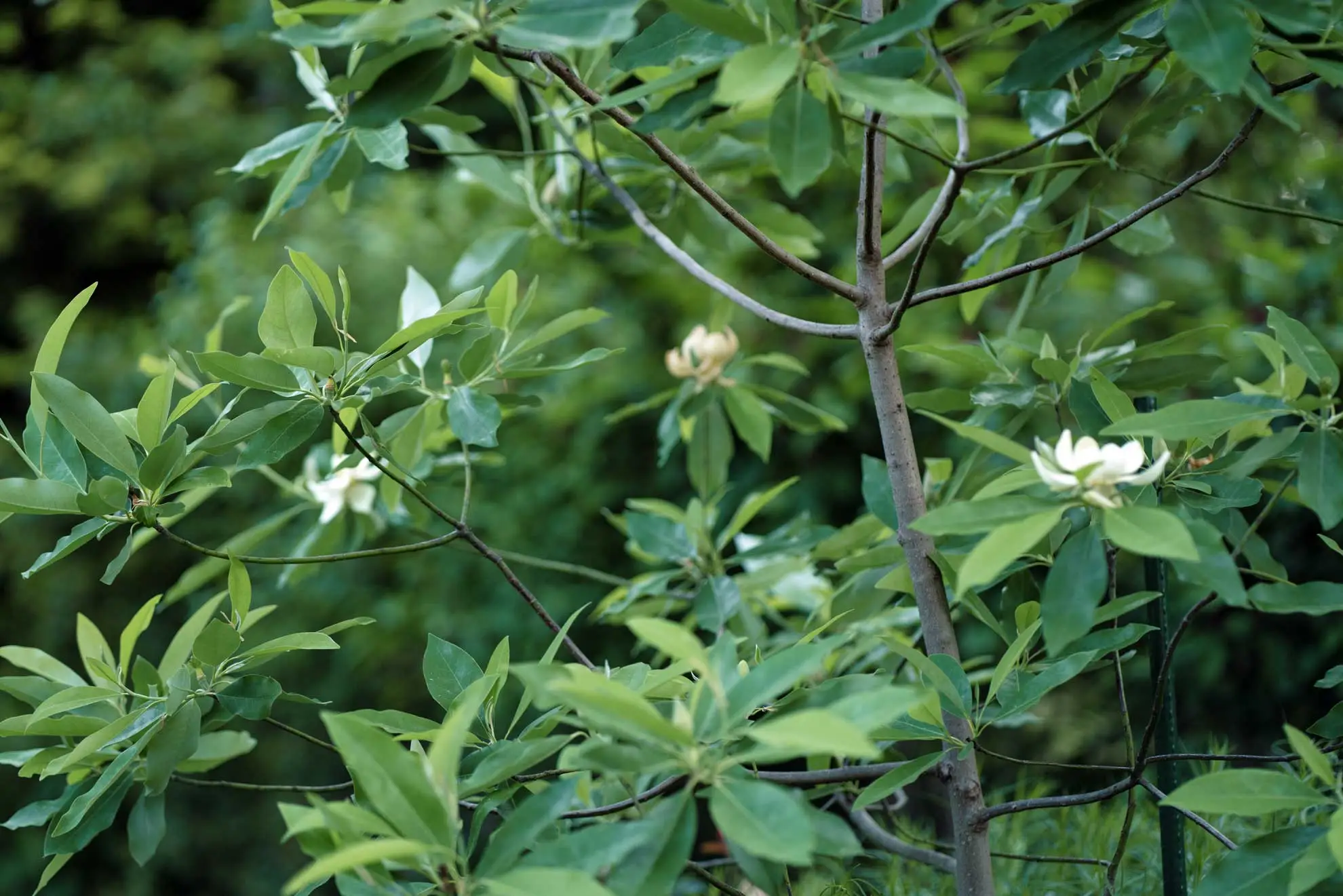
Give it 15 to 25 feet of room, depending on the expected mature size. In the South, where it grows larger, lean toward the wider end. In the North, where it stays smaller, 15 feet is usually enough.
Planting card
Magnolia virginiana
Watering
Water regularly during the first two growing seasons. After that, sweetbay is well-established and can handle periods of average rainfall on its own. It will always look its best with consistent moisture, though. If you are planting it in a naturally wet spot, you may not need to supplement at all.
Provenance helps when getting a sweetbay
Living in the north? Where you get a sweetbay magnolia from will help its survival in the cold. Where a plant’s DNA comes from is called its provenance.
Sweetbay magnolias are from a wide swath of the eastern US, and within that range, there are sweetbays that are regionally inclined. Sweetbays from the Northeast are tougher in cold winters than a sweetbay from a more southern state. This is another reason why it’s so important to buy from your local nurseries, particularly those nurseries that specialize in native plants.
With this in mind, we have a tip:
What to plant with sweetbay magnolias
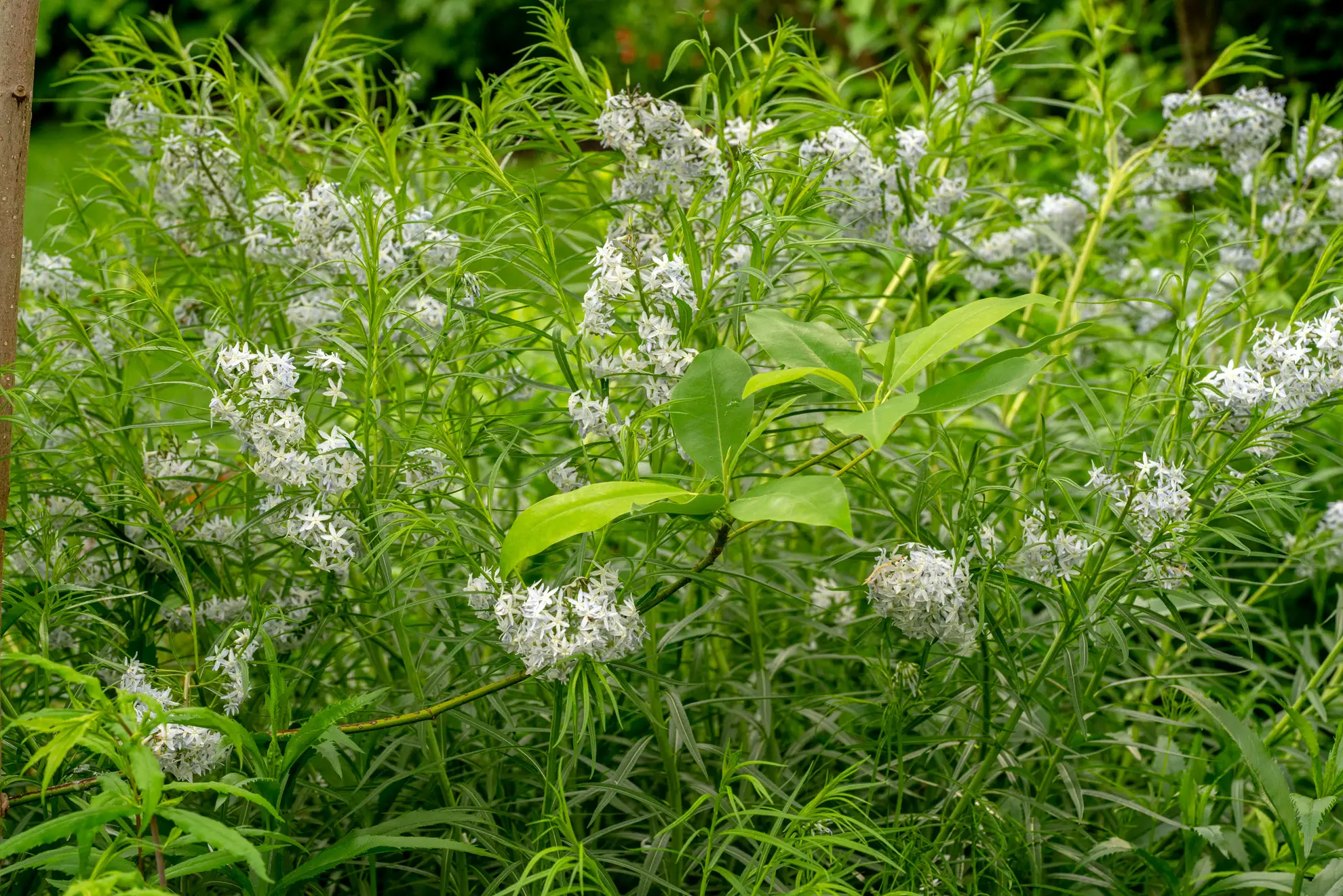
Sweetbay magnolias are perfectly paired with other native plants that like sun or part sun and moist soil. These natives work together beautifully:


Where can I buy sweetbay magnolia?
Most big-box garden centers don’t carry true natives, but sweetbay magnolia is easier to find than you might think. Your best bets are a native plant nursery near you, a native plant society sale, or a trusted online grower that ships to your region.
Potential challenges with sweetbay magnolia
Deciduous in cold climates
Sweetbay is marketed as “evergreen,” but this is only true in zones 8 and warmer. In zones 5 to 7, it drops most or all of its leaves in winter. This is normal and healthy.
If year-round evergreen leaves are important to you and you are in a cold zone, look for the ‘Henry Hicks’ cultivar, which holds its leaves better in the cold.
Needs moisture
Sweetbay magnolia is a wet-ground tree. In average garden soil, it does fine with regular watering, but in dry, sandy, or alkaline soil, it will struggle. Do not plant it on a dry hillside or in a hot, unwatered strip. Give it moisture and it will repay you for decades.
Suckering
Sweetbay can send up suckers from the roots, creating a multi-stemmed colony over time. Some gardeners love this look. If you want a single-trunk tree, simply remove suckers when they appear. It is easy to manage.
Scale insects
Magnolia scale can occasionally appear on sweetbay, showing up as brown or white bumps on the branches. It is not common and rarely serious. A strong spray of water or a light application of horticultural oil in late winter handles it. Healthy trees in the right spot (moist soil, decent light) almost never have scale problems.
Slow to moderate growth
Sweetbay magnolia is not a fast-growing tree. Expect 1 to 2 feet of growth per year. This is the tradeoff for a tree that is graceful, long-lived, and not pushy. If you want shade quickly, plant a native river birch or tulip poplar alongside it.
A note on cultivars
Sweetbay magnolia has several excellent cultivars, all bred from the native species. The straight species is always the safest bet for wildlife, but these cultivars keep the single-flowered form and wildlife value:
- ‘Henry Hicks’: The most popular cultivar. Selected for evergreen leaf retention in cold climates (holds leaves in zones 5 to 6 where the straight species drops them). Same fragrant flowers and wildlife value.
- ‘Moonglow’: A compact, upright form that stays narrower than the species with slightly larger flowers. Good for tighter spaces.
- ‘Green Shadow’: Very glossy leaves with excellent evergreen retention. A newer introduction gaining fans.
- Straight species: Always the best choice if you are in zones 7 to 9 where it stays naturally evergreen. Maximum genetic diversity and the strongest local adaptation.
All of these cultivars have the same single-flowered form, so pollinator value is the same as the straight species. Unlike some ornamental trees, sweetbay magnolia cultivars have not been bred into double-flowered or sterile forms. (If you want to be sadly surprised about how detrimental a cultivar can be, visit our Beginner’s Guide to Native Hydrangeas.)
FAQs
How tall do sweetbay magnolias get?
The height of sweetbay magnolias depends on the region in which the tree is planted.
- In the Northeast and Mid-Atlantic regions, it can grow up to 20 feet.
- In the South, it can soar to as high as 90 feet.
Are sweetbay magnolias evergreen?
In most climates, sweetbays are evergreen.
Regardless of the region, sweetbay magnolias will keep their leaves year-round unless there is a severely cold winter. During cold Northeast winters, the tree can drop its leaves to protect its energy. The leaves will come back in the spring.
Why are sweetbay magnolias sometimes called beaver trees?
This is a strange name for this plant! It comes from early colonists using it at the height of the fur trade. According to a 1925 guide to North American Wildflowers, beavers were “so fond of the bark that it was employed frequently to bait beaver traps.” This history is also why it goes by the common name “beaver tree.”
Can I grow sweetbay magnolia in a pot?
Yes, at least for a few years. Use a large container (18 inches or wider) with good drainage and keep the soil consistently moist. Sweetbay will eventually need to go in the ground to reach its full potential, but it makes a beautiful patio tree in a pot for several years.
Does sweetbay magnolia attract butterflies?
Yes. It is a host plant for the eastern tiger swallowtail and the sweetbay silkmoth. Tiger swallowtail caterpillars feed on the leaves, and the adults are some of the largest, most striking butterflies in the eastern US. Planting a sweetbay is one of the best things you can do for swallowtails in your yard.
What is the difference between sweetbay magnolia and southern magnolia?
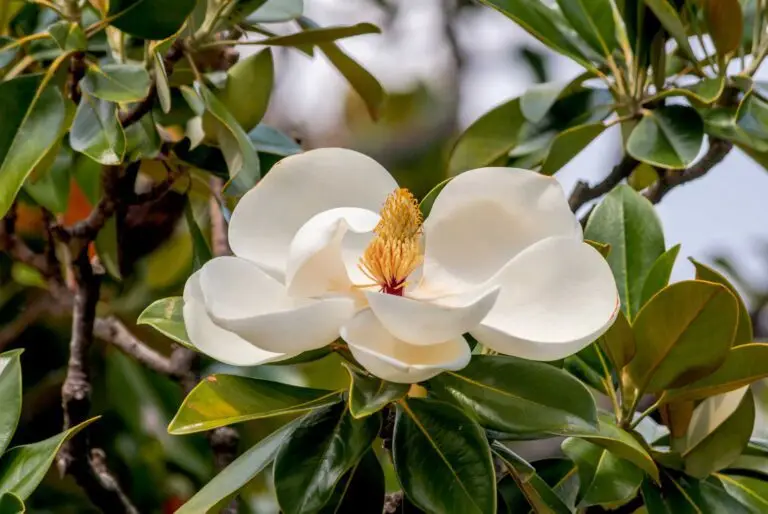
Southern magnolia (Magnolia grandiflora) is the big one, growing 60 to 80 feet tall with huge white flowers and leathery evergreen leaves. Sweetbay magnolia is much smaller (15 to 35 feet), with more delicate flowers and thinner, glossier leaves that flash silver underneath. Sweetbay also handles wet ground and part shade much better. If southern magnolia is the grand dame, sweetbay is the graceful little sister.
Plant nerd fact
Sweetbays were the first magnolia shipped to Europe
This tree has had its fans for literally centuries. Sweetbay magnolia was the first magnolia brought back to Europe. In 1688, a missionary named John Banister shipped specimens from Virginia to England, and Europeans went wild for it. That one shipment launched a magnolia obsession that lasted centuries and eventually made magnolias one of the most popular ornamental trees on the planet. (Magnolias are native to North America and Asia—but not Europe.)
One hundred years later, sweetbays were still a star. When sweetbays were found in Massachusetts in the early 1800s, it started a plant obsession that left very few sweetbays left in the wild in northern states. There are very few trends to pick up from the 17th century (we’ll keep our antibiotics and leech-free life, thank you), but planting sweetbay magnolias is one of them.
Sweetbay magnolia has been hiding in plain sight, and it’s time for us all to help make this a new garden staple. It’s gorgeous, evergreen (or semi-evergreen), a host plant, and easy to grow. Do you have an area in your yard that turns into a muddy spot after the rain? That’s where you plant this native gem. Plant it near a patio or window, so you can catch its fragrance on the summer breeze. Don’t forget to visit our Beginner’s Guide to Native Magnolias to meet other gorgeous native options. Or, stick with butterflies as your garden theme and visit our Best Native Host Plants for Butterflies. Or maybe finally deal with that muddy spot that’s a pain to mow, and visit our Best Native Plants for Rain Gardens. Happy planting!
Sources
- Arnold Arboretum, Harvard University. “Magnolia virginiana in Eastern North America and Cuba.” https://arboretum.harvard.edu/stories/magnolia-virginiana-in-eastern-north-america-and-cuba/. Accessed March 23, 2026.
- Arnoldia (Harvard Arnold Arboretum). “Magnolia virginiana: Ephemeral Courting for Millions of Years.” Arnoldia 71, no. 3 (2014). https://arboretum.harvard.edu/wp-content/uploads/2020/08/2014-71-3-magnolia-virginiana-ephemeral-courting-for-millions-of-years.pdf. Accessed March 23, 2026.
- Butterflies and Moths of North America. “Callosamia securifera (Sweetbay Silkmoth).” https://www.butterfliesandmoths.org/species/Callosamia-securifera. Accessed March 23, 2026.
- Harris, Marjorie. Botanica North America: The Illustrated Guide to Our Native Plants, Their Botany, History, and the Way They Have Shaped Our World. HarperCollins, 2003, 141–142.
- Holden Forests & Gardens. “Sweetbay Magnolia & Eastern Tiger Swallowtail.” https://holdenfg.org/blog/sweetbay-magnolia-eastern-tiger-swallowtail/. Accessed March 23, 2026.
- Lady Bird Johnson Wildflower Center. “Magnolia virginiana (Sweetbay).” University of Texas at Austin. https://www.wildflower.org/plants/result.php?id_plant=MAVI2. Accessed March 23, 2026.
- Missouri Botanical Garden. “Magnolia virginiana.” https://www.missouribotanicalgarden.org/PlantFinder/PlantFinderDetails.aspx?kempercode=e110. Accessed March 23, 2026.
- Monticello. “Sweet Bay Magnolia.” Thomas Jefferson Foundation. https://www.monticello.org/house-gardens/in-bloom-at-monticello/sweet-bay-magnolia/. Accessed March 23, 2026.
- Morton Arboretum. “Sweetbay Magnolia.” https://mortonarb.org/plant-and-protect/trees-and-plants/sweetbay-magnolia/. Accessed March 23, 2026.
- Mt. Cuba Center. “Sweet Bay (Magnolia virginiana).” https://mtcubacenter.org/plants/sweet-bay/. Accessed March 23, 2026.
- National Wildlife Federation. “Native Plant Finder.” https://nativeplantfinder.nwf.org/. Accessed March 23, 2026.
- Nelson, Gil. Best Native Plants for Southern Gardens: A Handbook for Gardeners, Homeowners, and Professionals. University Press of Florida, 2010.
- North Carolina State Extension. “Magnolia virginiana (Sweetbay Magnolia).” NC State University. https://plants.ces.ncsu.edu/plants/magnolia-virginiana/. Accessed March 23, 2026.
- USDA Forest Service. “Magnolia virginiana.” Fire Effects Information System. https://www.fs.usda.gov/database/feis/plants/tree/magvir/all.html. Accessed March 23, 2026.
- USDA PLANTS Database. “Magnolia virginiana L.” https://plants.usda.gov/plant-profile/MAVI2. Accessed March 23, 2026.
- Virginia Tech Dendrology. “Magnolia virginiana Fact Sheet.” https://dendro.cnre.vt.edu/dendrology/syllabus/factsheet.cfm?ID=334. Accessed March 23, 2026.
- Walcott, Mary Vaux, and Lessing J. Rosenwald Collection. North American Wild Flowers. Washington, D.C.: The Smithsonian Institution, 1925.
Explore more native magnolia profiles
-
-
-

-
-
-
-
-



Updated Find more: White Statement Tree Tree Spring Summer Full Sun Part Sun
The ads on this site help pay real native plant nerds to research and write these guides.
Garden notes
Notes from people who’ve grown it
Tips, wins, and the occasional disaster. If you’ve grown sweetbay magnolia, share the advice you’d give to a neighbor.
No notes yet. Yours could be the first.
Grown sweetbay magnolia? Tell the next person what you wish someone had told you.
Tap anywhere to close


