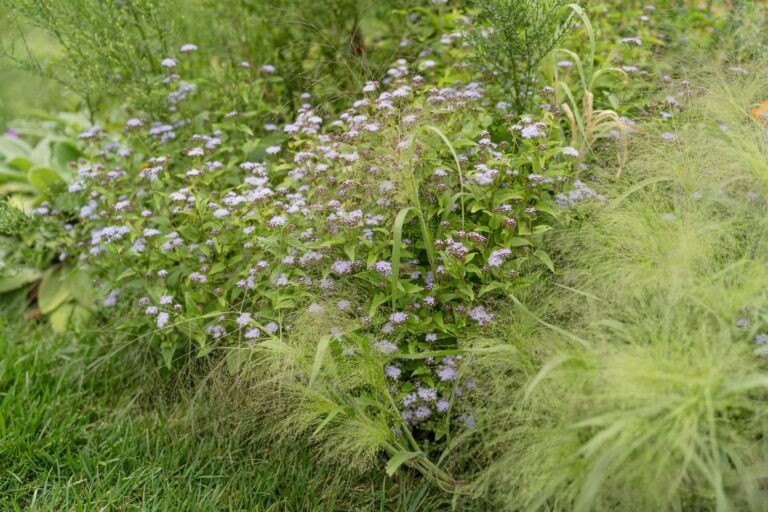
Highlights
Saskatoon serviceberry (Amelanchier alnifolia) is the berry bush of the northern plains and the West. In spring it’s covered in white, starry flowers, often before the leaves are fully out. By midsummer it’s hung with purple-blue berries that look a lot like blueberries, and that you can eat right off the branch.
It’s also tough. North Dakota rates it to zone 2, and it grows wild from Alaska down into the mountains of the Southwest. If blueberries sulk in your alkaline soil, this is the fruit shrub to try.
Is Saskatoon serviceberry a good choice for my yard?
Yes, if…
- You want a native shrub you can eat from. The berries are good fresh, in pies and in jam.
- Your winters are cold and your soil isn’t acidic. It prefers slightly acidic soil but will grow reasonably well on alkaline soil up to about pH 7.5.
- You want early flowers for bees. It’s one of the first shrubs to bloom, and bees and other insects come to the flowers.
- You have sun and soil that drains. Full sun gives you the most fruit.
Skip it if…
- Your soil stays wet. Morton Arboretum warns against wet soils, and heavy clay can lead to root rot.
- Your summers are hot and humid. Leaf spot disease spreads in high humidity, and in the East other serviceberries are the better bet. See our serviceberry guide.
- You have junipers nearby. Junipers and saskatoons share a rust disease that develops within a few hundred meters.
- You need it to stay one tidy trunk. Many forms sucker into a small thicket.
Why Saskatoon serviceberry matters
Wild animals all over the West eat from this shrub. The Forest Service notes that upland game birds consume the fruits and buds, many songbirds and small mammals eat the berries, and black bears, beavers and hares eat the twigs, leaves, fruit and bark. Deer and elk browse it too.
The Lady Bird Johnson Wildflower Center says it attracts orange tip and elfin butterflies. Across the genus, serviceberries host 190 native moths and butterflies in the Shropshire-Tallamy caterpillar records.
A berry with a long history
For the Cree, Blackfoot and other Plains nations, saskatoons were a staple. The berries were eaten fresh, dried, and pounded together with dried meat and fat to make pemmican. The English name comes from the Cree word for the berry, misâskwatômina, which settlers shortened to “saskatoon”.
Where Saskatoon serviceberry shines in your yard
- An edible hedge along a sunny property line.
- A bird and berry corner you can see from the kitchen.
- A windbreak row on the plains, mixed with other native shrubs.
- A mountain or high-desert yard where many fruit shrubs freeze out.
- The back of a pollinator bed, for early spring flowers.
Beginner tip
When the berries start to color, drape a light net over one or two branches. The birds can have the rest, and you’ll still get a bowl for breakfast.
How to grow Saskatoon serviceberry
When to plant
Spring or early fall, from a container plant. Water it weekly through the first summer.
Sun and soil
Full sun to part shade. Utah State says it prefers well-drained sandy loams and loams. It handles some dry spells once settled, but the Forest Service notes it can’t handle prolonged drought, so water during long dry stretches, especially while the fruit is ripening.
Size
In gardens most plants reach 6 to 15 feet tall and 6 to 10 feet wide. Size depends a lot on the cultivar: ‘Regent’ stays about 6 by 6 feet with little suckering, while ‘Thiessen’ grows to about 15 feet.
Pruning
Prune early in the spring, after the hardest cold but before the buds break. Each year, take out a few of the oldest branches at the base to keep the shrub young and fruiting.
When will it fruit?
Expect a first small crop in about four years. Berries ripen from July to September, one to two months after the flowers. Pick when they’re deep purple-blue and soft.
Planting card
Amelanchier alnifolia
The trickPrune in early spring before the buds break, taking a few of the oldest stems.
Where is Saskatoon serviceberry native?
Native to 22 US states
Sources: NatureServe, Royal Botanic Gardens, Kew (World Checklist of Vascular Plants) and the USDA PLANTS Database, compiled by The Plant Native. How we map native ranges
What are good pairings for Saskatoon serviceberry?
Pair it with other western and prairie natives that like sun and good drainage: golden currant, wild bergamot, prairie smoke, Rocky Mountain bee plant and little bluestem.


Where can I buy Saskatoon serviceberry?
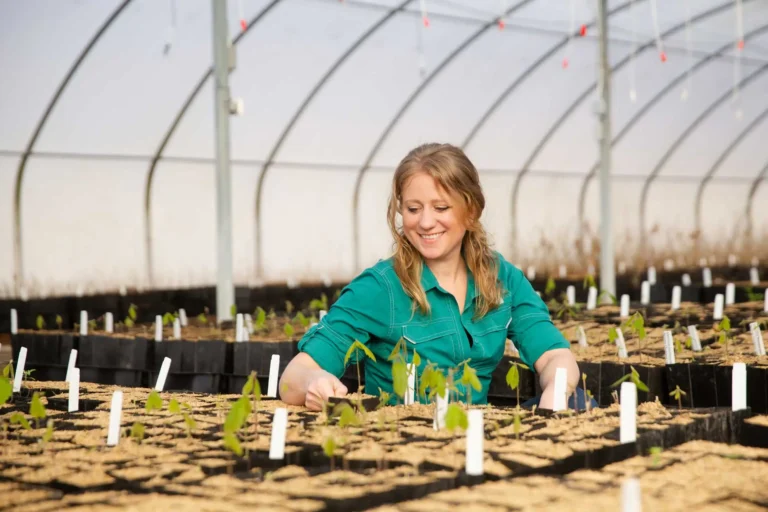
In the northern Plains and the West, native nurseries, conservation district tree sales and fruit nurseries all carry it, often as named cultivars like ‘Thiessen’, ‘Smoky’ and ‘Regent’. Start with our list of native plant nurseries or order online.
Leaf spots and orange spikes
Two diseases show up most. Entomosporium leaf spot is one of the most common diseases of serviceberries and is worst in humid weather. Saskatoon-juniper rust makes orange spots on leaves and spiky growths on the berries; its other host is juniper, so the University of Saskatchewan recommends keeping the two apart. Water at the base, give plants room for air, and rake up fallen leaves.
If blueberries sulk in your alkaline soil, this is the fruit shrub to try.
FAQs
Are Saskatoon berries the same as serviceberries and juneberries?
Saskatoon is one kind of serviceberry. “Serviceberry,” “juneberry” and “shadbush” are names shared across several Amelanchier species. “Saskatoon” means Amelanchier alnifolia, the western one. The species also hybridize readily, which makes them hard to tell apart.
Can you eat Saskatoon berries?
Yes. They’re eaten fresh and made into juice, jellies, jams and pies. Don’t eat the leaves or twigs: NC State notes the leaves contain cyanide.
When are Saskatoon berries ripe?
Usually July to September, depending on location. In warm, low-elevation spots they can ripen in June.
How long until a Saskatoon bush has fruit?
About three to five years. Utah State says plants reach full production at 8 years.
Will deer eat Saskatoon serviceberry?
Yes, sometimes. Deer and elk browse it, though the Forest Service says it’s not among the most preferred browse species. Protect young plants.
Does Saskatoon serviceberry spread?
Many forms do. It spreads by rhizomes, and cultivars like ‘Smoky’ and ‘Northline’ sucker freely. For a single clump, choose ‘Regent’.
Is the city of Saskatoon named after the berry?
Maybe not. The berry’s name is Cree, but The Canadian Encyclopedia reports that the city’s name may come from a Cree word for the place where willows are cut. Historians still debate it.
Plant nerd fact
Down 30 inches
Saskatoon serviceberry comes back after wildfire from deep underground stems. The Forest Service recorded a vertical rhizome reaching at least 30.4 inches down. After a 1977 Montana wildfire, the new sprouts were bearing fruit by the second summer.
Saskatoon serviceberry gives you spring flowers, summer fruit and fall color in one cold-hardy shrub, and it shares the harvest with the birds. For serviceberries that suit eastern yards, see our beginner’s guide to native serviceberries. Happy planting!
Sources
- Alberta Agriculture and Rural Development. “Saskatoons in Alberta.” Agdex 238/20-1, 2012. Accessed October 12, 2026.
- Crouch, Kristan, and Brent Black. “How to Grow Serviceberries in Your Garden.” Utah State University Extension, 2016. Accessed October 12, 2026.
- Gardening at USask. “Cedar/Apple Rust, Saskatoon/Juniper Rust.” University of Saskatchewan, 2018. Accessed October 12, 2026.
- Lady Bird Johnson Wildflower Center. “Amelanchier alnifolia.” Native Plant Database. Accessed October 12, 2026.
- Mintenko, Anthony. “Protecting Your Saskatoon Yields.” Manitoba Agriculture, 2023. Accessed October 12, 2026.
- Moreau, Nick. “Largest Cities in Canada With an Indigenous Name.” The Canadian Encyclopedia, 2021. Accessed October 12, 2026.
- Morton Arboretum. “Saskatoon Serviceberry.” Accessed October 12, 2026.
- Native American Ethnobotany Database. “Amelanchier alnifolia.” Accessed October 12, 2026.
- NatureServe. “Amelanchier alnifolia.” NatureServe Explorer. Accessed October 12, 2026.
- Nature Alberta. “Saskatoon.” PlantWatch. Accessed October 12, 2026.
- NC State Extension. “Amelanchier alnifolia.” Extension Gardener Plant Toolbox. Accessed October 12, 2026.
- NDSU Extension. “Juneberry.” North Dakota Tree Selector. Accessed October 12, 2026.
- Shropshire, Kimberley J., and Douglas W. Tallamy. “Lepidoptera of North America North of Mexico: An Annotated List Containing Geographic Ranges and Host Plant Records.” ZooKeys, 2025. Host counts from the UDELep data, May 2025.
- USDA Forest Service. “Amelanchier alnifolia.” Fire Effects Information System. Accessed October 12, 2026.

Similar plants
-
 Roses
-
 American Plum
-
 Golden Currant
-
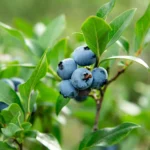 Highbush Blueberry
-
 Red Twig Dogwood
-
 Viburnums
-
 Buttonbush
-
 Rubber Rabbitbrush
-
 Bee Balm
Updated Find more: Edible Flowering Shrub Shrub
The ads on this site help pay real native plant nerds to research and write these guides.
Garden notes
Notes from people who’ve grown it
Tips, wins, and the occasional disaster. If you’ve grown Saskatoon serviceberry, share the advice you’d give to a neighbor.
No notes yet. Yours could be the first.
Grown Saskatoon serviceberry? Tell the next person what you wish someone had told you.
Tap anywhere to close


