




Highlights
Shagbark hickory (Carya ovata) is the tree that looks like it’s coming apart. On an old trunk the bark breaks into long gray plates, 1-3 foot long, that curl away at the ends like peeling wallpaper. You can spot one across a field in winter.
It’s a big, slow, long-lived tree, the kind you plant for your grandchildren. It makes sweet nuts that taste similar in taste and use to the pecan, it can live 200 to 300 years, and that shaggy bark is a nursery for endangered bats.
Is shagbark hickory a good choice for my yard?
Yes, if…
- You have room for a big tree. It grows 70 to 90 feet tall and 50 to 70 feet wide.
- You’re planting for the long haul. It grows slowly, about half as fast as a white oak, and lives for centuries.
- You want to feed wildlife. Squirrels, chipmunks, wild turkeys, wood ducks and black bears eat the nuts.
- Your winters are cold. It’s hardy in zones 4 to 8.
Skip it if…
- You want nuts soon. A tree grown from seed begins producing seed at approximately 40 years. Grafted cultivars bear much sooner.
- You might move it. NC State says the deep taproot makes it difficult to transplant. Plant it where it can stay for good.
- It would shade a patio or a parking spot. Big trees drop ample litter, and hickory nuts in their husks are heavy.
- You have a small yard. Look at a smaller nut or fruit tree instead, like American plum or pawpaw.
Why shagbark hickory matters
Hickory nuts are rich food for wildlife. The Forest Service lists the mallard, wood duck, northern bobwhite, and wild turkey among the birds that eat them, and the nuts are a preferred food of squirrels. Good crops come every one to three years.
Hickories host 284 native moths and butterflies in the Shropshire-Tallamy caterpillar records. That includes the hickory horned devil, the largest caterpillar found in North America, which grows to about 5.5 inches, sports orange horns and is completely harmless. It also feeds on walnut, sweetgum, sumac and persimmon, and it turns into the regal moth.
A bat hotel
The loose plates of bark make roosts. Endangered Indiana bats raise their pups under the loose bark of dead trees and live trees possessing a characteristic shaggy bark. U.S. Fish and Wildlife Service guidelines in Indiana tell foresters not to cut shagbark and shellbark hickories during thinning, because they have relatively high value as maternity roosts for Indiana and northern long-eared bats. Duke Gardens notes the bark also shelters brown creepers, tiny birds that hunt insects in the cracks.
Where shagbark hickory shines in your yard
- A legacy shade tree in the middle of a big lawn or field.
- A woodland edge, mixed with oaks and an understory of native shrubs.
- A wildlife planting on a farm or large lot.
- A nut orchard, with grafted cultivars for faster harvests.
- A winter feature where the shaggy trunk catches low sun.
Beginner tip
Plant two or three young hickories where you want one tree, then keep the strongest after a few years. Seedlings vary, and the taproot means you can’t move the winner later.
How to grow shagbark hickory
Start small
Plant a small container tree, or sow fresh nuts right where you want the tree. Seedlings grow a large and deep taproot first, sometimes 2 to 3 feet down in their first three years while the top barely moves. Small trees settle in far better than big ones.
Sun and soil
Full sun to part shade. It’s intermediate in shade tolerance. NC State says it prefers fertile, deep, soil that is well-drained, and it’s drought tolerant once established. It handles a range of pH, alkaline included.
Water and patience
Water the first two or three summers during dry spells. Then mostly leave it alone. The first few years are about roots; growth above ground picks up after that.
Getting nuts sooner
For nuts in years instead of decades, buy a grafted cultivar from a nut nursery. Kentucky’s extension service notes that hickory grafts on older trees may produce in three to four years. Named shagbark selections include ‘Grainger’, with very large nuts, and ‘Weschcke’, an early bearer that Trees and Shrubs Online lists as male-sterile, so it needs other hickories nearby.
Planting card
Carya ovata
The trickPlant it small, or sow a nut where it will grow: the taproot won’t forgive a move.
Where is shagbark hickory native?
Native to 34 US states and Washington, D.C.
Sources: NatureServe, Royal Botanic Gardens, Kew (World Checklist of Vascular Plants) and the USDA PLANTS Database, compiled by The Plant Native. How we map native ranges
When does the bark get shaggy?
Not right away. Young trees have smooth or scaly gray bark. The shagging is usually not visible on young trunks and typically appears around 30-40 years old. If you plant one now, someone will be peeling at its bark in the 2060s.
On an old trunk the bark breaks into long gray plates, 1-3 foot long, that curl away at the ends like peeling wallpaper.
What are good pairings for shagbark hickory?
Plant it with the understory of an eastern hardwood woods: pawpaw, spicebush, redbud, wild geranium and Christmas fern. Tulip poplar is a tall, faster-growing canopy partner.


Where can I buy shagbark hickory?
Native nurseries and state forestry nurseries sell seedlings, usually small because of the taproot. For grafted cultivars, look to specialty nut nurseries. Start with our list of native plant nurseries or order online.
FAQs
Are shagbark hickory nuts edible?
Yes, and they’re sweet. Arkansas Extension calls them amongst the sweetest of the hickories. The shells are hard; Kentucky’s extension service suggests soaking the nuts overnight before cracking, and freezing the kernels so the oils don’t go rancid.
How long until a shagbark hickory makes nuts?
About 40 years from seed. Peak production comes between 60 and 200 years of age. Grafted trees can bear in a few years.
How fast does shagbark hickory grow?
Slowly. The Forest Service calls it one of the fastest growing hickories, but that’s still slower than most oaks.
Can I plant shagbark hickory near my vegetable garden?
Usually, yes. Hickories make juglone, the chemical in black walnut that harms some plants, but Penn State says they produce it to a lesser degree.
Is shagbark hickory deer resistant?
Moderately. NC State rates it moderately resistant to deer. Protect young trees with a cage until they’re above browsing height.
What’s the difference between shagbark and shellbark hickory?
Count the leaflets. Shagbark usually has five leaflets; shellbark has seven to nine. Shellbark grows in bottomlands and makes the largest nuts of any hickory.
Plant nerd fact
The moth that never eats
The hickory horned devil spends all its eating as a caterpillar. After a winter as a pupa in the soil, it emerges as the regal moth, which has no functioning mouthparts. The adult lives about a week, long enough to mate and lay eggs on the next tree.
Shagbark hickory is a gift to the future: slow to start, then generous for centuries with nuts, shade and shelter. If you have the space, few trees give back more. For another big native shade tree with wildlife value, see tulip poplar. Happy planting!
Sources
- Dellinger, Theresa A., and Eric Day. “Hickory Horned Devil.” Virginia Cooperative Extension ENTO-20, 2023. Accessed October 12, 2026.
- Frank, Steven, and James Baker. “Hickory Horned Devil.” NC State Extension, 2019. Accessed October 12, 2026.
- Graney, David L. “Carya ovata, Shagbark Hickory.” In Silvics of North America, vol. 2. USDA Forest Service, 1990. Accessed October 12, 2026.
- Klingaman, Gerald. “Shagbark Hickory.” Plant of the Week, University of Arkansas Cooperative Extension, 2006. Accessed October 12, 2026.
- Lady Bird Johnson Wildflower Center. “Carya ovata.” Native Plant Database. Accessed October 12, 2026.
- Little, Jan. “Shagbark Hickory.” Duke Gardens, 2024. Accessed October 12, 2026.
- Mayer, Wendy. “Intro to Trees of Indiana: Shagbark Hickory.” Purdue University, 2022. Accessed October 12, 2026.
- NatureServe. “Carya ovata.” NatureServe Explorer. Accessed October 12, 2026.
- NC State Extension. “Carya ovata.” Extension Gardener Plant Toolbox. Accessed October 12, 2026.
- Penn State Extension. “Landscaping and Gardening Around Walnuts and Other Juglone-Producing Plants.” Accessed October 12, 2026.
- Shropshire, Kimberley J., and Douglas W. Tallamy. “Lepidoptera of North America North of Mexico: An Annotated List Containing Geographic Ranges and Host Plant Records.” ZooKeys, 2025. Host counts from the UDELep data, May 2025.
- Strang, John. Kentucky Woodlands Magazine, December 2010, 14–17. PDF. Accessed October 12, 2026.
- Tirmenstein, D. A. “Carya ovata.” Fire Effects Information System, USDA Forest Service, 1991. Accessed October 12, 2026.
- Trees and Shrubs Online. “Carya ovata.” International Dendrology Society. Accessed October 12, 2026.
- University of Guelph Arboretum. “Shagbark Hickory.” Accessed October 12, 2026.
- University of Minnesota. “Shagbark Hickory.” Trees of Minnesota. Accessed October 12, 2026.
- U.S. Fish and Wildlife Service, Indiana Field Office. “Forest Management Guidelines.” Revised May 23, 2019. Accessed October 12, 2026.
- Wright, Kathy Andrews. “Communities Supporting Bat Communities.” Outdoor Illinois, November 2023. Accessed October 12, 2026.

Similar plants
-
 Serviceberry
-
 American Plum
-
 Pines
-
 Birch
-
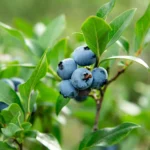 Highbush Blueberry
-
 Hackberry
-
 Bald Cypress
-
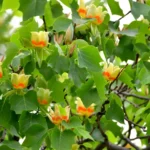 Tulip Poplar
-
 Black Willow
Updated Find more: Edible Fall Foliage Keystone Tall Tree Tree
The ads on this site help pay real native plant nerds to research and write these guides.
Garden notes
Notes from people who’ve grown it
Tips, wins, and the occasional disaster. If you’ve grown shagbark hickory, share the advice you’d give to a neighbor.
No notes yet. Yours could be the first.
Grown shagbark hickory? Tell the next person what you wish someone had told you.
Tap anywhere to close


