Highlights
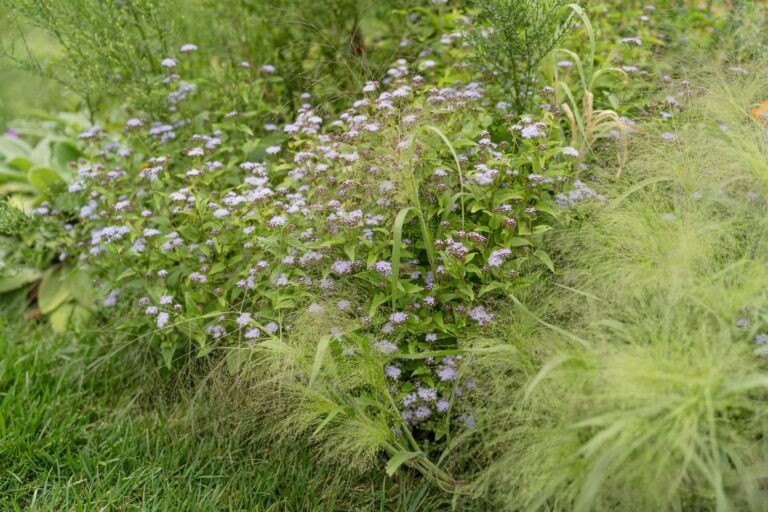
Stiff goldenrod (Solidago rigida) doesn’t look like the goldenrod most people picture. Instead of arching yellow plumes, it holds up a flat-topped cluster 2 to 5 inches across, like a bright yellow plate on a straight stem. Its leaves are gray-green and rough to the touch, and they really do feel stiff.
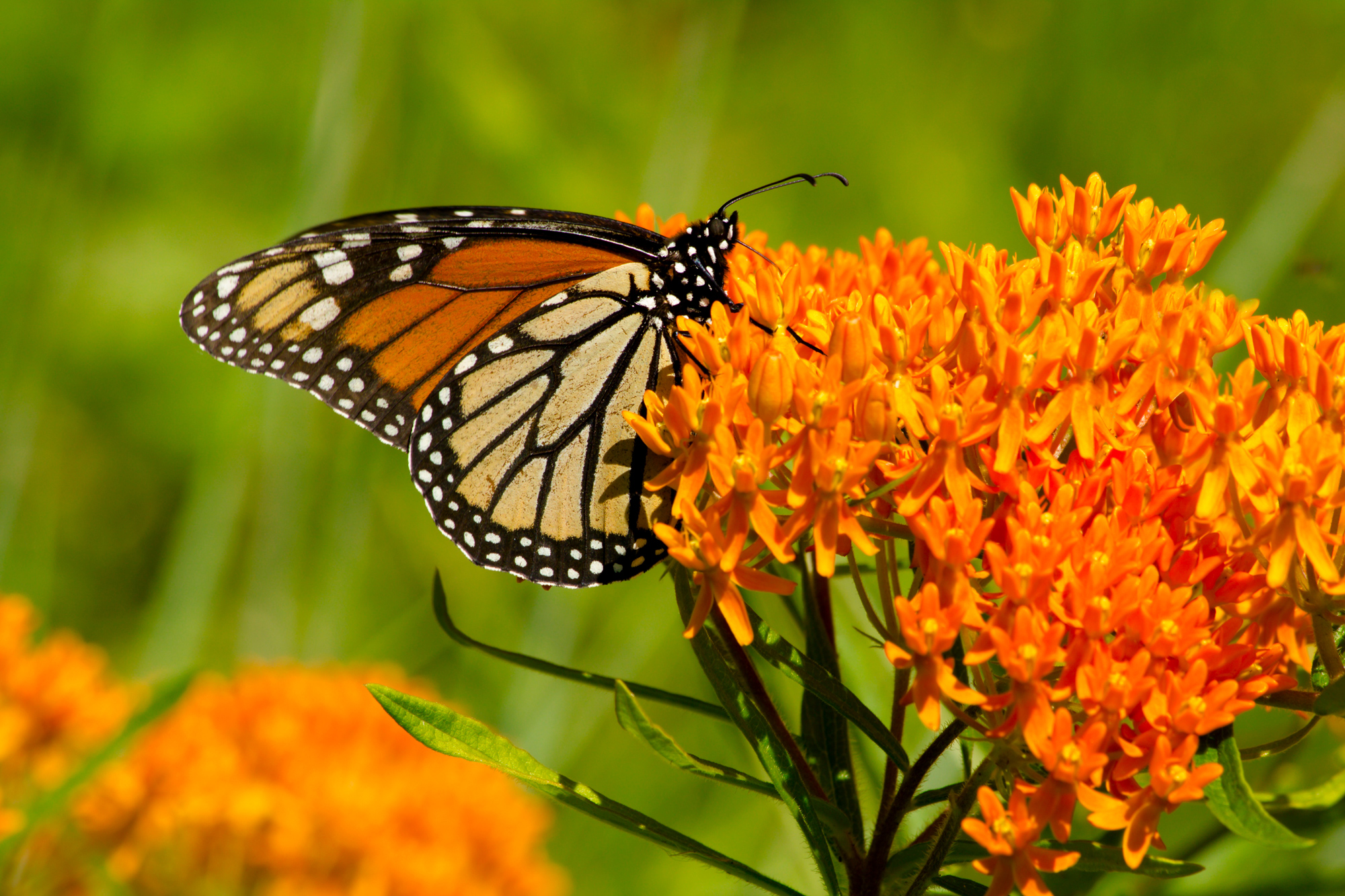
It’s a prairie plant through and through: deep-rooted, happy in poor soil, and one of the busiest flowers in a late-summer garden. Bees, wasps, beetles and monarchs all crowd onto those flat tops from August into October.
Is stiff goldenrod a good choice for my yard?
Yes, if…
- You have a sunny, dry spot. It grows on mesic to xeric soils in open habitats, from sand and gravel to clay.
- You want a late-season pollinator magnet. Minnesota’s state soil and water board says monarchs use it heavily for late-season nectar.
- You want a goldenrod that doesn’t run. It forms upright clumps, and its roots spread very slowly.
- You’re planting a prairie or meadow and want something with a different shape from the grasses.
Skip it if…
- You have shade. It’s a full-sun plant and grows better in full sun than in part shade.
- You don’t want seedlings. The University of Tennessee notes it can be a heavy re-seeder. Cut the seed heads if you want to stop it.
- You need a tidy, short plant. In rich garden soil it can reach 5 to 6.5 feet. Ohio goldenrod is a smaller choice.
Why stiff goldenrod matters
Late summer is crunch time for bees. Many are building up for winter, and some bees can’t use anything but goldenrod. Illinois Wildflowers lists six native bees, mostly mining bees, that are goldenrod specialists, which it defines as bees that visit a limited variety of plant species, often in a single genus. The flat flower heads make easy landing pads, and Illinois Wildflowers records monarchs, bumble bees, sweat bees and many more on them.
Goldenrods host 181 native moths and butterflies in the Shropshire-Tallamy caterpillar records. After the flowers fade, the downy seeds stay on the flower head into November or December, and chickadees and finches pick at them.
Goldenrod doesn’t cause hay fever
Goldenrod pollen is too large and heavy and sticky to be windborne. It travels on insects, not on the breeze. The hay fever you feel in September comes from ragweed, which blooms at the same time and sends its tiny pollen into the air.
Where stiff goldenrod shines in your yard
- A prairie or meadow planting, among little bluestem and coneflowers.
- A dry, sunny slope where other perennials struggle.
- A pollinator garden that needs late-season flowers.
- A hell strip or parking-lot island with lean, rocky soil.
- The middle of a sunny border, where its flat tops break up the spires and daisies.
Beginner tip
Leave the stems standing after bloom. The fluffy seed heads hang on into December and feed chickadees and finches when food is getting scarce.
How to grow stiff goldenrod
When to plant
Spring or fall, from plugs or pots. From seed, it makes a basal rosette in its first year and typically flowers in year two or three.
Sun and soil
Full sun. It’s not particular about soil: sand, gravel, loam and clay all work. Skip the fertilizer. Rich soil just makes it taller.
Water
Water new plants until they’re growing well. After that, its deep roots handle dry spells on their own.
Health
Mt. Cuba Center grew stiff goldenrod in its 2021 to 2023 goldenrod trial. Typical stiff goldenrod rated 3.5 out of 5: it did very well the first year, then declined, likely from rust and lace bugs. The southeastern form, Solidago rigida subsp. glabrata, rated 4.1, with better resistance to both. If you can find it, it’s the healthier choice.
Planting card
Solidago rigida
The trickSkip the fertilizer: poor soil keeps it shorter and sturdier.
Where is stiff goldenrod native?
Native to 36 US states
Sources: NatureServe, Royal Botanic Gardens, Kew (World Checklist of Vascular Plants) and the USDA PLANTS Database, compiled by The Plant Native. How we map native ranges
In parts of the East it’s rare. New Jersey ranks it critically imperiled, and the state’s profile counts 12 of its 14 known sites as lost or historical.
Instead of arching yellow plumes, it holds up a flat-topped cluster 2 to 5 inches across, like a bright yellow plate on a straight stem.
What are good pairings for stiff goldenrod?
Build a prairie around it: little bluestem, prairie dropseed, purple coneflower, blazing stars, rattlesnake master and asters, which bloom right alongside it.


Where can I buy stiff goldenrod?
Prairie and native plant nurseries carry it as plugs, pots and seed, sometimes under its other name, Oligoneuron rigidum. Chicago Botanic Garden lists no named cultivars, so you’ll be buying the wild species. Start with our list of native plant nurseries or order online.
FAQs
Does stiff goldenrod spread?
Slowly by roots, faster by seed. It stays in a clump, but the University of Tennessee says it can be a heavy re-seeder. Deadhead before the seeds fluff out if you want fewer.
When does stiff goldenrod bloom?
August to October. The Lady Bird Johnson Wildflower Center gives August to October, with the peak around mid-September in much of its range.
Is stiff goldenrod deer resistant?
Mostly. Rutgers rates goldenrods “seldom severely damaged.” Native Plant Trust says deer do browse it, but its palatability is low. Young plants are the most at risk.
How tall does stiff goldenrod get?
Usually 2 to 5 feet. In the wild it stays at 2-5′ tall; in Mt. Cuba’s rich clay-loam trial beds it reached 5 to 6.5 feet.
What’s the difference between stiff goldenrod and Ohio goldenrod?
Both have flat-topped flower clusters, but Ohio goldenrod is smaller and likes it wetter. Mt. Cuba grew Ohio goldenrod at 3.5 to 4 feet, rated it 4.0, and called it ideal for smaller gardens.
Why is it called stiff goldenrod?
For its leaves. Minnesota Wildflowers says they’re fairly stiff and rough from short bristly hairs. Oddly, they start out soft in spring and stiffen as the season goes on.
Plant nerd fact
Bee sting lotion
The Meskwaki used stiff goldenrod flowers to make a lotion for bee stings, according to a 1928 record of their plant uses. Considering how many bees crowd onto this plant, it’s a fitting remedy.
Stiff goldenrod is a prairie workhorse with a flat yellow top and a lot of visitors. Give it sun, poor soil and room for a few seedlings, and it will feed bees long after summer is done. To compare it with other native goldenrods, see our beginner’s guide to native goldenrods. Happy planting!
Sources
- Chicago Botanic Garden. “Solidago rigida.” Plant Finder. Accessed October 12, 2026.
- Illinois Wildflowers. “Stiff Goldenrod,” “Insect Visitors of Stiff Goldenrod” and “Oligolectic Bees.” Accessed October 12, 2026.
- Kansas Wildflowers and Grasses. “Solidago rigida.” Accessed October 12, 2026.
- Lady Bird Johnson Wildflower Center. “Oligoneuron rigidum.” Native Plant Database. Accessed October 12, 2026.
- Minnesota Board of Water and Soil Resources. “Featured Plant: Stiff Goldenrod.” October 2014. Accessed October 12, 2026.
- Minnesota Wildflowers. “Stiff Goldenrod.” Accessed October 12, 2026.
- Mt. Cuba Center. “Goldenrods for the Mid-Atlantic Region,” trial report, 2021–2023. Accessed October 12, 2026.
- Native Plant Trust. “Solidago rigida Conservation and Research Plan.” Accessed October 12, 2026.
- NatureServe. “Oligoneuron rigidum.” NatureServe Explorer. Accessed October 12, 2026.
- New Jersey Natural Lands Trust. “Stiff Flat-Topped Goldenrod.” New Jersey Department of Environmental Protection. Accessed October 12, 2026.
- Rutgers New Jersey Agricultural Experiment Station. “Landscape Plants Rated by Deer Resistance.” Accessed October 12, 2026.
- Shropshire, Kimberley J., and Douglas W. Tallamy. “Lepidoptera of North America North of Mexico: An Annotated List Containing Geographic Ranges and Host Plant Records.” ZooKeys, 2025. Host counts from the UDELep data, May 2025.
- University of Tennessee Extension. “Oligoneuron rigidum.” Tennessee Smart Yards. Accessed October 12, 2026.
- University of Wisconsin–Eau Claire. “Solidago rigida.” Putnam Park Plant Notes. Accessed October 12, 2026.
- Williams, Larry. “Blame Ragweed, Not Goldenrod, for Fall Hay Fever.” UF/IFAS Extension Okaloosa County, 2016. Accessed October 12, 2026.

Similar plants
-
 Hummingbird Mint
-
 Sneezeweed
-
 Golden Alexander
-
 Blue Vervain
-
 Irises
-
 Golden Ragwort
-
 Nodding Onion
-
 Bleeding Heart
-
 Mountain Mints
Updated Find more: Deer Resistant Flower
The ads on this site help pay real native plant nerds to research and write these guides.
Garden notes
Notes from people who’ve grown it
Tips, wins, and the occasional disaster. If you’ve grown stiff goldenrod, share the advice you’d give to a neighbor.
No notes yet. Yours could be the first.
Grown stiff goldenrod? Tell the next person what you wish someone had told you.
Tap anywhere to close


