
Highlights
An evergreen is the plant your yard leans on in February, when everything else is sticks. Pines, spruces, hemlocks and the trees we call cedars all keep their needles through winter, and the native ones are caterpillar food on a grand scale: pines (Pinus) host 409 native moths and butterflies in the Shropshire-Tallamy caterpillar records.
The trick is knowing which group fits your yard. Sun, soil and region decide most of it. This page sorts that out quickly, then sends you to the guide for the group you want.
Why native conifers matter
Start with caterpillars. Pines (Pinus) host 409 native moths and butterflies in the Shropshire-Tallamy caterpillar records, spruces (Picea) 262 and hemlocks (Tsuga) 169. Junipers add 111.
Cover in the worst weather
Dense evergreen branches are shelter when the hardwoods are bare, and eastern hemlock gives winter and severe-weather cover. White-tailed deer lean on them too: northern white cedar is highly preferred by white-tailed deer for both shelter and browse.
Seeds for the specialists
Red crossbills come in at least 11 different types, and their bill size tracks the size of the cones they work. Clark’s nutcrackers bury pine seeds by the thousands, and after fires limber pine forests regrow largely from nutcracker seed caches. Pinyon seeds have no wings at all, so the trees depend upon the behavior of four corvid species to spread.
Pinyon seeds have no wings at all, so the trees depend upon the behavior of four corvid species to spread.
Beginner tip
Before you shop, count the hours of direct sun on your spot. Full sun points to a pine or a juniper. Cool, moist shade points to a hemlock. Then check the region list above and pick from the guide.
Which conifer am I looking at?
Grab a branch and work down the list.
- Needles in bundles: a pine. Pine needles grow in little bundles, sheathed at base, although white pines shed the sheath early.
- Single needles, four-sided and stiff: a spruce. Roll one between your fingers. Spruce needles are 4-angled in cross section, so they spin.
- Single needles, flat and soft, with tiny cones: a hemlock. Eastern hemlock cones are about 3/4 inch long. (Firs have flat needles too, but their cones appear upright on branches.)
- No needles, just flat scales: a “cedar,” meaning a juniper, arborvitae or white cedar. None are true cedars, which grow only in the Old World.
The native conifer groups, and what each one is for
Each group has its own guide with species, sizes, zones and where to buy.
Native pines: sun, sand and speed
Thirty-seven pine species are native to the U.S. and Canada, from a 10 to 20 foot pinyon in the Southwest to a 60 to 120 foot longleaf in the Southeast. Most want full sun and good drainage, and several handle poor, sandy ground. Loblolly has the most rapid growth rate of all pines, but pinyon is slow, so growth speed depends on the species. Pick a pine for a sunny screen, a dry slope or a big open yard.
Native spruces: cold country and cover to the ground
Seven spruces are native to North America, and they are northern and mountain trees. Region matters more here than anywhere else. Colorado blue spruce is native to the Rockies, yet the University of Minnesota says it is “no longer recommended for Minnesota landscapes,” and in Michigan trials Black Hills spruce, a native form of white spruce, resisted the canker fungus that hit blue spruce hard.
Native hemlocks: the shade answer, with homework
Eastern hemlock can survive in as little as 5 percent of full sunlight, deeper shade than any other big native evergreen here. It is also under attack from hemlock woolly adelgid, which can kill mature trees in as little as 2 to 4 years. Treatment works. Penn State notes that one imidacloprid treatment typically lasts four to six years, so an eastern hemlock is a promise to check it every spring. In the Northwest, western and mountain hemlock are the natives to plant.
Native cedars and junipers: the tough sites
America’s cedars are junipers, arborvitae, white cedars, incense cedar and Alaska yellow cedar. Eastern red cedar has the best drought resistance of any conifer native to the eastern United States, while Atlantic white cedar prefers sandy, peaty, moist to wet, acidic soil. Native arborvitae is a lovely hedge, but deer damage can be a serious problem. Out West, Rocky Mountain juniper is the dry-country pick.
Bald cypress: the conifer that drops its needles
Not every conifer is evergreen. Bald cypress is deciduous, turning orange to cinnamon-brown before it drops its needles in fall, and it handles a wide range of soil conditions, including standing water. It’s the one to plant in a wet yard where most pines would struggle.
Which conifer is right for my region?
Pines in the sunny South and dry West, spruces and hemlocks where summers stay cool, cedars for the hardest sites everywhere. By region:
- Northeast: eastern white pine or red pine for sun, red or white spruce for a windbreak, eastern hemlock in shade if you’ll treat it, northern white cedar on limy ground.
- Mid-Atlantic: eastern white, pitch or Virginia pine; eastern red cedar for dry sites; Atlantic white cedar for wet, acidic ground.
- South: longleaf, loblolly or shortleaf pine, bald cypress in wet spots, and red spruce only high in the mountains, where it grows as low as 4,500 feet in the southern Appalachians.
- Midwest: jack and red pine in the north, shortleaf pine farther south, Black Hills spruce for windbreaks, eastern red cedar almost anywhere dry.
- Southwest: two-needle pinyon, ponderosa pine, Rocky Mountain juniper, and Colorado blue or Engelmann spruce up high.
- California: ponderosa pine and incense cedar in the mountains, western redcedar and Sitka spruce on the north coast.
- Northwest: western redcedar, western hemlock and Sitka spruce near the coast, shore pine in sand, Engelmann spruce east of the Cascades.
Where can I buy native conifers?
Ask for the species by its Latin name, buy small, and skip the European pines and spruces that fill garden-center lots. Start with our list of native plant nurseries or order online.
Similar native plants
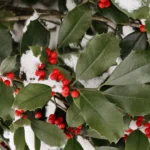
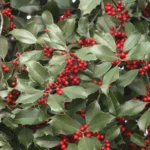
If you want more evergreen in the yard, look at American holly and inkberry in the East, or Oregon grape and kinnikinnick in the West. They pair well with conifers, and they carry berries the needle trees don’t.


Native conifer FAQs
What’s the difference between a pine, a spruce and a hemlock?
Pines carry needles in bundles; spruces and hemlocks carry them one at a time. Spruce needles are stiff and four-sided, so they roll. Hemlock needles are flat and soft, and the cones are tiny, about 3/4 inch.
Which native evergreen grows fastest?
Loblolly pine, in the South. NC State says it has the most rapid growth rate of all pines. Eastern white pine is also rated rapid, and it grows much farther north.
Are the pines at big-box stores native?
Often not. Austrian pine is native to central and southern Europe, Scots pine to northern Europe and northern Asia, and mugo pine to the mountains of Central Europe. Mugo still supports imperial moth larvae, so it isn’t useless, but if you want a native, check the Latin name.
Can I still plant an eastern hemlock?
Yes, if you will inspect and treat it. Adelgid treatments buy years of protection, and NatureServe still ranks eastern hemlock apparently secure worldwide. If you won’t treat, plant a pine or a native cedar instead.
Is bald cypress an evergreen?
No. It’s a conifer, with needles and cones, but it drops its needles every fall and grows them back in spring. That’s where the “bald” comes from.
Do deer eat native conifers?
Some much more than others. Rutgers rates eastern white pine and Colorado blue spruce “seldom severely damaged,” eastern hemlock “occasionally severely damaged,” and arborvitae “frequently severely damaged.” If deer are heavy, start with a pine or a spruce.
Start with sun and region, and the choice gets simple: a pine for the sunny dry spot, a cedar for the hard one, a spruce or hemlock where summers stay cool, bald cypress where water stands. Then head to the pines, spruces, hemlocks or cedars guide and pick your tree. Happy planting!
Sources
- Cornell Lab of Ornithology. “Red Crossbill Life History.” All About Birds. Accessed October 12, 2026.
- Flora of North America Editorial Committee. “Pinus” and “Picea.” Flora of North America North of Mexico, vol. 2. Accessed October 12, 2026.
- Gymnosperm Database. “Picea pungens.” Accessed October 12, 2026.
- Jarosz, Andrew M., Dennis W. Fulbright, Bert M. Cregg, and Jill O’Donnell. “Spruce Decline in Michigan: Disease Incidence, Causal Organism and Epidemiology.” MDARD Hort Fund final report. Michigan Nursery and Landscape Association. Accessed October 12, 2026.
- Jackson, David R. “An Integrated Approach to Hemlock Woolly Adelgid Mitigation.” Penn State Extension, updated November 24, 2021. Accessed October 12, 2026.
- McCarty, Elizabeth P., and Karla M. Addesso. “Hemlock Woolly Adelgid (Hemiptera: Adelgidae) Management in Forest, Landscape, and Nursery Production.” Journal of Insect Science 19, no. 2 (2019): iez031.
- NatureServe. “Tsuga canadensis.” NatureServe Explorer. Accessed October 12, 2026.
- NC State Extension. “Pinus strobus,” “Pinus taeda,” “Pinus palustris,” “Pinus edulis,” “Pinus nigra,” “Pinus mugo,” “Tsuga canadensis,” “Abies balsamea,” “Juniperus virginiana,” “Thuja occidentalis,” “Chamaecyparis thyoides” and “Taxodium distichum.” Extension Gardener Plant Toolbox. Accessed October 12, 2026.
- Royal Botanic Gardens, Kew. “Cedrus.” Plants of the World Online. Accessed October 12, 2026.
- Rutgers New Jersey Agricultural Experiment Station. “Landscape Plants Rated by Deer Resistance.” Accessed October 12, 2026.
- Shropshire, Kimberley J., and Douglas W. Tallamy. “Lepidoptera of North America North of Mexico: An Annotated List Containing Geographic Ranges and Host Plant Records.” ZooKeys, 2025. Host counts from the UDELep data, May 2025.
- University of Minnesota Extension. “Choosing Evergreens for Your Landscape.” Accessed October 12, 2026.
- USDA Forest Service. Fire Effects Information System. “Pinus flexilis.” Accessed October 12, 2026.
- USDA Forest Service. Silvics of North America, vol. 1, Conifers: “Tsuga canadensis,” “Picea rubens,” “Pinus edulis” and “Thuja occidentalis.” 1990. Accessed October 12, 2026.

Similar plants
Updated Find more: Beginner Guide Evergreen Evergreen Shrub Evergreen Tree Shrub Tall Tree Tree
The ads on this site help pay real native plant nerds to research and write these guides.
Garden notes
Notes from people who’ve grown it
Tips, wins, and the occasional disaster. If you’ve grown native evergreen conifer, share the advice you’d give to a neighbor.
No notes yet. Yours could be the first.
Grown native evergreen conifer? Tell the next person what you wish someone had told you.
Tap anywhere to close


